Top 10 Best Cyberpunk Anime to Watch

There is no genre that predicts the terrifying reality of our modern future quite like cyberpunk. At its core, the genre is built on a suffocating paradox: humanity has successfully conquered the limits of biology, yet society has never been more broken. It explores a world where artificial intelligence can flawlessly mimic the human soul, where missing limbs are effortlessly replaced with military-grade chrome, and where the human consciousness can be uploaded to a digital network. But despite all of this god-like technological advancement, the average person is still starving in a rain-slicked alleyway, crushed under the absolute, unchallenged monopoly of mega-corporations.
Unlike standard sci-fi stories that focus on exploring the stars, cyberpunk turns the camera inward to examine the rotting core of a dystopian metropolis. If you have spent time diving into our Sci-Fi & Fantasy Hub or analyzed the bleak narratives in our Dark Hub, you will recognize the psychological weight that these shows carry. The tension in a cyberpunk anime does not come from stopping an alien invasion; it comes from trying to survive a hyper-capitalist meatgrinder that views the human body as a cheap, disposable commodity. It asks the ultimate philosophical question: if you replace every single piece of your physical body with metal, at what point do you stop being human?
From the grimy, VHS-era gore of Neo-Tokyo to the hyper-kinetic, neon-drenched tragedies of Night City, these series deliver the absolute peak of transhumanist fiction. Jack into the mainframe and secure your neural link—here are the Top 10 best cyberpunk anime that perfectly capture the gritty, neon-lit reality of high-tech and low-life.
Table of Contents
No Guns Life
No Guns Life flawlessly blends the classic, smoke-filled atmosphere of a 1940s hardboiled detective noir with the gritty, mechanical reality of a cyberpunk dystopia. The story follows Juzo Inui, a private investigator known as a “Resolver,” who specializes in handling cases involving “Extends”—individuals who have heavily modified their bodies with cybernetic technology. Juzo himself is an Over-Extend, an illegal military cyborg created for a war that has long since ended, cursed with a massive, fully functional revolver for a head that can only be fired by someone standing behind him.

The overarching antagonist of the series is the Berühren Corporation, a terrifyingly omnipotent mega-corporation that controls the city through its monopoly on cybernetic parts and the suppressive medication required to keep Extends from suffering neural rejection. Juzo is dragged into a massive conspiracy when a rogue Extend bursts into his office carrying a kidnapped boy who possesses the technological key to overriding any cybernetic implant in the city.
The aesthetic of this show is dripping with style. Backed by a heavy, jazz-infused soundtrack, the pacing takes its time, prioritizing investigative footwork, dark alleyway confrontations, and the heavy, mechanical clanking of heavy cyborg combat. Juzo is an incredible protagonist—stoic, chain-smoking, and deeply cynical, yet possessing a rigid moral code that forces him to protect the innocent from a society that views heavily augmented individuals as disposable military garbage.
Cyber City Oedo 808
If you want to inject the pure, unadulterated essence of 1990s cyberpunk directly into your veins, Cyber City Oedo 808 is the ultimate time capsule. Directed by the legendary Yoshiaki Kawajiri (Ninja Scroll), this 3-episode OVA serves as a brilliant precursor to modern “Suicide Squad” tropes. Set in the year 2808, three hardcore, maximum-security criminals—Sengoku, Gogul, and Benten—are serving centuries-long sentences in an orbital prison. They are offered a brutal deal: work as cyber-police for the Oedo City police force to reduce their sentences.

The catch is a hallmark of extreme cyberpunk cruelty. Each criminal is fitted with an explosive collar wired directly to a countdown timer. If they fail to complete a mission, attempt to escape, or if their handler’s heart stops beating, the collar instantly decapitates them. The three men are thrust into a hyper-violent, neon-soaked city to hunt down rogue cyborgs, vampire-like mutants, and corrupted military artificial intelligences.
This series is widely celebrated for its legendary English dub produced by Manga Entertainment in the UK, which heavily localized the script to include an astronomical amount of incredibly creative profanity, perfectly matching the rebellious, anti-authoritarian punk rock attitude of the genre. The cell-shaded animation holds up beautifully, showcasing the grotesque body-horror of early cybernetics against the backdrop of a decaying, skyscraper-filled city. It is a short, explosive, and aggressively stylish masterpiece.
Mardock Scramble
Mardock Scramble is an agonizingly dark, cinematic trilogy that pulls absolutely no punches when it comes to the horrors of transhumanism. The story follows Rune Balot, a teenage prostitute who is taken in by a sadistic, incredibly wealthy casino manager named Shell Septinos. When she uncovers the horrific, murderous secrets hidden in his past, Shell brutally attempts to murder her by locking her in a car and blowing it up. Her charred, near-dead body is recovered by a specialized police division and resurrected through the highly illegal ‘Mardock Scramble-09’ protocol.

Rebuilt with synthetic skin and advanced cybernetics that allow her to interface with and manipulate electronics, Balot is given a choice: use her new body to testify against Shell and help the police tear down his criminal empire, or face deactivation. She is partnered with Oeufcoque, a highly advanced, empathetic artificial intelligence housed in the body of a golden mouse, which can transform into any weapon or tool she requires. Together, they wage a hyper-violent war against Shell’s heavily augmented assassins.
The animation across these three films is visually staggering. It effortlessly shifts from high-speed, bloody gunfights to intense, slow-burn psychological warfare during an incredibly tense, multi-hour blackjack sequence at a casino. The core of Mardock Scramble is a deeply moving story about trauma, recovery, and a completely broken girl fighting to reclaim her own sense of self-worth in a society that treats human beings like expendable trash.
Akudama Drive
If you want a cyberpunk anime that looks like a high-budget, neon-drenched theme park ride going entirely off the rails, Akudama Drive delivers absolute visual ecstasy. Created by Kazutaka Kodaka (the mastermind behind the Danganronpa series), the anime takes place in a highly stylized, dystopian version of the Kansai region, which operates as a vassal state to the utopian, untouchable region of Kanto. The plot detonates immediately when an anonymous benefactor hires the city’s most dangerous S-Class super-criminals, known as Akudama, for an impossible heist.

An ordinary, innocent civilian girl accidentally gets swept up in the criminal gathering and, to avoid being immediately murdered, lies and assumes the alias of “Swindler.” She is forced to join this chaotic suicide squad—consisting of a psychotic doctor, a brawler, a hacker, a courier, a hoodlum, and a serial killer—as they attempt to infiltrate a heavily fortified bullet train transporting mysterious ‘cargo’ to Kanto. The police force, equipped with advanced, cybernetic lightsabers, engages them in blistering, city-destroying combat.
Despite its wildly over-the-top, popcorn-munching action, the underlying world-building is textbook cyberpunk. The bright, flashy holographic signs of Kansai intentionally mask a society suffering from extreme poverty, rigid police brutality, and mass public executions. The 12-episode series operates at a breakneck pace, culminating in a violent, emotional finale that brilliantly explores how the sheer spectacle of crime can completely shatter an authoritarian government’s control over its citizens.
Ergo Proxy
Ergo Proxy is a slow, methodical, and incredibly dense philosophical thriller that leans heavily into the post-apocalyptic side of the cyberpunk spectrum. The series takes place inside Romdo, a massive, sterilized dome city built to protect the remnants of humanity from the toxic, unlivable wasteland outside. Inside the dome, humans live in a heavily monitored, emotionless ‘utopia’, accompanied by android companions known as AutoReivs. However, the delicate peace shatters when the AutoReivs begin contracting the ‘Cogito Virus’—a malfunction that inexplicably grants them self-awareness and human souls.

The narrative follows Re-l Mayer, an intense, heavily eye-shadowed investigator tasked with hunting down the infected androids. Her investigation is completely derailed when she is attacked by a terrifying, seemingly invincible humanoid monster known as a Proxy. The mystery pulls her into the orbit of Vincent Law, a timid immigrant worker who holds the key to the dark, horrifying secrets the city’s government is hiding. Together, they are forced to flee the dome and embark on a bleak journey across the frozen, apocalyptic wasteland.
This anime demands your absolute attention. It is heavily layered with philosophical references to Descartes, existentialism, and theology, utilizing long, surreal dream sequences to dissect the psychology of its main cast. The muted, desaturated color palette and brooding gothic atmosphere create a suffocating sense of isolation. It is a brilliant, highly intelligent exploration of artificial intelligence and the terrifying burden of free will.
Texhnolyze
There is absolutely no light at the end of the tunnel in Texhnolyze. Widely considered one of the bleakest, most depressing anime ever created, this series strips the cyberpunk genre of all its flashy neon action and replaces it with suffocating, existential dread. The story takes place in the subterranean city of Lukuss, a rotting, lawless slum controlled by competing mafia factions. The citizens view ‘Texhnolyze’—highly invasive, painful cybernetic amputations—as the ultimate display of power and status.

The protagonist, Ichise, is an underground prizefighter who offends a local crime boss. In retaliation, his arm and leg are brutally amputated, and he is left to bleed out in an alley. He is saved by a rogue doctor who forcibly installs experimental Texhnolyze limbs into his body, dragging him into an apocalyptic gang war that threatens to completely wipe out the remnants of the city. Accompanied by Ran, a young girl wearing a fox mask who possesses the horrifying ability to see the city’s inevitable destruction, Ichise acts as a violent, rabid dog navigating a world that has already died.
The storytelling in Texhnolyze is notoriously demanding. The first episode features almost zero dialogue, communicating entirely through heavy breathing, atmospheric sound design, and agonizingly slow, deliberate visual framing. It completely rejects the idea of transhumanism as a path to salvation, arguing instead that replacing human flesh with metal only accelerates the loss of empathy and societal decay. It is a punishing, masterful work of art that will leave you staring at a blank screen long after the final episode ends.
Psycho-Pass
While most cyberpunk dystopias look like rotting slums, Psycho-Pass presents a terrifyingly pristine, utopian facade. Set in the 22nd century, Japan is entirely governed by the Sibyl System, a massive, omnipotent biometric network that constantly scans the mental state and stress levels of every citizen. This calculation forms a person’s “Psycho-Pass.” If their “Crime Coefficient” rises above a certain threshold, they are designated as a latent criminal and preemptively arrested or executed before they ever commit a crime.

The narrative follows Akane Tsunemori, an idealistic rookie Inspector who is assigned to the Public Safety Bureau. Because investigating horrific crimes naturally raises a person’s stress levels, Inspectors are forced to work alongside “Enforcers”—latent criminals who serve as heavily armed hunting dogs for the government. Armed with ‘Dominators’, terrifying smart-weapons that only unlock and fire if the Sibyl System deems the target a threat, Akane quickly realizes that the system is deeply, fundamentally flawed.
Written by Gen Urobuchi (famous for Fate/Zero and Madoka Magica), the first season of Psycho-Pass is a phenomenal cat-and-mouse thriller. It centers heavily on the psychological warfare between Akane’s rogue Enforcer, Shinya Kogami, and Makishima Shogo—a brilliantly written, philosophically obsessed terrorist whose unique brain allows him to commit horrific murders without his Crime Coefficient ever rising. It is a razor-sharp critique of utilitarianism and the terrifying consequences of sacrificing human judgment to an algorithmic AI.
Akira
It is completely impossible to discuss the cyberpunk genre without bowing to the absolute foundational monolith that is Akira. Released in 1988, Katsuhiro Otomo’s cinematic masterpiece practically birthed the modern perception of Neo-Tokyo. Set in a corrupt, neon-lit metropolis violently protesting a failing government, the story revolves around a teenage motorcycle gang led by the confident, iconic Shotaro Kaneda. During a violent clash with a rival gang, Kaneda’s childhood friend, Tetsuo Shima, crashes into an escaped child test subject, triggering a massive military cover-up.
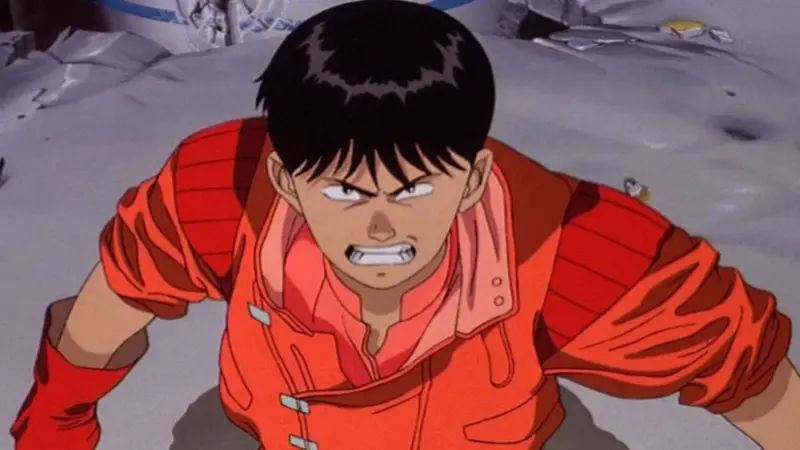
Captured by the government and subjected to horrific experimentation, Tetsuo begins developing god-like telekinetic powers. However, fueled by a lifelong inferiority complex and a deep, festering anger toward a society that treats him like garbage, Tetsuo’s mind completely fractures under the weight of his new abilities. His uncontrollable evolution triggers a hyper-violent, psychic rampage across the city, threatening to awaken “Akira”—the mysterious, apocalyptic entity responsible for wiping out Tokyo decades prior.
The animation of Akira remains completely unmatched even by modern standards. Produced entirely with hand-drawn cels, the film features an insane level of detail, from the iconic light trails of Kaneda’s red motorcycle to the grotesque, fleshy body-horror of Tetsuo’s final mutation. Beyond the incredible visuals and the booming, tribal percussion soundtrack, the film is a profound exploration of Japanese nuclear trauma, student protests, and the terrifying realization that humanity cannot control the technology it creates.
Ghost in the Shell
If Akira provided the visual aesthetic for cyberpunk, Mamoru Oshii’s 1995 Ghost in the Shell provided the absolute philosophical soul of the genre. The narrative takes place in a highly advanced 2029, where cybernetic body modification is the standard and human brains can connect directly to global information networks. The story follows Major Motoko Kusanagi, the cold, hyper-competent assault leader of Public Security Section 9. Motoko’s body is 100% synthetic; the only remaining biological component is her brain, and by extension, her “Ghost” (her consciousness).

The core tension revolves around Section 9’s hunt for the “Puppet Master,” an incredibly dangerous cyber-terrorist who hacks into the cyberbrains of innocent civilians, altering their memories and forcing them to commit crimes. As Motoko dives deeper into the investigation, she experiences a profound existential crisis. If her memories can be faked, and her entire body is manufactured by a corporation, what actually proves that she is human? The philosophical dialogue regarding identity and the evolution of artificial intelligence heavily, and explicitly, inspired the creators of The Matrix.
Whether you watch the atmospheric, beautifully quiet 1995 film or dive into the incredibly smart, politically complex Stand Alone Complex television series, the franchise remains the pinnacle of transhumanist fiction. The animation masterfully contrasts high-speed, invisible optical-camouflage firefights with long, lingering shots of rain hitting the dense, claustrophobic architecture of the city. It is a breathtaking, highly intelligent masterpiece that practically demands multiple viewings to fully absorb.
Cyberpunk: Edgerunners
Sitting at the absolute apex of the modern cyberpunk genre is Studio Trigger’s masterpiece, Cyberpunk: Edgerunners. Breathing massive, hyper-violent life into Mike Pondsmith’s tabletop universe, the anime focuses on David Martinez, a bright, impoverished street kid drowning in corporate debt. When his mother is killed in a random gang shootout because she lacks premium healthcare, David completely snaps. With absolutely nothing left to lose, he illegally installs a military-grade “Sandevistan” spinal implant, allowing him to move at blinding, superhuman speeds, and drops out of school to become a mercenary “Edgerunner.”
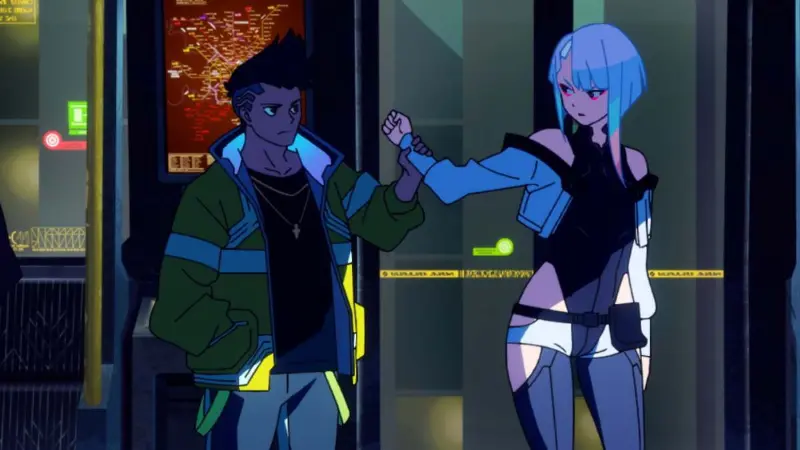
David is quickly absorbed into a crew of heavily augmented, chaotic mercenaries, falling deeply in love with a mysterious, moon-obsessed netrunner named Lucy. The anime brilliantly executes the foundational warning of the genre: Night City is a meatgrinder that consumes everyone. The more successful David becomes, the more chrome he bolts onto his body to protect his new family. The audience is forced to watch in absolute agony as his humanity slowly degrades under the crushing weight of cyberpsychosis, a terrifying mental collapse caused by excessive augmentation.
Studio Trigger’s animation is completely unhinged, utilizing intensely saturated neon colors, extreme gore, and blindingly fast camera pans to capture the adrenaline-fueled highs of a mercenary gig. However, it is the emotional devastation that cements this show as the number one spot. The pacing is relentless, leading to an incredibly tragic, unforgettable finale that perfectly encapsulates the genre: there are no happy endings in Night City. You either burn out in a blaze of glory, or you live long enough to become a corporate slave. It is a flawless, 10-episode sprint of pure cinematic hype and tragedy.
The System is Down
The cyberpunk genre is not just an aesthetic; it is a profound, terrifying warning about the trajectory of human civilization. Whether you are holding your breath during the philosophical, slow-burn investigations of Ghost in the Shell, or having your soul completely crushed by the hyper-kinetic tragedy of Edgerunners, these masterpieces prove that advanced technology will never fix the fundamental flaws of human greed. They force us to confront the reality that the more we augment our bodies to survive a cruel world, the more of our humanity we leave behind on the operating table.
If you need a break from the suffocating corporate monopolies and want to experience dystopias focused on supernatural warfare rather than cybernetic implants, you absolutely need to jack out of the mainframe and step into our Sci-Fi & Fantasy Hub. Or, if the psychological weight of Night City has you craving even more mind-bending tension, check out our deep dives over in the Dark Hub, where the horror stems from human depravity rather than faulty wiring.
But before you install your next piece of chrome, we need to know your survival plan. Would you rather hack the mainframe with Lucy, or load up a Dominator alongside Akane Tsunemori? Head directly over to the Smash or Pass global arcade right now. Drop your votes on your favorite cyber-enhanced protagonists, rate the most lethal implants, and see exactly where your street cred ranks against the rest of the cyberpunk community.
Which Cyberpunk universe would you actually try to survive in?
Frequently Asked Questions
What defines the cyberpunk genre in anime?
Why is Akira considered a masterpiece of cyberpunk?
Is Psycho-Pass considered a cyberpunk anime?
What is cyberpsychosis in Cyberpunk: Edgerunners?
Do I need to play the game to watch Cyberpunk: Edgerunners?
Rank Your Favorites
Take a break and play our interactive Smash or Pass games. Vote on your favorite anime characters, game characters, and idols to shape the global tier lists.





Join the Discussion (0)