Top 10 Best Mecha Anime for Beginners
There is a massive misconception in the anime community that the mecha genre is just about selling plastic robot toys to children. In reality, giant robots are almost never the actual focal point of the story. They are massive, heavily armored narrative vehicles used to explore the darkest corners of the human condition. When you strap a traumatized teenager into a multi-ton war machine, you are not just setting up a cool laser fight; you are creating an extreme pressure cooker for political corruption, systemic oppression, and the agonizing psychological trauma of being a disposable asset in a never-ending war.
However, getting into the genre can feel like studying for a history exam. The sheer volume of content—especially the decades-long, politically dense timelines of the Universal Century Gundam universe—can be incredibly hostile to newcomers. But you do not need an encyclopedia to experience the absolute peak of sci-fi warfare. If you have already explored our Sci-Fi & Fantasy Hub or dipped your toes into the best psychological thrillers, you already possess the exact analytical mindset required to appreciate these narratives. We are bypassing the sprawling, multi-generational franchises and focusing entirely on brilliant, self-contained masterpieces.
Whether you are looking for the hyper-kinetic, galaxy-throwing insanity of Studio Trigger or the suffocating, trench-warfare realism of modern military sci-fi, there is a cockpit waiting for you. These are the Top 10 best standalone mecha anime for beginners, featuring zero confusing timelines, absolute emotional devastation, and unparalleled mechanical hype.
Table of Contents
Full Metal Panic!
Full Metal Panic! is the absolute perfect palate cleanser for viewers who are intimidated by the overly grim, politically dense atmospheres of traditional mecha epics. The narrative follows Sousuke Sagara, an elite, heavily traumatized teenager working for a covert anti-terrorist mercenary group known as Mithril. He is assigned a seemingly simple mission: go deep undercover as a Japanese high school student to protect Kaname Chidori, a hot-headed girl completely unaware that she holds dangerous, classified technological knowledge known as “Whispered” inside her subconscious.
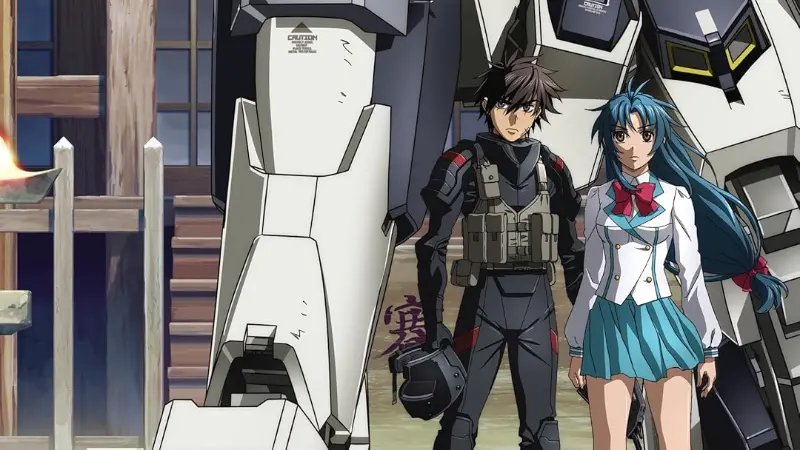
What makes this series so incredibly charming is its flawless execution of extreme tonal whiplash. One episode will feature a suffocating, hyper-realistic military extraction utilizing bipedal mechs called “Arm Slaves,” complete with tactical ammunition management and ECM radar jamming. The very next episode will focus entirely on the comedic gold of Sousuke—a boy raised exclusively in active warzones—treating a simple high school love letter like a highly sophisticated biological weapon, resulting in him blowing up his own locker with plastic explosives.
The mecha combat in this series is firmly rooted in the “Real Robot” subgenre. The Arm Slaves are not magical; they run out of fuel, their weapons overheat, and they require massive logistical support to drop into a combat zone. For a beginner looking to dip their toes into military sci-fi without committing to pure depression, the brilliant dynamic between Sousuke’s rigid military logic and Kaname’s grounded, civilian frustration makes Full Metal Panic! an iconic, easily digestible starting point.
SSSS.Gridman
If you grew up watching Power Rangers, Ultraman, or classic Godzilla films, SSSS.Gridman is a breathtaking, modernized homage to the entire Tokusatsu genre. Produced by Studio Trigger, the story begins when an amnesiac high schooler named Yuta Hibiki wakes up in a quiet, seemingly idyllic Japanese city. He soon discovers a rusted, digital “Hyper Agent” named Gridman living inside an old computer monitor. When massive, violently destructive kaiju suddenly appear to ravage the city, Yuta merges with Gridman, transforming into a towering, heavily armored hero to fight the monsters in traditional, city-crushing melee combat.
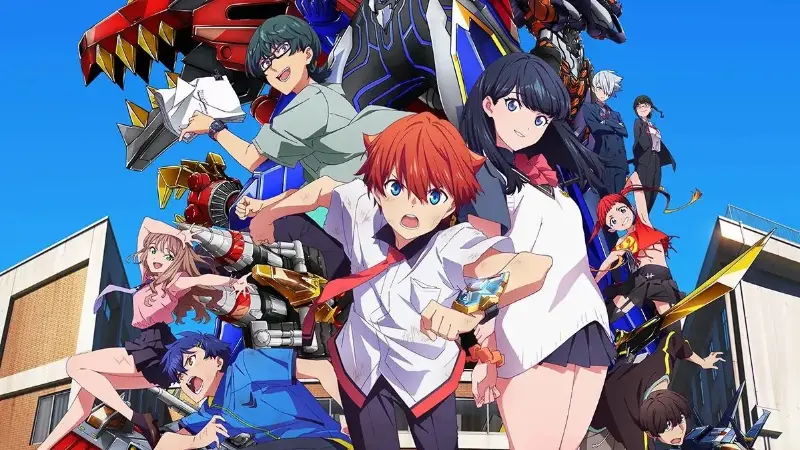
The genius of this 12-episode series is that the giant robot fights are effectively a smokescreen for a much darker, incredibly nuanced psychological thriller. Yuta quickly realizes that whenever a kaiju destroys a building or kills a classmate, the city magically resets the next morning, seamlessly erasing the victims from the collective memory of the populace. The anime slowly pivots from a monster-of-the-week action show into a deeply unsettling investigation into the nature of their simulated reality, focusing heavily on the emotional isolation of the villain creating the monsters.
Studio Trigger deliberately animates the combat sequences to mimic the physical weight of practical suit-mation. Gridman moves with the heavy, deliberate impact of a man wearing a massive rubber suit, delivering slow, earth-shattering dropkicks and laser grid beams. It is a visually spectacular, highly contained narrative that perfectly balances the nostalgic hype of classic Saturday morning cartoons with a profound commentary on depression and the toxic desire to completely isolate oneself from the real world.
Promare
Sometimes you do not want to watch a 24-episode political drama; sometimes you just want to inject two hours of pure, unadulterated adrenaline directly into your veins. Promare is a standalone, theatrical masterpiece from Studio Trigger that pushes the “Super Robot” genre to its absolute, hype-inducing limits. The film takes place in a futuristic world recovering from a catastrophic event where a portion of humanity mutated into the “Burnish”—a race of people capable of generating and controlling highly destructive, sentient flames.

The narrative revolves around the explosive collision of two completely opposite ideologies. Galo Thymos is a loud, hot-headed firefighter who pilots specialized anti-fire mechs for Burning Rescue, dedicated to stopping the mutants. Lio Fotia is the cold, calculated leader of Mad Burnish, fighting a desperate, violent terrorist campaign to prevent his oppressed people from being kidnapped and used as literal fuel cells by the corrupt planetary government. When they realize the true scope of the governor’s apocalyptic plans, their rivalry evolves into an alliance that quite literally breaks the laws of physics.
The visual direction of Promare is absolutely staggering. It utilizes a highly distinct, neon-drenched color palette dominated by vivid pinks, cybernetic blues, and blinding yellows. The mecha combat consists of hyper-kinetic, wildly exaggerated acrobatics set to a booming, vocal-heavy soundtrack by the legendary Hiroyuki Sawano. Because it is a standalone movie, the pacing never stops to breathe. It is an easily digestible, visually stunning spectacle that perfectly captures the unapologetic hype that makes the mecha genre so beloved.
Darling in the Franxx
Darling in the Franxx is arguably the most famous modern “gateway” mecha anime, largely propelled into the mainstream by the immense cultural impact of its female lead, Zero Two. The setting is bleak: humanity lives in massive, mobile fortress cities to hide from the Klaxosaurs, a race of giant, biomechanical subterranean monsters. The only defense against these creatures are the “Franxx”—highly advanced mechs that require the synchronized brainwaves of a male and female pair of child soldiers to operate.

The core of this anime is not actually the apocalyptic war; it is a heavy, highly explicit metaphor for puberty, intimacy, and the confusing transition into adulthood. The child soldiers are kept completely ignorant of human reproduction and emotional love by the authoritarian government. The act of piloting the Franxx forces them to confront deeply buried psychological insecurities, jealousy, and the raw vulnerability of trusting another human being. The dynamic between the failing pilot Hiro and the dangerous, horned hybrid Zero Two is an incredibly toxic, yet deeply compelling romance that anchors the first half of the series.
While the anime is notoriously criticized for its massively derailed, bizarre narrative shift in the final few episodes, the journey to get there is still phenomenally entertaining. The mecha designs are uniquely expressive, mimicking the physical traits of the female pilots, and the emotional drama between the squadmates hits incredibly hard. For beginners who prioritize character relationships, romance, and heavy emotional stakes over technical military jargon, this remains a highly effective, beautifully animated starting point.
Mobile Suit Gundam: The Witch from Mercury
If you want to experience the legendary Gundam franchise without spending months reading wikis about the Universal Century, Mobile Suit Gundam: The Witch from Mercury was precision-engineered specifically for you. Set in the completely independent “Ad Stella” timeline, the story shifts away from traditional trench warfare and places the protagonist, Suletta Mercury, in the Asticassia School of Technology. This elite academy is run entirely by the Benerit Group, a massive, hyper-capitalist military-industrial conglomerate that settles all corporate disputes through heavily regulated student mecha duels.
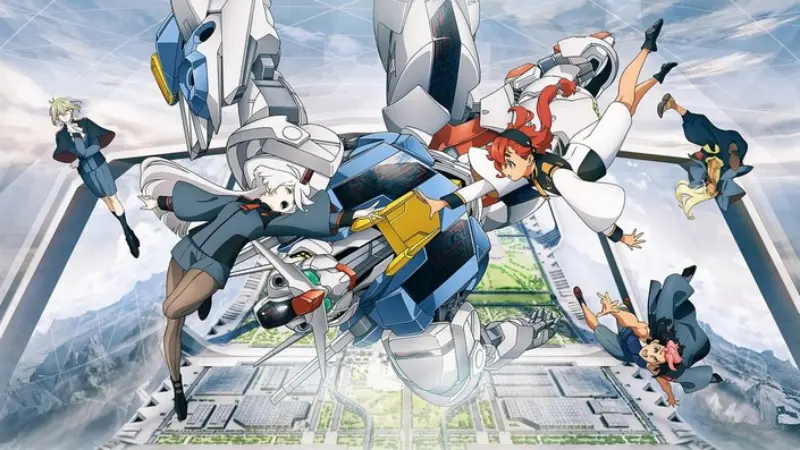
The initial premise feels deceptively similar to a high school drama. Suletta accidentally stumbles into a duel, wins, and inadvertently becomes the “holder” (fiancé) of Miorine Rembran, the rebellious daughter of the corporate president. However, the bright, colorful school setting is a deliberate facade. Beneath the surface, the anime is a terrifying exploration of corporate espionage, the exploitation of Earth-born laborers, and the sinister reality of Suletta’s machine, the Gundam Aerial. In this universe, the “Gund-Format” technology physically destroys the nervous systems of its pilots, making the machines literal curses.
The tactical combat in The Witch from Mercury is sleek, fast-paced, and heavily reliant on autonomous drone warfare (Gund-Bits). The character writing is absolutely phenomenal, focusing heavily on the horrifying extent of parental manipulation. Watching Suletta’s naive, stuttering personality slowly fracture as she realizes her mother has weaponized her as an obedient executioner is a masterclass in psychological horror. It perfectly updates the classic anti-war themes of the franchise for a modern, corporate-ruled era.
Mobile Suit Gundam: Iron-Blooded Orphans
Completely abandoning the clean laser rifles and political debates of other timelines, Mobile Suit Gundam: Iron-Blooded Orphans is a raw, unapologetically brutal descent into the mud. Set in the independent “Post Disaster” timeline, the story follows a Private Military Company (PMC) operating out of a poverty-stricken Mars. The PMC relies entirely on disposable child soldiers, referred to as “human debris,” to do their dying. Led by the charismatic Orga Itsuka and the dead-eyed, ruthlessly efficient pilot Mikazuki Augus, the boys launch a violent mutiny, take over the company, and form Tekkadan.
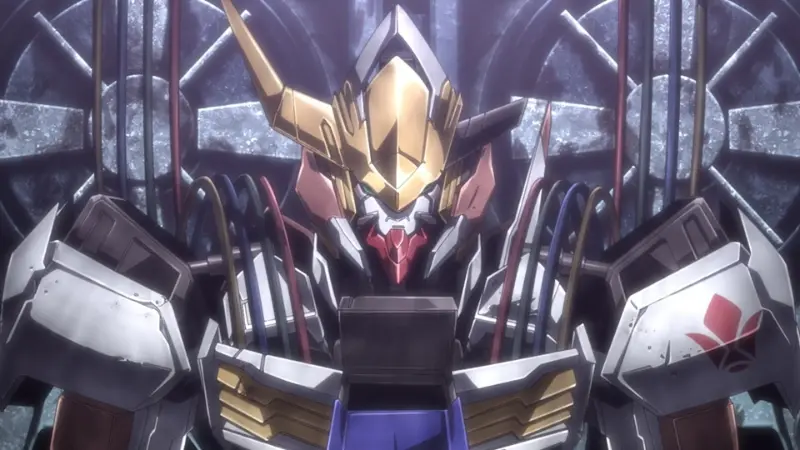
The mechanical combat in IBO is visceral and heavy. Because highly advanced “Nano-Laminate Armor” renders traditional beam weapons entirely useless, the mechs are forced to fight using massive, heavy physical weaponry. Mikazuki pilots the legendary Gundam Barbatos, a terrifying, demon-like relic from an ancient war. He tears opposing mobile suits apart using giant maces, chainsaws, and point-blank smoothbore cannons. You can physically feel the agonizing weight of the metal crushing the cockpits of enemy pilots.
The psychological core of this series is devastating. The child soldiers of Tekkadan are physically integrated into their machines via the “Alaya-Vijnana System”—a highly illegal, dangerous spinal implant that directly feeds spatial data into their brains. The anime does not shy away from the horrific consequences of this technology; the harder Mikazuki pushes the Barbatos to survive, the more the machine permanently cripples his biological body. It is a brilliant, gut-wrenching mafia-style story about desperate kids trying to carve out a place in a universe that actively wants them dead.
86 EIGHTY-SIX
86 EIGHTY-SIX is a modern, absolute masterpiece that utilizes the mecha genre to deliver a suffocating critique of institutional racism and the horrors of the military-industrial complex. The Republic of San Magnolia claims to fight a bloodless, automated war against the “Legion,” a terrifying swarm of autonomous, AI-driven spider mechs. The Republic tells its citizens that their defense drones are entirely unmanned. This is a massive, horrific lie. The drones, known as Juggernauts, are piloted by the “86”—a marginalized, heavily oppressed minority group stripped of their human rights and forced into literal concentration camps.
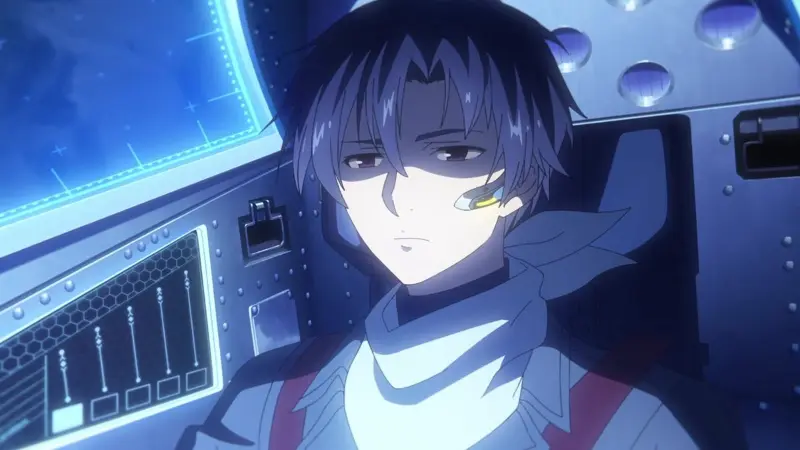
The story is told through a brilliant, dual-perspective narrative. We follow Vladilena Milizé, a naive, privileged military Handler operating from the safety of the capital, who desperately tries to treat the 86 like actual human beings via audio transmission. On the other end of the line is Shinei Nouzen, the battlefield commander known as the “Undertaker.” Shin carries a piece of every dead comrade with him and is cursed with the horrifying ability to hear the mechanical, wailing ghosts of the Legion constantly screaming in his mind.
The Juggernauts in this anime are intentionally designed to look like fragile, walking aluminum coffins. They are vastly inferior to the Legion’s heavy armor, forcing Shin’s squadron into desperate, highly tactical guerrilla warfare where casualties are a daily reality. The direction by Toshimasa Ishii is cinematic perfection, utilizing brilliant match-cuts to emphasize the sickening disparity between Lena’s luxurious, peaceful life and the muddy, blood-soaked trenches of the 86. It is an emotionally devastating, visually stunning triumph that will completely break you.
Neon Genesis Evangelion
If you want to understand the foundational DNA of modern anime, you have to confront Neon Genesis Evangelion. Created by Hideaki Anno in 1995, this series completely dismantled the “Super Robot” genre. The premise initially seems standard: giant, incomprehensible alien entities known as “Angels” are attacking a futuristic Tokyo, and the only defense are the Evangelions—massive, humanoid mechs. The cold, manipulative commander of the defense force, Gendo Ikari, summons his estranged 14-year-old son, Shinji, and essentially forces him into the cockpit.
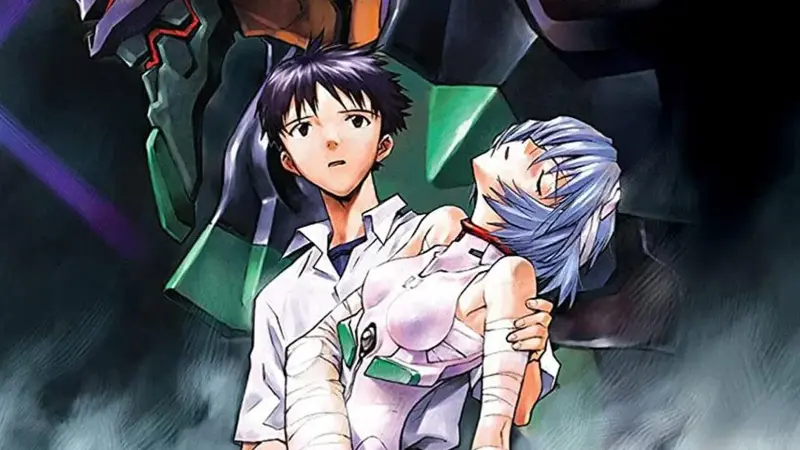
What makes Evangelion an untouchable classic is that it actively refuses to provide a power fantasy. Shinji does not want to be a hero; he is a severely depressed, traumatized child suffering from intense abandonment issues. The Eva units themselves are not actually robots; they are horrifying, biological cyborgs restrained by armor that constantly threaten to go “berserk” and cannibalize their enemies. The synchronization process forces the teenage pilots to physically feel the agonizing pain of their mechs having limbs torn off or armor pierced.
The final third of the series abandons traditional narrative structure entirely, diving into a surreal, avant-garde exploration of clinical depression, the Hedgehog’s Dilemma, and the inherent pain of human intimacy. It completely broke the minds of its audience, culminating in the apocalyptic, deeply disturbing masterpiece that is The End of Evangelion movie. While it is undoubtedly a heavy, suffocating watch, it is a completely standalone cultural monument that completely permanently altered the psychological depth of the medium.
Code Geass: Lelouch of the Rebellion
Code Geass: Lelouch of the Rebellion is an absolute masterclass in high-stakes strategy and theatrical pacing. In an alternate reality, the Holy Britannian Empire has conquered a third of the world, including Japan, stripping the nation of its culture and renaming it “Area 11.” The protagonist, Lelouch vi Britannia, is an exiled prince living in hiding who completely hates his father’s empire. His life changes when he acquires the “Geass”—a supernatural ocular power that forces anyone he makes eye contact with to obey a single, absolute command.
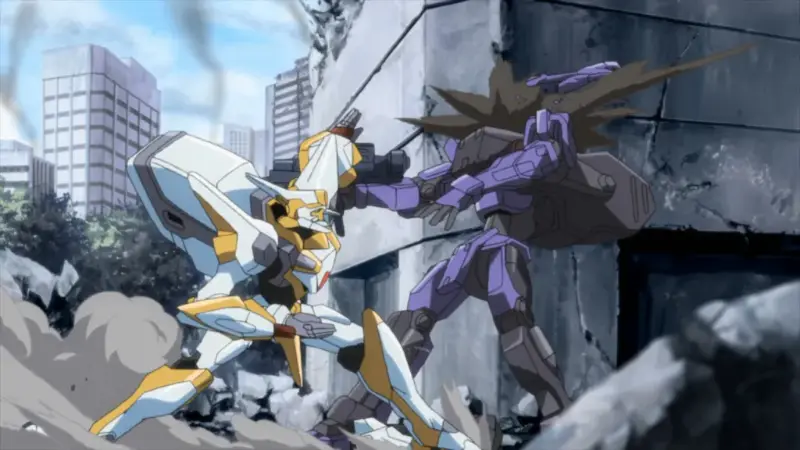
Adopting the masked persona of “Zero,” Lelouch builds a rebel army known as the Black Knights to completely dismantle the Britannian military from the inside out. The mecha in this series, known as “Knightmare Frames,” operate exactly like fast-paced, highly mobile chess pieces. Because Lelouch is physically weak, he almost never fights on the front lines. Instead, he orchestrates massive, multi-layered tactical traps, using geographical collapses, psychological manipulation, and his Geass to outsmart his enemies, including his childhood best friend, Suzaku Kururugi, who pilots the enemy’s most advanced prototype machine.
The pacing of this 50-episode epic is completely relentless, filled with massive betrayals, catastrophic mistakes, and brilliant tactical reveals. Lelouch is forced to make horrifying moral compromises, sacrificing innocent lives and his own humanity to achieve his utopian vision. The narrative perfectly balances the political warfare with the personal tragedies of its cast, leading directly into what is universally considered the single most flawless, satisfying, and legendary ending in anime history. It is the perfect binge-watch for beginners.
Tengen Toppa Gurren Lagann
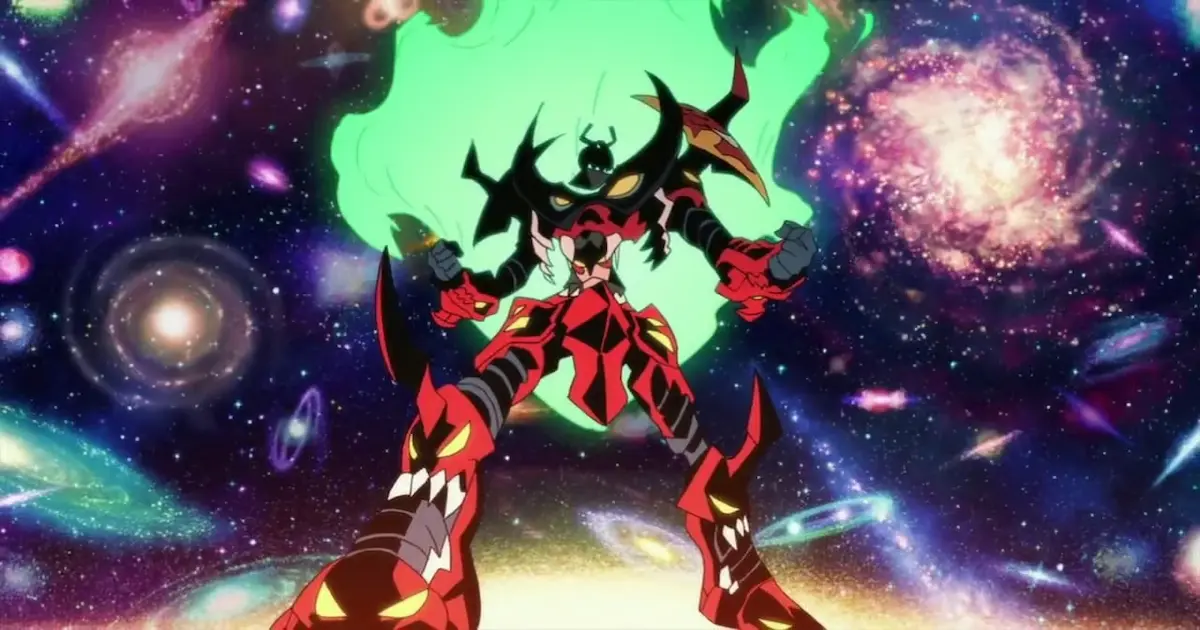
Sitting completely untouchable at the absolute summit of the genre is Tengen Toppa Gurren Lagann. Produced by Studio Gainax, this anime is the physical manifestation of pure, unadulterated willpower. The story begins in a dark, oppressive underground village where humanity has been forced to live in fear of frequent earthquakes. Simon, a timid, constantly terrified young digger, uncovers a small, face-shaped mech. With the help of his wildly charismatic, impossibly optimistic adoptive brother Kamina, they break through the ceiling of their subterranean prison to reclaim the surface world from the terrifying Beastmen.

The power scaling in this series is completely insane and fundamentally tied to its core philosophy. The mechs operate on “Spiral Energy”—the literal evolutionary power of a species refusing to be suppressed. The show violently rejects logic, math, and probability. If the enemy is bigger, Simon and Kamina simply generate enough willpower to combine their mech with the enemy’s machine. What starts as a gritty fight using small, rusty robots slowly escalates into mind-bending, cosmic warfare where the characters are literally throwing entire galaxies at each other like shurikens.
However, beneath the screaming, the explosions, and the massive drills, Gurren Lagann is a profoundly moving, emotional epic about grief, self-actualization, and carrying the legacy of the fallen. It takes a deeply traumatized, cowardly boy and believably transforms him into a man capable of shouldering the weight of the entire universe. It is loud, it is beautifully animated, and it delivers the highest concentration of hype ever recorded in the medium. It is the absolute pinnacle of what a mecha anime can achieve.
The Final Ejection
The mecha genre is infinitely more than just metal plating and laser beam particle effects. It is an incredibly powerful narrative lens used to dissect the absolute extremes of the human condition. Whether you are analyzing the brilliant, chess-like tactical warfare orchestrated by Lelouch vi Britannia, or completely breaking down over the devastating, muddy reality of the 86 Undertaker squadron, these standalone masterpieces prove that the most fascinating component of a giant robot is always the broken, deeply flawed human being sitting inside the cockpit.
If you have had your fill of post-apocalyptic wastelands and want to see how these exact same studios handle completely different sci-fi concepts, you should absolutely transition over to our Essentials Hub. You can cleanse your palate with some lighter classics, or dive back into the time travel epics that require the exact same level of deep, analytical focus to untangle.
But before you unbuckle your harness, we need to know which pilot earned your absolute respect. Would you rather have the unwavering optimism of Kamina covering your blind spot, or the cold, calculated efficiency of Mikazuki Augus leading the charge? Head directly over to the Smash or Pass global arcade right now. Cast your votes on your favorite mecha protagonists, rate their signature machines, and see where your survival instincts rank against the rest of the community.
Which cockpit would you actually step into?
Frequently Asked Questions
Why is the mecha genre so intimidating for new anime fans?
Do I need to watch previous Gundam series to understand Iron-Blooded Orphans or The Witch from Mercury?
Is Neon Genesis Evangelion technically a mecha anime?
Why do so many mecha anime focus on child soldiers?
What is the difference between 'Super Robot' and 'Real Robot' anime?
Rank Your Favorites
Take a break and play our interactive Smash or Pass games. Vote on your favorite anime characters, game characters, and idols to shape the global tier lists.



Join the Discussion (0)