Top 10 Anime Where the MC Starts Weak and Becomes Insanely Strong
There is a fundamental psychological flaw in the current landscape of modern action anime: the complete erasure of the journey. We are currently drowning in an ocean of instant-gratification power fantasies where the protagonist opens their eyes in episode one with a cosmic cheat code, a broken database glitch, or a genetic lineage that renders training entirely obsolete. While watching an omnipotent god effortlessly flatten a universe can offer a fleeting hit of cheap dopamine, it completely starves the narrative of stakes. True narrative weight cannot be inherited; it must be paid for in blood, sweat, and unyielding psychological torment.
The true magic of storytelling belongs to the underdogs. When we look closely at the most compelling narratives across the medium, the stories that permanently anchor themselves in our memories are those that honor the mechanics of progression. These are the series where the protagonist begins as an absolute nobody—physically frail, socially ostracized, or structurally locked out of the world’s power systems. Witnessing these characters claw their way out of the abyss, surviving grueling training arcs, and breaking their own bones just to climb an inch up the food chain transforms their eventual triumphs into monumental emotional payoffs. If you are looking to explore how these narrative frameworks operate across different genres, head over to our comprehensive Anime Tropes Hub to see how these structural masterclasses compare to other legendary storytelling devices.
If you are completely sick of characters who win simply because the script handed them a flawless destiny, you have found your ultimate sanctuary. It is time to honor the characters who had to grind, strategize, and suffer for every single ounce of their power. Here are the Top 10 best anime where the MC starts weak and becomes insanely strong.
Table of Contents
World Trigger (Osamu Mikumo)
To understand the true essence of starting from zero, one must look at World Trigger and its deeply unconventional protagonist, (Osamu Mikumo). In a world plagued by extra-dimensional invaders known as Neighbors, defense forces rely on “Trion”—an internal spiritual energy that acts as the fuel for advanced weaponry. While most shonen protagonists possess vast, latent reservoirs of cosmic energy waiting to be unlocked by an emotional outburst, Osamu is a statistical anomaly in the worst way possible. His Trion levels are drastically below average, a hard-coded biological limitation that can never be augmented by standard means.

The sheer brilliance of Osamu’s character progression is that the series never insults the viewer’s intelligence with a sudden mutation or a convenient plot contrivance to fix his weakness. If Osamu engages an elite combatant in a direct, one-on-one mechanical duel, he loses every single time. This structural barrier forces the narrative to pivot entirely toward high-level tactical squad warfare. Osamu becomes insanely strong not by outputting massive destructive energy, but by mastering spatial control, wire trap layouts, psychological manipulation, and precise team synchronization.
His growth is agonizingly slow, calculated, and profoundly intellectual. He studies combat telemetry, begs superior officers for training, and learns to weaponize his own frailty to bait arrogant opponents into tactical crossfires. Witnessing Osamu evolve from a helpless liability who gets obliterated in basic simulations into a highly respected squad commander who outmaneuvers military geniuses is an masterclass in progression. It is a striking reminder that true strength can be forged out of absolute physical insufficiency through the sheer force of a disciplined intellect.
Is It Wrong to Try to Pick Up Girls in a Dungeon? (Bell Cranel)
Affectionately known as Danmachi, Is It Wrong to Try to Pick Up Girls in a Dungeon? presents a literalized, masterfully executed framework for the weak-to-strong progression archetype. The city of Orario is built entirely around a colossal, monster-infested labyrinth, where adventurers receive divine blessings from gods to level up their physical attributes in a manner mirroring classic role-playing games. Enter (Bell Cranel), a frail, crying rookie adventurer who begins his journey as the solitary, laughingstock member of the incredibly destitute Hestia Familia, possessing absolutely zero combat prowess.
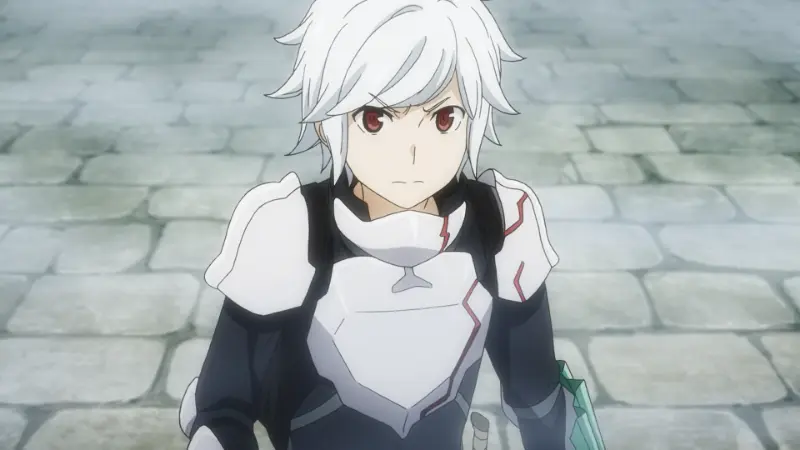
The turning point in Bell’s progression is defined by a deep psychological trauma: being effortlessly rescued from a lethal Minotaur by an elite, legendary swordswoman. The sheer weight of his own inadequacy triggers the awakening of a unique skill called “Liaris Freese,” which accelerates his physical and magical stat growth based on the absolute intensity of his emotional desire to catch up to his idol. While this sounds like a narrative shortcut, the anime masterfully preserves the stakes by forcing Bell to constantly battle threats that vastly outpace his rapidly climbing tier list.
Bell’s evolution is heavily centered on severe physical punishment. He spends hours in the dark, suffocating lower floors of the dungeon, breaking his blades, enduring fractures, and confronting terrifying psychological horrors. The pinnacle of his progression—his legendary, solo rematch against an evolved Minotaur—is universally celebrated as one of the greatest milestones in progression anime. It perfectly illustrates the transition from a terrified child into an absolute vanguard of hope, showing that accelerated growth still demands an ungodly amount of individual grit.
The Rising of the Shield Hero (Naofumi Iwatani)
The Rising of the Shield Hero approaches the zero-to-hero structure by combining mechanical restriction with profound psychological alienation. Summoned into a parallel world alongside three other legendary heroes, (Naofumi Iwatani) is handed the Legendary Shield—a weapon entirely incapable of outputting a single point of direct offensive damage. To make matters worse, within twenty-four hours of arrival, Naofumi is framed, stripped of his dignity, and cast out into a hostile kingdom as a despised pariah, forced to survive with absolutely no institutional support or offensive capabilities.

Because the system fundamentally denies him the ability to swing a sword or cast offensive magic, Naofumi’s progression becomes an absolute masterclass in gritty, meticulous resource management. He treats his survival like a brutal economic simulation: gathering monster hides, studying herbalism to craft medicine, and feeding every scrap of biological matter to his shield to unlock hyper-specific defensive utility trees. His strength scales entirely through adaptation, learning to turn defensive concepts like counter-attacks, status-inflicting shields, and environmental positioning into a lethal, asymmetric fighting style.
The psychological weight of his evolution is what makes his scaling so compelling. Naofumi is operating entirely on pragmatism, completely detached from the idealistic heroism of his peers. When he eventually unlocks the forbidden “Wrath Shield,” his power surges not from a righteous awakening, but from the dark, volatile amplification of his internalized trauma and bitterness. Watching him slowly transform from a broken, penniless outcast into an unstoppable, strategic powerhouse who single-handedly carries an ungrateful kingdom is a profoundly satisfying journey through systemic adversity.
Parasyte: The Maxim (Shinichi Izumi)
If you want to witness a weak character transform through a deeply unsettling, body-horror paradigm, Parasyte: The Maxim delivers a visceral masterclass. (Shinichi Izumi) begins his narrative arc as a fundamentally timid, hyper-sensitive high school student who trembles at the sight of insects. His peaceful, mundane life is shattered when an alien parasite attempts to burrow into his brain, but is forced to settle for colonizing his right arm instead. This creature, named Migi, introduces a chilling, hyper-logical alien dynamic into Shinichi’s fragile psychology.

In the initial stages of the narrative, Shinichi remains a weak, reactionary bystander, entirely dependent on Migi’s apex predator biology to survive attacks from other, fully integrated parasites. The true evolutionary shift occurs mid-way through the series following a horrific, fatal injury. To save Shinichi’s life, Migi disperses thirty percent of his own cellular composition throughout Shinichi’s entire circulatory system. This catastrophic physiological fusion permanently mutates Shinichi, granting him superhuman reflexes, heightened sensory perception, and immense raw physical strength.
However, the narrative treats this massive power upgrade not as a glorious triumph, but as a deeply tragic psychological crisis. As Shinichi becomes physically capable of tearing through monstrous predators with his bare hands, he discovers that his emotional capacity is rapidly freezing over. He stops crying, analyzes human deaths with cold, mathematical distance, and begins viewing the world through the detached lens of an apex hunter. His progression is a brilliant, terrifying exploration of the ultimate trade-off: losing your human vulnerability in order to obtain the strength required to protect it.
Demon Slayer (Tanjiro Kamado)
Demon Slayer (Kimetsu no Yaiba) owes its meteoric global success to many factors, but at its emotional center lies a beautifully traditional, unyielding approach to the zero-to-hero trope. (Tanjiro Kamado) is a peaceful, soft-hearted mountain boy whose entire life is violently dismantled when his family is slaughtered by the demon progenitor, leaving his sister mutated into a feral monster. When he vows to join the elite Demon Slayer Corps, he possesses absolutely zero specialized combat training, relying entirely on a heightened sense of smell and a frail, unconditioned body.

The series refuses to rush his entry into the supernatural battlefield. Instead, it forces Tanjiro to undergo two full years of brutal, exhausting physical conditioning on Mt. Sagiri. The training is depicted as a harrowing endurance test: running down a treacherous mountain littered with lethal traps in oxygen-deprived air, swinging a katana thousands of times a day until his hands bleed, and learning to manipulate his own respiratory system through Total Concentration Breathing. His ultimate graduation exam—slicing a massive, solid boulder in half with a sword—is a brilliant narrative anchor that demonstrates his strength is a direct product of mechanical repetition and endurance.
Even after joining the corps, Tanjiro’s scaling remains refreshingly grounded within the internal logic of the universe. He doesn’t suddenly become invincible; every single victory against a high-ranking demon requires him to suffer severe physical setbacks, including broken ribs, ruptured lungs, and absolute muscular exhaustion. His progression is a testament to kinetic martial mastery, where unlocking superior techniques like the Hinokami Kagura demands a steep physical toll, showing that true power is built frame by painstaking frame through unmitigated dedication.
My Hero Academia (Izuku Midoriya)
In a superhero society where eighty percent of the global population possesses a specialized superpower known as a Quirk, My Hero Academia introduces us to (Izuku Midoriya)—a boy born into the tragic, heavily marginalized minority of the completely Quirkless. Ostracized by his peers and told by society that his dreams are an impossibility, Midoriya’s early life is defined by absolute powerlessness. His only weapon is a obsessive, analytical mind that documents the tactical strengths and weaknesses of other heroes in handwritten notebooks.
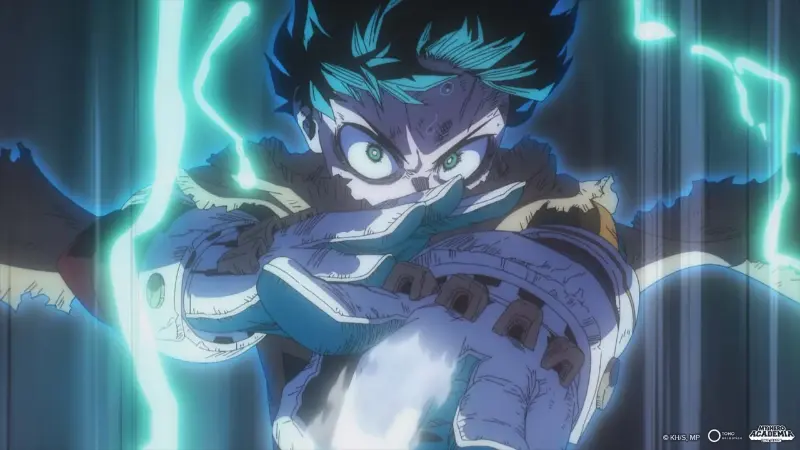
The narrative brilliance of Midoriya’s acquisition of the legendary quirk “One For All” is that it acts not as an instant blessing, but as a literal physical curse. Because his body is a standard, unconditioned human vessel, activating the inherited, stockpiled kinetic energy instantly explodes his own muscles and shatters his bones. The anime brilliantly turns his progression into a complex engineering problem: how do you deploy a weapon that destroys the user upon firing? His early fights are harrowing exercises in self-mutilation, where victory requires him to sacrifice his own limbs.
Midoriya’s evolution is defined by a slow, highly calculated calibration of his output ceilings. He undergoes ten months of grueling physical labor just to clean a trash-strewn beach to handle the base power, and later learns to distribute the energy evenly across his entire body at manageable percentages through his “Full Cowl” technique. His growth is highly technical, shifting his combat style from mimicking his mentor to developing an independent, high-speed kick-based system. Witnessing this anxious, powerless boy systematically reconstruct his body and mind to become a pillar of unstoppable force is a masterful execution of modern progression fantasy.
Black Clover (Asta)
Operating within a high-fantasy universe where a person’s entire societal standing, political power, and human worth are dictated by their internal magical density, Black Clover presents the ultimate underdog paradigm. (Asta) is an orphan born with absolutely zero mana—a biological impossibility that makes him a complete anomaly in the Clover Kingdom. While every other teenager effortlessly casts elemental spells, flies on brooms, and manipulates reality, Asta is left completely unable to spark a single ember of magic.
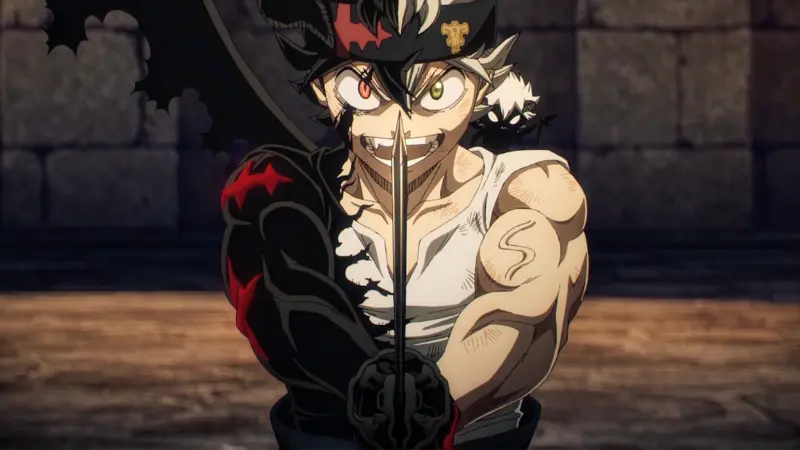
To compensate for this absolute lack of supernatural energy, Asta commits himself to a psychotic, daily routine of raw physical conditioning. He does thousands of handstand push-ups, runs through wilderness paths with massive weights, and drinks specialized muscle-building elixirs. When he eventually receives a mysterious, five-clover grimoire containing heavy, rusted swords that nullify magic, the narrative makes an incredibly sharp point: these swords are useless to anyone else because they constantly drain mana and require an ungodly amount of raw muscular strength just to lift.
Asta’s progression is built entirely on the concept of hard counter-strategy. He becomes an absolute force of nature by using his hyper-conditioned physical speed and anti-magic weaponry to violently disrupt the complex, arrogant spellcasting of high-born nobles. He doesn’t win because he has more magic; he wins because he has trained his body to withstand immense physical recoil while deleting his opponent’s advantages. His journey from a screaming, magicless commoner into a legendary magical knight is a beautifully high-energy celebration of pure, unadulterated work ethic overcoming systemic birthrights.
Tokyo Ghoul (Ken Kaneki)
Tokyo Ghoul takes the progression trope, completely strips it of any shonen optimism, and drags it through a pitch-black corridor of psychological trauma. (Ken Kaneki) begins his journey as an introverted, deeply empathetic university student who loves literature and actively avoids conflict. Following a horrific encounter with a predatory creature known as a Ghoul, Kaneki receives an emergency organ transplant that mutates him into a half-ghoul—trapping his psyche between the human world and a monstrous underworld that survives solely on human flesh.

For the entire first half of the narrative, Kaneki remains a painfully weak, deeply frustrated pacifist. He actively refuses to consume flesh, cries in the face of violence, and constantly allows himself to be beaten, tortured, and manipulated by predatory factions. He views his new power as a curse, clinging desperately to his human morals. The absolute genius of his progression occurs during his legendary, ten-day torture session at the hands of a psychotic ghoul named Yamori.
The unbearable physical and psychological agony causes Kaneki’s mind to violently fracture. He undergoes a radical personality shift, symbolized by his hair turning stark white, as he finally accepts his predatory ghoul nature and abandons his self-destructive pacifism. His sudden transition into an absolute beast who effortlessly breaks his torturer’s bones while counting backward from one thousand is an iconic, deeply chilling milestone. It proves that scaling power can sometimes cost an absolute, irreversible piece of your own soul.
Hajime no Ippo (Ippo Makunouchi)
Sitting confidently at the absolute pinnacle of realistic progression is Hajime no Ippo. (Ippo Makunouchi) starts his narrative as a timid, softly spoken high school kid who spends all his free time helping his mother run their fishing boat business. Because of his quiet demeanor and constant scent of fish bait, he is a primary target for violent school delinquents, who regularly beat him unconscious under pedestrian bridges. He possesses zero self-esteem, zero athletic background, and an absolute terror of confrontation.
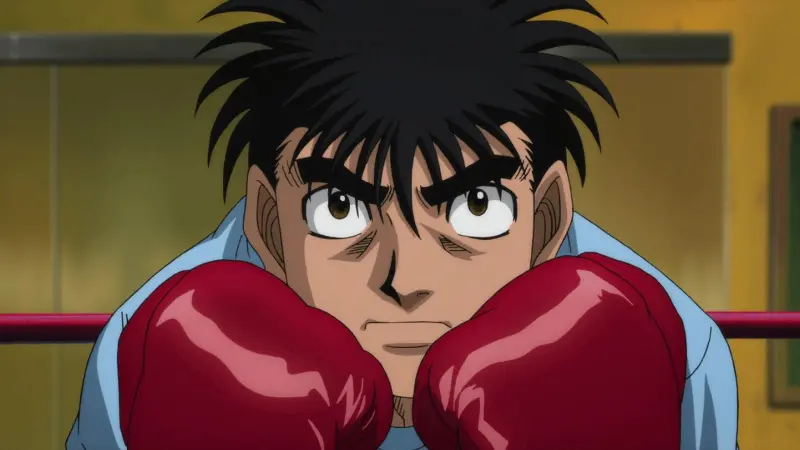
His entry into the world of professional boxing is a slow, beautifully detailed athletic grind. The anime spends hours documenting the unglamorous reality of the sport: the thousands of miles of solitary roadwork at 5 AM, the grueling shadowboxing routines, the core-shattering medicine ball training, and the precise mechanical science behind shifting your weight to generate kinetic force. Ippo’s power scales not through supernatural awakening, but through the incredible musculature naturally developed by lifting heavy fishing equipment combined with a relentless, disciplined training ethic at the Kamogawa Gym.
What makes Ippo’s progression so profoundly moving is his evolving psychological fortitude. He doesn’t become a cocky, loudmouthed champion; he remains deeply humble, stepping into the ring not out of malice, but out of a desperate, philosophical quest to discover what it truly means to be “strong.” Every single fight is a tactical and physical war of attrition that demands he survive severe internal bleeding, fractured ribs, and intense mental fatigue. Watching this bullied kid master complex boxing mechanics like the Peek-a-Boo style and the legendary Dempsey Roll is a masterclass in realistic character growth.
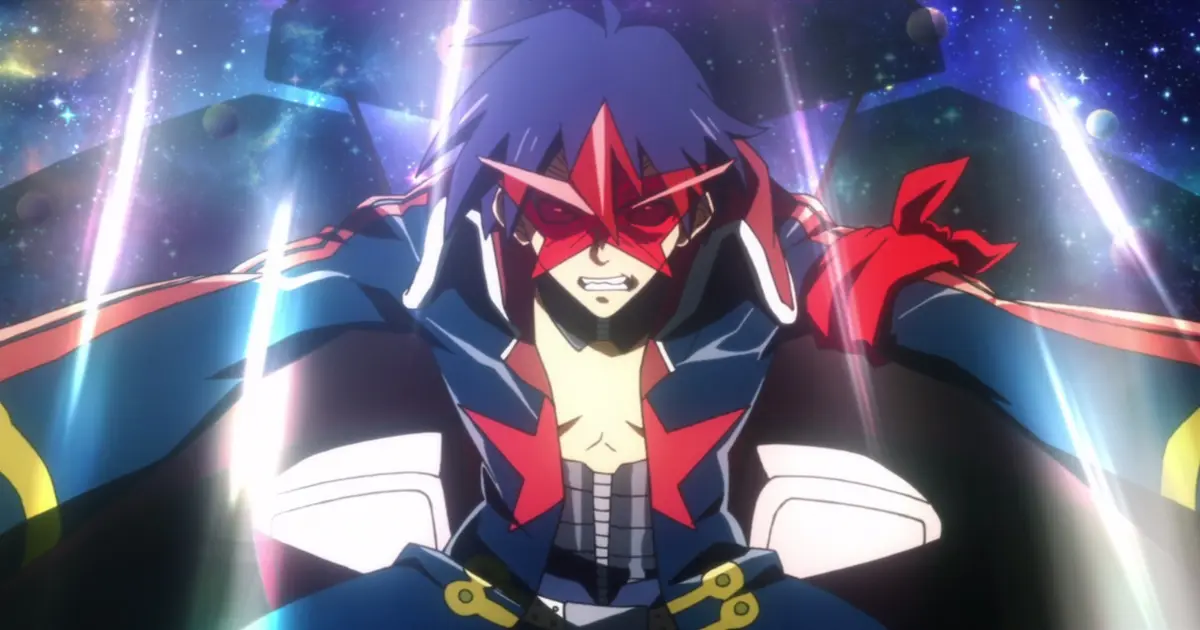
Tengen Toppa Gurren Lagann (Simon)
Sitting uncontested at the absolute peak of the zero-to-hero narrative architecture is Tengen Toppa Gurren Lagann. The series introduces us to (Simon), a young, dirty orphan living in a claustrophobic underground village, entirely unaware that a surface world exists. Simon is completely devoid of charisma, confidence, or ambition. He spends his days blindly digging tunnels with a handheld drill, heavily overshadowed by his charismatic older brother figure, Kamina. He is a character defined by his desire to hide from danger, viewed by his village as a strange, disposable utility worker.
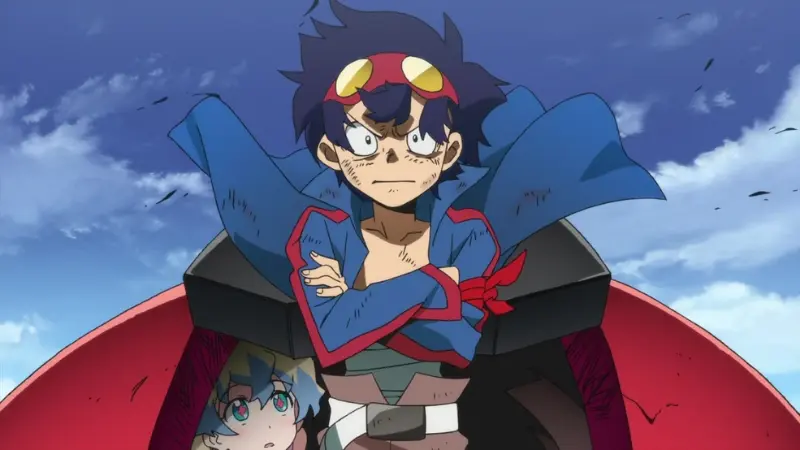
The progression of this anime is legendary because it operates on a scale of exponential expansion that has never been matched. The core power system, Spiral Energy, is a literal manifestation of the human evolutionary drive, fueled entirely by an individual’s willpower to break through systemic limitations. Simon’s growth is directly tied to his psychological maturation. Following a monumental, mid-series emotional trauma that plunges him into an absolute depressive abyss, Simon is forced to step out of Kamina’s shadow and declare his own identity: “I am Simon the Digger!”
From that exact psychological breakthrough, Simon’s power scaling accelerates past the boundaries of sanity. The narrative visualizes his growth through the changing scale of his mecha: starting with a small, head-sized robot dug out of the dirt, scaling up to a city-sized fortress, expanding to a moon-sized battleship, and culminating in a universal titan that literally throws entire galaxies like shuriken. Simon reaches the pinnacle of strength not by acquiring a convenient power cheat, but by turning his handheld drill into a universal metaphor for breaking through every ceiling in existence. It is the absolute gold standard of progression storytelling.
The Triumph of the Hard-Earned Grind
The enduring brilliance of watching a character climb from the absolute bottom of the food chain is that it respects the audience’s emotional investment. We don’t just cheer for their ultimate victories because the animation looks flashy; we cheer because we actively remember the episodes where they were coughing up blood on a gym floor, breaking their fingers against stone walls, or weeping in a dark alleyway over their own helplessness. Whether it is Ippo throwing endless left jabs into a heavy bag or Simon transforming a tiny hand drill into a multiversal force, these journeys prove that true narrative resonance requires a dedication to the grind.
If you are looking to pivot away from characters who have to suffer through physical training arcs and instead want to explore stories where the main characters rely purely on overwhelming intellectual dominance from the very start, check out our guide on the Top 10 Anime with Genius Main Characters. Or, if you want to make your voice heard and declare which underdog had the absolute greatest training arc in the medium, head over to the Smash Senpai main hub and cast your vote in our live community polls!
Which zero-to-hero protagonist had the most earned power progression?
Frequently Asked Questions
What defines a true Zero to Hero anime?
Why is World Trigger considered the ultimate underdog anime?
How does Hajime no Ippo differ from supernatural progression anime?
What is the difference between an Overpowered MC and a Zero to Hero MC?
Is Tokyo Ghoul considered a progression anime?
Rank Your Favorites
Take a break and play our interactive Smash or Pass games. Vote on your favorite anime characters, game characters, and idols to shape the global tier lists.




Join the Discussion (0)