Top 10 Best Martial Arts Anime for Combat
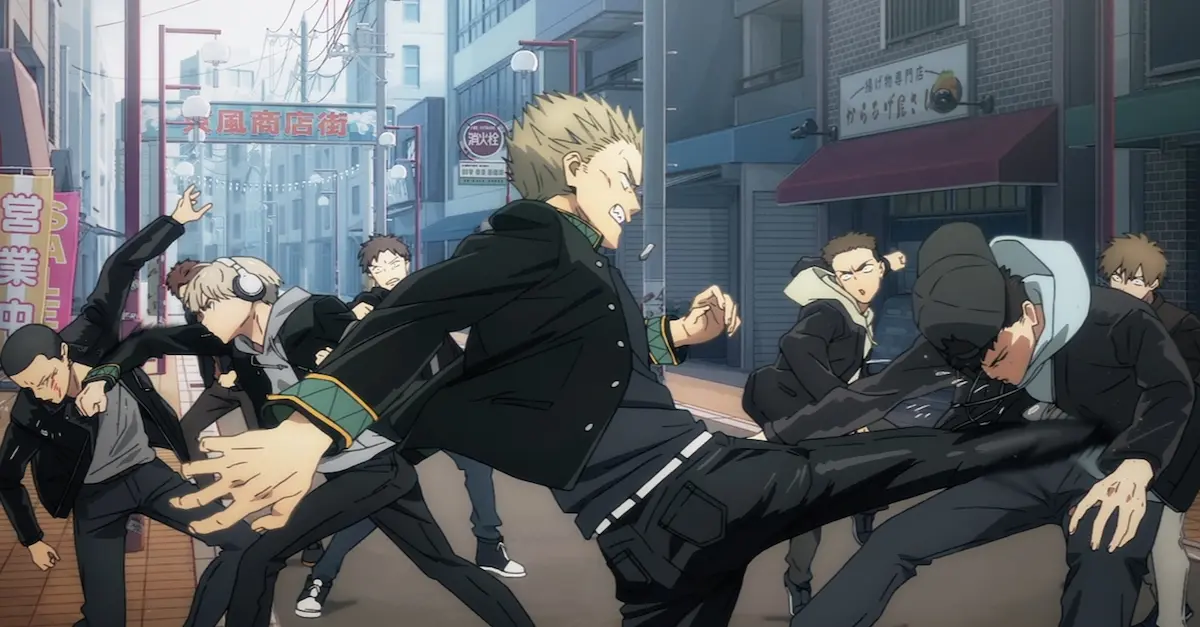
When you strip away the massive energy blasts, the enchanted weaponry, and the apocalyptic magic systems, what is left? You are left with the absolute, raw baseline of human conflict: two people, a confined space, and the sheer mechanical force of a well-placed strike. The martial arts genre is the beating heart of combat animation. It does not rely on flashy superpowers to generate tension; it relies on the visceral, bone-crunching reality of physical limitations, grueling discipline, and the agonizing weight of hand-to-hand combat.
If you have explored our Action Hub, you know that a top-tier fight sequence is built on rhythm, spatial awareness, and psychological pressure. Martial arts anime distill these elements down to a microscopic level. Every single movement matters. A shift in a fighter’s center of gravity, a slightly dropped guard, or the pivot of a lead foot can instantly determine the difference between a triumphant knockout and a catastrophic, hospitalizing defeat. These stories force their protagonists into grueling crucibles, testing not just their muscular endurance, but the unbreakable philosophies that drive their fists forward.
From hyper-realistic street brawls fueled by modern internet culture to legendary, blood-soaked underground arenas where corporate billionaires gamble on human lives, these shows deliver the purest adrenaline in the medium. Tape your wrists and step into the ring—here are the Top 10 best martial arts anime for elite hand-to-hand combat.
Table of Contents
Tenjho Tenge
Dripping with the unapologetic, edgy aesthetic of the early 2000s, Tenjho Tenge is a chaotic, testosterone-fueled introduction to the high school martial arts genre. The premise kicks off when two arrogant street brawlers, Soichiro Nagi and Bob Makihara, transfer to Toudou Academy—a school specifically built to educate and train the next generation of elite martial artists. Believing they can easily subjugate the student body through sheer physical intimidation, they are immediately, violently humbled by the school’s upperclassmen, thrusting them into a brutal hierarchy of martial arts clubs.

The combat in Tenjho Tenge straddles a strange, highly entertaining line between grounded street fighting and supernatural mysticism. Initially, the fights are heavy, gritty brawls involving knee strikes, grapples, and raw boxing. However, as the series progresses and the lore deepens, it begins heavily incorporating ‘Ki’—spiritual energy that allows characters to execute devastating, superhuman techniques. This transition from bloody knuckle-fights to energy-infused martial arts creates a rapidly escalating sense of scale.
While the narrative can occasionally lose focus in its complex, multi-generational flashback arcs, the raw kinetic execution of the fights remains deeply satisfying. The animation captures the weight of physical impact brilliantly, emphasizing muscle tension and bone-jarring follow-throughs. It perfectly encapsulates the trope of arrogant thugs being forced to undergo rigorous, traditional martial arts training just to survive a school where every hallway encounter is a potential fight to the death.
Tekken: Bloodline
Video game adaptations have a notoriously terrible track record, but Tekken: Bloodline shatters the curse by delivering a laser-focused, aggressively paced martial arts masterclass. Clocking in at a tight 6 episodes, the series serves as the definitive origin story for Jin Kazama. After watching his mother get murdered by an ancient, demonic entity, Jin seeks out his estranged grandfather, the ruthless billionaire martial artist Heihachi Mishima. Heihachi agrees to train Jin, completely tearing down his foundational Kazama-style pacifism to rebuild him into an instrument of pure violence.
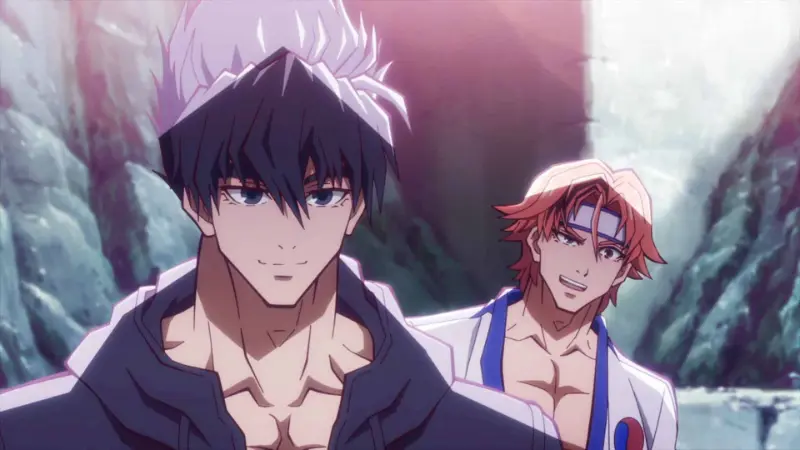
The psychological warfare in this anime is just as brutal as the physical combat. Heihachi’s training methods are borderline torture, designed to break Jin’s empathy and awaken the dark, violent instincts of the Mishima bloodline. The transition from Jin’s fluid, defensive martial arts to the heavy, aggressive, bone-breaking karate of the Mishima style is visualized brilliantly. You can physically see Jin’s morality eroding with every heavy counter-punch he learns to throw under his grandfather’s sadistic tutelage.
Mechanically, the fight choreography is a massive love letter to the fighting game community. The studio seamlessly integrated actual frame-data logic and signature combos from the games into the animated sequences. When Jin executes a Mishima flash punch combo, or Hwoarang unleashes a flurry of kinetic Taekwondo kicks, the screen erupts with heavy impact sparks that perfectly mimic the arcade experience. It is a tight, violent, and highly satisfying tournament arc that wastes absolutely zero time.
Viral Hit
Viral Hit is a phenomenal, highly modernized take on the martial arts genre that completely grounds its combat in the reality of the internet age. Hobin Yoo is a scrawny, severely bullied high school student who accidentally goes viral after a pathetic, messy fight with a classmate gets uploaded online. Realizing he can monetize the views to pay for his mother’s medical bills, Hobin starts a ‘street fighting’ channel. The only problem is that he has absolutely zero physical strength and no formal training.
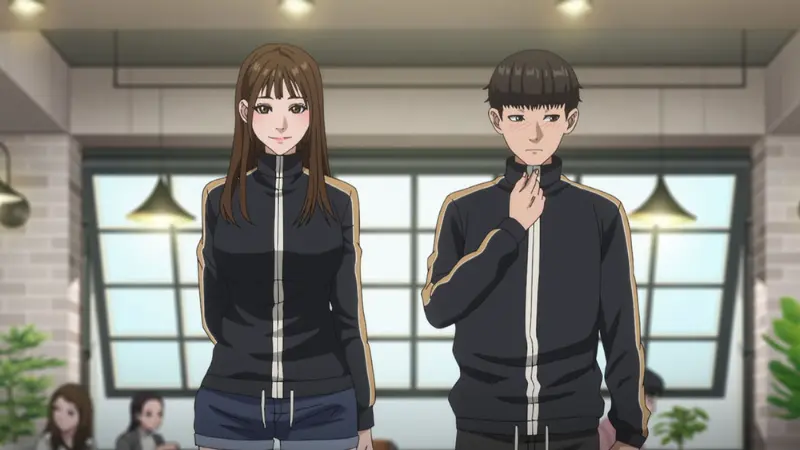
This anime completely rejects the trope of sudden magical power-ups. Instead, Hobin relies on a mysterious, nameless YouTube channel that teaches highly specific, situational martial arts techniques. Before every fight, Hobin meticulously researches his opponent’s style—whether it is an amateur boxer, a Taekwondo practitioner, or an MMA heavyweight—and grinds out specific counters. He learns the brutal reality of calf kicks to destroy an opponent’s mobility, the mechanics of a rear-naked choke, and how to weaponize his own pain tolerance.
The strategic tension in Viral Hit is fantastic because Hobin is almost always physically outclassed. He cannot trade blows; he has to fight dirty, manipulate his environment, and execute flawless technique to survive. The series provides an incredibly educational, surprisingly accurate breakdown of modern mixed martial arts, showing exactly how technique can overcome raw muscle mass in a gritty, high-stakes street fight.
Wind Breaker
Breathing fresh, high-octane life into the delinquent brawler genre, Wind Breaker delivers some of the slickest, most kinetic street fighting choreography of the modern era. Haruka Sakura is an aggressive, socially isolated teenager who transfers to Furin High School—an institution notorious for housing the absolute worst, most violent degenerates in the city. His goal is simple: fight his way to the top of the food chain to prove his worth. However, he quickly realizes that the ‘gang’ running the school, Bofurin, operates more like a highly disciplined martial arts security force that protects the local town.

The combat in this series is an absolute joy to watch because every single character possesses a highly distinct, visually expressive fighting style. Sakura relies on extreme acrobatics, utilizing parkour and aggressive aerial kicks to overwhelm his opponents. Meanwhile, other squad leaders utilize foundational Judo throws, precision boxing, or overwhelming, tank-like grappling. The studio masterfully directs these group brawls, tracking the chaos with sweeping camera angles that give every punch a massive sense of momentum.
Beneath the shattered concrete and bloody noses, Wind Breaker is a deeply thematic exploration of what a fist is actually meant for. It challenges the protagonist’s toxic, isolationist worldview, teaching him that throwing a punch to assert dominance is ultimately hollow. The true weight of a martial artist comes from planting your feet and fighting to protect the people behind you, creating a phenomenal balance of hype-inducing action and genuine emotional payoff.
Garouden: The Way of the Lone Wolf
If you want a martial arts anime that completely abandons flashy aesthetics for the grim, suffocating reality of underground combat, Garouden: The Way of the Lone Wolf is an absolute must-watch. Based on the novels by Baku Yumemakura (who also created the Baki universe), the series follows Juzou Fujimaki, a stoic, deeply scarred martial artist fleeing from a dark past. To survive on the run, he enters an illicit, high-stakes underground fighting tournament where the only rules are to break your opponent before they break you.
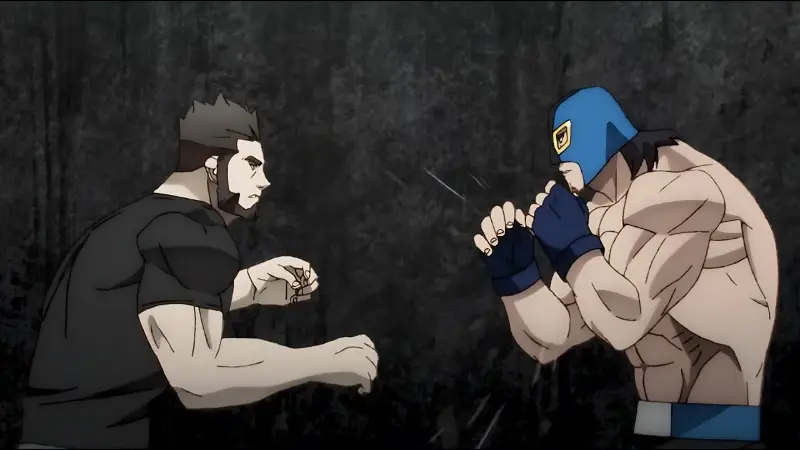
What separates Garouden from other tournament fighters is its hyper-fixation on the terrifying mechanics of submission grappling and catch wrestling. The fights do not end with a spectacular, screaming energy blast; they end when a joint is hyper-extended past its breaking point, or when a fighter’s oxygen is slowly, agonizingly choked out. The choreography meticulously details the micro-adjustments of grip-fighting, weight distribution, and the horrifying sound of ligaments tearing under pressure.
The atmosphere of the series is heavy, drenched in sweat, blood, and cigar smoke. The combatants are not noble heroes; they are desperate, violent men who have dedicated their entire lives to inflicting pain. The psychological tension comes from watching Juzou, a man attempting to maintain a shred of his humanity, being forced to unleash his absolute darkest, most violent instincts just to survive the merciless, uncompromising reality of the underground arena.
The God of High School
Before it eventually scales into massive, apocalyptic supernatural warfare, the first half of The God of High School delivers arguably the greatest pure martial arts animation ever committed to the screen. Directed by Sunghoo Park (the visionary behind Jujutsu Kaisen Season 1) at Studio MAPPA, the anime kicks off with a massive, country-wide tournament to determine the strongest high school fighter. The protagonist, Mori Jin, enters the fray utilizing ‘Renewal Taekwondo,’ a highly destructive, specialized form of the Korean martial art.
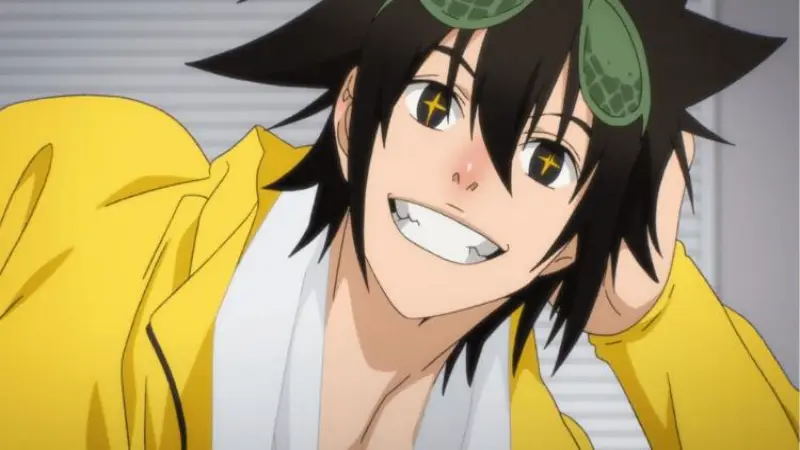
The hand-to-hand combat in this series is mind-bogglingly fluid. MAPPA utilized motion capture technology heavily inspired by real martial artists to animate the core fights. The result is a level of kinetic momentum that is completely unmatched. When Han Daewi throws a Kyokushin Karate straight punch, you feel the entire weight of his hips rotating into the strike. When Yoo Mira executes a Moonlight Sword technique, the footwork is precise and grounded in actual kendo mechanics.
The camera work during these arena battles is completely unchained, spinning 360 degrees around the fighters to track the blinding speed of their exchanges. While the narrative later pivots heavily into ‘Charyeok’ (supernatural borrowed power from gods), the foundational martial arts choreography remains the absolute heart of the series. It is a visual spectacle that treats traditional fighting styles with an incredible amount of reverence and hyper-stylized hype.
Kenichi: The Mightiest Disciple
If you want a series that acts as a comprehensive encyclopedia of different martial arts philosophies, Kenichi: The Mightiest Disciple is the definitive journey. Kenichi Shirahama starts the series as the ultimate victim—weak, cowardly, and constantly bullied. His life changes when he stumbles into the Ryozanpaku Dojo, a home filled with the absolute strongest, most terrifying martial arts grandmasters on the planet. To survive a looming gang war, Kenichi is forced to become their collective disciple.
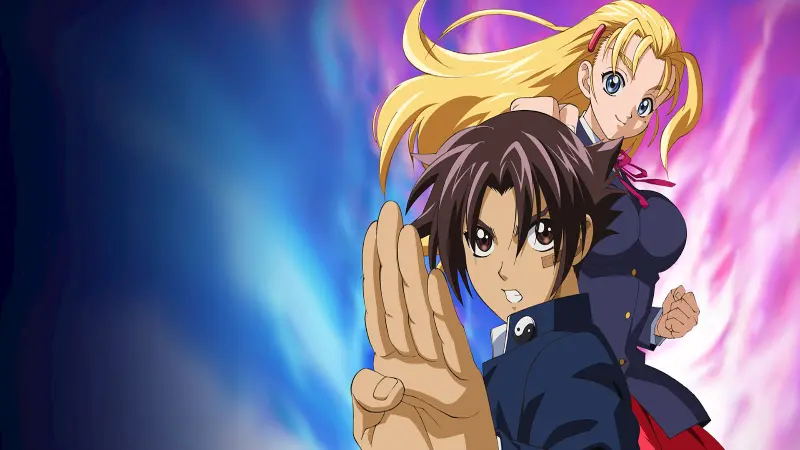
The brilliance of this anime lies in its grueling, step-by-step training arcs. Kenichi does not receive a magical power-up; he suffers through literal hell. The masters break down the exact mechanics of Muay Thai, Chinese Kenpo, Jujutsu, and Karate. The show goes into extreme analytical depth, explaining how a Muay Thai fighter utilizes their shins like baseball bats, or how Jujutsu uses an opponent’s center of gravity against them. Every single technique Kenichi learns is earned through agonizing blood, sweat, and repetition.
Because Kenichi is completely devoid of natural talent, his combat style becomes a highly unorthodox, defensive amalgamation of all these different disciplines. When he finally steps into the ring against rival gang members, the payoff is incredibly satisfying. He wins not by being the fastest or the strongest, but by executing foundational basics flawlessly under extreme pressure. It is a brilliant, zero-fluff dissection of what it actually takes to forge a human weapon from scratch.
Fist of the North Star
Standing as the absolute godfather of the battle shonen genre, Fist of the North Star laid the violent, muscular foundation that nearly every modern fighting anime is built upon. Set in a bleak, Mad Max-style post-apocalyptic wasteland where water is scarce and warlords rule through sheer brutality, the story follows Kenshiro. He is the sole successor of the Hokuto Shinken (Divine Fist of the North Star), an ancient, terrifying martial art designed for absolute assassination.
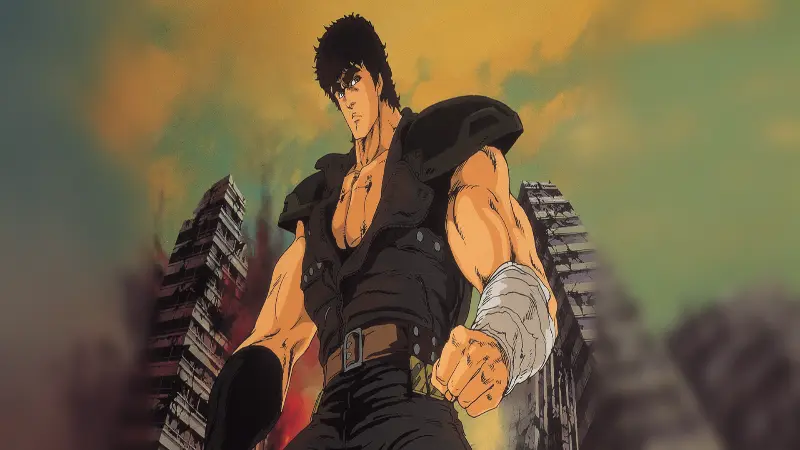
The combat mechanics of Hokuto Shinken are legendary. Instead of relying on blunt force trauma, Kenshiro strikes the 708 hidden pressure points (tsubo) on the human body. This triggers horrific, explosive internal destruction, causing his enemies’ bodies to rapidly mutate and violently explode from the inside out just seconds after being hit. The sheer masculine brutality of these sequences, punctuated by Kenshiro’s iconic catchphrase, “You are already dead,” cemented the series in anime history.
However, beneath the extreme gore and exploding heads, the narrative is an incredibly heavy, tragic martial arts opera. Kenshiro does not fight for glory or sport; he fights an endless, sorrowful crusade to protect the weak and confront his ambitious, tyrannical adopted brothers. The series explores the heavy philosophical weight of martial arts lineages, loyalty, and the agonizing sadness of a man cursed to destroy everything he touches in a world that has already ended.
Kengan Ashura
Kengan Ashura is a vicious, adrenaline-fueled descent into the ultimate corporate bloodsport. In this universe, massive mega-corporations do not settle their financial disputes in boardrooms or courts. Instead, they hire elite, underground gladiators to fight in brutal, bare-knuckle Kengan matches, wagering billions of dollars on the outcome. The story follows Ohma Tokita, a fierce, feral martial artist known as ‘The Ashura’, who utilizes the highly adaptable ‘Niko Style’ to crush his opposition.
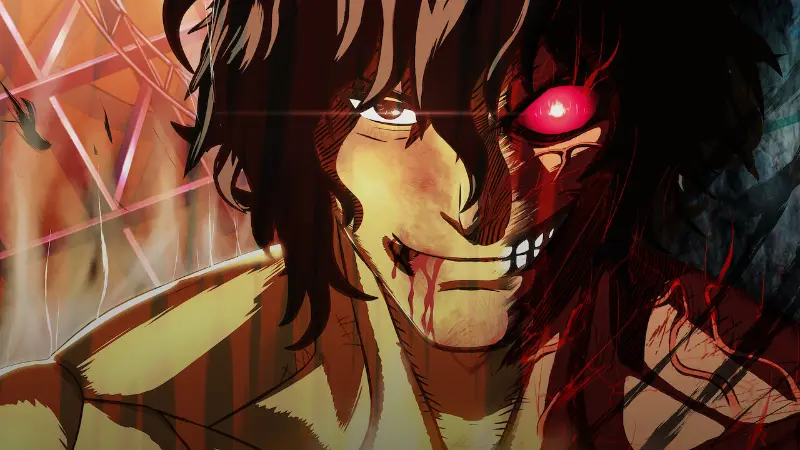
The martial arts diversity in this tournament is staggering. Every single fighter represents a different, highly researched discipline, ranging from Lethwei (Burmese bare-knuckle boxing) and Brazilian Jiu-Jitsu to professional wrestling and assassination-style finger conditioning. The series acts as a massive ‘what-if’ simulator, pitting highly specialized combat systems against each other. The tactical breakdowns mid-fight are phenomenal, explaining the physics behind grappling leverage, the devastating impact of a counter-hook, and the anatomical destruction caused by joint locks.
The decision to animate the series in 3D CGI was a masterstroke for the fight choreography. The 3D models allow for incredibly complex, unbroken grappling exchanges that would be completely impossible to animate accurately in 2D. You can physically see muscles tense, ribcages crack, and sweat fly off the fighters as they transition from a stand-up striking exchange into a ground-and-pound scenario. It is a grueling, unapologetically violent masterpiece that perfectly captures the heavy, meat-tearing impact of elite combat.
Baki (The Grappler)
Sitting on the absolute throne of the martial arts genre is the unhinged, philosophical, and hyper-muscular madness of Baki. The overarching narrative is brutally simple: Baki Hanma wants to become strong enough to defeat his father, Yujiro Hanma, a man known as ‘The Ogre’ who is literally considered the strongest creature on planet Earth. To achieve this, Baki fights his way through underground arenas, maximum-security prisons, and international death-row inmates in a quest for ultimate combat supremacy.
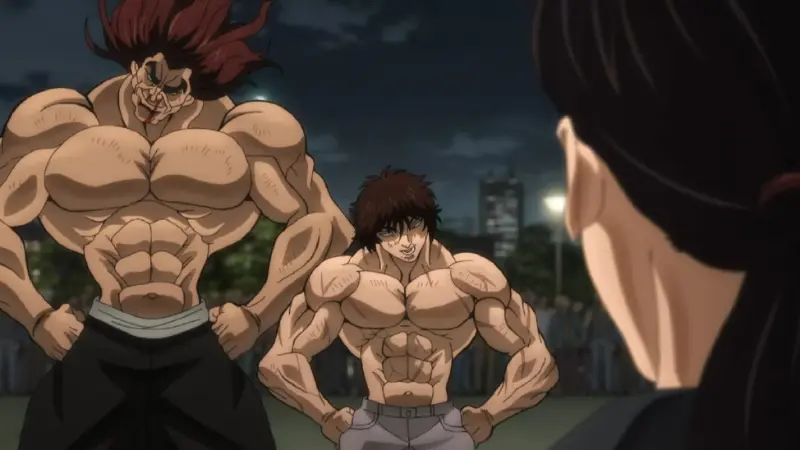
What separates Baki from every other combat anime is its complete disregard for normal human limitations, while simultaneously acting like a hyper-analytical sports science documentary. The series features long, incredibly detailed monologues breaking down the mechanics of the human body, only to use that logic to justify absolute absurdity. Baki literally trains by shadow-boxing a 100-pound imaginary praying mantis, while other fighters develop techniques to dislocate their own joints to increase the whip-like velocity of their strikes.
The fights in this series transcend standard martial arts and become surreal explorations of masculinity, ego, and pure physical dominance. The art style is intentionally grotesque, with muscles bulging like steel cables and veins throbbing under the skin, visually representing the terrifying amount of testosterone on the screen. There is no magic or energy beams here—just the raw, horrifying spectacle of the human body being pushed past the limits of sanity in the pursuit of absolute perfection. It is the definitive king of the combat genre.
The Final Bell
The martial arts genre is the purest, most visceral form of storytelling in anime. It strips away all external crutches and forces characters to rely entirely on the strength of their own two hands. Whether you are analyzing the gritty, ground-level MMA tactics of Viral Hit or staring in awe at the hyper-muscular, philosophical madness of Baki, these series prove that the human body is the ultimate weapon. They remind us of the grueling physical and psychological toll required to stand at the top of the combat food chain.
If you have had your fill of bare-knuckle violence and want to see how these intense tactical philosophies apply to larger battlefields, be sure to step out of the ring and into our Dark Hub. There, you can explore narratives that trade martial arts for high-stakes psychological warfare and grim survival scenarios, offering a completely different flavor of tension.
Before you tap out, we want to know whose combat style you respect the most. Do you lean toward the flawless traditional mechanics of Kenichi, or the brutal, unpredictable street-brawling of Wind Breaker? Step into the Smash or Pass global arcade right now to drop your vote, rate your favorite martial arts prodigies, and see who the community crowns as the undisputed champion.
Which martial arts discipline would you actually want to master?
Frequently Asked Questions
What makes martial arts anime different from regular action anime?
Is Kengan Ashura completely done in 3D CGI?
Do I need to play the games to understand Tekken: Bloodline?
Why is Baki's art style so exaggerated?
Is Viral Hit realistic?
Rank Your Favorites
Take a break and play our interactive Smash or Pass games. Vote on your favorite anime characters, game characters, and idols to shape the global tier lists.


Join the Discussion (0)