Top 10 Most Suffered & Broken Anime MCs (Who Lost Everything)
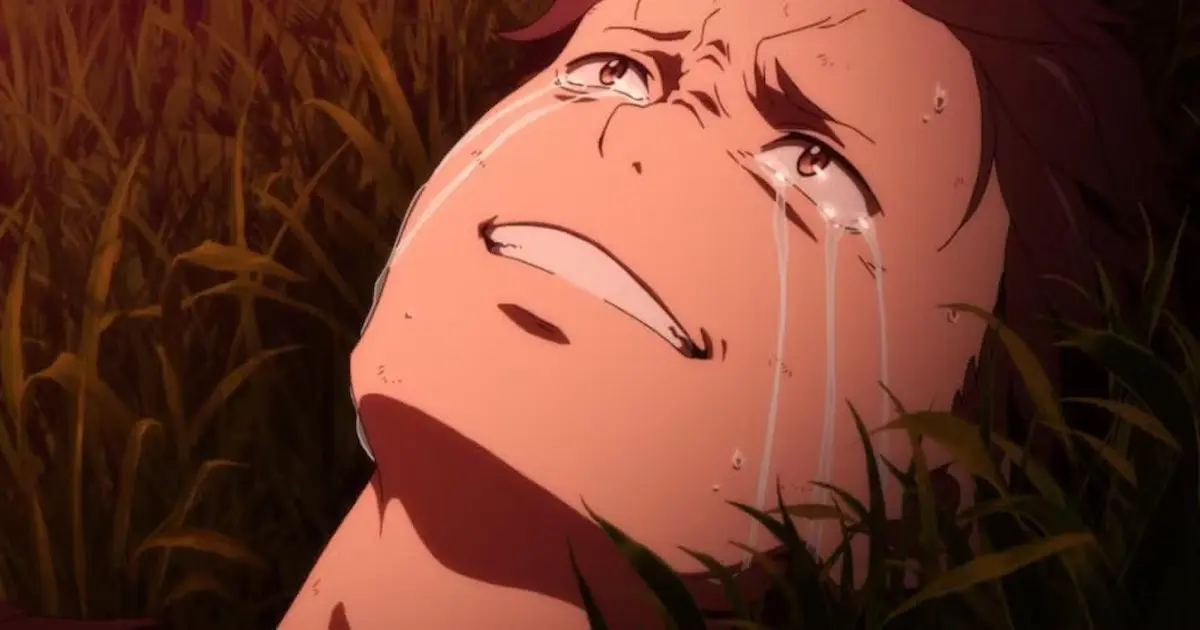
The standard anime narrative often promises a light at the end of the tunnel. The protagonist trains hard, overcomes a few setbacks, and ultimately claims a triumphant victory. But there is a vastly different, much darker tier of storytelling that strips away the plot armor entirely. In these series, the universe does not reward hard work; it actively, maliciously crushes the protagonist. These are the stories that explore the absolute breaking point of the human mind, pushing characters through unimaginable physical and psychological agony until there is nothing left but a hollow shell.
True suffering in anime is rarely just about losing a fight. It is about the systemic, meticulous dismantling of a character’s sanity. It is the horror of watching the people you love die violently, realizing you are entirely powerless to stop it. It is the agonizing burden of survivor’s guilt, the visceral pain of brutal physical torture, and the suffocating isolation of carrying a trauma so immense that no one else could possibly understand it. These protagonists do not get a clean, happy ending; they get a permanent scar.
If you are looking for narratives that abandon the power of friendship in favor of pure, unfiltered psychological devastation, you are in the right place. From endless, inescapable death loops to demonic massacres, here are the Top 10 anime where the main character suffers the most and loses absolutely everything.
Table of Contents
Ash Lynx (Banana Fish)
Kicking off our list is a character whose entire existence has been defined by extreme, systemic abuse. Banana Fish introduces Ash Lynx not as a typical hero, but as a deeply traumatized teenage gang leader in New York City. From early childhood, Ash was groomed, violently exploited, and weaponized by the horrific mafia boss Dino Golzine. His stunning intellect and deadly combat skills are not superpowers; they are extreme survival mechanisms forged in the fires of a stolen childhood.
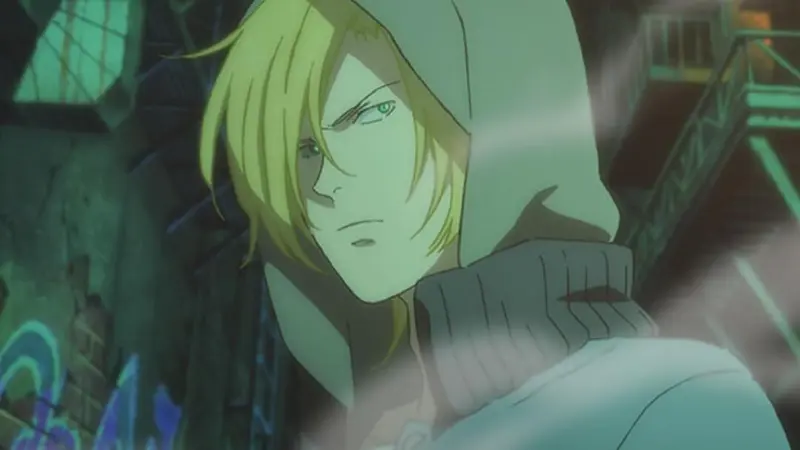
Ash’s psychological suffering stems from his total inability to escape the criminal underworld. Every time he attempts to grasp a sliver of normalcy or connect with his closest ally, Eiji, the mafia violently retaliates. Ash is forced to watch his closest friends be executed, knowing that his very presence puts a target on the backs of anyone who shows him genuine affection. He is trapped in a suffocating, paranoid existence where sleep is a luxury and betrayal is a constant guarantee.
The true tragedy of Ash Lynx is the crushing weight of his self-loathing. He has been forced to kill so many people to survive that he genuinely believes his soul is irredeemably stained. Even when a fleeting chance at a peaceful life presents itself, the overwhelming momentum of his violent past catches up to him. He is a brilliant, beautiful, and completely broken young man who was fundamentally destroyed by the adults who were supposed to protect him.
Hyakkimaru (Dororo)
In the grim, demon-infested world of Dororo, suffering is literally written into the protagonist’s DNA before he is even born. Hyakkimaru’s father, a ruthless feudal lord, enters a pact with forty-eight demons, sacrificing his unborn son’s body parts in exchange for absolute prosperity for his land. Hyakkimaru is born as a horrifying anomaly—a child without skin, eyes, ears, a nose, limbs, or even a nervous system. He is discarded in a river like trash, left to die a silent, sensory-deprived death.
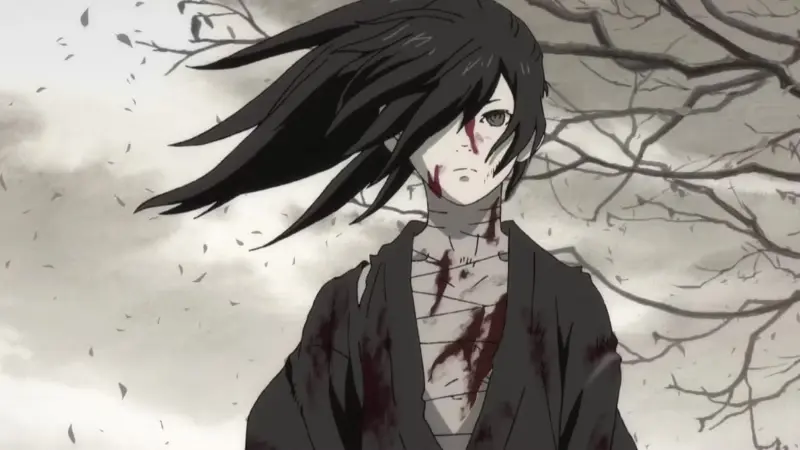
Equipped with prosthetic weapons, Hyakkimaru spends his life hunting the demons to reclaim his missing pieces. However, the true horror of his journey is that regaining his humanity is absolute agony. When he reclaims his nervous system, he is instantly paralyzed by the excruciating, unfamiliar sensation of physical pain. When he reclaims his hearing, the sudden influx of chaotic noise causes him to scream in pure terror. Every step toward becoming human is paved with visceral, agonizing suffering.
Beyond the physical torment, Hyakkimaru’s psychological state is completely shattered by betrayal. His own family, the people who sacrificed him, actively hunt him down because his survival threatens the prosperity of their land. He is forced into a brutal, bloody conflict against his own bloodline, realizing that the world he is desperately trying to experience wants him dead. He is a broken soul fighting an incredibly lonely war just to secure the basic human right to exist.
Shinei Nouzen (86 -Eighty Six-)
The Republic of San Magnolia boasts that their war against the autonomous Legion machines is a bloodless conflict fought entirely by drones. This is a horrific lie. The drones are piloted by the “86”—an oppressed, racially segregated minority forced to fight and die in brutal, unwinnable frontline battles. At the center of this slaughter is Shinei Nouzen, a teenage battlefield veteran burdened with the most agonizing responsibility imaginable: he is the “Undertaker.”

Because the Legion machines actively harvest the intact brains of dead humans to upgrade their central processors, Shin is forced to personally execute his mortally wounded comrades on the battlefield. To spare his friends from the eternal hell of having their consciousness trapped inside an enemy machine, he shoots them in the head. This act is not an exception; it is his daily reality. He carries a physical box containing a fragment of every single person he has had to kill, shouldering the weight of an entire graveyard.
Shin’s psychological state is utterly destroyed by a unique supernatural curse: he can constantly hear the screaming, agonizing mechanical voices of the Legion—the corrupted voices of his dead friends. He lives in a perpetual, waking nightmare of grief and survivor’s guilt. Stripped of his childhood, his future, and his right to mourn, Shin fights with a hollow, emotionless acceptance that he is simply waiting for his turn to die on the battlefield.
Denji (Chainsaw Man)
Unlike most anime protagonists who strive to be the greatest in the world, Denji from Chainsaw Man starts at absolute rock bottom. Inheriting an insurmountable debt from his dead father, Denji is forced to sell his eye, his kidney, and one of his testicles just to afford a single slice of bread. He lives in a filthy shack, hunting devils as a desperate, exploited mercenary until he is inevitably betrayed, chopped into pieces, and thrown in a dumpster. His only dream is to experience a normal life.
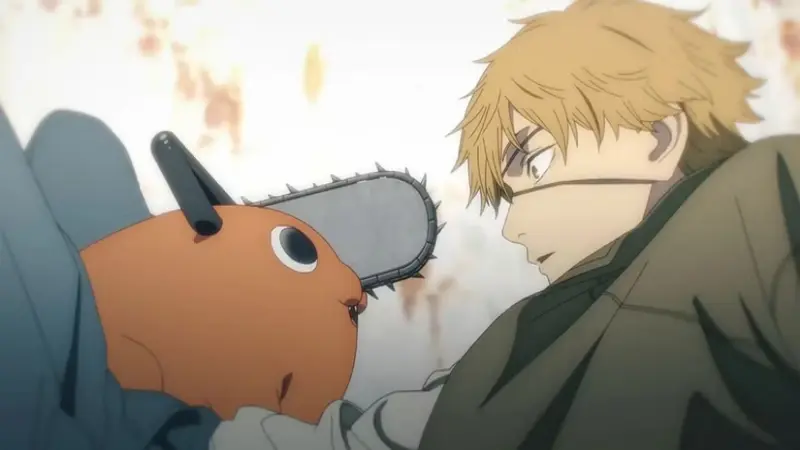
When he merges with his devil dog, Pochita, and is taken in by the manipulative Makima, Denji finally believes he has found happiness. He gets three meals a day, a warm bed, and a found family in Aki and Power. However, this normalcy is a meticulously crafted, cruel illusion. Makima orchestrates Denji’s happiness specifically so she can systematically rip it away, destroying his newfound family right in front of his eyes to break his spirit and force him into absolute, dog-like submission.
The true tragedy of Denji is the manipulation of his extreme naivety. Because he has never experienced genuine affection, he cannot comprehend that he is being groomed and weaponized. The psychological trauma of opening the door to see his best friend murdered, realizing that his entire existence is nothing but a plaything for higher powers, completely shatters him. Denji is a broken teenager who was punished violently simply for wanting to be loved.
Itadori Yuji (Jujutsu Kaisen)
Jujutsu Kaisen aggressively deconstructs the classic shonen trope of the heroic, self-sacrificing protagonist. Itadori Yuji starts his journey with a simple, noble goal: to ensure that people have a “proper death.” By swallowing the cursed finger of Ryomen Sukuna, the undisputed King of Curses, Yuji heroically accepts his role as a living vessel. However, during the horrific events of the Shibuya Incident, the brutal reality of his situation violently catches up with him.
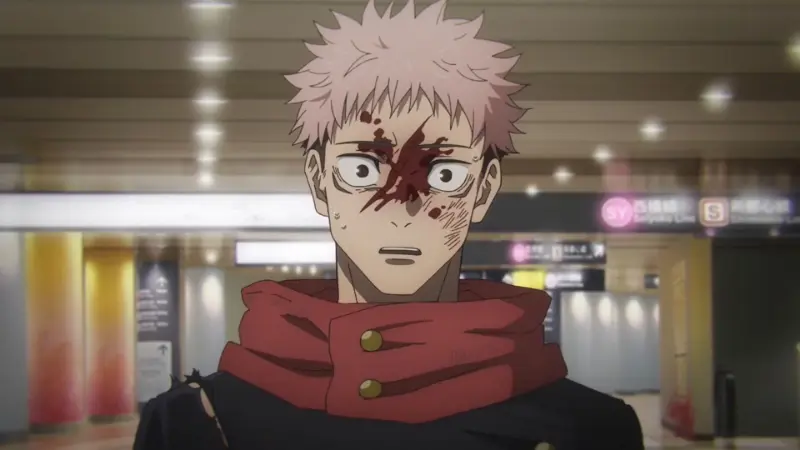
When Yuji is incapacitated and force-fed multiple fingers, Sukuna hijacks his body. Unbound by any moral constraint, Sukuna unleashes an apocalyptic domain expansion, instantly turning a massive, populated sector of Tokyo into a flat crater of blood and dust. When Yuji regains control of his body, he is forced to look at the unimaginable, indiscriminate mass slaughter that was committed using his own two hands. The sheer psychological shock literally brings him to his knees as he vomits in pure, agonizing despair.
Yuji’s suffering is compounded by the rapid, brutal executions of his mentors and closest friends right in front of his eyes. His idealistic worldview completely shatters. He realizes he is not a hero saving lives; he is a walking time bomb responsible for the deaths of thousands. The emotional toll of Shibuya leaves Yuji completely hollow, fighting not out of hope, but out of a grim, mechanical necessity to exterminate curses until he is ultimately executed.
Thorfinn (Vinland Saga)
To understand the depth of Thorfinn’s brokenness in Vinland Saga, you must look beyond the physical scars of his childhood. After witnessing the dishonorable murder of his father, Thorfinn dedicates a decade of his life to a singular, consuming goal: exacting revenge against the mercenary leader Askeladd in a fair duel. To earn that duel, Thorfinn turns himself into a cold-blooded killing machine, slaughtering hundreds of innocent people and soldiers on the battlefield without a second thought.
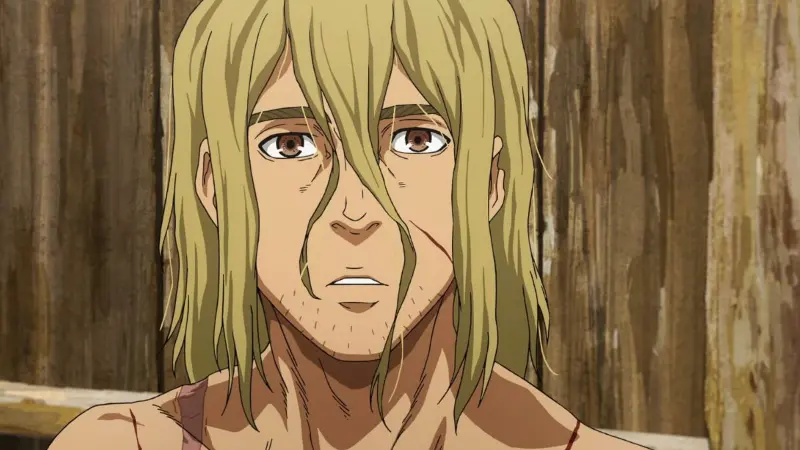
The true psychological destruction occurs when Askeladd is assassinated by someone else. In a single, violent moment, Thorfinn’s entire life’s purpose evaporates. He is left with absolutely nothing. When the narrative transitions to the Farmland arc, Thorfinn is depicted as an empty, enslaved shell of a human being. Stripped of the adrenaline of war, the deafening silence forces him to finally confront the horrific reality of his actions.
Thorfinn is tormented by excruciating, visceral nightmares of a literal hell, where the rotting, screaming corpses of the people he murdered drag him down into the darkness. He realizes that he wasted his entire childhood on a hollow, meaningless vendetta, leaving nothing but a trail of blood and misery in his wake. His suffering is a masterclass in psychological realism—the agonizing, suffocating process of a murderer slowly regaining his empathy and bearing the crushing weight of his sins.
Okabe Rintarou (Steins;Gate)
Steins;Gate begins as a lighthearted comedy about a self-proclaimed mad scientist, but it quickly devolves into one of the most grueling psychological thrillers ever animated. Okabe Rintarou discovers a way to alter the past, but his actions inadvertently set off a devastating chain of events. The core of his suffering is singular, focused, and utterly agonizing: he is forced to witness the brutal murder of his childhood best friend, Mayuri, over and over again.
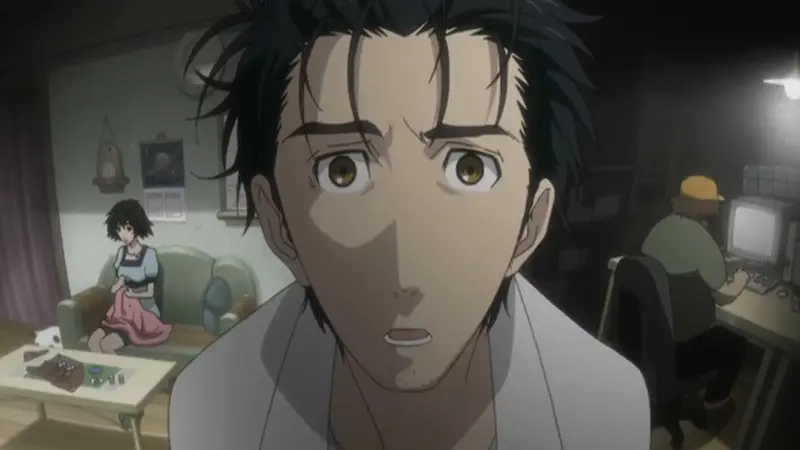
The universe actively conspires to ensure Mayuri’s death. Okabe resets the clock dozens of times, desperately trying to change her fate. Yet, no matter what he does, he is forced to endure the visceral PTSD of watching her die. He watches her get shot in the head. He watches her get hit by a speeding train. He watches her get brutally stabbed. He holds her bleeding, lifeless body in his arms countless times, completely powerless to stop the inevitable tragedy.
The true horror of Okabe’s situation is his absolute isolation. Because the timeline resets, he is the only person on the planet who remembers the trauma. He cannot confide in his friends because, to them, the horrific events have not happened yet. The mental collapse of enduring decades of accumulated grief within the span of a few weeks entirely shatters his flamboyant persona, leaving him a paranoid, hollow, and deeply traumatized man suffocating under the weight of his own memories.
Ken Kaneki (Tokyo Ghoul)
The tragedy of Ken Kaneki in Tokyo Ghoul is the story of a gentle, compassionate boy who is violently forced to abandon his humanity just to survive. After being unwillingly transformed into a half-ghoul, Kaneki spends the entire first season desperately clinging to his moral compass. He refuses to consume human flesh, acting as a pacifist bridge between two warring species. However, the world of Tokyo Ghoul has absolutely zero tolerance for weakness.
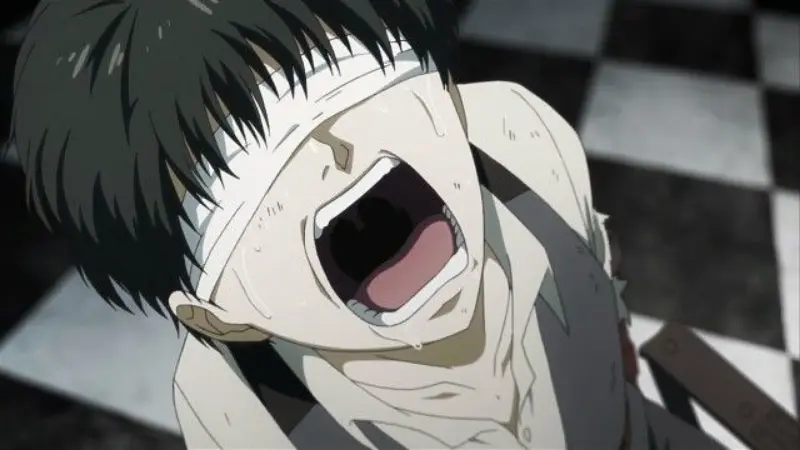
Kaneki’s breaking point is arguably the most famous torture sequence in modern anime. Captured by the sadistic ghoul Jason, Kaneki is chained to a chair and subjected to ten days of unimaginable, gruesome physical mutilation. His fingers and toes are repeatedly severed, only to regenerate so the process can begin again. A massive, live centipede is forced into his ear canal. To keep him conscious through the excruciating agony, Jason forces him to count backward from one thousand by sevens.
Under the weight of this relentless, visceral trauma, Kaneki’s mind completely snaps. His hair turns white from the sheer stress, and his psyche forcefully ejects his gentle human persona, replacing it with a cold, ruthless survivor. He brutally cannibalizes his tormentor and emerges as a fundamentally broken entity. Kaneki’s descent from an innocent student into a ruthless killer is a harrowing exploration of how severe, systematic trauma can completely overwrite a person’s soul.
Natsuki Subaru (Re:Zero)
While many protagonists on this list suffer horrific physical injuries, they usually only have to die once. Natsuki Subaru from Re:Zero is cursed with the ability to “Return by Death,” forcefully respawning at a previous checkpoint whenever he is killed. He is an ordinary teenager with zero combat skills thrust into a brutal fantasy world, meaning his deaths are never quick or heroic. They are excruciating, lingering, and unbelievably agonizing.
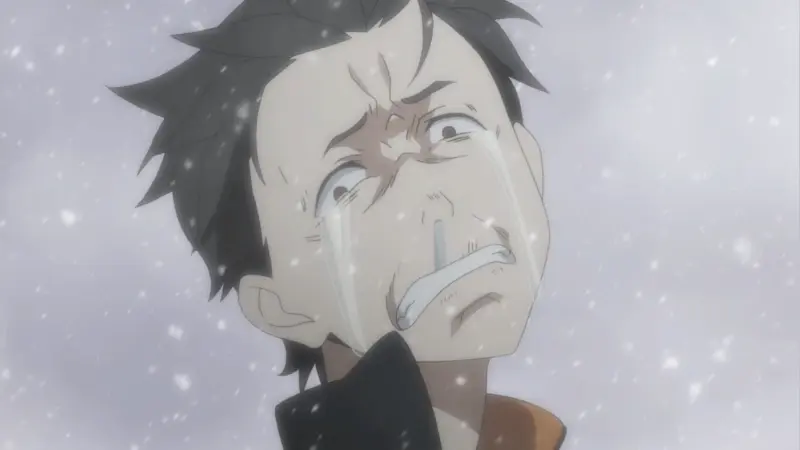
Subaru’s physical suffering is genuinely difficult to watch. He is subjected to the sheer agony of being eaten alive from the inside out by a swarm of thousands of tiny, ravenous Great Rabbits, feeling every single bite as they burrow through his internal organs. He endures a slow, freezing death in the snow, watching helplessly as his limbs physically snap off like frozen twigs before his heart finally gives out. He is disemboweled, decapitated, and repeatedly murdered by the very people he considers his closest friends.
However, the true horror of Subaru’s existence is his absolute psychological isolation. The curse explicitly prevents him from telling anyone about his ability. When the world resets, the friends who tortured him greet him with a smile, possessing no memory of their actions. Subaru carries the visceral trauma, the phantom pains, and the suffocating grief entirely alone. The mental fortitude required to endure this inescapable, repeating cycle of agony without completely losing his mind makes his suffering almost unfathomable.
Guts (Berserk)
Sitting uncontested at the absolute peak of broken protagonists is Guts from Berserk. His entire existence is a monument to human suffering. Born from the womb of a hanging corpse, Guts is immediately thrust into the brutal life of a child mercenary. He endures horrific abuse, betrayal, and relentless warfare before finally finding a sliver of hope, camaraderie, and purpose within the Band of the Hawk under the charismatic leadership of Griffith.
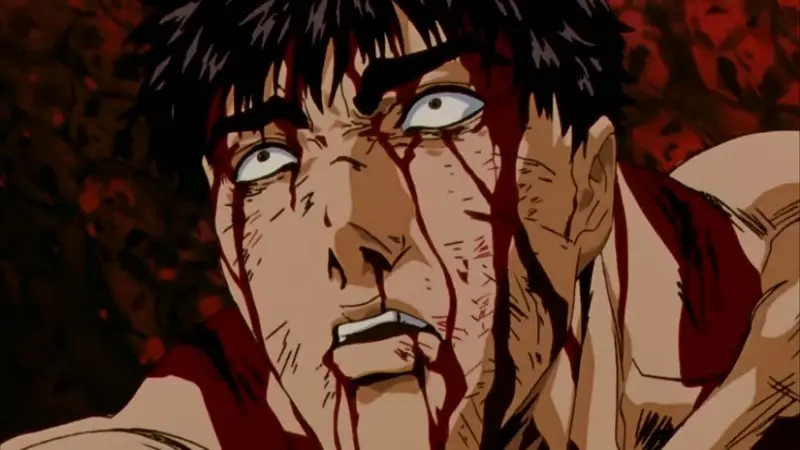
This fleeting happiness is violently, systematically ripped away during the Eclipse—the most devastating, traumatic sequence in anime history. Guts is forced to watch as Griffith, his closest friend and commander, sacrifices their entire found family to a horde of grotesque demons to attain godhood. Pinned down and powerless, Guts sacrifices his own arm and eye in a desperate, futile attempt to save the woman he loves, Casca, whose mind is completely shattered by the resulting trauma.
Surviving the Eclipse is not a victory; it is the beginning of a living hell. Guts and Casca are branded with the Mark of Sacrifice, a cursed scar that bleeds and actively attracts monstrous demons every single night. Guts cannot even afford to sleep. He is condemned to a perpetual, exhausting, blood-soaked war just to survive until the morning sun. Bereft of his family, his eye, his arm, and a peaceful night’s rest, Guts defines what it means to be a truly broken, suffering protagonist.
Picking up the Pieces
The protagonists on this list do not offer us a standard power fantasy. Instead, they provide a harrowing reflection on human endurance. We watch them suffer, break, and crawl through the darkest depths of despair because their sheer refusal to give up—even when their minds are completely fractured—is profoundly compelling. Whether it is Subaru freezing in the snow or Kaneki counting backwards from one thousand, their agony elevates their narratives from simple entertainment into unforgettable psychological masterpieces.
If you need to step away from the heavy trauma and cleanse your palate, dive into our Smash or Pass global arcade and let your instincts take over in a much lighter setting. Still fascinated by the darker side of storytelling? Check out our analysis of the Top 10 Anime Where the MC is Actually the Villain.
Which anime protagonist suffered the absolute most?
Frequently Asked Questions
Who is the most traumatized anime character of all time?
Why is Subaru's suffering considered worse than physical torture?
How does Ken Kaneki's trauma change his personality?
What is the psychological toll of Thorfinn's revenge?
Why did Okabe Rintarou completely break down?
Rank Your Favorites
Take a break and play our interactive Smash or Pass games. Vote on your favorite anime characters, game characters, and idols to shape the global tier lists.


Join the Discussion (0)