Top 10 Anime Where the MC is Actually the Villain (Descent into Evil)
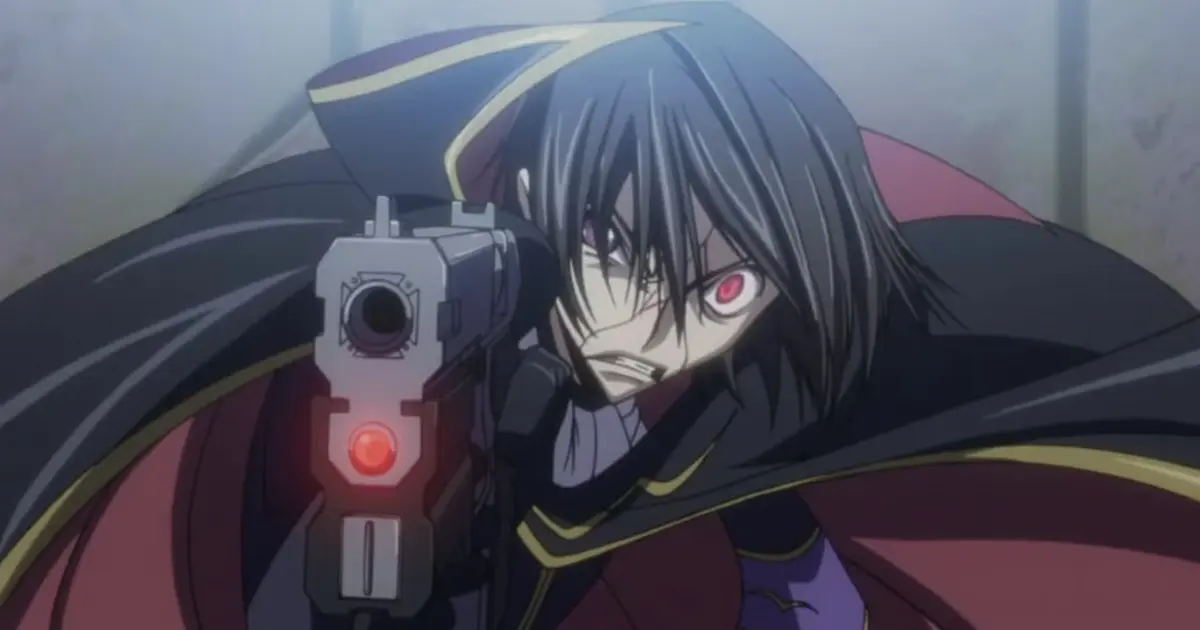
The traditional anime narrative is built on a very predictable foundation: an underdog protagonist faces insurmountable odds, relies on the power of friendship, and ultimately saves the world. It is a comforting, reliable formula. However, there is a distinct, darker breed of storytelling that completely flips the script. Instead of watching a hero rise to the occasion, we are forced to witness a protagonist slowly, methodically shed their humanity until they become the ultimate monster of their own universe.
The descent into evil is rarely instantaneous. It usually begins with a twisted sense of justice, a tragic loss, or a desperate need to fix a broken world. The protagonist convinces themselves—and often the audience—that their extreme methods are a necessary evil. But as the body count rises and the moral boundaries blur, the horrific truth becomes undeniable. The person we have been cheering for from Episode 1 is actively committing atrocities, building oppressive regimes, and slaughtering the innocent.
If you are exhausted by the righteous heroes and want to explore the darkest corners of animated storytelling, you have arrived at the definitive list. From remorseless bio-weapons to global terrorists, here are the Top 10 anime where the main character is actually the villain.
Table of Contents
Guilty Crown (Shu Ouma)
Starting our list is a protagonist whose descent into villainy is fueled by sheer desperation and trauma. In Guilty Crown, Shu Ouma begins as an incredibly passive, generic high school student who accidentally acquires the “Power of the King,” allowing him to extract weapons (Voids) from the souls of his classmates. Initially, he tries to use this power benevolently to protect his friends during a horrific, apocalyptic viral outbreak that quarantines their school.

However, the psychological breaking point occurs when the love of his life, Hare, is killed. Consumed by grief and the immense pressure of keeping everyone alive, Shu completely abandons his morality. He establishes a ruthless, caste-based totalitarian regime within the school, ranking students based on the usefulness of their Voids. He becomes a vicious dictator, punishing dissent with physical violence and treating his former friends as disposable tools for survival.
Shu’s transition from a reluctant hero to a cruel tyrant highlights the terrifying reality of what happens when a scared teenager is handed absolute power. He actively forces low-ranking students into deadly combat situations, showing zero empathy for their suffering. While he ultimately faces the consequences of his actions, his dark reign as the “Void King” firmly establishes him as the undisputed villain of the anime’s chaotic second act.
Land of the Lustrous (Phosphophyllite)
At first glance, Land of the Lustrous appears to be a beautiful, ethereal fantasy about immortal gem people fighting against mysterious lunar invaders. The protagonist, Phosphophyllite (Phos), starts as the youngest, weakest, and most innocent gem in the society. Driven by a desire to be useful, Phos embarks on a journey that slowly, literally chips away at their physical body. As Phos loses limbs and replaces them with foreign materials like agate and gold, their very personality begins to mutate.
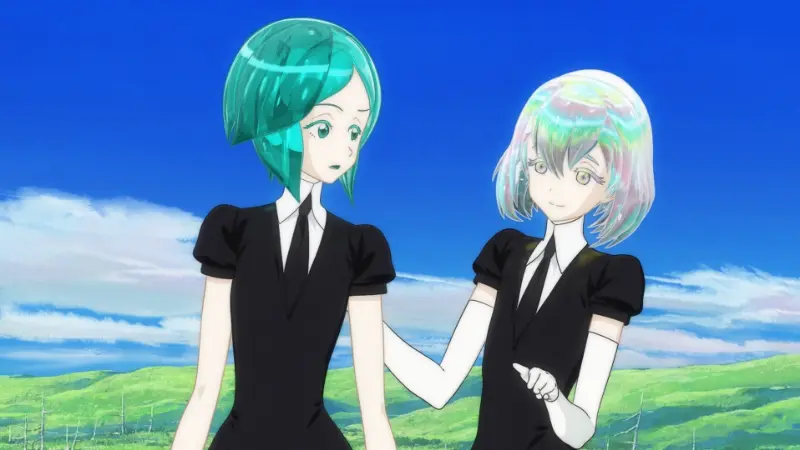
The tragedy of Phos is that their descent into villainy is a slow burn of physical and psychological corruption. With every new body part, Phos loses a piece of their original memories and their innate empathy. Driven by a manipulative obsession to uncover the dark secrets of their creator, Kongou, Phos actively betrays their own kind. They abandon the society that raised them, defecting to the moon to ally with the very monsters that have been hunting the gems for centuries.
By the latter parts of the narrative, Phos is entirely unrecognizable from the cheerful gem of Episode 1. They become a cold, calculating manipulator who orchestrates a brutal invasion of their former home, shattering their former friends without hesitation. Phos is a tragic villain—a protagonist who destroyed their entire world, and themselves, simply because they could not let go of an obsession with an ugly truth.
Tokyo Ghoul (Ken Kaneki)
The story of Ken Kaneki in Tokyo Ghoul is a masterclass in breaking a protagonist’s spirit. Kaneki starts as a gentle, literature-loving college student who is violently dragged into the underground world of flesh-eating ghouls. For the entire first season, he desperately clings to his human morality, refusing to consume human flesh and acting as a bridge of peace between the two warring species. He is the ultimate, suffering victim of circumstances beyond his control.
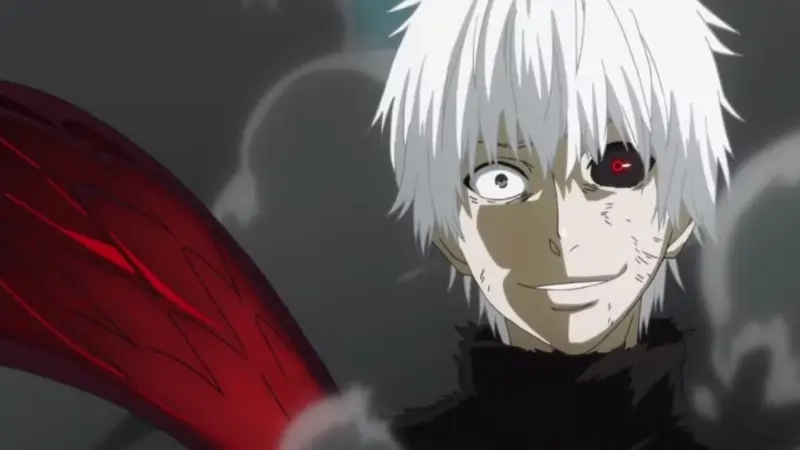
Everything shatters during his horrific, days-long torture at the hands of Jason. To survive the unimaginable pain, Kaneki’s mind snaps. He completely abandons his human empathy, accepting his ghoul nature and brutally cannibalizing his tormentor. From that moment, Kaneki walks a dark, villainous path. He forms his own militant faction, cutting ties with his peaceful friends and actively engaging in the slaughter of both humans and rival ghouls to consolidate his power.
His transition into the “Black Reaper” and eventually the massive, apocalyptic “Dragon” entity showcases the terrifying consequences of his fractured psyche. By prioritizing his own twisted sense of protection over the lives of innocent civilians, Kaneki becomes the very monster he once feared. He transforms Tokyo into a literal warzone, proving that sometimes, the only way to survive a tragedy is to become the architect of a nightmare.
Terror in Resonance (Nine & Twelve)
When analyzing Terror in Resonance, we must focus entirely on the domestic terrorism committed by the protagonists, Nine and Twelve. Operating under the cryptic moniker “Sphinx,” these two teenagers do not play the role of misunderstood vigilantes fighting in the shadows; they are literally bombing Tokyo’s infrastructure. By planting highly explosive devices in government buildings, police stations, and public spaces, they actively hold an entire nation hostage, utilizing the internet to broadcast their threats and instigate mass panic across the civilian population.
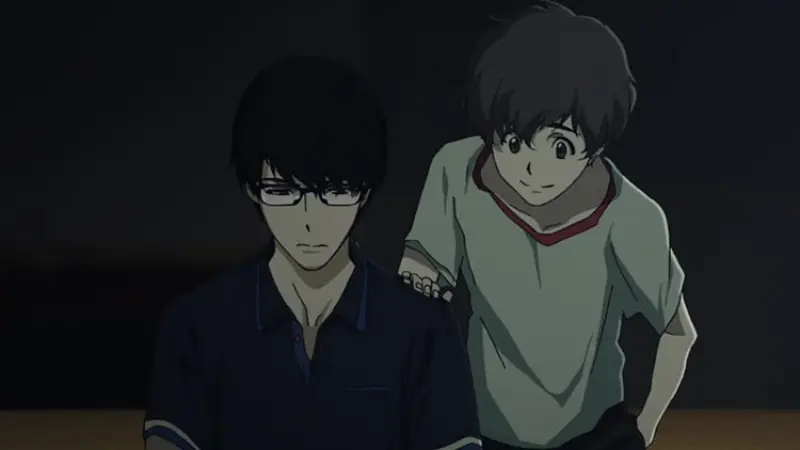
The moral ambiguity of their actions is deeply unsettling and firmly roots them in villainy. They orchestrate sheer destruction, paralyzing a modern metropolis and causing unprecedented psychological terror, just to force the world to listen to their message regarding the abusive government facility that raised them. They are willing to tear down the societal framework of Japan, demonstrating that a deep-seated, institutional grievance can easily mutate into large-scale, catastrophic violence against the public.
Their crimes cannot be ignored or romanticized by the narrative. The mass panic they cause and the sheer scale of the domestic terrorism they unleash firmly categorize them under the villain archetype. They bypass all standard channels of justice and diplomacy, choosing instead to weaponize fear and explosive destruction. By ensuring their legacy is written in the burning rubble of Tokyo’s infrastructure, Nine and Twelve cement themselves as highly destructive antagonists.
Elfen Lied (Lucy)
In the gruesome world of Elfen Lied, the protagonist, Lucy, is the pure, unfiltered embodiment of a biological nightmare. Rather than a sympathetic victim fighting against an evil corporation, she must be viewed strictly through the lens of her indiscriminate slaughter of innocent civilians. The very moment she escapes her high-security confinement, she does not simply fight for her freedom; she unleashes a terrifying, hyper-violent bloodbath, dismembering scientists, armed guards, and completely uninvolved bystanders with a chilling, complete lack of remorse.
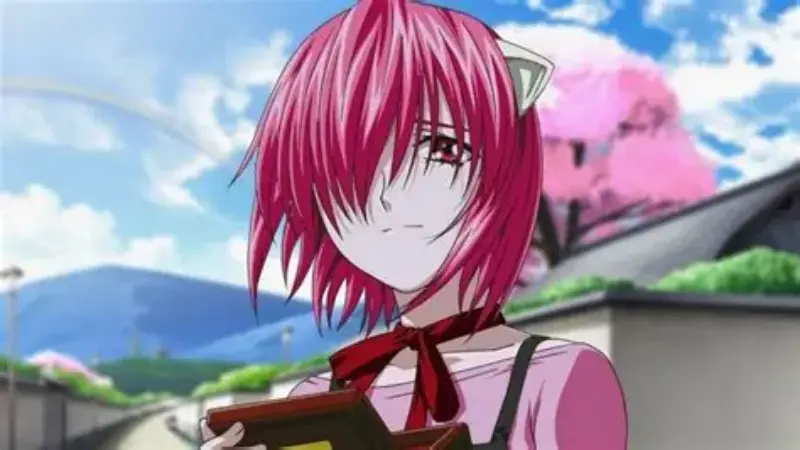
She operates entirely as a bio-weapon, a mutated entity whose very instinct is seemingly to eradicate the human race. Her massacres are not calculated acts of war or strategic strikes; they are instinctual, brutal expressions of a superiority complex born from her Diclonius DNA. She tears through civilian populations and highly populated areas, leaving a grotesque trail of mutilated corpses and painting the walls in blood without a single hesitation or moral second thought.
This indiscriminate slaughter completely defines her descent into pure, unadulterated villainy. By shedding any semblance of human empathy when her alternate personality takes over, she fully embraces her role as a bio-weapon designed for human extinction. The sheer volume of innocent civilians she murders, combined with her complete lack of remorse while executing them, solidifies her position as one of the most ruthless, unapologetic villains to ever lead a psychological horror narrative.
Saga of Tanya the Evil (Tanya Degurechaff)
Saga of Tanya the Evil provides a disturbingly entertaining look into the mind of a true sociopath. The protagonist is originally a ruthless, hyper-capitalist Japanese salaryman who, upon being murdered, challenges God (Being X) and is reincarnated as an orphaned girl in an alternate, magic-infused version of World War I Europe. Retaining all of her adult memories and extreme sociopathy, Tanya Degurechaff joins the Empire’s military, intent on climbing the ranks to secure a comfortable, safe life in the rear echelons.
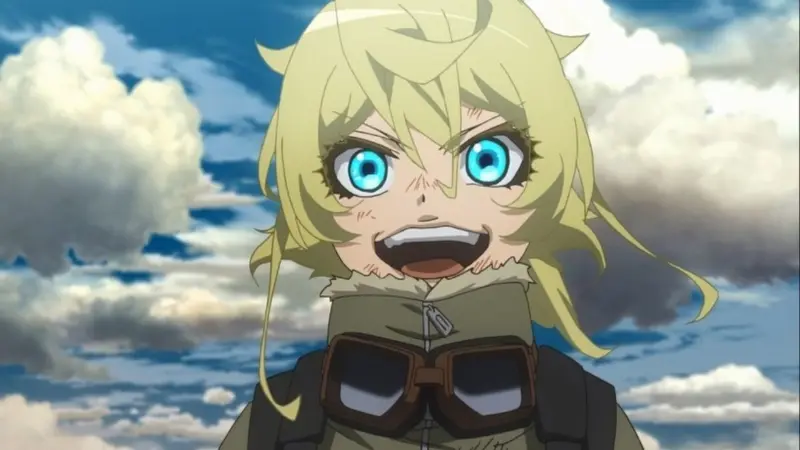
Tanya is completely devoid of human empathy. She views her own subordinates not as people, but as expendable human resources to be optimized or discarded. When her soldiers disobey orders, she forces them into suicidal defensive positions as punishment. Her defining villainous moments involve explicitly exploiting loopholes in international treaties to commit horrific war crimes, such as issuing legally mandated evacuation warnings in a whisper to justify the subsequent massacre of entire civilian cities.
Driven purely by self-preservation and a burning hatred for Being X, Tanya operates as a terrifying engine of war. She is not fighting for patriotism, justice, or freedom; she fights to violently spite a deity. Her willingness to slaughter enemy mages and burn down nations with a manic smile on her face proves that her ruthless, corporate-minded sociopathy makes her the ultimate villain of the battlefield.
Overlord (Ainz Ooal Gown)
While many Isekai protagonists use their overpowered abilities to save the fantasy world they are transported to, the protagonist of Overlord takes a vastly different approach. When the ordinary gamer Momonga finds himself permanently trapped in the body of his skeletal avatar, Ainz Ooal Gown, he realizes that his physical undead form is actively suppressing his human emotions. This psychological shift allows him to orchestrate the cold, calculated conquest of the New World without a shred of moral hesitation.
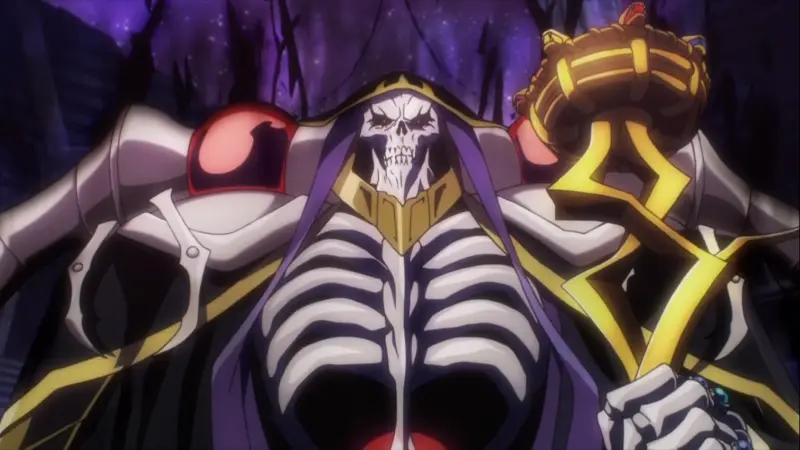
Ainz is the absolute ruler of the Great Tomb of Nazarick, surrounded by monstrous NPCs who worship him as a supreme being and view humanity as inferior trash. As the series progresses, Ainz fully leans into this villainous role to protect his guild’s legacy. He explicitly allows his subordinates to kidnap, torture, and perform grotesque biological experiments on innocent humans, treating entire kingdoms as mere stepping stones for his grand, imperial ambitions.
The turning point in his villainy occurs during the massacre at the Katze Plains. To demonstrate a single tier-10 spell, Ainz completely obliterates over 70,000 human soldiers in an instant, summoning grotesque Lovecraftian horrors to devour the fleeing survivors. He watches the mass slaughter with total, terrifying apathy. Ainz Ooal Gown is not a misunderstood anti-hero; he is an apocalyptic threat who views human life as nothing more than an expendable resource.
Code Geass (Lelouch vi Britannia)
Code Geass presents Lelouch vi Britannia not as a righteous savior, but as a Machiavellian prince who willingly drowns himself in blood to achieve his goals. Driven initially by an insatiable thirst for vengeance against the Britannian Empire, he orchestrates a violent rebellion under the masked persona of “Zero.” However, Lelouch operates on a terrifyingly ruthless philosophy: to defeat evil, he must become a greater evil.
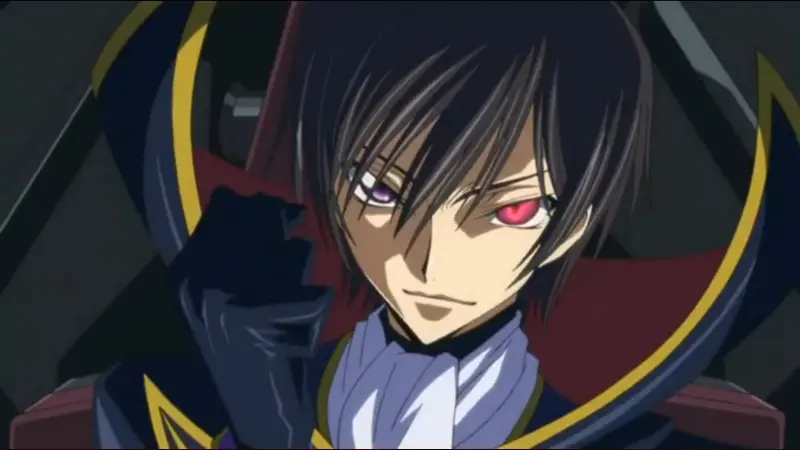
His dramatic ascent to power is paved with horrific betrayals and the corpses of innocent people. Lelouch routinely weaponizes his mind-control ability to rob people of their free will, forces his own soldiers into suicidal tactical maneuvers, and coldly orders the mass execution of the entire Geass Order—including unarmed scientists and children—simply to tie up loose ends. He actively lies to his closest friends, manipulating their grief and loyalty to further his military crusade.
Ultimately, Lelouch executes the “Zero Requiem,” intentionally mutating into the exact monster he originally swore to destroy. By crowning himself Emperor, he establishes a brutal, global dictatorship ruled by absolute fear and public executions. He purposefully commits these atrocities to turn the entire globe’s hatred toward himself, proving that his path to world peace required him to become the ultimate, unforgivable villain of human history.
Death Note (Light Yagami)
Death Note meticulously documents the horrifying psychological decay of Light Yagami, a high schooler whose acquisition of a supernatural notebook instantly triggers a terrifying, undeniable god complex. He does not seek justice or reform; he seeks absolute worship. Convinced of his own divine infallibility, Light appoints himself as the ultimate judge, jury, and executioner of humanity, initiating a global massacre to cleanse the world according to his deeply twisted, narcissistic morality.
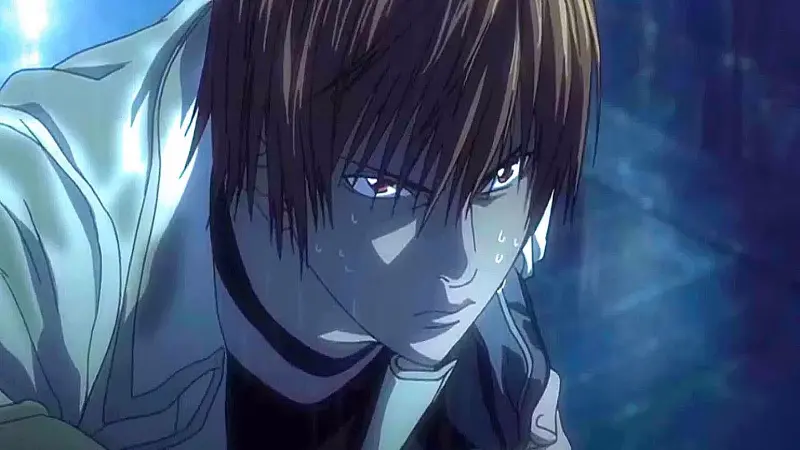
The true horror of Light’s reign as “Kira” is the sheer volume of innocent people murdered simply to protect his secret identity. He does not stop at killing convicted criminals; he ruthlessly slaughters detectives, police officers, FBI agents, and anyone who dares to investigate his authority. His god complex allows him to instantly justify the execution of completely innocent civilians, viewing their deaths as necessary, minor sacrifices for the totalitarian dictatorship he is actively trying to build.
By the end of the series, Light has shed every remaining fragment of his humanity. He is a raving megalomaniac attempting to construct a totalitarian dictatorship where the entire globe lives in constant, suffocating fear of an invisible executioner. His descent is absolute, driven entirely by a god complex that leaves thousands of innocent people murdered and cements him as one of anime’s most vile, irredeemable, and fascinating villains.
Attack on Titan (Eren Yeager)
Sitting at the absolute peak of villainy is Eren Yeager from Attack on Titan, whose dark narrative arc culminates in the most horrific act of global terrorism in anime history. Abandoning any pretense of seeking diplomatic peace or understanding, Eren initiates the Rumbling—a catastrophic, apocalyptic event designed to flatten the entire planet outside his home island. He is no longer a soldier fighting for freedom; he is a global terrorist executing a premeditated, world-ending genocide.
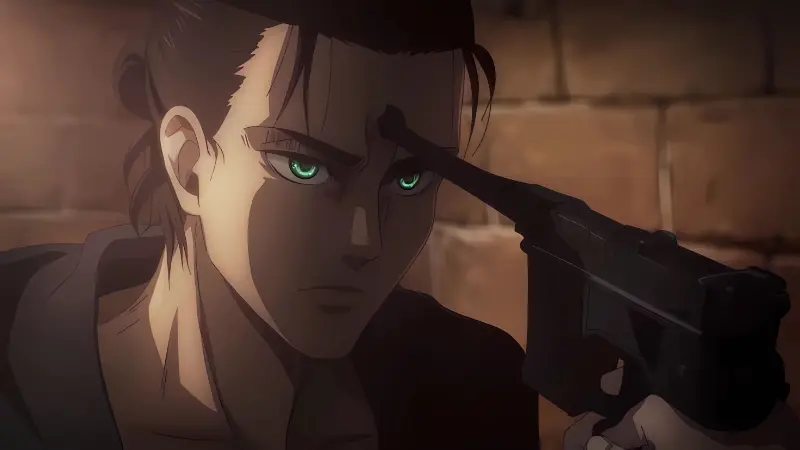
The true horror of Eren’s actions lies in the crushing of innocent children, unarmed civilians, and entire civilizations beneath the feet of millions of Colossal Titans. The narrative does not shy away from the visceral, sickening reality of his choice: the Rumbling explicitly involves the agonizing, physical crushing of innocent children who have absolutely nothing to do with the cycle of hatred. It is a mass slaughter of unfathomable proportions, stripping away the future of billions.
Eren’s transition into a global terrorist is absolute and unforgivable. He violently strips away the free will of the world, utilizing an apocalyptic weapon to ensure that all life beyond the walls is violently extinguished. The sheer, terrifying scale of the Rumbling, characterized by the merciless crushing of innocent children and the total annihilation of global ecosystems, solidifies Eren Yeager not as a tragic hero, but as the ultimate, world-shattering villain.
The Final Judgment
There is a deeply unsettling catharsis in watching a protagonist fully embrace the darkness. We are so conditioned to expect the hero to make the morally correct choice at the final hour that when they finally shatter that expectation and cross the point of no return, it leaves a permanent impact on the viewer. Whether it is through the calculated domestic terrorism of Nine and Twelve or the apocalyptic global terrorism of Eren Yeager, these anime prove that sometimes, the true monster of the story is the one whose name is on the title card.
If you need to cleanse your palate after exploring the darkest depths of anime morality, head over to our Smash or Pass hub to cast your votes in a much lighter setting. Or, if you want to see protagonists who use their minds for less destructive purposes, check out our guide to the Top 10 Anime With Genius Main Characters.
Which villain protagonist had the most devastating impact?
Frequently Asked Questions
Why is Eren Yeager considered a villain?
Is Light Yagami a hero or a villain?
What makes Ainz Ooal Gown a villain in Overlord?
Are Nine and Twelve terrorists in Terror in Resonance?
Why does Lelouch vi Britannia become a dictator?
Rank Your Favorites
Take a break and play our interactive Smash or Pass games. Vote on your favorite anime characters, game characters, and idols to shape the global tier lists.

Join the Discussion (0)