Top 10 Romance Anime Where the Couple Lives Under the Same Roof

The standard anime romance relies heavily on the “schoolyard barrier.” Characters spend entire seasons trying to orchestrate a simple five-minute conversation by the shoe lockers, only to be interrupted by a ringing bell or a dense best friend. The moment the school day ends, the romantic progression resets. It is a formula built on distance and carefully maintained public personas. But what happens when you completely obliterate that distance? What happens when the characters are forced to share a kitchen, a bathroom schedule, and a front door?
Cohabitation romance anime are the ultimate accelerator for character development. By forcing two people to live under the same roof, the narrative completely strips away the safety of their social masks. You cannot maintain a perfectly composed, unapproachable facade when you are arguing over who forgot to buy groceries, or when you accidentally run into each other in the hallway at 2 AM. Forced proximity breeds a unique, inescapable domestic tension that accelerates emotional intimacy faster than any fireworks festival ever could.
If you are completely exhausted by the endless chasing and want a romance built on shared meals, late-night vulnerability, and intense domestic friction, you have arrived at the definitive list. From arranged marriages to boarding house chaos, here are the Top 10 romance anime where the couple actually lives under the same roof.
Table of Contents
A Couple of Cuckoos
Kicking off our list is an anime that utilizes a hilariously convoluted premise simply to justify trapping its protagonists under the same roof. In A Couple of Cuckoos, Nagi Umino and Erika Amano discover they were accidentally switched at birth. When their respective parents finally uncover the truth 16 years later, they devise an absolutely unhinged solution: to keep both children in the family, they force Nagi and Erika into an arranged engagement and make them live together in a massive, unsupervised mansion.
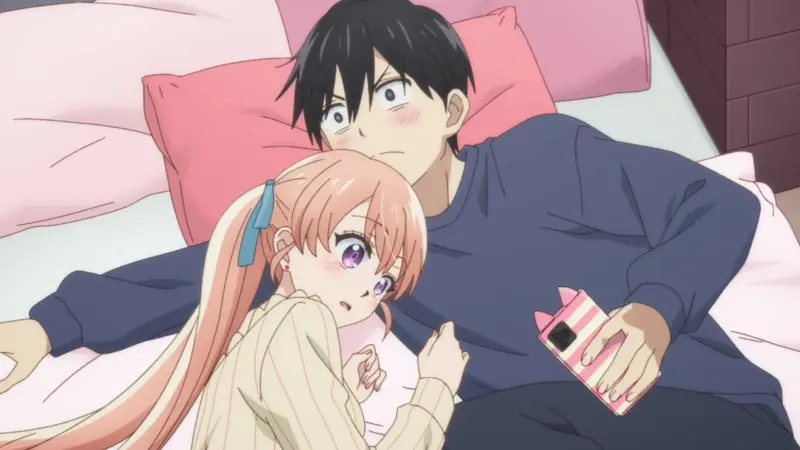
The domestic tension in this series is heavily driven by class disparity. Nagi was raised in a highly frugal, hard-working diner environment, possessing exceptional cooking and cleaning skills. Erika, raised as an ultra-wealthy social media influencer, lacks basic survival skills. The comedy thrives as they navigate their massive shared living space, with Nagi constantly having to reign in Erika’s absurd, out-of-touch lifestyle while simultaneously managing the upkeep of the house.
Because they are forced to live together, the artificial barriers of their engagement quickly break down. They transition from actively avoiding one another in the massive hallways to sharing late-night meals, studying together, and legitimately relying on each other’s emotional support. It is a highly chaotic, fast-paced harem comedy that uses its cohabitation premise to forge a surprisingly strong foundational friendship before pushing the romance.
The Kawai Complex Guide to Manors and Hostel Behavior
If you prefer your cohabitation tropes to include an ensemble cast of deeply eccentric weirdos, The Kawai Complex is an absolute hidden gem. Kazunari Usa moves into the Kawai Complex boarding house seeking a peaceful, independent high school life. To his absolute delight, he discovers that Ritsu Kawai, the quiet, book-obsessed girl he has a massive crush on, also lives there. To his utter despair, the rest of the tenants are borderline sociopathic, perverted, and overwhelmingly loud.

The romantic progression in this anime is entirely dictated by the architecture of the boarding house. Ritsu is intensely introverted, using her books as an impenetrable shield against the world. Usa cannot simply ask her out; he has to slowly, methodically bridge the gap by sharing the common areas. He earns her trust by quietly reading next to her on the porch, defending her from the teasing of their older roommates, and respecting her need for domestic silence.
Because they live together, Usa gets to see the side of Ritsu that the rest of the school completely misses—her awkwardness, her hyper-fixations, and her incredibly rare, genuine smiles. The boarding house setting creates a brilliant contrast: the loud, chaotic communal dinners perfectly highlight the sweet, subtle, and profound moments of romantic vulnerability the main couple shares in the background.
ItaZura na Kiss
As one of the most foundational pillars of the Shoujo genre, ItaZura na Kiss defined the modern cohabitation trope. Kotoko Aihara is deeply, hopelessly in love with Naoki Irie, the coldest, most arrogant, and highly intelligent boy in school. After he brutally rejects her confession letter, Kotoko believes it is over. However, in a twist of cruel, comedic fate, her newly built house collapses in a minor earthquake. Her father’s best friend invites them to stay at his home, which happens to be the Irie household.

The transition from a humiliating public rejection to waking up across the hall from her crush creates an incredibly suffocating, highly entertaining domestic tension. Naoki is furious that his perfectly quiet, structured life has been invaded by a loud, academically struggling girl. The anime thrives on the friction of their daily routines: sharing the breakfast table, studying late into the night in the living room, and Kotoko constantly trying to hide her presence to avoid annoying him.
The sheer power of the cohabitation premise in this series is its longevity. Because they live together, Naoki cannot simply ignore her existence. He is forced to witness Kotoko’s unwavering determination, her kindness, and her sheer resilience. Over the course of the anime, the forced proximity completely chips away at his icy, perfect facade, forcing him to confront the terrifying realization that his perfectly structured house feels entirely empty without her in it.
My Stepmom’s Daughter Is My Ex
Do not let the light novel title fool you; My Stepmom’s Daughter Is My Ex is an incredibly sharp, highly psychological exploration of post-breakup trauma. Mizuto and Yume dated throughout middle school, transitioning from awkward best friends into a toxic, deeply resentful couple before enduring a bitter breakup. Two weeks later, their single parents announce they are getting married, forcing Mizuto and Yume to move into the exact same house as step-siblings.

To avoid ruining their parents’ newfound happiness, they establish a “sibling rule”: whoever acts like the ex-lover first loses. What follows is a claustrophobic, high-stakes game of domestic chicken. Every single interaction—sharing the bathroom, passing each other in the narrow hallway, and eating dinner at the same table—is layered with suffocating, unresolved romantic tension. They are constantly trying to establish dominance while actively fighting off their lingering, complicated feelings for one another.
The cohabitation aspect forces them to confront the exact reasons their relationship failed. Because they live together, they cannot simply block each other’s numbers and walk away. The anime uses the shared living space as a crucible, slowly forcing them to drop their bitter, hostile facades and actively communicate the insecurities that broke them apart in middle school. It is a brilliant, mature take on forced proximity.
I’m Getting Married to the Girl I Hate in My Class
A highly celebrated recent adaptation, I’m Getting Married to the Girl I Hate in My Class executes a brilliant whiplash between public hostility and private vulnerability. Saito Houjou and Akane Sakuramori are the fiercest, most toxic academic rivals in their high school. They actively despise each other. However, due to a massive, convoluted arrangement set up by their respective, highly influential grandfathers, they are forced to marry and move into an apartment together.

The true magic of this series lies entirely in the domestic living arrangement. At school, they must maintain their vicious, hateful rivalry to keep their marriage a total secret from their classmates. But the moment they unlock their front door and enter their shared apartment, the masks come off. The hostility is replaced by the quiet, deeply awkward reality of two teenagers trying to figure out how to cook dinner, share chores, and sleep under the same roof.
The cohabitation forces them to see the humanity behind their rival’s persona. Saito realizes that the “perfect, untouchable” Akane is actually deeply insecure, exhausted, and desperately trying to maintain her grades. By sharing the mundane, unglamorous aspects of daily life, their hostile tension slowly dissolves into profound mutual support, making the contrast between their public hatred and private domestic intimacy incredibly satisfying.
A Galaxy Next Door
For viewers seeking an anime completely devoid of toxic drama, A Galaxy Next Door is a masterpiece of domestic healing. Ichiro Kuga is a desperate, exhausted manga artist struggling to raise his two younger siblings alone after their father’s death. Enter Shiori Goshiki, a beautiful, highly competent assistant who moves into his apartment complex. Following an accidental prick from her supernatural “stinger,” Ichiro unknowingly signs a lifelong marriage contract with Shiori, who is actually an alien princess.

The supernatural premise is quickly sidelined in favor of an incredibly grounded, heartwarming exploration of cohabitation. Shiori essentially integrates herself directly into Ichiro’s chaotic, exhausted life. She lives under the same roof, helps him meet his grueling manga deadlines, cooks for his younger siblings, and becomes an indispensable pillar of their fragile family unit. The romance is built entirely on the quiet, steady reliability of shared domestic labor.
The tension in the series is never about whether they like each other; it is about two highly empathetic adults learning how to communicate their boundaries while living in the same house. Watching Ichiro, who is used to shouldering the weight of the world alone, slowly learn to lean on Shiori in the safety of their shared living room is profoundly moving. It is the absolute pinnacle of cozy, supportive cohabitation.
Taisho Otome Fairy Tale
Set in the atmospheric Taisho era of Japan, Taisho Otome Fairy Tale uses forced cohabitation to explore the profound psychological healing that comes from genuine domestic care. Tamahiko Shima is the pessimistic, deeply depressed son of a wealthy family. After losing his mother and the use of his right arm in an accident, his cruel father exiles him to a remote mountain villa, declaring him dead to the world. He expects to rot away in isolation, until a cheerful young girl named Yuzuki arrives, announcing she was purchased to be his bride.
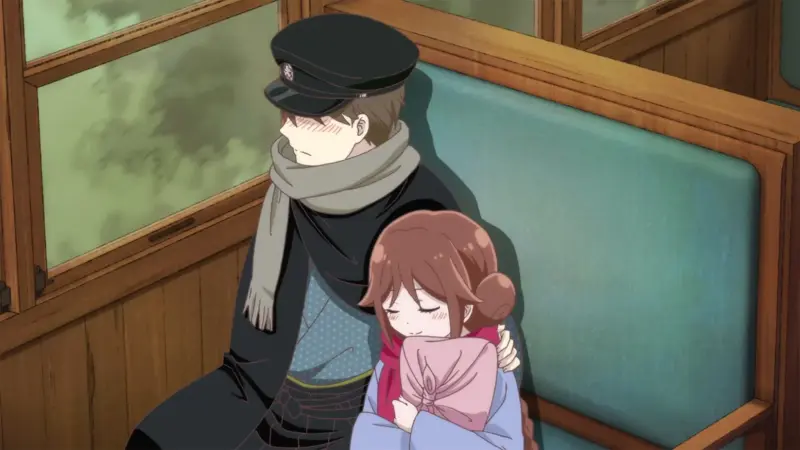
The entire narrative revolves around the slow, methodical process of turning a desolate house into a home. Tamahiko is consumed by self-loathing, completely refusing to engage with the world. Yuzuki does not magically cure him with a grand speech; she cures him through relentless, unwavering domestic presence. She cooks warm meals, cleans the dusty mansion, tends to his injuries, and refuses to let him wallow in the darkness of his bedroom.
Because they live completely isolated from the rest of society, their entire world shrinks down to the walls of the villa. The cohabitation forces Tamahiko to recognize his own self-worth, realizing that he has to become a man capable of protecting the girl who brought warmth back into his freezing house. It is a beautiful, tear-jerking romance that highlights the immense power of shared domesticity.
More Than a Married Couple, But Not Lovers
More Than a Married Couple, But Not Lovers features one of the most unapologetically absurd premises in the genre, creating a brilliant, high-tension romantic sandbox. Jiro Yakuin and Akari Watanabe attend a high school with a mandatory “Marriage Practical” curriculum. Students are paired up, forced to live in highly monitored apartments, and graded by a pervasive camera system on their ability to simulate a harmonious, affectionate domestic life.

Jiro is a quiet gamer; Akari is a loud, incredibly popular gyaru. They both want to score enough points to switch partners and be with their actual crushes. To do so, they must perform acts of domestic intimacy—cooking together, sharing the couch, and greeting each other at the door with a hug. However, the forced proximity quickly backfires. The more they pretend to be married, the more the boundaries blur between their transactional performance and genuine, undeniable physical attraction.
The sheer brilliance of the cohabitation dynamic here is the constant, suffocating psychological tension. Behind closed doors, they see the deeply vulnerable sides of each other that the rest of the school completely misses. Jiro realizes Akari is incredibly sweet and domesticated, while Akari realizes Jiro is deeply reliable. The apartment becomes a pressure cooker of heavy, blush-inducing domestic tension, making the inevitable transition from “faking it” to “feeling it” wildly entertaining.
The Angel Next Door Spoils Me Rotten
If you were to weaponize the concept of “domestic fluff,” the resulting anime would be The Angel Next Door Spoils Me Rotten. Amane Fujimiya is a notoriously lazy high school student living alone in a messy apartment, surviving entirely on energy drinks and convenience store food. His next-door neighbor is Mahiru Shiina, the “Angel” of the school—flawless, beautiful, and completely unapproachable. After Amane lends her an umbrella in the rain, she notices his horrific living conditions and decides to cook him a single meal out of pity.

That single meal snowballs into one of the most intense, deeply intimate “unofficial” cohabitation setups in anime history. Mahiru essentially takes over his apartment. She comes over every single night to cook dinner, clean his living room, and eventually, just to sit on his couch and watch TV. While they technically maintain separate apartments, the massive, gaping hole in their balcony wall effectively turns their living spaces into a single, shared home.
The romance thrives entirely on the absolute sanctity of their private, domestic world. At school, they act like complete strangers to protect Mahiru’s pristine reputation. But inside Amane’s apartment, Mahiru drops her perfect facade, revealing a deeply lonely girl who just wants to feel safe and appreciated. Amane’s gentle, unwavering respect for her creates a profoundly cozy, borderline-married dynamic that will legitimately give you a toothache.
Toradora!
Sitting uncontested upon the throne of cohabitation romance is the legendary Toradora!. Much like The Angel Next Door, Ryuuji Takasu and Taiga Aisaka technically live in adjacent apartments. However, because Taiga’s wealthy parents have completely abandoned her and she is entirely incapable of performing basic human chores, she effectively lives with Ryuuji. She breaks into his apartment through his balcony window every single morning, eats all of his food, and utilizes his living space as her own.

The genius of Toradora! is how naturally the domestic dynamic forms the absolute foundation of their romance. Ryuuji, who possesses an intimidating face but a deeply maternal obsession with cleaning and cooking, naturally steps into the role of Taiga’s domestic caretaker. Their relationship does not start with a spark of physical attraction; it starts with Ryuuji ensuring Taiga does not starve to death in her own filth. They become an inseparable, highly functional domestic unit long before they ever realize they are in love.
Because they share every meal and know the intimate, unglamorous details of each other’s daily routines, the eventual romantic realization hits with the force of a freight train. The climax of the series revolves around the terrifying realization that their shared domestic life is the only place where they truly feel safe. It is an absolute masterpiece of character writing, proving that the strongest romances are not built in the school courtyard, but across the dining room table.
Closing the Door
The cohabitation trope will always be a cornerstone of the romance genre because it demands absolute vulnerability. When a protagonist is forced to share their living space, they cannot hide their flaws, their habits, or their morning hair. Whether it is the suffocating psychological tension of My Stepmom’s Daughter Is My Ex or the ultimate domestic fluff of The Angel Next Door, these anime prove that true intimacy is built in the quiet, mundane moments behind closed doors. Once you see someone in their most unguarded state, falling in love is simply inevitable.
If you want to step out of the apartment and explore relationships that begin on much more hostile terms, check out our list of 10 Romance Anime Where Enemies Fall in Love. Or, if you want to vote on your favorite domestic couple, head over to our Smash or Pass hub and let your instincts take over.
Which cohabitation couple has the best domestic dynamic?
Frequently Asked Questions
Why is the cohabitation trope so popular in romance anime?
Are Toradora's Ryuuji and Taiga actually living together?
Is My Stepmom’s Daughter Is My Ex a controversial anime?
What is the premise of More Than a Married Couple, But Not Lovers?
Does The Angel Next Door Spoils Me Rotten feature actual dating?
Rank Your Favorites
Take a break and play our interactive Smash or Pass games. Vote on your favorite anime characters, game characters, and idols to shape the global tier lists.





Join the Discussion (0)