Top 10 Sad Romance Anime That Will Absolutely Break Your Heart
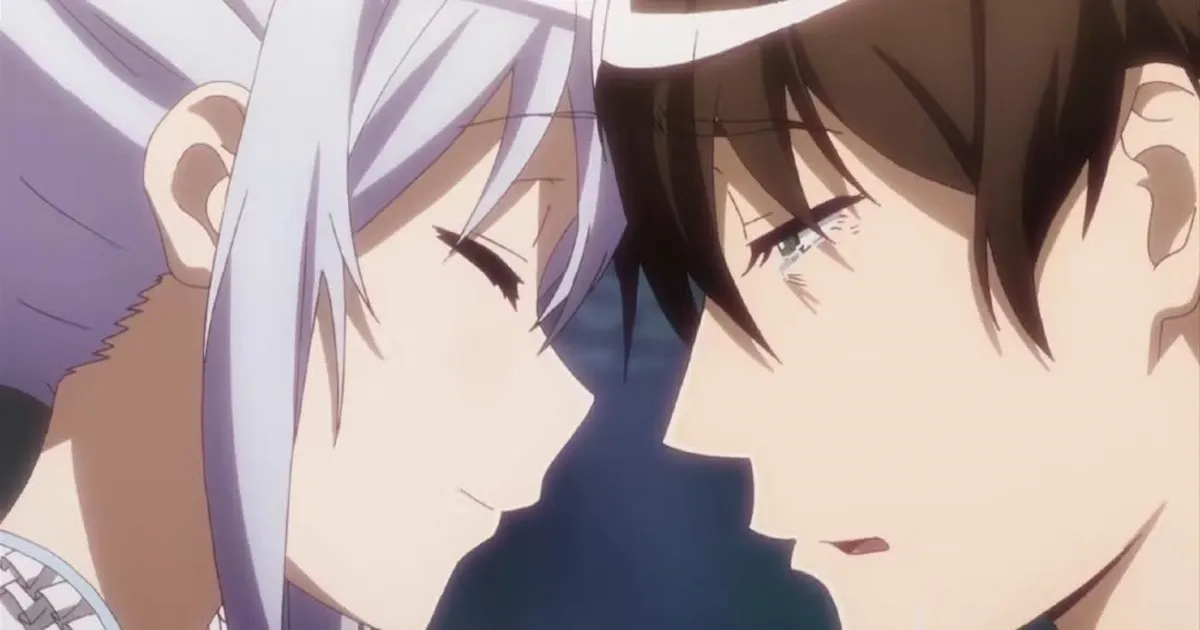
There is a unique, deeply masochistic thrill in intentionally seeking out a piece of media that you know is going to completely destroy you. Romance anime, in its standard form, is usually a vehicle for escapism—a cozy, dopamine-inducing sanctuary of hand-holding, festival fireworks, and blushing confessions. But there is an entirely different echelon of the genre designed with surgical precision to rip your heart out of your chest. These are narratives that weaponize love, using it not as a source of ultimate happiness, but as the foundation for absolute, inescapable emotional devastation.
The true brilliance of a top-tier sad romance anime lies in its psychological framing. These stories understand that a tragedy is only effective if the viewer is entirely invested in the connection between the characters. They force you to watch two people painstakingly build a universe together, resolving their traumas and finding profound solace in one another, all while an invisible timer ticks down in the background. Whether it is the slow, agonizing decay of a terminal illness, a glitching memory span, or the ruthless indifference of an uncaring world, the impending doom makes every stolen moment feel painfully sharp and unforgettable.
If you are completely exhausted by happy endings and are actively looking for an excuse to stare blankly at your ceiling at 3 AM, you have arrived at the ultimate gauntlet of grief. From dystopian sacrifices to the crushing weight of adulthood, here are the Top 10 most devastating sad romance anime guaranteed to break you.
Table of Contents
To Every You I’ve Loved Before / To Me, The One Who Loved You
Kicking off our list is an incredibly ambitious, dual-movie narrative that utilizes high-concept science fiction to explore the crushing weight of romantic regret. Set in a world where humans subconsciously shift between parallel universes daily, the story follows Koyomi Takasaki across two completely different timelines. Depending on which movie you watch first, the narrative fundamentally alters your psychological perception of his life, transforming what appears to be a standard sci-fi romance into a horrifying exploration of cosmic isolation and inevitable sacrifice.
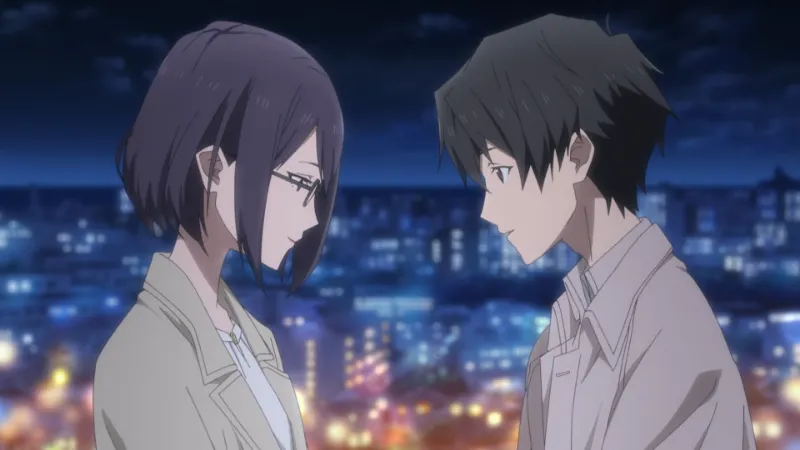
The tragedy of this anime is heavily anchored in the character of Shiori. In one timeline, an attempt to prevent their parents from marrying so that Koyomi and Shiori can be together results in a catastrophic dimensional shift. Shiori becomes “ghosted” between worlds, physically present but entirely inaccessible. The romance rapidly devolves into an existential nightmare as Koyomi dedicates his entire mortal existence, sacrificing decades of his life and his own sanity, desperately trying to construct a timeline where the girl he loves can simply exist.
This is not a traditional tearjerker built on shouting and dramatic hospital beds. It is a slow, suffocating burn. The narrative forces the audience to ponder the terrifying reality of the multiverse: if every choice creates a new world, how many infinite realities did Koyomi have to destroy just to hold Shiori’s hand? The ending is a masterclass in bittersweet melancholy, leaving you utterly hollowed out as you realize the sheer, terrifying magnitude of what true devotion costs across space and time.
Orange
Orange disguises itself as a standard high school shoujo before aggressively pivoting into one of the most painfully accurate depictions of clinical depression and survivor’s guilt in anime history. Naho Takamiya receives a letter from herself ten years in the future, warning her that the new transfer student, Kakeru Naruse, is going to commit suicide by the end of the school year. The letter serves as a desperate, retroactive attempt by an adult drowning in grief to rewrite history and save the boy she loves.
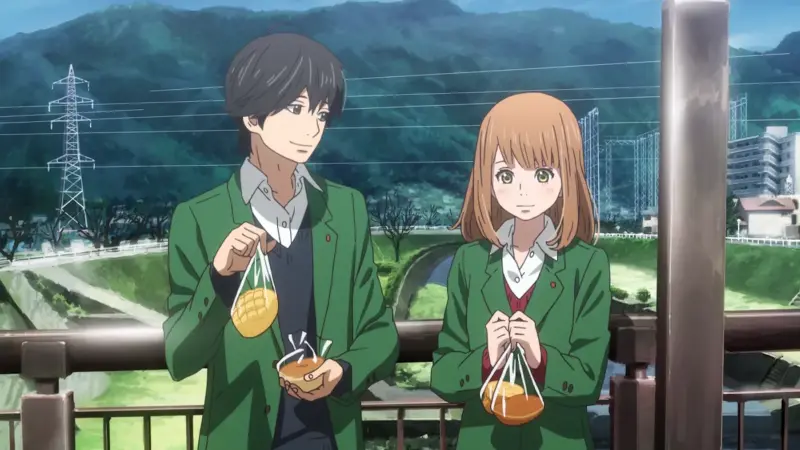
The absolute heartbreak of this series comes from the realization that love is rarely a magical cure for profound mental illness. Naho and her friends systematically follow the letter’s instructions, trying to engineer perfect, happy days for Kakeru. Yet, despite their overwhelming affection and romantic milestones, Kakeru’s trauma—stemming from his mother’s tragic death—constantly pulls him back into the abyss. The narrative perfectly captures the sheer terror of loving someone whose mind is actively trying to kill them.
What makes Orange utterly devastating is the dual timeline perspective. While we watch teenage Naho fight tooth and nail for Kakeru’s life, the anime frequently cuts back to the adult timeline. In that reality, Kakeru is already dead. We see the permanent, unhealing scars left on his friends, the empty seat at their reunions, and the crushing realization that their letters might just be creating a parallel universe, leaving their own grief completely unresolved. It is a grueling, exhausting, and beautifully human exploration of regret.
Ride Your Wave
Directed by the legendary Masaaki Yuasa, Ride Your Wave is a cinematic ambush. The first act of the movie is a blindingly colorful, wildly optimistic surfer romance. Hinako, a clumsy but passionate surfer, falls deeply in love with Minato, a highly competent, endlessly supportive firefighter. Their relationship is disgustingly cute, built on shared songs, making coffee, and saving lives. And then, without any grand thematic warning, Minato drowns trying to save someone in the ocean. The absolute suddenness of it mirrors real-world tragedy flawlessly.
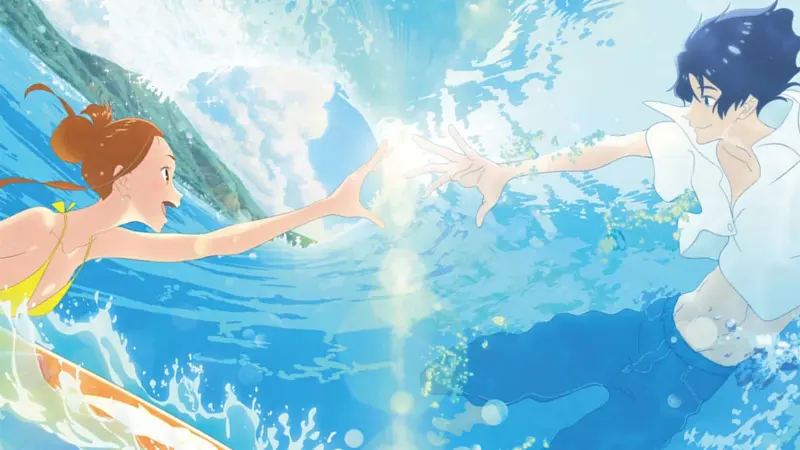
The film brilliantly externalizes the hallucinatory nature of acute grief. Unable to process the total destruction of her future, Hinako discovers that singing their favorite song causes Minato’s spirit to appear in water. At first, it seems like a magical, heartwarming second chance. But the narrative quickly twists this mechanic into psychological horror. Hinako begins carrying a water bottle everywhere, talking to puddles, isolating herself from society, and literally refusing to let the dead move on.
The romance transforms into a haunting exploration of dependency. Minato, despite being a spirit, realizes he is actively preventing the love of his life from healing. The heartbreak comes from the agonizing realization that the ultimate act of love is not holding on, but forcing yourself to let go. Watching Hinako slowly realize she cannot keep her dead boyfriend trapped in a water glass, and must finally face the crushing reality of an empty apartment, is enough to absolutely break you.
WorldEnd (SukaSuka)
If you enjoy the concept of inescapable, systemic tragedy, WorldEnd (often referred to as SukaSuka) is a masterclass in establishing a romance that is fundamentally doomed from episode one. Willem Kmetsch is the last surviving human in a sky-island world overrun by apocalyptic beasts. He is hired to manage a weapons warehouse, only to discover that the “weapons” are actually young fairy girls, heavily engineered to fight, explode, and die to protect the remaining races. Among them is Chtholly, a girl rapidly approaching her expiration date.
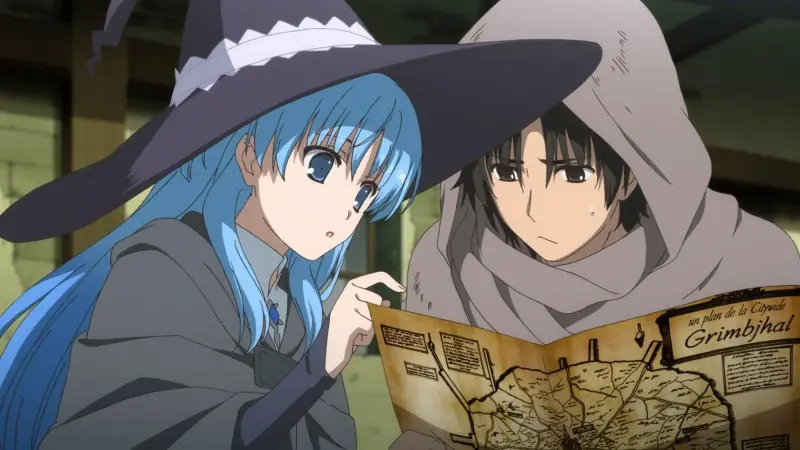
The romance between Willem and Chtholly is intensely agonizing because the audience, and the characters themselves, know exactly how it ends. Every sweet moment—baking cakes, walking through the market, offering emotional support—is heavily poisoned by the fact that Chtholly’s mind is literally deteriorating every time she uses her powers. The series expertly explores the psychological torment of choosing to fall in love when you know, with absolute certainty, that your partner’s core purpose is to be a disposable suicide bomber.
Chtholly’s mental degradation is incredibly difficult to watch. She slowly loses her memories, her personality, and her sense of self, desperately clinging to her love for Willem as her mind violently fragments. Willem, having already failed to save humanity years ago, is forced to stand completely powerless as history repeats itself. It is a beautifully animated, ruthlessly cruel narrative about finding fleeting pockets of warmth in a universe designed to slaughter you.
Plastic Memories
While many sad anime rely on sudden tragedy or ambiguous illness, Plastic Memories completely weaponizes inevitability. In this near-future setting, humans live alongside “Giftias”—highly advanced androids that possess real souls and emotions. The catch is devastating: Giftias have a hard-coded lifespan of exactly 81,920 hours (about 9 years and 4 months). When their time runs out, their memories corrupt, and they become violently hostile, requiring them to be systematically shut down by retrieval teams. Tsukasa joins one of these teams and immediately falls in love with his veteran Giftia partner, Isla.
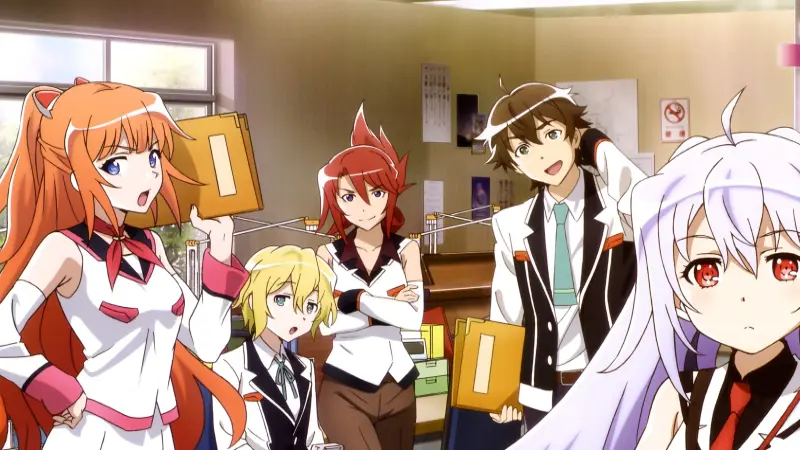
The genius of this series is that it forces both the characters and the viewer to confront a terrifying philosophical question: if you know the exact day and hour a relationship is going to permanently end, do you pull away to protect yourself, or do you love as fiercely as possible until the timer hits zero? Isla, knowing she only has a few months left, actively tries to distance herself from Tsukasa, believing that making happy memories will only inflict deeper trauma on him when she inevitably dies.
The finale of Plastic Memories is legendary for its unadulterated emotional damage. There is no last-minute scientific miracle. There is no deus ex machina. The show meticulously counts down the hours, forcing you to watch Tsukasa and Isla share one final, breathtakingly beautiful ride on a Ferris wheel before he has to physically deactivate the love of his life with his own hands. It is a flawless execution of tragedy that leaves viewers completely hollow.
Cyberpunk: Edgerunners
Beneath the chrome, hyper-capitalist violence, and pulse-pounding aesthetic of Night City, Cyberpunk: Edgerunners is fundamentally one of the most soul-crushing romances of the modern era. David Martinez is a street kid who loses absolutely everything to a rigged system. His life only gains true trajectory when he meets Lucy, an enigmatic netrunner with an impossible, seemingly naive dream of escaping the dystopian nightmare to live on the moon. Their romance is built on deep shared trauma, forged in the blood-soaked alleyways of a city designed to chew up human connections.
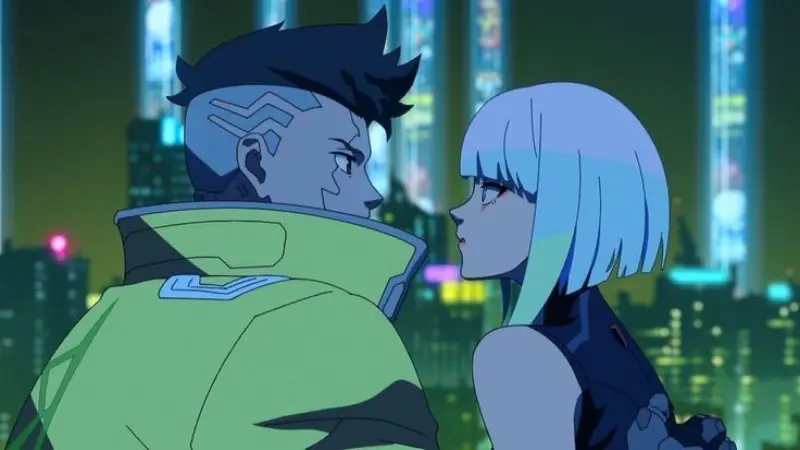
The tragedy of David and Lucy is rooted in a brutal miscommunication of values. For Lucy, David is the dream; she abandons her desire for the moon because keeping him alive becomes her sole priority. However, David suffers from severe savior complex and cyber-psychosis. He fundamentally believes he is “built different,” heavily modifying his body into an unrecognizable machine of war solely to amass enough wealth and power to physically launch Lucy to the moon. He sacrifices his humanity for her dream, completely ignoring that she just wants him to survive.
The final episodes are an absolute psychological meat grinder. Watching David slowly lose his mind to the chrome, his physical and mental state violently degrading while Lucy desperately tries to pull him back from the edge, is harrowing. When the iconic track “I Really Want to Stay At Your House” drops during the finale, it perfectly cements the absolute emotional devastation of two people deeply in love being entirely destroyed by a world that refuses to let them win.
Anohana: The Flower We Saw That Day
While often categorized primarily as a story about friendship, Anohana relies heavily on unrequited romantic feelings and complex love triangles to deliver its legendary emotional payload. The premise is universally known: a tight-knit group of childhood friends completely shatters following the tragic, accidental death of Menma. Years later, a deeply depressed, socially isolated Jinta is suddenly haunted by an older version of Menma’s ghost, forcing the estranged, highly hostile group back together to grant her final wish.
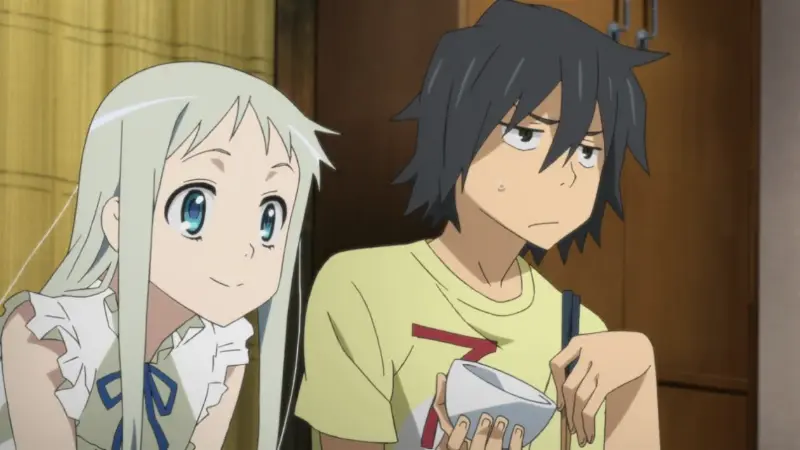
The heavy romantic undertones are the true source of the group’s toxicity and pain. Jinta was in love with Menma. Yukiatsu was also in love with Menma, and his failure to save her warped his entire personality into a jealous, cross-dressing psychological breakdown. Anaru is in love with Jinta, heavily burdened by the guilt that she was secretly relieved when Menma died because it removed her romantic rival. Every single character’s adolescent development was violently halted the day she fell into the river.
The anime is a grueling examination of how people weaponize their grief against each other. The ghost of Menma is less of a magical phenomenon and more of a narrative forcing mechanism, dragging every toxic, unspoken romantic resentment out into the open. The finale, featuring the legendary game of hide-and-seek and the dropping of the iconic ending theme, is a masterclass in emotional release. It breaks you down completely before finally allowing the characters—and the audience—permission to grieve and move on.
I Want to Eat Your Pancreas
Despite its bizarre, highly off-putting title, I Want to Eat Your Pancreas is arguably the most lethal anime movie ever created for the human tear duct. Haruki is a deeply cynical, utterly detached high school loner who accidentally discovers a diary belonging to Sakura, the most popular, vibrant girl in his class. The diary reveals a heavily guarded secret: Sakura has a terminal pancreatic disease and is dying. Because Haruki reacts with absolute apathy, Sakura latches onto him, desiring a relationship completely devoid of the suffocating pity everyone else would offer.
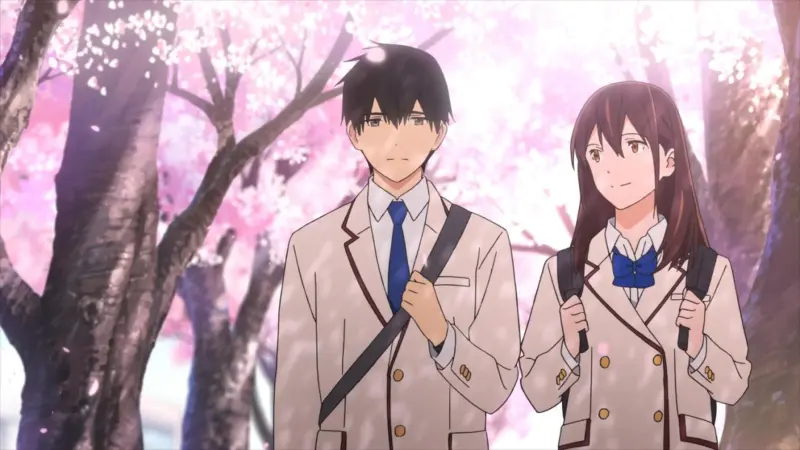
The brilliance of this film is how it strips the melodrama out of the terminal illness trope. Sakura is not bedridden or crying softly by a window; she is chaotic, deeply annoying, and aggressively dragging Haruki into the vibrant world of the living. Their romance is entirely unspoken. It is a profound, metaphysical connection where two completely opposite souls trade philosophies to complete each other before time runs out. Haruki learns how to engage with the world, while Sakura gets the normalcy she desperately craves.
But the true devastation of the movie lies in its third act. The narrative pulls a violently abrupt, brutally realistic bait-and-switch that completely shatters the audience’s expectations of how a “dying girl” story is supposed to end. It serves as a horrifying reminder that mortality is random, indifferent, and does not care about your emotional preparations. The scene where Haruki finally drops his stoic facade and completely breaks down weeping is one of the most visceral, authentic displays of grief ever animated.
Your Lie in April
Standing as a monolithic pillar of the sad romance genre, Your Lie in April is a visually stunning, emotionally grueling masterpiece. Kousei Arima was a child piano prodigy whose talent was beaten into him by an abusive, dying mother. Following her death, Kousei suffers a severe psychological breakdown, rendering him completely tone-deaf to the sound of his own playing. He lives a suffocating, monochromatic existence until a free-spirited, wildly aggressive violinist named Kaori Miyazono forces her way into his life.
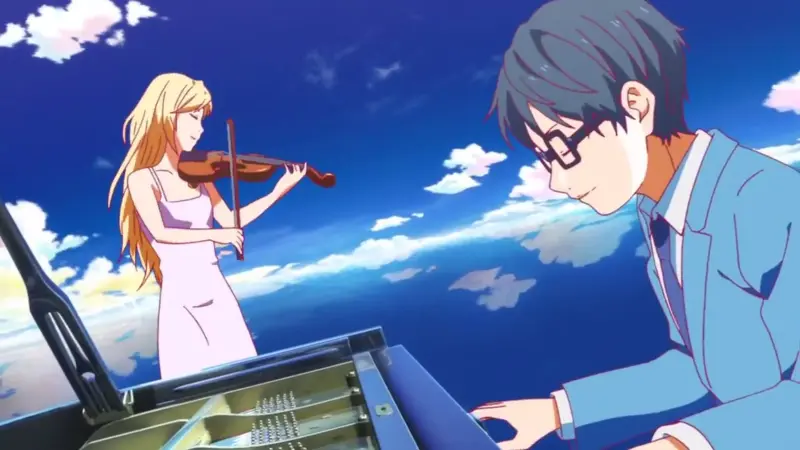
Kaori is the ultimate catalyst. She violently drags Kousei back to the stage, forcing him to confront the agonizing trauma of his past through the medium of classical music. Their relationship is explosive, built on the frantic energy of live performances and deep psychological vulnerability. However, the vibrant colors of the anime slowly bleed out as the audience realizes Kaori is hiding a profound, terminal illness. Her eccentric, aggressive pushiness is revealed to be the desperate flailing of a girl terrified of being forgotten.
The series completely destroys viewers by making the inevitability of loss so beautiful. Kousei’s final piano performance, where he realizes through the music that Kaori is dying on the operating table in that exact moment, is a sequence of unbridled emotional agony. The revelation of the titular “lie” in the final episode recontextualizes every single interaction in the entire series, transforming it from a simple tragedy into a profound, devastating testament to the selflessness of true love.
Clannad: After Story
Sitting uncontested on the throne of absolute, unrelenting emotional destruction is Clannad: After Story. While the first season is a standard, albeit highly emotional, high school visual novel adaptation, After Story does something almost no other anime dares to do: it forces the characters to grow up. Tomoya and Nagisa graduate, get married, and enter the adult workforce. The narrative strips away the safety nets of school festivals and club activities, replacing them with the crushing weight of blue-collar labor, societal expectations, and severe health complications.
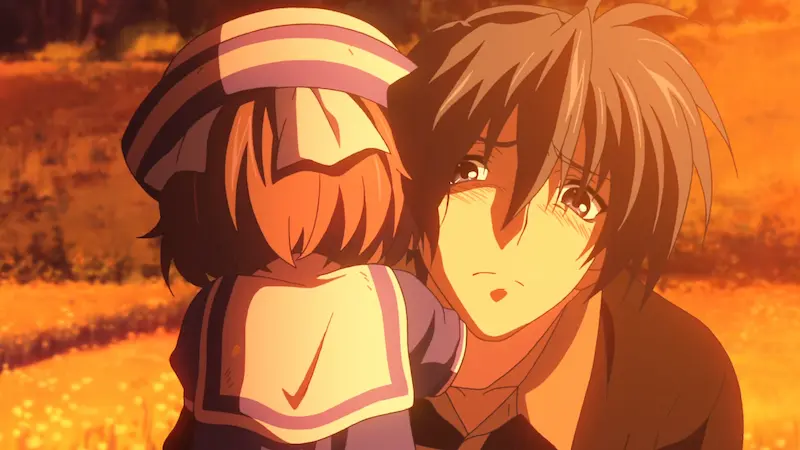
The tragedy of this series is so profoundly effective because it feels terrifyingly real. There are no magic powers, no futuristic androids, and no dystopian cybernetics. It is just a man deeply in love with a frail woman, desperately trying to build a family in a world that is fundamentally indifferent to their happiness. The mid-season twist is so violently catastrophic that it has cemented itself as arguably the most traumatizing sequence in anime history, completely shattering Tomoya’s psyche and plunging him into a multi-year depressive spiral of parental neglect and alcoholism.
What makes After Story the peak of sad romance is the sheer endurance test it puts the viewer through. Episode 18, famously known as the “Field of Sunflowers” episode, is a masterclass in emotional payoff, forcing Tomoya to finally confront his grief and his responsibilities as a father. It is a grueling, grueling watch that fundamentally alters your perspective on family, loss, and the horrifying fragility of human happiness. It is not just the saddest romance anime ever made; it is an absolute rite of passage.
The Catharsis of Absolute Heartbreak
Surviving this list is no small feat. Sad romance anime hold a very specific, deeply important place in the medium. They remind us that love is not just about the happy endings; it is about the profound vulnerability required to care for someone when the outcome is uncertain, tragic, or violently stripped away. Whether it is Kaori’s desperate lie, Isla’s ticking clock, or Tomoya’s grueling journey through adulthood, these narratives teach us that the pain of loss is simply the final, unavoidable tax we pay for the privilege of loving someone deeply.
If your heart is completely in ruins and you need a palate cleanser that focuses on mature communication rather than terminal illness, prepare for our upcoming dive into the Top 10 Realistic Romance Anime, where characters actually talk through their problems. Until then, wipe your tears, grab some water, and head over to the Smash Senpai hub to cast your vote on which tragic couple truly deserved a second chance.
Which sad romance anime absolutely destroyed you the most?
Frequently Asked Questions
Why are sad romance anime so popular?
Which anime is sadder, Clannad After Story or Your Lie in April?
Is Cyberpunk Edgerunners considered a sad romance anime?
Do sad romance anime ever have happy endings?
What is the saddest anime movie about romance?
Rank Your Favorites
Take a break and play our interactive Smash or Pass games. Vote on your favorite anime characters, game characters, and idols to shape the global tier lists.
Join the Discussion (0)