Top 10 Best Anime With a Non-Human MC (Monsters to Objects)

The vast majority of modern action and fantasy anime suffer from an aggressive case of anthropocentric bias. We are continuously forced to view grand, multiversal conflicts through the highly predictable lens of human morality, teenage anxieties, and standard anatomical limitations. Even when a series introduces a sprawling world filled with ancient gods, cybernetic anomalies, or grotesque monsters, the protagonist is almost always a baseline human designed to keep the audience safely coddled within their own comfort zone. This reliance on the human template completely starves the medium of true creative experimentation.
When you shift the camera away from humanity and place the narrative consciousness behind the eyes of a completely non-human entity, the entire structural matrix of storytelling changes. The conflict is no longer about fitting into human society; it is about managing morphological alienation, navigating non-human biology, and processing a world that views you as either an invasive predator or a literal piece of hardware. To explore how this subversion of standard narrative structures fits into wider storytelling patterns, check out our comprehensive Anime Tropes Hub to see how breaking the human baseline compares to other legendary narrative deconstructions.
If you are completely exhausted by emotional human teenagers and want to dive into characters who operate on cold logic, monstrous instincts, or literal inanimate mechanical constraints, you have arrived at the perfect sanctuary. From ancient skeletal overlords to sentient blades, here are the Top 10 best anime with a non-human MC.
Table of Contents
Ginga Nagareboshi Gin (Gin)
Kicking off our list is an absolute retro masterpiece that completely strips away the modern, sanitized depiction of anthropomorphic animals. Ginga Nagareboshi Gin focuses entirely on (Gin), a silver brindle Akita pup born into a legacy of elite bear-hunting hounds. The narrative operates with zero human coddling; the setting is the unforgiving, frozen wilderness of northern Japan, where a monstrous, mutated grizzly bear named Akakabuto is slaughtering human hunters and claiming total territorial dominance over the mountains.
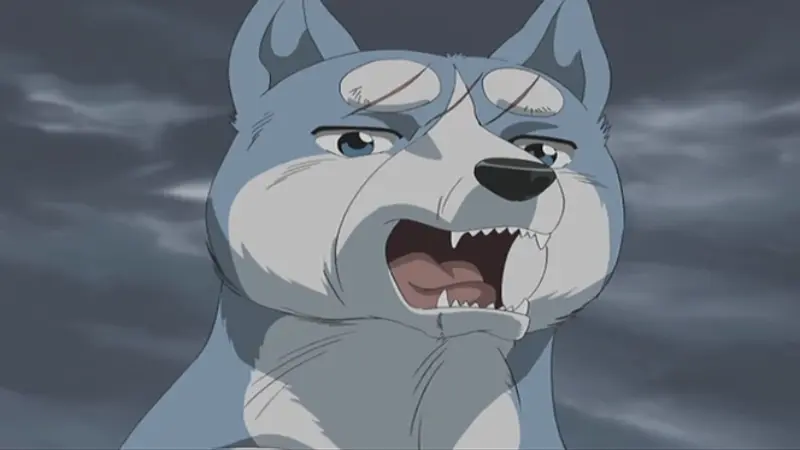
What makes this series so distinct is its absolute adherence to canine psychology and pack mechanics. Gin does not possess magical human speech or a convenient transformation; he communicates entirely through barks, growls, and body language that the audience interprets as a complex, blood-soaked martial epic. He leaves his human master as a mere pup, choosing to join a wild pack of stray dogs who are traversing the country to recruit an army of canine warriors capable of launching a tactical military strike against the bears.
The progression within this dog society is deeply militaristic and brutal. Strength is measured in scars, tactical hunting formations, and the absolute willingness to bite through an opponent’s jugular. Gin’s evolution from a weak, shivering newborn into a legendary pack commander who executes complex, high-speed spin attacks is incredibly gripping. It is an intense, uncompromised look at wild predator psychology that proves you don’t need a human baseline to deliver a gripping story about honor, brotherhood, and raw survival.
Reborn as a Vending Machine, I Now Wander the Dungeon (Boxxo)
On the complete opposite end of the spectrum lies Reborn as a Vending Machine, I Now Wander the Dungeon, a concept that sounds like an absolute joke but functions as an incredible exercise in strict narrative limitation. The protagonist, (Boxxo), is an eccentric vending machine otaku who is crushed to death by a falling machine and reincarnated into a dangerous fantasy dungeon as a literal, fully functioning Japanese vending machine. He cannot walk, he cannot gesture, and his vocal capabilities are hard-coded to preset automated phrases.
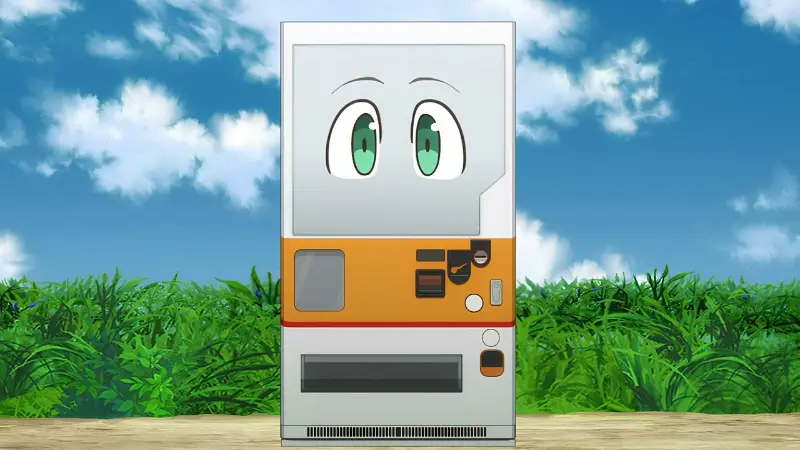
The psychological brilliance of this anime is how it turns Boxxo’s inanimate rigidity into a high-stakes puzzle of survival and utility. He manages his internal mechanics via a points system fueled by transactions. To survive, he must sell items—ranging from canned coffee and hot noodles to specialized defensive gear and barrier fields—to passing adventurers. Because he cannot speak freely, he has to carefully select automated corporate catchphrases like “Thank you very much” to signal danger, communicate strategies, or express affection to his human partner, Lammis.
The series masterfully preserves his non-human constraints during combat. Boxxo cannot attack; he relies entirely on his immense weight, material transformations, and the tactical deployment of frozen foods or carbonated beverages to disrupt monster formations. It is a brilliant, hyper-focused exploration of technical adaptation that forces the audience to appreciate the profound level of strategic thinking required to conquer a high-fantasy dungeon when your entire existence is anchored to a sheet-metal chassis.
Reincarnated as a Sword (Shishou / Master)
Reincarnated as a Sword takes the concept of an inanimate protagonist and infuses it with high-octane kinetic action. The main character, known simply as (Shishou) or Master, wakes up in a fantasy realm to discover he has been reincarnated as a highly advanced, beautifully forged magical blade stuck in a stone pedestal. While he possesses immense telekinetic flight capabilities and access to an absolute mountain of spellcasting skills, he remains a literal piece of hardware that requires an organic hand to unlock his true structural potential.
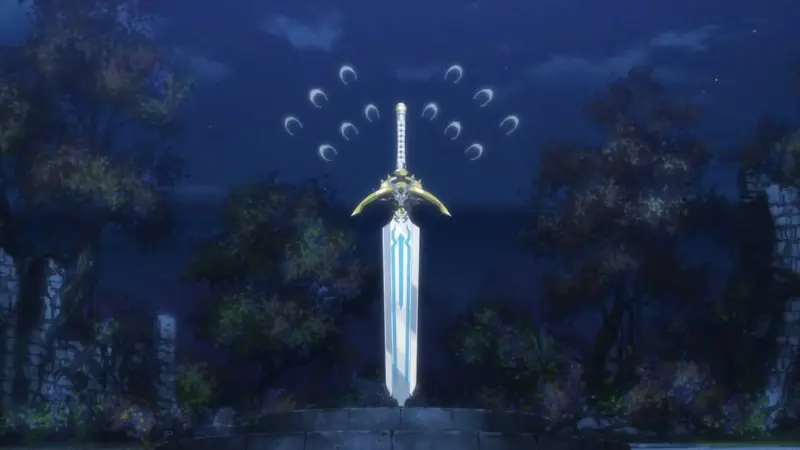
The narrative core of the show is built entirely around his symbiotic relationship with Fran, a heavily traumatized, formerly enslaved beastgirl. Shishou acts as her literal weapon, adoptive father, and strategic mentor. Because he is a sword, his psychological focus is entirely non-human; he doesn’t care about standard political corruption or mortal social norms except for how they directly impact Fran’s physical safety and psychological development. He spends his internal processing time managing edge alignment, durability scores, and telekinetic parries.
The combat mechanics are incredibly compelling because they are split between two distinct entities operating as one biological and mechanical unit. Fran provides the spatial mobility and martial instincts, while Shishou manages the casting of high-tier elemental spells and the real-time absorption of monster core data to upgrade his steel composition. It is a fantastic, highly kinetic exploration of how an inanimate object can become an absolute engine of destruction without ever losing its fundamental identity as a piece of equipment.
So I'm a Spider, So What? (Kumoko / Shiraori)
If you want to explore the absolute limits of subterranean survival and morphological alienation, So I’m a Spider, So What? delivers an incredibly chaotic, deeply analytical masterclass. An entire human classroom is eradicated by a dimensional anomaly, and our nameless female protagonist is reincarnated as a tiny, completely defenseless taratect—a spider monster—at the lowest, most lethal layer of the world’s largest dungeon. She is known to the community as (Kumoko).
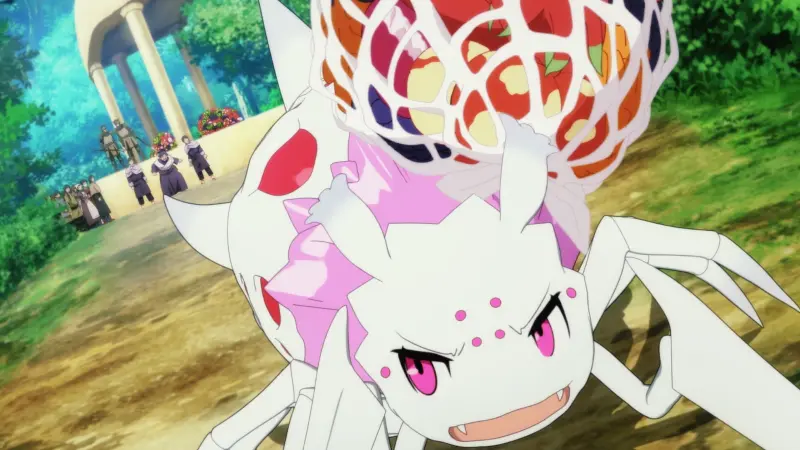
Unlike standard isekai where the protagonist is immediately welcomed into a cozy starter village, Kumoko is instantly hunted by giant basilisks, armored drakes, and even her own cannibalistic spider mother. Her survival requires the total, immediate abandonment of human morality. She spends episodes hiding in dark crevices, eating highly toxic, burning monster flesh that literally melts her internal organs, and mastering arachnid combat mechanics like high-speed thread manipulation, poison synthesis, and structural web engineering.
Her psychological evolution is fascinatingly unhinged. To survive the crushing isolation and continuous neardeath experiences, her mind splinters into multiple distinct internal sub-routines (Information Brain, Body Brain, Magic Brain) that argue with each other to optimize combat telemetry. As she continuously evolves her physical form, shedding her skin and morphing into highly dangerous, multi-legged predator tiers, her connection to human empathy completely evaporates. She views the world through a cold, evolutionary lens of pure statistical dominance, making her transformation spectacular to witness.
Dorohedoro (Caiman)
Dorohedoro drops the audience into “The Hole”—a grim, smoke-choked dystopian cityscape where cruel magic users from a parallel dimension routinely kidnap citizens to perform horrific biological experiments. Our protagonist, (Caiman), is the ultimate victim of these atrocities. He wakes up with a massive, scaled reptile head, total amnesia regarding his original human life, and a bizarre, secondary human consciousness living deep inside his throat that speaks to people he bites.
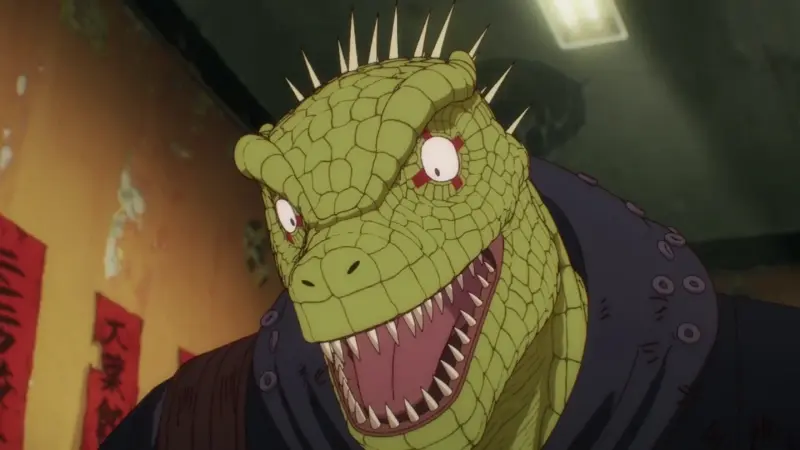
The narrative is a chaotic, blood-drenched mystery tracking Caiman’s desperate, hyper-violent quest to find the specific magic user who mutated him. Because of his reptilian physiology, he is entirely immune to all direct magical spells, turning him into a terrifying, dual-dagger-wielding apex predator who hunts sorcerers through dark alleyways. He shoves their heads into his massive jaws so the entity inside his throat can identify their souls. The physical contrast of his brutal, cold-blooded violence against his endearing obsession with eating gyoza is brilliant.
The series completely ignores standard moral dualism. Caiman is a monster hunting monsters in a world completely devoid of structural order. His non-human head is not a temporary curse he laments; it is a violent lifestyle he completely embraces alongside his partner Nikaido. The visceral, grimy aesthetic of his reptilian combat style—ripping off limbs and surviving decapitations due to his advanced regenerative biology—makes this one of the most uniquely entertaining, atmospheric deconstructions of the human identity in the medium.
Beastars (Legoshi)
Moving away from fantasy action, Beastars utilizes an anthropomorphic animal society to deliver an incredibly sharp, highly uncomfortable psychological examination of human nature, prejudice, and sexual tension. The setting is Cherryton Academy, where carnivores and herbivores live together in a highly regulated, fragile state of forced peace. The delicate social order fractures completely when an alpaca student is brutally murdered and consumed on campus. The focus shifts to (Legoshi), a massive, socially awkward grey wolf who actively represses his apex biology to blend into the background.
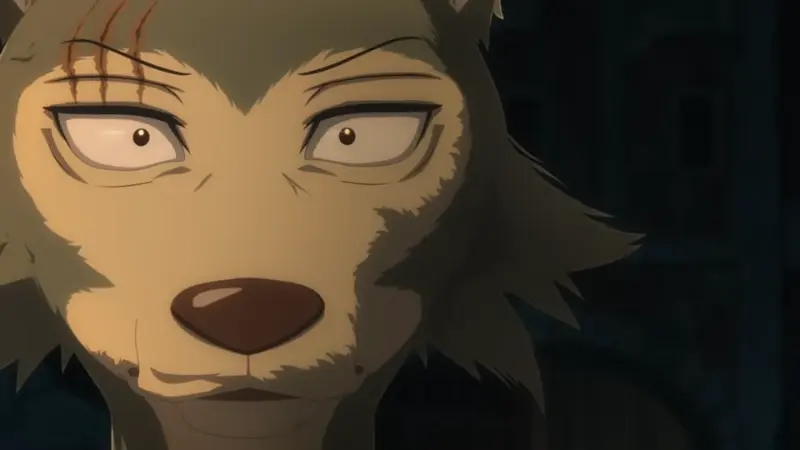
What makes Legoshi an incredible non-human protagonist is the deep, agonizing internal warfare that governs his mind. He is not a human wearing a wolf skin; his muscles, his jaw pressure, his heightened sense of smell, and his predatory instincts are real, volatile biological forces that he must continuously fight to suppress. The narrative reaches an intense psychological peak when he meets Haru, a tiny dwarf rabbit. When his natural hunting instincts explode in a dark garden, he is forced to question whether his fixation on her is a manifestation of romantic affection or a repressed, primal desire to tear her flesh apart.
The series treats animal traits as complex sociological constructs. We see the black markets where carnivores buy meat to keep their sanity, the systemic discrimination herbivores face, and the immense physical toll required for a predator to strip their own claws and teeth of violence. Legoshi’s journey through this social landscape is beautifully written and deeply atmospheric, offering a profound exploration of how hard it is to construct an ethical identity when your own biology is hard-coded for slaughter.
Odd Taxi (Hiroshi Odokawa)
Odd Taxi is an absolute narrative miracle that presents itself as a charming, quirky slice-of-life about an anthropomorphic walrus taxi driver, only to slowly unravel into a pitch-black, tightly spun criminal noir thriller. The protagonist, (Hiroshi Odokawa), is a cynical, deeply insomniac 41-year-old walrus who spends his nights navigating the neon-lit streets of Tokyo, listening to the eccentric, interconnected monologues of his various passengers—ranging from clout-chasing hippos to corrupt alpaca cops and murderous baboon mobsters.
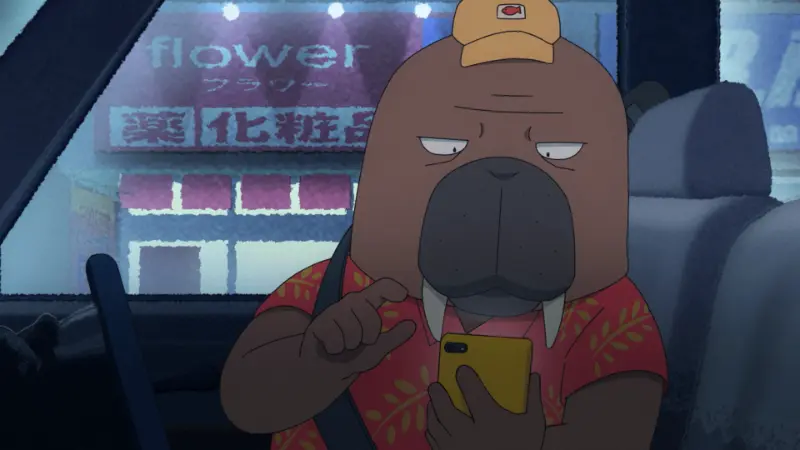
The dialogue is incredibly sharp, capturing the authentic rhythms of real human conversations, anxieties, and modern digital obsessions with surgical precision. Odokawa acts as the ultimate passive observer, drifting through a high-stakes missing persons investigation, multi-million yen bank heists, and complex Yakuza turf wars. Because he perceives everyone—including himself—as an animal, the audience accepts the visual style as a standard creative design choice common throughout anime history.
However, the series pulls off one of the greatest narrative deconstructions in modern media by revealing that the anthropomorphic animal world is entirely a product of Odokawa’s mind. Following a massive childhood trauma, Odokawa developed a severe, highly specific form of visual agnosia that prevents him from recognizing human faces, causing his brain to map animal archetypes onto people to cope with his isolation. The brilliance of this reveal turns the entire non-human structure of the show into a tragic, beautifully complex psychological study of coping mechanisms and human disconnection.
To Your Eternity (Fushi)
If you want a series that approaches the non-human concept from a deeply philosophical, existentially devastating angle, To Your Eternity is an absolute masterpiece. The story follows (Fushi), an immortal, amorphous alien entity cast down to earth by a mysterious creator. Initially, Fushi possesses no identity, no gender, and no consciousness; it is a blank slate that can copy the physical shape of anything it interacts with that leaves a strong emotional or physical impression, starting as a simple stone, then a patch of moss, and eventually a dying wolf.
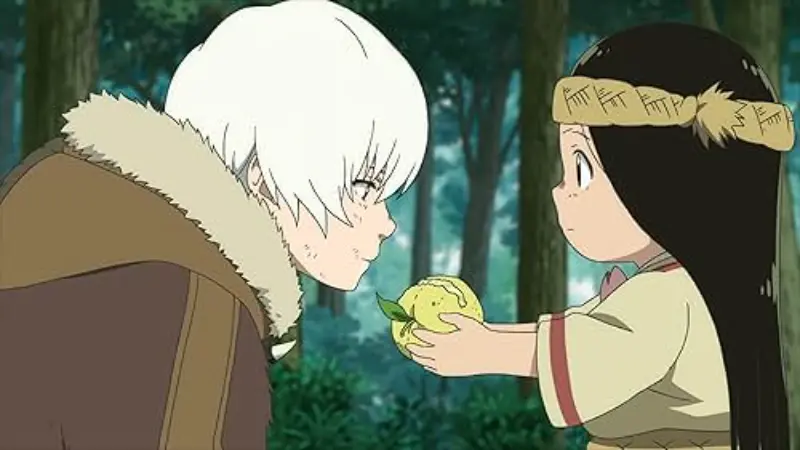
The narrative is a sprawling, multi-generational epic that tracks Fushi’s slow, agonizing evolution into a sentient being. He doesn’t understand human speech, the concept of death, or basic biological needs like eating and processing pain. He learns these concepts entirely through tragedy. Whenever a human companion who has shown him kindness dies, Fushi inherits their physical appearance, their memories, and their specific skills, turning his body into a living, physical archive of human grief.
The romance and relationships Fushi forms are intensely melancholic because he is existentially detached from the natural lifecycle. He stays exactly the same while the world around him ages, rots, and collapses into dust. Watching this immortal entity slowly master the complex, highly painful mechanics of human emotion—learning to love, to grieve, and to fight against a cosmic threat designed to steal his archived memories—is an emotional journey that will completely hollow you out.
Overlord (Ainz Ooal Gown / Momonga)
Standing as a monolithic titan of the dark fantasy genre, Overlord approaches the non-human protagonist archetype through a lens of profound psychological isolation and administrative terror. When the virtual reality server of Yggdrasil shuts down, a corporate salaryman named Momonga finds himself permanently trapped inside his avatar: (Ainz Ooal Gown), an ancient, immensely powerful Elder Lich. He is transported to a realistic new world alongside the Great Tomb of Nazarick and its massive army of fiercely loyal, highly psychotic monstrous NPCs.
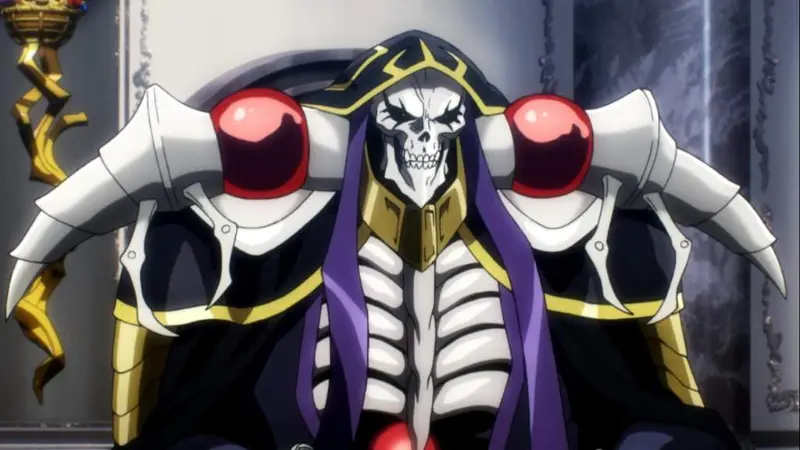
What elevates Overlord far above standard power fantasies is the terrifying biological effect of Ainz’s skeletal form. Because he is a literal undead being, his body possesses a hard-coded emotional damper. Whenever his residual human consciousness experiences an intense surge of panic, empathy, or sorrow, a green magical aura flashes across his bones, instantly crushing the emotion and returning his mind to a state of cold, calculating apathy. He watches human armies get slaughtered with the exact same emotional distance he would feel clearing a spreadsheet.
The true core of the narrative is an identity crisis. Ainz is trapped inside a prison of absolute expectations. His monstrous subordinates view him as an omnipotent, ruthless god of death. To prevent them from discovering he is just a normal human salaryman, Ainz is forced to constantly act out a flawless facade of absolute tyranny. He systematically conquers kingdoms, authorizes horrific biological experiments, and orchestrates global massacres, slowly realizing that his original human self is being entirely consumed by the merciless, cold-blooded logic of the Overlord architecture.
That Time I Got Reincarnated as a Slime (Rimuru Tempest)
Sitting uncontested at the absolute peak of the genre is That Time I Got Reincarnated as a Slime (Tensura). Satoru Mikami is stabbed to death on a city street and reincarnated into a high-fantasy universe as a blind, acoustic-sensing ball of blue slime. On paper, a slime is the absolute lowest common denominator of fantasy life—a brainless, disposable starter mob meant to be farmed for basic experience points. But the series turns this absolute biological baseline into the ultimate engine of structural, political, and evolutionary nation-building.
The protagonist, renamed (Rimuru Tempest), scales his immense power purely by honoring and maximizing his slime biology through his unique skill, Predator. He analyzes magicule flows, dissolves organic matter, and replicates the cellular composition of everything he consumes. The anime spends hours detailing the chemical, biological, and industrial development of his nation, the Jura Tempest Federation—a safe haven built entirely for monsters who have been structurally cast out by human kingdoms.
Rimuru’s non-human identity is what dictates his entire political philosophy. He doesn’t view the world through human borders or religious dogmas; he approaches geopolitics with the fluid, adaptive pragmatic intelligence of a slime, integrating disparate monster races (Goblins, Direwolves, Ogres, Orcs) into a unified, hyper-efficient economic powerhouse. When he eventually undergoes the “Harvest Festival” transformation to become a True Demon Lord, the power upgrade feels immensely satisfying because it is structurally tethered to his role as the absolute vanguard of monster civilization. It is the gold standard of non-human progression storytelling.
De-Centering the Human Matrix
The enduring satisfaction of exploring anime through a non-human protagonist is the complete dismantling of standard creative limitations. These series prove that the most compelling mirrors for our own humanity often come from entities that possess no human parts at all. Whether it is Ainz Ooal Gown managing the terrifying psychological isolation of his skeletal throne, Rimuru Tempest constructing a technological monster paradise from a slime baseline, or Odokawa processing his internal trauma through a walrus mask, these narratives show that life looks completely different when you step outside the human template.
If you are looking to pivot away from non-human monsters and instead want to dive into characters who rely on absolute, hyper-calculated human intelligence from the very first frame without any supernatural help, check out our guide on the Top 10 Anime with Genius Main Characters. Or, if you want to make your voice heard and declare which non-human entity had the absolute best tactical adaptation, head over to the Smash Senpai main hub and lock in your vote on our community dashboard!
Which non-human protagonist has the absolute best concept execution?
Frequently Asked Questions
What defines a non-human MC anime?
Why is Rimuru Tempest considered the blueprint for non-human protagonists?
How does Odd Taxi deconstruct the anthropomorphic animal trope?
What is the difference between a non-human MC and a standard monster tamer anime?
Does Overlord avoid the typical tropes of an overpowered main character?
Rank Your Favorites
Take a break and play our interactive Smash or Pass games. Vote on your favorite anime characters, game characters, and idols to shape the global tier lists.

Join the Discussion (0)