Top 10 Best Tsundere Characters in Anime
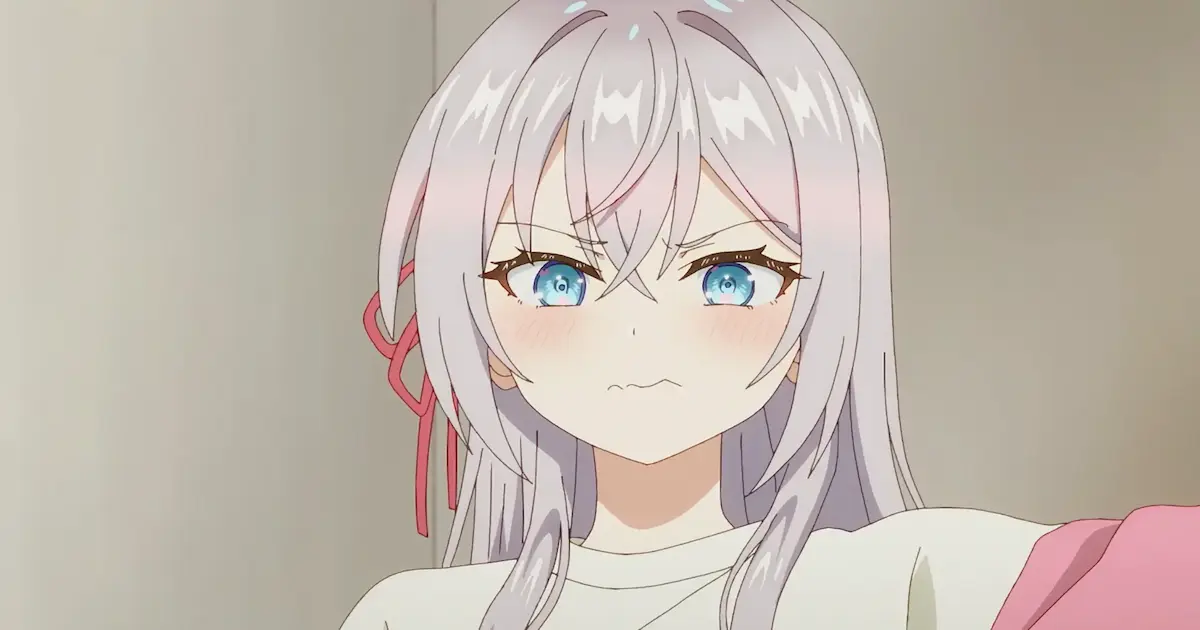
In the vast ecosystem of anime romance, vulnerability is terrifying. Handing someone your heart means giving them the absolute power to crush it. While some characters leap into romance with blind optimism, others construct massive, heavily fortified psychological fortresses to protect their fragile egos. This is the birthplace of the Tsundere—the most enduring, iconic, and endlessly debated character archetype in anime history. They are the masters of emotional self-sabotage, utilizing barbed insults, physical violence, and unwavering arrogance simply to hide the fact that their heart is beating out of their chest.
If you explored our breakdown of the best yandere characters within our Tropes Hub, you know that toxic obsession is terrifying because it completely lacks boundaries. The tsundere operates on the exact opposite psychological principle: they enforce absolute, impenetrable boundaries out of a paralyzing fear of intimacy. The true brilliance of this archetype does not lie in the hostility; it lies in the structural integrity of the wall, and the immense, rewarding emotional payoff that occurs when the protagonist finally manages to break it down. When the harsh “tsun” finally melts away into the sweet, vulnerable “dere,” it delivers a romantic climax that a straightforward confession simply cannot match.
From the deep, agonizing psychological trauma of 1990s mecha pilots to the modern, bilingual mind games of elite student councils, these characters defined the art of playing hard to get. Prepare to be called an idiot—here are the Top 10 best tsundere anime characters of all time.
Table of Contents
Eri Sawachika — School Rumble
We begin the list with an absolute classic from the mid-2000s rom-com era. Eri Sawachika from School Rumble is the definitive blueprint for the “Ojou-sama” (rich girl) variant of the tsundere archetype. Born into massive British-Japanese wealth, Eri projects a flawless aura of untouchable elegance. She is universally admired by the male student body, but she intentionally uses her high-class status, sharp tongue, and cold demeanor to keep everyone at a comfortable, superficial distance.
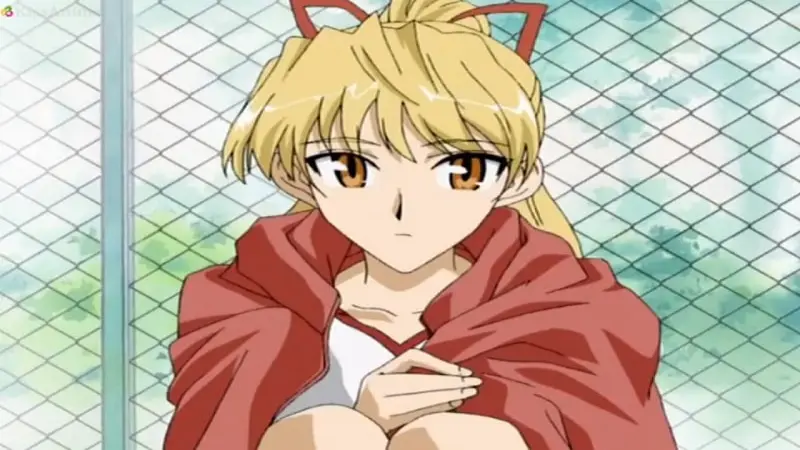
The psychological friction stems from the fact that Eri is incredibly lonely. Her parents are constantly away on international business, leaving her trapped in a massive, empty mansion. She desperately craves authentic human connection but is terrified of people only valuing her for her money. Enter Kenji Harima, the school’s resident delinquent who is completely oblivious to her social status. Harima treats her with zero reverence, frequently calling her ‘Ojou’ as a mocking nickname, which infuriates her but simultaneously provides the exact grounded interaction she subconsciously desires.
The dynamic between Eri and Harima is pure comedic gold. Because Harima is hopelessly in love with someone else, he completely misinterprets Eri’s aggressive, stuttering attempts at affection. When her perfectly constructed, elegant facade cracks—usually resulting in her violently kicking him or fleeing the scene in tears—it reveals a deeply insecure girl who simply does not possess the emotional vocabulary to ask for attention. She perfectly captures the charming, frustrating reality of a teenager trapped by her own pride.
Nino Nakano — The Quintessential Quintuplets
Nino Nakano executes one of the most satisfying, whiplash-inducing subversions of the tsundere trope in modern harem history. During the first season of The Quintessential Quintuplets, Nino’s hostility toward the tutor, Futaro Uesugi, is not a cute, blushing act—she genuinely despises him. Acting as the fiercely protective mother-hen of the quintuplets, she views Futaro as a foreign invader threatening to destroy the sacred, isolated bond she shares with her sisters. She actively sabotages his lessons, drugs him, and constantly demands his termination.
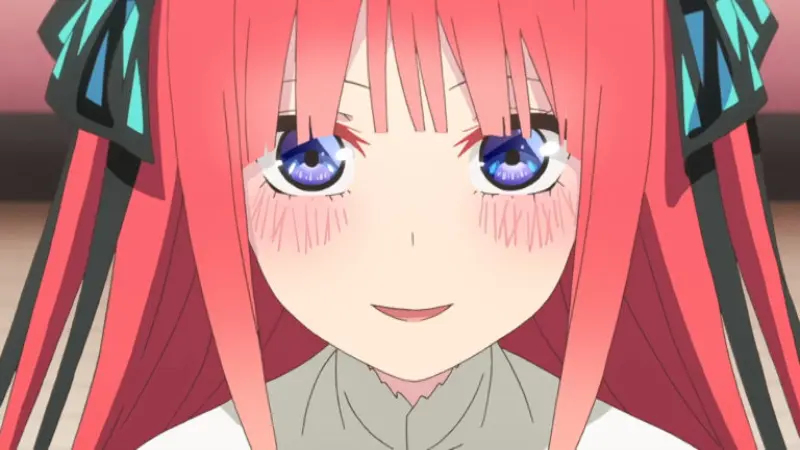
Most traditional tsunderes maintain their abrasive wall until the final episode, dragging out the romantic tension for years. Nino, however, operates like a freight train with no brakes. When she finally processes her own complex emotions and realizes she is actually in love with Futaro, she completely abandons the “tsun” facade. Instead of blushing and calling him an idiot, she forcefully confesses to him. When he does not hear her over the noise of a motorcycle, she immediately repeats it directly to his face just to ensure there is zero misunderstanding.
This aggressive pivot is what makes Nino a legendary character. She weaponizes her stubbornness, turning the fierce hostility she used to push Futaro away into a relentless, unapologetic campaign to win his heart. She forces the protagonist out of his dense, oblivious harem shell, demanding to be acknowledged as a romantic equal. Nino proves that a tsundere does not have to be a helpless, stuttering mess once their walls fall; they can become the most dangerous competitor on the battlefield.
Alya Mikhailovna Kujou — Alya Sometimes Hides Her Feelings in Russian
Bringing the archetype into the modern era with a brilliant linguistic twist, Alya Mikhailovna Kujou introduces a highly unique defense mechanism. As the incredibly beautiful, half-Russian idol of her high school, Alya projects an aura of absolute perfection. She is an elite student council member who treats her slacker desk neighbor, Masachika Kuze, with frigid, lecturing disdain. Whenever she experiences a moment of genuine romantic vulnerability, she mutters incredibly sweet, embarrassing confessions in fluent Russian, assuming no one in the room can understand her.
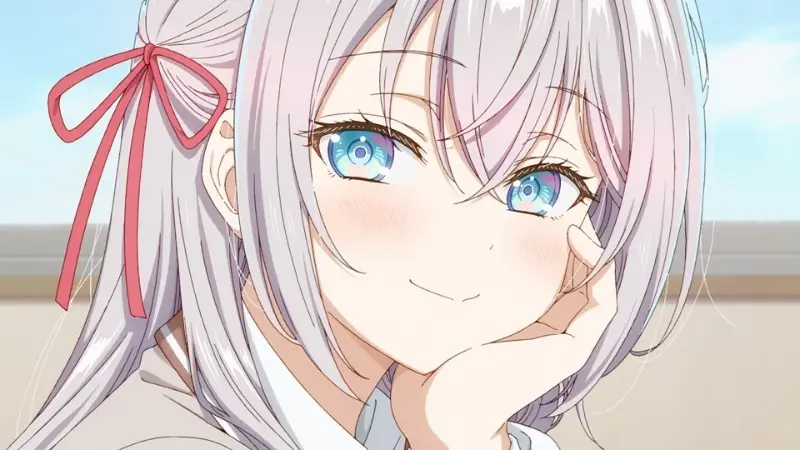
The core tension—and the primary comedic engine—of the series is that Kuze secretly possesses native-level fluency in Russian. He understands every single word she is saying. Alya is essentially operating a classic tsundere program, but she has outsourced her “dere” output to a localized server she believes is completely secure. She uses her mother tongue as a literal shield against her own paralyzing embarrassment, allowing her to vent her massive crush without ever risking actual rejection.
Watching Alya maintain her icy, lecturing glare while simultaneously murmuring “You’re so cute, I want to hug you” in Russian is an absolute delight. The dynamic forces Kuze to maintain his own massive poker face, creating a brilliant, high-stakes game of mutual psychological chicken. Alya’s character explores the immense difficulty of bridging the gap between the perfect, untouchable persona you project to the world and the clumsy, desperate affection burning underneath.
Shana — Shakugan no Shana
When discussing the pantheon of tsunderes, you must bow to the holy trinity voiced by Rie Kugimiya in the mid-2000s. Shana is the quintessential, katana-wielding, supernatural variant of the trope. She is a ‘Flame Haze’—an immortal warrior bound by contract to hunt down ‘Crimson Denizens’ who consume human existence. Because she was raised entirely as an emotionless tool of war, Shana lacks even the most fundamental understanding of normal human social dynamics. She does not even possess a real name until the protagonist, Yuji, gives her one.
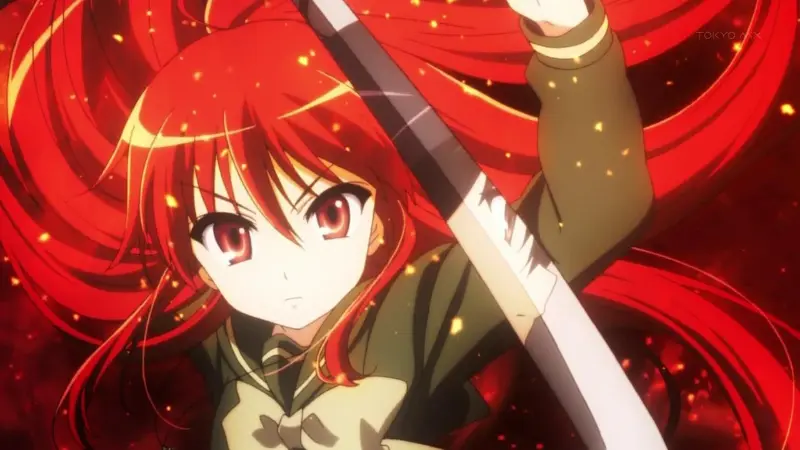
Shana’s abrasive personality is not born from petty high school drama; it is the result of a soldier completely short-circuiting when faced with domestic intimacy. When Yuji treats her like a human girl instead of a disposable weapon, her brain cannot process the data. Her legendary, rapid-fire catchphrase—“Urusai, urusai, urusai!” (Shut up, shut up, shut up!)—is a literal verbal panic button she slams whenever she feels her emotional programming breaking down.
The progression of Shana’s character across the sprawling three-season narrative is incredibly rewarding. Her evolution from a cold, logic-driven killer who views Yuji merely as a “Torch” (a useful tool), into a fiercely protective, deeply jealous teenage girl is the emotional anchor of the franchise. Her fiery red hair and blazing katana became the definitive visual blueprint for an entire generation of action-fantasy tsunderes who express their love primarily through physical violence and melon bread.
Misaka Mikoto — A Certain Scientific Railgun
In Academy City, a sprawling metropolis dedicated to researching supernatural esper abilities, Misaka Mikoto is a literal living legend. Ranked third among the city’s seven Level 5 Espers, she possesses devastating, city-leveling electromagnetic powers. Surrounded by sycophants and terrified underclassmen who place her on an untouchable pedestal, Misaka fiercely protects her proud, highly competent reputation. She is a seasoned warrior bearing the agonizing guilt of knowing her DNA was used to create thousands of disposable military clones.
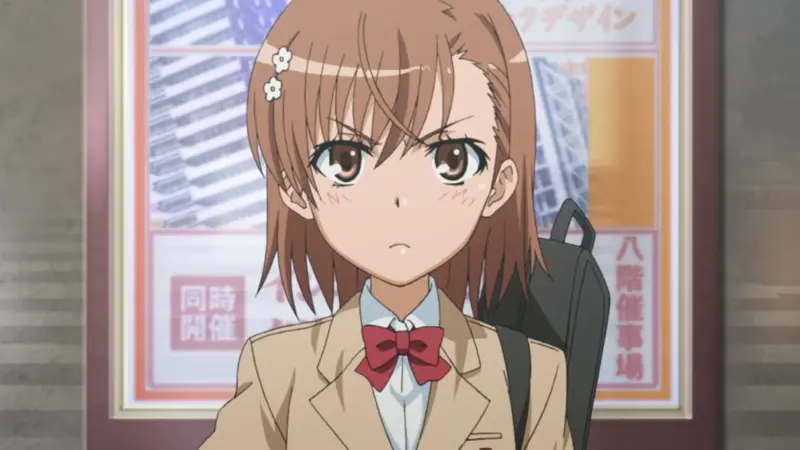
The entire foundation of her tsundere dynamic rests entirely on Touma Kamijou. Touma possesses the “Imagine Breaker,” an absolute anti-magic ability in his right hand that completely nullifies Misaka’s legendary lightning strikes. Because he is functionally immune to her god-tier powers, Touma is the only person in the entire city who treats her like an annoying, normal middle school girl rather than an intimidating deity. This infuriates Misaka’s pride but simultaneously fulfills her deepest, unspoken desire for normalcy.
Her violent outbursts—frequently resulting in her launching a billion volts of electricity at Touma’s face—are classic tsundere deflections. But beneath the sparking electricity and the prideful shouts, Misaka’s devotion is terrifyingly absolute. When the chips are down, she will gladly march into heavily fortified military bases and face down psychotic accelerators to protect the people she cares about. She perfectly balances raw, undeniable badassery with agonizingly relatable teenage romantic incompetence.
Hitagi Senjougahara — Bakemonogatari
Nisio Isin completely dismantled and rewrote the archetype when he created Hitagi Senjougahara. She self-identifies as a “tsundere,” but the community often refers to her as a “Tsundora” (a portmanteau of tsun and dragon). There is absolutely zero blushing, stuttering, or cutesy pouting in her repertoire. Senjougahara uses sharp words, terrifying psychological intimidation, and literal concealed weapons—staplers, box cutters, and compasses—to violently repel anyone who attempts to get close to her.
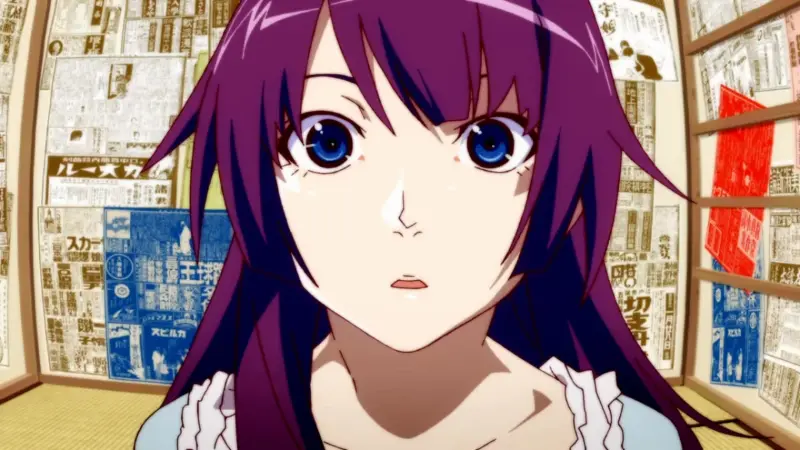
Her extreme hostility is a heavily fortified trauma response. After her mother fell into an abusive cult and her family was destroyed, Senjougahara encountered a supernatural Heavy Crab that stripped her of her physical weight, leaving her hollow and defenseless. Her prickly, venomous exterior is a survival mechanism designed to prevent her from ever being victimized or betrayed again. When the protagonist, Koyomi Araragi, literally catches her falling body and discovers her secret, she staples the inside of his mouth to ensure his silence.
The progression of their relationship is a masterclass in dialogue-heavy storytelling. Araragi does not fight her walls; he absorbs her abuse and systematically proves his unwavering loyalty. When Senjougahara finally lowers her defenses, the resulting “dere” is breathtakingly mature. Her iconic starry-night confession in episode 12 of Bakemonogatari strips away all the hostility, revealing a deeply broken girl offering the absolute entirety of her fragile soul to the only boy who bothered to carry her weight.
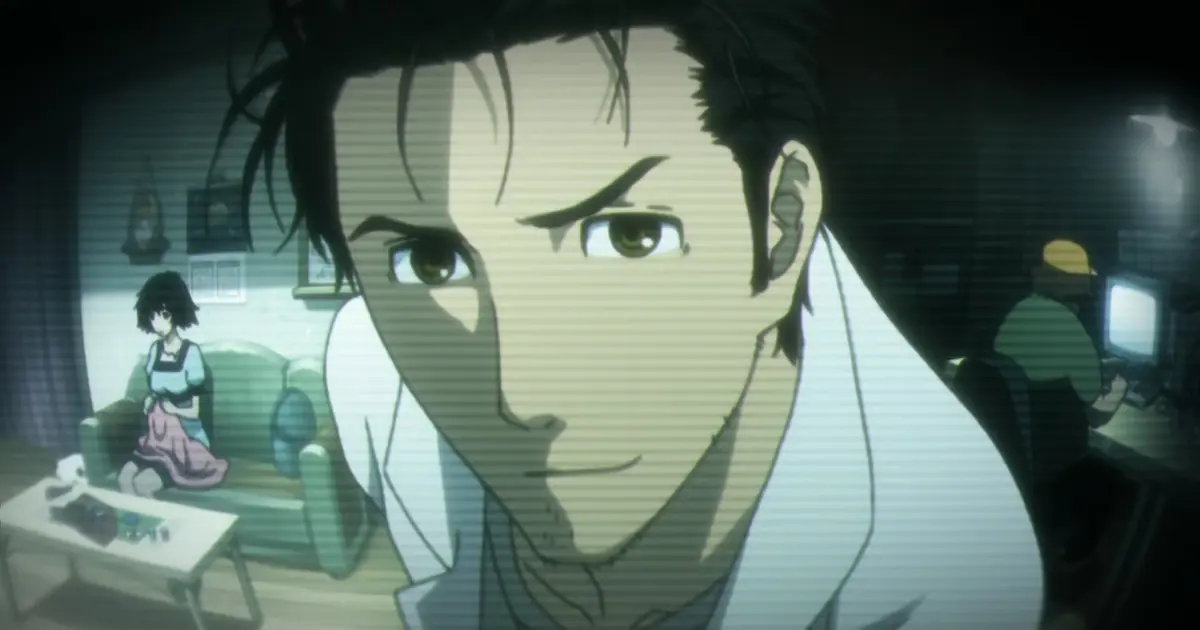
Kurisu Makise — Steins;Gate
Referred to affectionately (and annoyingly) as “Christina,” “Zombie,” or “Assistant” by the protagonist, Kurisu Makise from Steins;Gate is the ultimate intellectual tsundere. At only 18 years old, she is an internationally published neuroscience prodigy. She is deeply rational, highly skeptical, and relies entirely on peer-reviewed data to interact with the world. However, her brilliant academic career is overshadowed by massive “daddy issues”—her father, a bitter physicist, completely despises her for surpassing his life’s work.
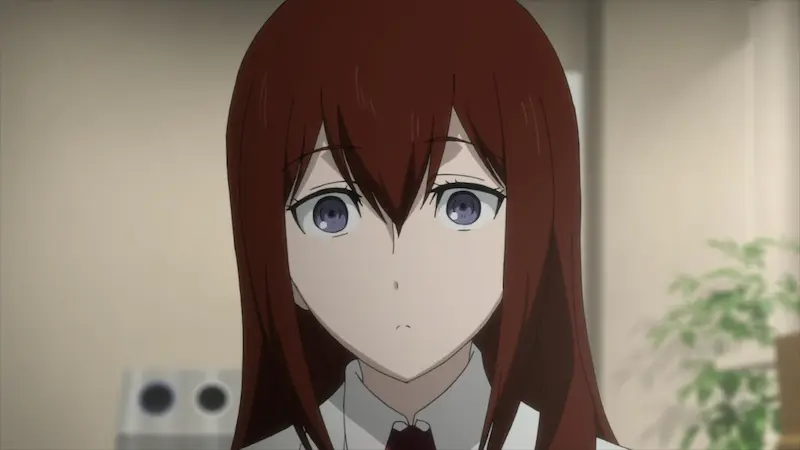
Kurisu’s tsundere dynamic is uniquely reliant on Rintaro Okabe’s relentless “chuunibyou” (eighth-grader syndrome) delusions. Okabe constantly acts like a manic mad scientist, shouting about secret organizations and time machines. Kurisu, relying on her rigid logic, cannot help but aggressively dismantle his unscientific nonsense, leading to rapid-fire, highly entertaining laboratory debates. Her sharp tongue and crossed arms are a defense mechanism designed to mask her profound imposter syndrome and deep-seated fear of rejection.
The tragedy of Steins;Gate elevates their dynamic into legendary status. As Okabe suffers through agonizing, traumatic time loops to save the lives of his friends, Kurisu consistently becomes his only intellectual and emotional anchor. Even across different timelines, her fundamental core—the harsh skepticism masking immense, self-sacrificing empathy—remains identical. Watching this rigidly logical scientist slowly abandon her precious rationality to completely surrender to the chaotic, unproven theory of love is one of the greatest character arcs in anime history.
Taiga Aisaka — Toradora!
If you were to open a dictionary to the word ‘tsundere,’ you would find a picture of the Palmtop Tiger glaring back at you. Taiga Aisaka from Toradora! is the pinnacle of Rie Kugimiya’s legendary era. Despite her tiny, doll-like stature, Taiga is an absolute terror. She carries a wooden katana, snaps at the slightest provocation, and resolves every single social conflict through extreme, hyper-aggressive physical violence. The entire school is terrified of her, isolating her in a self-imposed bubble of hostility.
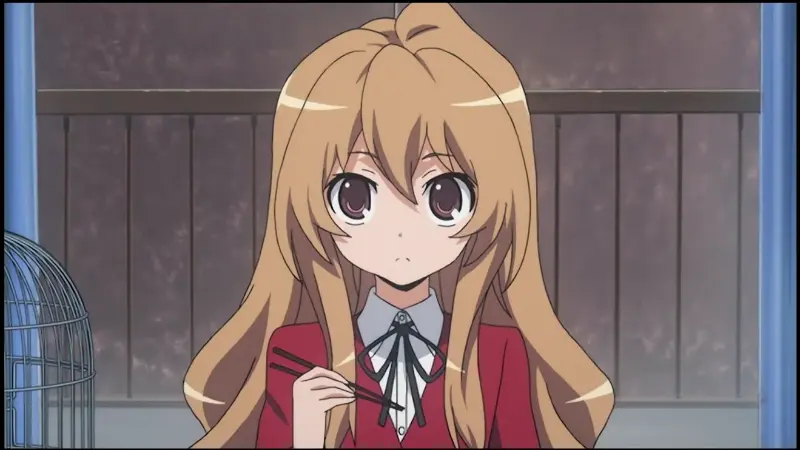
However, Toradora! excels at brutally deconstructing her violent facade. The audience quickly learns that Taiga’s hostility is a desperate shield covering extreme parental neglect. Her wealthy, broken family completely abandoned her, leaving her to live alone in a massive, trash-filled apartment without the basic ability to feed or care for herself. She attacks people because she has been conditioned to believe that anyone who gets close to her will eventually abandon her just like her parents did.
The dynamic changes when Ryuji Takasu, a boy cursed with an intimidating face but possessing the domestic skills of a seasoned housewife, steps into her life. He does not try to fight the Tiger; he simply cooks for her, cleans her apartment, and provides the unwavering, domestic stability she has been starved of. Watching Taiga slowly unlearn her violent survival mechanisms and realize that she is actually worthy of being loved creates a profoundly emotional, incredibly rewarding romantic journey.
Rin Tohsaka — Fate/stay night
There are many imitations, but Rin Tohsaka remains the absolute gold standard for the perfectly balanced tsundere. Operating within the blood-soaked, high-stakes battleground of the Holy Grail War, Rin is the heir to the prestigious Tohsaka magus lineage. She projects an aura of flawless, elite superiority at school, and in combat, she is a terrifyingly pragmatic, highly lethal tactician willing to sacrifice pawns to achieve victory. She embodies the core rule of the magus world: survival of the fittest, and absolutely zero emotional attachment.

The friction occurs because Rin is, at her core, a genuinely good person trapped by the horrific expectations of her bloodline. Her tsundere tendencies are not just cute blushing fits; they are the literal symptoms of her failing to suppress her own humanity. When the protagonist, Shirou Emiya, repeatedly throws himself into suicidal danger to protect others—completely violating every logical rule of magical warfare—it deeply infuriates Rin’s pragmatic worldview, while simultaneously making her fall hopelessly in love with his reckless idealism.
Particularly in the Unlimited Blade Works route, Rin’s evolution is spectacular. She never loses her sharp tongue or her confident, bossy demeanor, but she redirects that aggressive energy into saving Shirou from his own self-destructive hero complex. The visual novel roots of her character ensure that her transition from a cold, calculating enemy magus into a fiercely protective, blushing partner is paced perfectly. She is the ultimate, untouchable queen of the high-fantasy tsundere.
Asuka Langley Soryu — Neon Genesis Evangelion
Sitting at the absolute apex of the list is the character who essentially birthed the archetype, yet remains infinitely more complex and tragic than the thousands of tropes she inspired. Asuka Langley Soryu from Neon Genesis Evangelion is the physical embodiment of the Hedgehog’s Dilemma. She bursts into the narrative as a fiery, arrogant, hyper-aggressive prodigy. She constantly belittles the protagonist, Shinji, screaming her iconic “Anta Baka?!” (Are you an idiot?!), and demands absolute perfection from everyone around her.
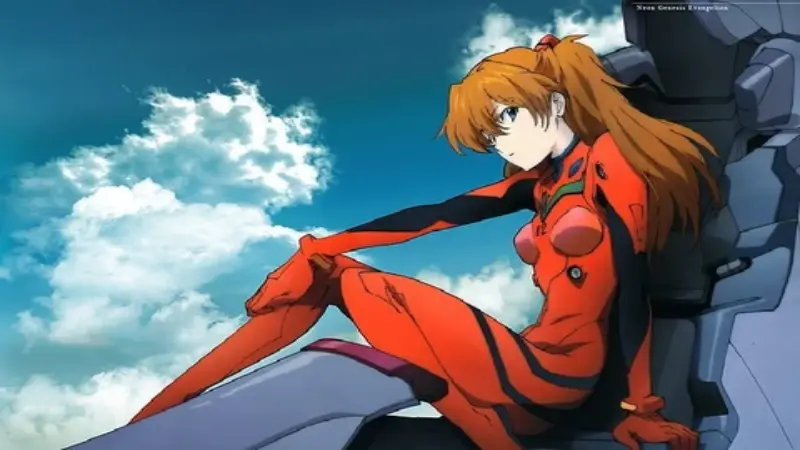
But Evangelion is a masterclass in psychological deconstruction. Asuka’s superiority complex is a hollow, desperate facade designed to mask a horrific childhood trauma. After witnessing her mother’s psychotic breakdown and subsequent suicide, Asuka’s entire identity became tethered to piloting Eva Unit-02. She believes that if she is not the absolute best, if she is not constantly validated by the adults around her, she is fundamentally worthless and will be abandoned again. Her aggression toward Shinji stems from the fact that he mirrors her own deep-seated self-loathing, a reflection she cannot bear to look at.
There is no cute, blushing resolution for Asuka in the original series. When her synchronization rates drop and she is outperformed by Shinji, her carefully constructed psychological fortress completely collapses, plunging her into severe, catatonic depression. Asuka is the definitive tsundere because she demonstrates the agonizing, realistic consequences of building walls so high that you suffocate behind them. She is a profound, terrifying, and legendary character study that completely defined the psychological depth of anime storytelling.
The Walls Come Down
The tsundere archetype will forever remain a cornerstone of anime because it taps into a universal human truth: vulnerability is utterly terrifying. Whether you are analyzing the deep, paralyzing childhood trauma of Asuka Langley Soryu, or simply laughing at the runaway-train aggression of Nino Nakano, these characters prove that the highest emotional payoffs require the heaviest defensive walls. They teach us that sometimes, the sharpest insults are just a clumsy, desperate plea to be understood.
If you have successfully broken through these emotional barriers and are looking for protagonists with the raw intellect required to navigate these complex psychological minefields, you should immediately head over to our breakdown of the best genius anime protagonists. Or, if you want to explore relationships where the affection is fundamentally twisted into something much darker, step back into the Dark Hub for a dose of unfiltered thriller mechanics.
But before you turn away and pretend you don’t care, we need your final verdict. Which emotional fortress are you actually willing to lay siege to? Would you endure the stapler attacks of Senjougahara, or weather the lightning strikes of Misaka Mikoto? Head directly over to the Smash or Pass global arcade right now. Drop your votes on your favorite tsunderes, rate the most satisfying confessions, and see exactly where your romantic endurance ranks against the rest of the community. Baka.
Which Tsundere's wall is actually worth breaking down?
Frequently Asked Questions
What does Tsundere actually mean?
Who is considered the Queen of Tsunderes in anime?
Is Asuka Langley Soryu a traditional tsundere?
Why is Nino Nakano considered a subversion of the tsundere trope?
What is a 'Tsundora' in Bakemonogatari?
Rank Your Favorites
Take a break and play our interactive Smash or Pass games. Vote on your favorite anime characters, game characters, and idols to shape the global tier lists.
Join the Discussion (0)