Top 10 Anime With Most Brutal Deaths That Will Traumatize You
Let’s be real: sometimes we don’t watch anime for the “power of friendship” or the heartwarming romance. Sometimes, we want to see the world burn. We’re talking about those stomach-churning, “did they really just show that?” moments that stay burned into your brain long after the credits roll.
In 2026, the gore game has changed. From biological horror to casual, cold-blooded massacres, studios are pushing the limits of what’s allowed on screen. If you have a weak stomach, consider this your only warning—turn back now. But if you’re ready to see the most creative, graphic, and absolutely unhinged ways characters have been written out of existence, you’re in the right place.
Buckle up. Here are the Top 10 most brutal anime deaths that will leave you absolutely traumatized.
Table of Contents
Another
Another treats death not as the work of a slasher or a monster, but as an inescapable, structural curse woven directly into the fabric of reality. In the cursed Class 3-3 of Yomiyama North Middle School, death is a mathematical certainty. From the moment the “calamity” begins, the environment itself becomes a hyper-lethal weapon, turning the most mundane, everyday objects into highly efficient instruments of slaughter.
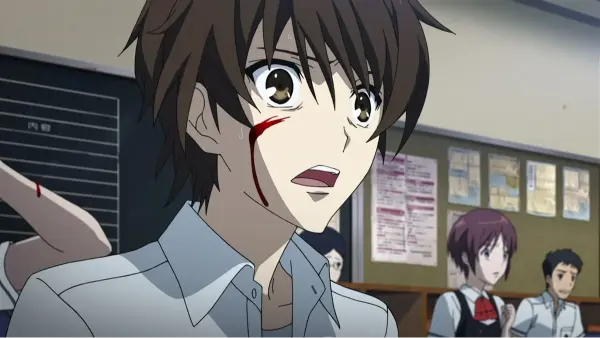
Unlike traditional horror where characters can fight back or outsmart their pursuer, Another offers no physical enemy to defeat. The deaths are framed as highly improbable “accidents” orchestrated by a malicious, unseen force. Whether it is the legendary, cringe-inducing moment involving an umbrella tip to the throat or a catastrophic failure of a rusted elevator shaft, the series builds a crushing, suffocating sense of dread. Characters are brutally punished simply for existing in the wrong place at the wrong time.
What separates Another from standard gore-fests is the sheer, agonizing creativity of its set pieces. It does not rely on massive explosions or supernatural blasts; it focuses on the terrifying fragility of the human body. A simple trip down the stairs or a walk through the rain becomes a high-stakes gamble with your life. The animation team intentionally slows down these moments, letting the deaths linger on the screen just long enough to make you wince at the horrifically “unlucky” nature of it all. It is a masterclass in establishing environmental paranoia.
Akame ga Kill!
Akame ga Kill! became notorious in the anime community for completely disregarding the concept of “plot armor.” Set in a deeply corrupted Empire where the rebel assassination group Night Raid clashes with the state military using ancient biological weapons called Imperial Arms, the series treats its cast like disposable assets in a meat grinder. From the very first episode, the show establishes a bleak rule: being a main character with a tragic backstory does not protect you from a horrific end.
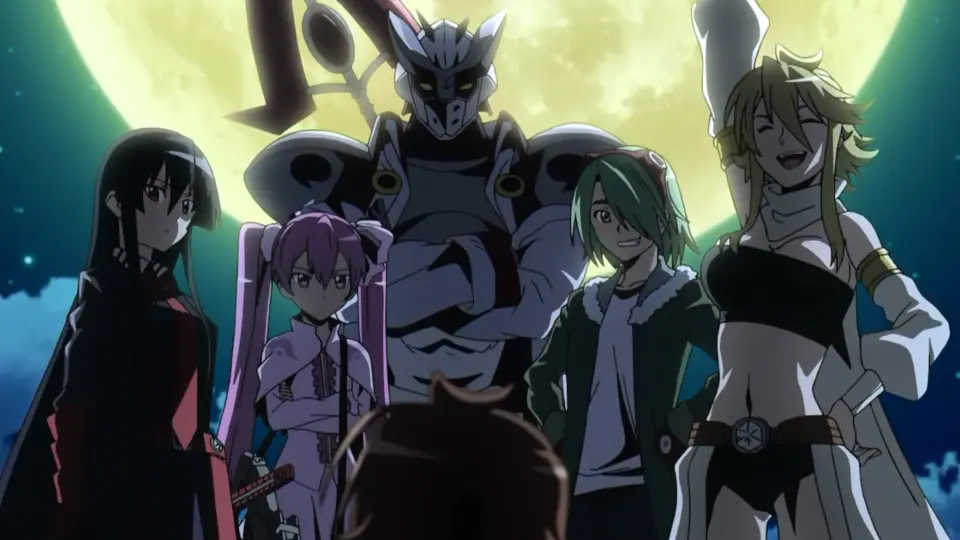
Unlike typical shonen anime where heroes die in grand, noble sacrifices bathed in golden light, Akame ga Kill! kills its beloved characters in the most humiliating, painful, and sudden ways possible. The violence is deeply mean-spirited. Deaths are not just violent ends; they are often followed by the desecration of the corpse or public display, meticulously designed by the villains to crush the morale of both the surviving characters and the viewing audience.
The true brutality of this series lies in its emotional whiplash. The narrative excels at building deep, likable, and highly relatable bonds between its misfit cast members, only to violently rip them apart mid-battle. Whether a character is being eaten alive by mutated biological weapons, melted down to the bone by highly corrosive acid, or executed via public beheading, the deaths feel agonizingly personal. It is a stark, bloody reminder that in a real revolution, the good guys do not always get a heroic send-off.
Blood-C
If you are looking for the absolute pinnacle of unhinged, cinematic gore, Blood-C remains an undisputed titan. Developed in collaboration with CLAMP—a studio known for elegant and beautiful character designs—the series intentionally lures viewers into a false sense of security with a slow, slice-of-life opening. But when the Elder Bairns (Lovecraftian monsters that feed on humans) finally attack, the show devolves into a masterclass of extreme, unrelenting biological slaughter.
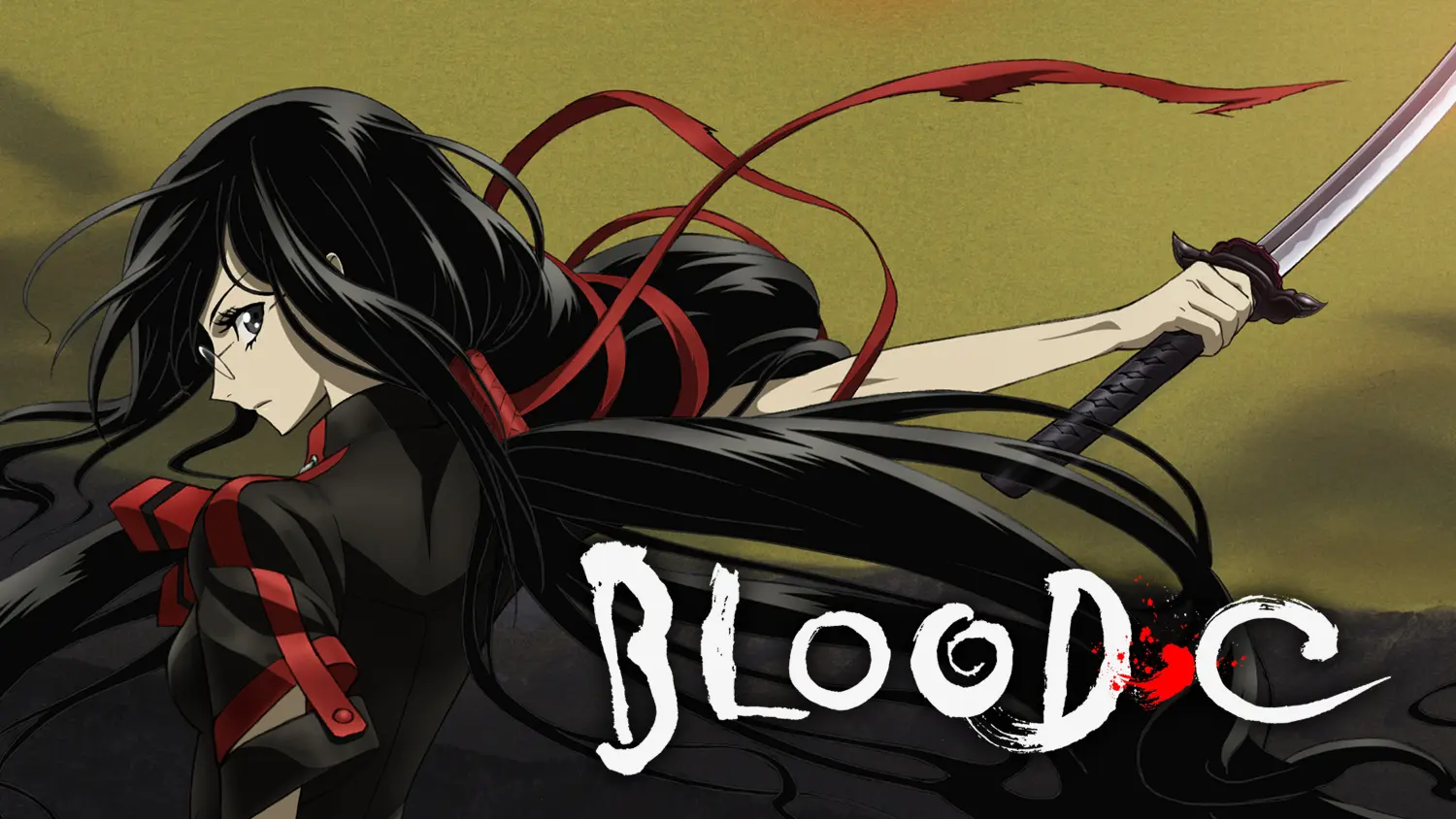
Unlike other dark fantasy series where a clean sword strike ends a life instantly, Blood-C actively lingers on the gruesome process of dying. The monsters in this universe do not just kill for basic sustenance; they seem to take a sickening, sadistic pleasure in how they physically “prepare” their victims. Characters are twisted into unnatural shapes, pulled apart limb from limb like warm dough, and put through literal human meat grinders in scenes that aggressively pushed the absolute limits of Japanese television broadcasting laws.
What elevates Blood-C above standard shock-value media is the sheer, jaw-dropping scale of its final episodes. The infamous “Bunny Monster” massacre is permanently etched into the horror community’s collective memory. Watching crowds of fleeing civilians get skewered in massive groups, blended into a fine red paste, and eaten in ways that feel more like a grotesque fever dream than a standard action show is an unforgettable experience. There is no dignity in death here—only the wet, visceral sound of total biological destruction.
Terra Formars
Terra Formars is a brutal exploration of evolutionary dominance that treats humanity as an overwhelmingly inferior species. The premise follows a highly trained, genetically modified crew of astronauts sent to Mars to eradicate a cockroach infestation. However, upon landing, they realize they are centuries too late. The insects have rapidly evolved into massive, hyper-muscular, humanoid killing machines. Death in this series is fast, freezing cold, and occurs with the casual, emotionless ease of a human stepping on a bug.
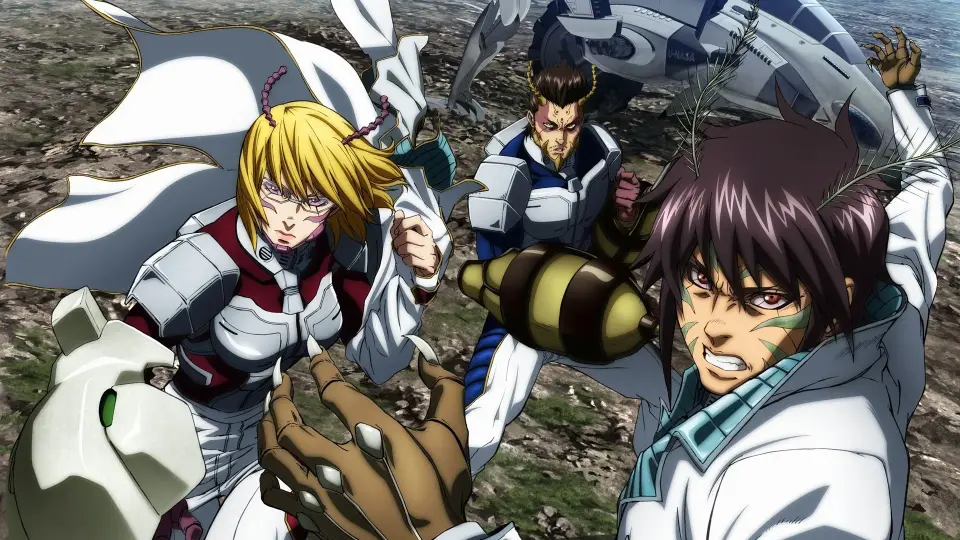
Unlike traditional battle anime where characters trade dramatic blows, monologue about their backstories, and slowly wear each other down, Terra Formars is built entirely on the terrifying concept of the “One-Shot” kill. The Terraformars possess an absurd level of physical strength and kinetic speed that human eyes simply cannot track. In the literal blink of an eye, a major character’s head and spinal column are violently ripped from their shoulders before they can even process the threat. There is no dramatic buildup—just sudden, silent extinction.
The core brutality of this series stems from its intense biological horror. To fight back, the human crew is infused with the DNA of Earth’s deadliest insects and animals, leading to horrific, grotesque transformations. The resulting combat is purely primal “insect-on-insect” violence. You watch characters get crushed by overwhelming physical force, their limbs snapped like dry twigs by enemies whose blank, unblinking faces show absolutely zero emotion or malice. It is Darwinism at its most terrifying.
Higurashi: When They Cry
Higurashi: When They Cry is a masterpiece of deception. By wrapping its narrative in a brightly colored, cute, almost chibi-like art style, it completely lowers the viewer’s defenses before unleashing a relentless psychological nightmare. Set in the isolated, rural village of Hinamizawa, the series utilizes a complex “Time Loop” structure. This forces the audience to watch the core cast of endearing friends die over and over again in the most grueling, intimately violent ways imaginable.
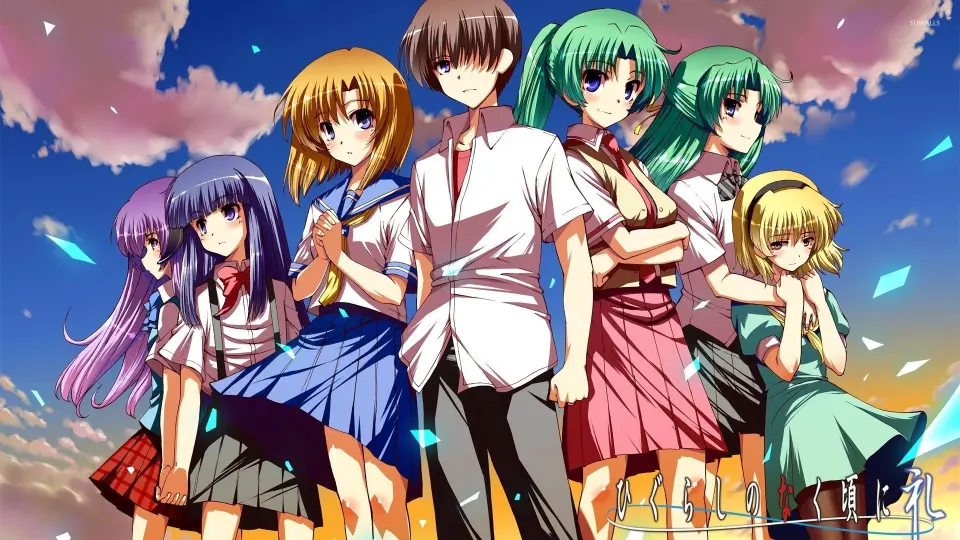
Unlike high-octane action anime where death is dealt quickly from a distance, Higurashi focuses on the slow, personal, and agonizingly intimate nature of violence. The series is legendary for its “sound-based” horror. It forces you to listen to the sickening, wet squelch of a fingernail being slowly ripped off with pliers, or the rhythmic, heavy thud of a blunt weapon repeatedly caving in a skull, all set against the eerie, constant hum of summer cicadas.
The true trauma of Higurashi is that the killers are not faceless monsters—they are best friends whose minds have been completely shattered by the paranoia-inducing “Hinamizawa Syndrome.” The violence feels like a profound betrayal of trust. Characters frequently inflict extreme torture upon their loved ones or commit gruesome self-mutilation as they lose their grip on reality. It presents death as an unsolvable puzzle, where every timeline “reset” only introduces a new, more creatively agonizing form of suffering.
Sentenced to Be a Hero
As one of the most highly anticipated dark fantasy releases of 2026, Sentenced to Be a Hero takes the standard concept of a “death sentence” and twists it into a terrifying new extreme. In this grim universe, the absolute worst criminals are not simply executed for their crimes—they are formally sentenced to become “Heroes.” Drafted into penal battalions, they are sent directly to the front lines to fight the catastrophic Demon Blight. Here, death is not a final escape or a release from their sins; it is a mandatory, recurring part of their job description.
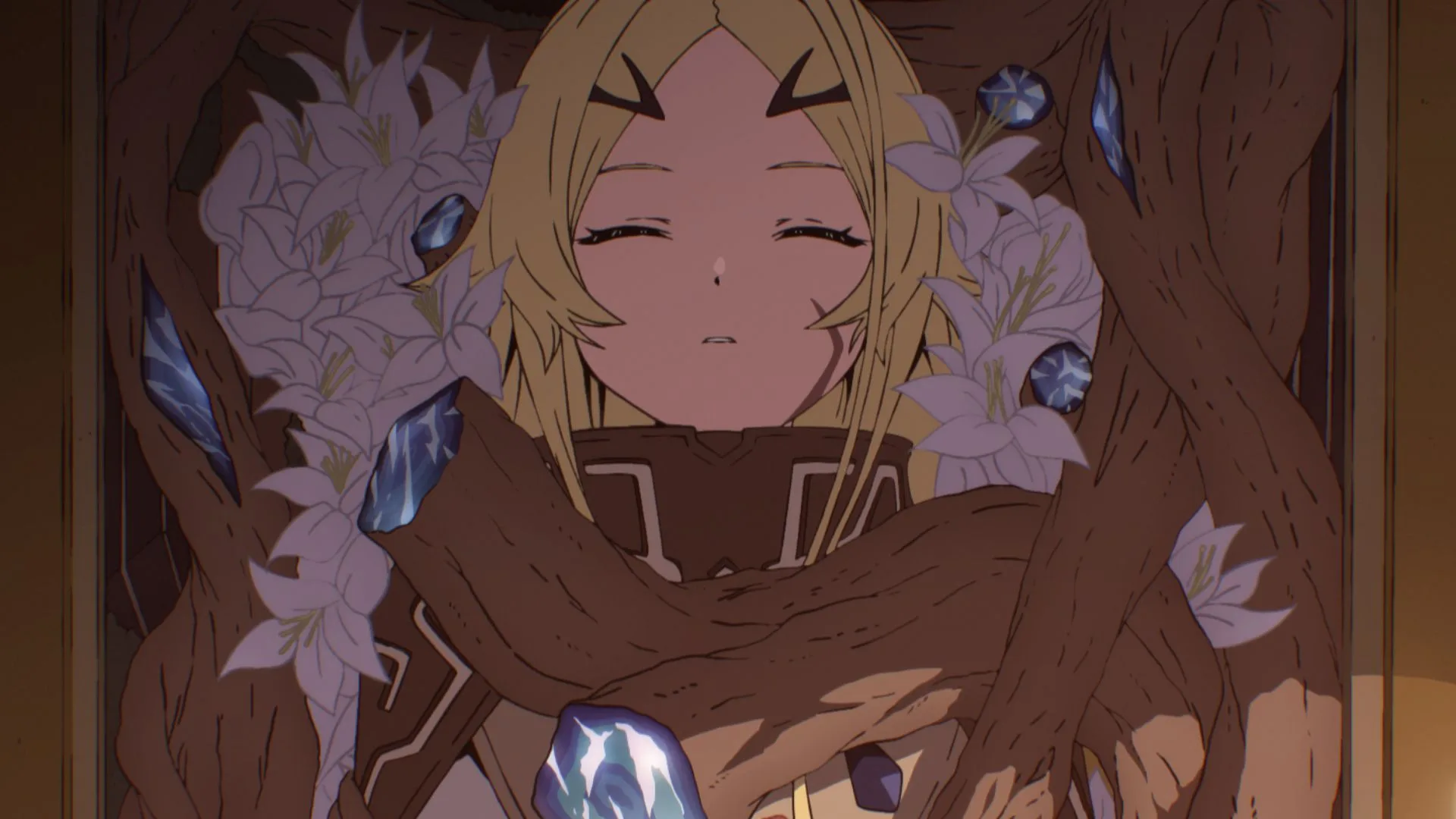
The brutality in this series is entirely unique because it treats the human body as an infinitely renewable tactical resource. The viewer is forced to watch characters get absolutely shredded on the battlefield—melted into slag by acidic breath, crushed into paste by monstrous, towering demons, or suffering instant “Head Explosions” triggered by the magical penal collars around their necks. But the horror doesn’t stop there. They are forcibly, agonizingly resurrected seconds later to continue fighting.
The show introduces the sickening concept of the “Meat Shield” strategy. Because these convicted heroes are functionally immortal during their sentence, the government aggressively uses them as tactical bait, subjecting them to levels of trauma that would break a normal mind instantly. The gore is rendered in relentless, high-definition detail, focusing heavily on the sheer, exhaustive pain of being a soldier who is deemed too “evil” to be allowed the sweet mercy of the grave.
Corpse Party: Tortured Souls
Corpse Party: Tortured Souls treats the human body like a disposable biology experiment. When a group of innocent high school students performs a seemingly harmless charm, they are violently sucked into the haunted, multi-dimensional ruins of Heavenly Host Elementary School. They enter a decaying dimension where the standard laws of physics, logic, and basic human mercy simply do not exist. This four-episode OVA is the closest the anime medium has ever gotten to pure “Splatter” cinema.
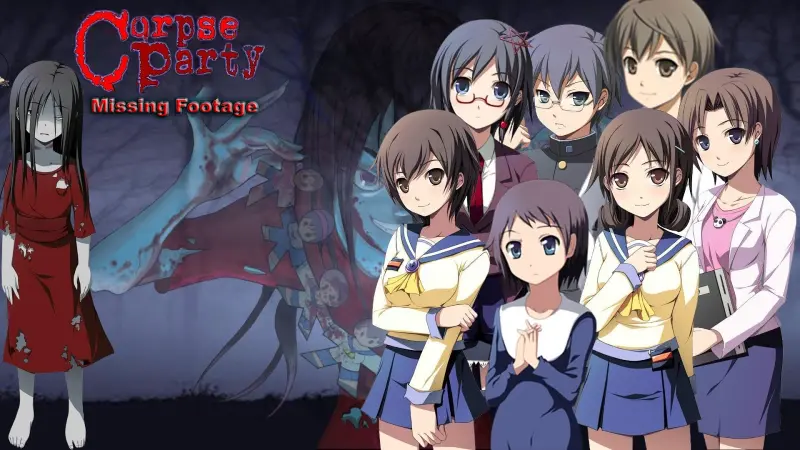
Unlike other horror shows that might offer a glimmer of hope or a final, heroic escape, Corpse Party is meticulously designed to make the viewer lose all faith in a happy ending. The anime adapts the infamous “Wrong End” scenarios from the original video game, subjecting the cast to industrial-grade brutality. Characters are slowly disemboweled with scissors, have their tongues violently snipped off, or are literally smashed into a red “meat jam” against the bloodstained walls. The camera never looks away; it zooms in on the exposed organs and the agonizingly slow fading of life.
The true trauma of this series is the “Eternal Pain” factor. The lore of Heavenly Host dictates that even after you die, your soul is trapped within the school, forced to continuously experience the exact physical pain of your death for all of eternity. Seeing a young character survive a horrific, crippling injury only to realize they are hopelessly trapped in a dark room full of rotting corpses is a level of psychological devastation that few other shows can match.
Inuyashiki
Inuyashiki treats death not as an emotional climax, but as a cold, detached digital calculation. The premise is bizarre but brilliant: a terminally ill, elderly man and an apathetic, sociopathic teenager are accidentally crushed by a UFO and rebuilt as unstoppable, hyper-advanced cybernetic war machines. While the old man uses his powers to heal the sick, the teenager, Hiro Shishigami, explores the absolute darkest, most terrifying applications of his new god-like abilities.
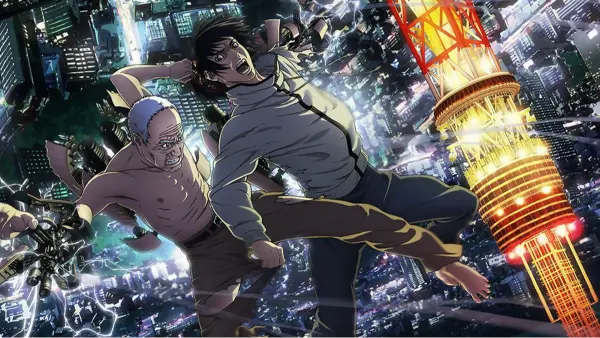
Unlike standard horror anime that relies on dark shadows and jump scares, Inuyashiki features some of the most brutal, senseless killings in broad daylight. The show’s most infamous and stomach-churning scene involves Hiro casually entering a random family’s home, sitting down at their dinner table, and systematically executing them one by one. There is no grand villainous monologue or dramatic motive—just the terrifying, mechanical efficiency of a killer who feels absolutely nothing as he points his finger and mimics the sound of a gun.
The brutality exponentially scales up as the series progresses. Hiro eventually transitions from intimate, single-family home invasions to orchestrating catastrophic mass-casualty events. He hacks into digital networks to assassinate people through their smartphone screens and forcibly crashes commercial airliners into the bustling heart of Tokyo just to watch the chaos unfold. The violence is technically “clean” regarding blood, but the profound psychological impact of how helpless humanity is against this technology makes it a deeply traumatic watch.
Gantz
Gantz is a masterclass in nihilism, treating human death as a meaningless, entirely random occurrence in a vast, uncaring universe. The story begins when recently deceased individuals wake up in a sterile apartment with a mysterious black sphere. They are forcibly drafted into a lethal, urban survival game where they must hunt down bizarre alien targets using advanced, heavily malfunctioning sci-fi weaponry. From the very first mission, the anime establishes a terrifying rule: absolutely no one is safe, and survival relies heavily on blind luck.
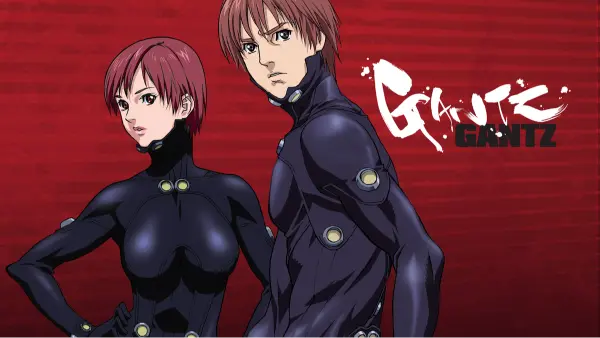
Unlike traditional battle shonen anime, Gantz offers zero dramatic buildup or swelling background music before a character meets their demise. Normal people are thrown into an absolute meat grinder against surreal, terrifying entities—like the Onion Alien or the giant, multi-armed Buddhist statues. Characters are frequently obliterated mid-sentence, their bodies popping like over-inflated blood balloons or being instantly sliced into ribbons by invisible laser fire. There are no heroic final words; there is only the wet, visceral reality of a human life being snuffed out in a fraction of a second.
What truly elevates the trauma in Gantz is its brutal psychological realism. When faced with these impossible horrors, characters do not suddenly become brave warriors. They panic, they scream, they wet themselves, and they make profoundly cowardly, selfish choices that actively get their teammates killed. The series is infamous for showcasing the absolute ugliest sides of human nature when pushed to the brink, proving that the true horror is not just the aliens, but how little human life is actually worth.
Mnemosyne
Mnemosyne sits comfortably at the top of this list because it treats death as a temporary inconvenience, which ironically makes the resulting brutality exponentially worse. The narrative follows Rin Asogi, an immortal private investigator who has been infected by mysterious “Time Spores.” Over the course of several decades, she is relentlessly hunted by sadistic enemies and twisted biological anomalies. Because Rin physically cannot stay dead, the series gleefully pushes the absolute boundaries of what can be done to a human body, knowing she will eventually regenerate just to suffer all over again.
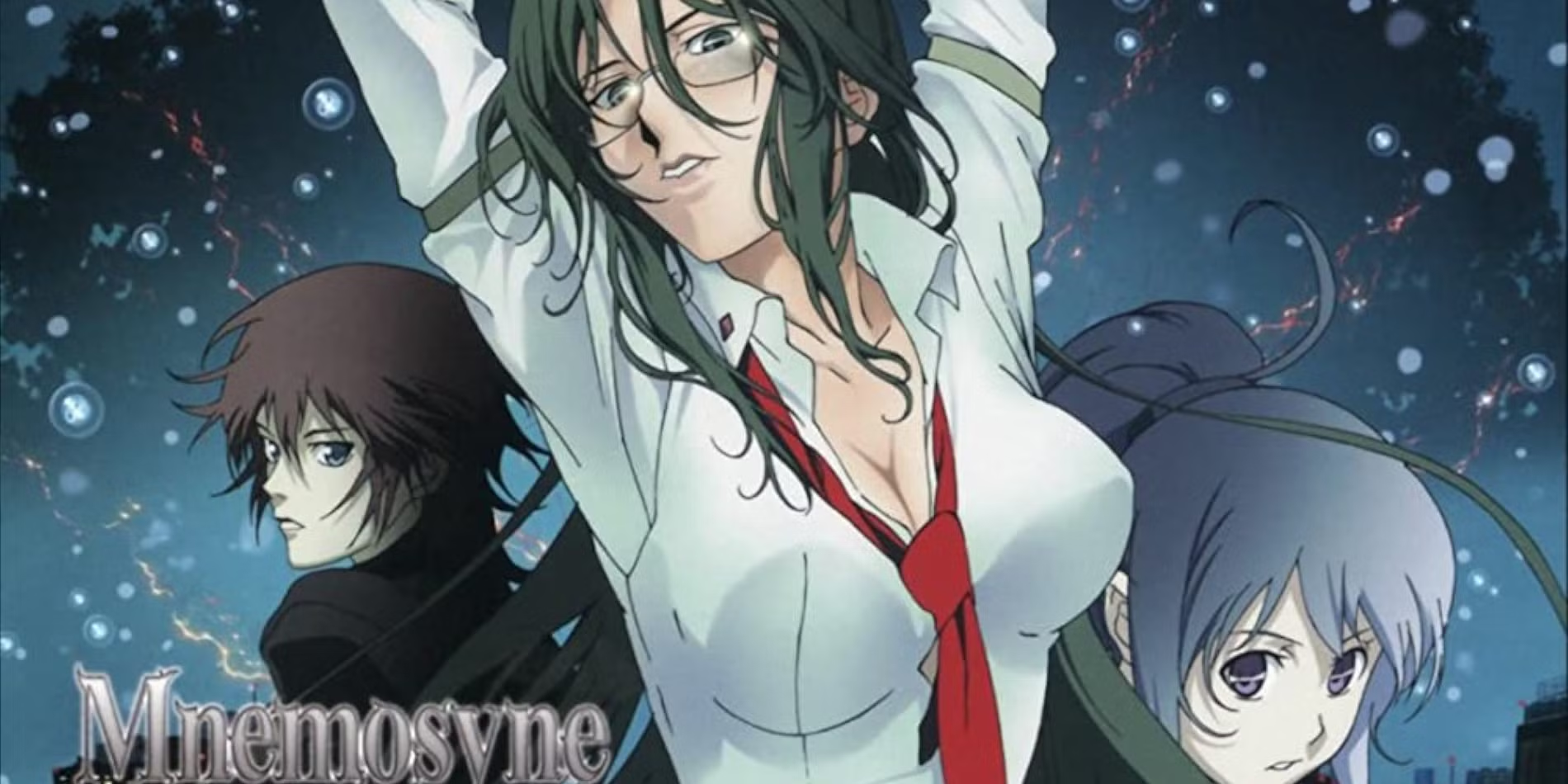
Unlike other shows where death provides a final, merciful release from pain, Mnemosyne forces the viewer to focus entirely on the agonizing process of dying. Rin is subjected to horrific, prolonged torture that spans years within the narrative. She is cooked alive in jet engines, crushed into paste by heavy industrial machinery, and slowly ripped apart by grotesque, Lovecraftian monstrosities. The animation lingers on the physical agony, the screaming, and the slow, gruesome destruction of her flesh, weaponizing her immortality against her.
What truly separates Mnemosyne from other gore-heavy anime is the “Creative Sadism” displayed by its villains. They are not looking for a quick, efficient assassination; they are deeply invested in seeing exactly how much physical and mental trauma an immortal can endure before breaking. This leads to scenes of extreme, highly controversial graphic violence that blend eroticism with body horror in a way that is almost unparalleled in the industry. It presents death as a repetitive, inescapable loop of agony.
Survive the Carnage
Watching brutal anime deaths is a true test of endurance. While shows like Mnemosyne and Corpse Party push the absolute limits of physical and psychological torture, others like Akame ga Kill! remind us that no beloved character is ever truly safe from the reaper. These 10 anime prove that when creators decide to take the safety wheels off, the results are nothing short of traumatic.
Need a breather after all that gore? Head over to our Anime Smash or Pass game to vote on your favorite survivors, or explore the rest of our dark rankings to continue your descent.
Which anime's deaths traumatized you the most?
Frequently Asked Questions
Is "Sentenced to Be a Hero" the most brutal anime of 2026?
Why is "Another" always on these lists if it's so old?
Is there an uncensored version of "Blood-C"?
Which anime on this list is the hardest to finish?
Does Gantz ever get a reboot with better animation for the deaths?
Rank Your Favorites
Take a break and play our interactive Smash or Pass games. Vote on your favorite anime characters, game characters, and idols to shape the global tier lists.

Join the Discussion (0)