Top 10 Best Anime with Guns & Gun-Fu
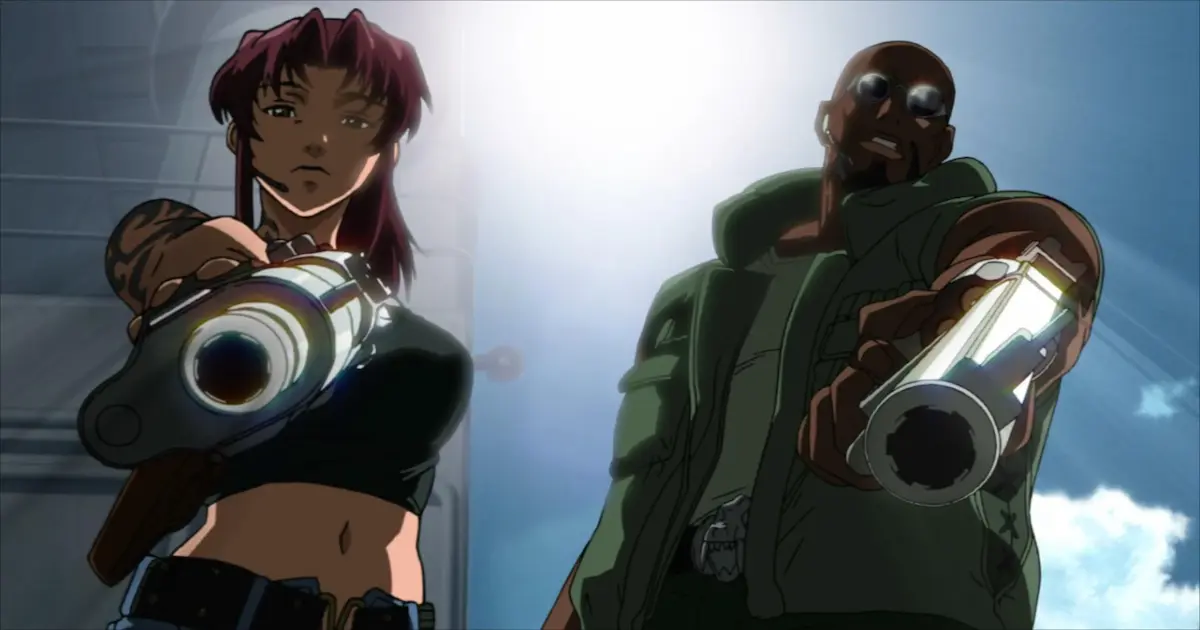
There is a definitive, uncompromising finality to the sound of an empty brass casing hitting concrete. In the realm of action anime, it is incredibly easy for studios to rely on massive, planet-destroying energy beams or enchanted swords to generate hype. However, creating a masterpiece centered around firearms requires an entirely different, highly specialized form of cinematic discipline. When an anime strips away the magical plot armor and forces its characters to rely entirely on ballistics, the tactical tension immediately skyrockets. Every single movement matters. A jammed slide, a poorly executed reload, or a failure to check a blind corner does not result in a dramatic monologue—it results in an instant, unceremonious death.
The absolute peak of the gunplay genre occurs when studios abandon the concept of stationary shootouts and embrace the fluid, hyper-lethal art of “Gun-Fu.” If you have analyzed the flawless bodily mechanics in our breakdown of the best elite martial arts anime, you will immediately recognize the exact same principles applied here. The best gun-fu sequences treat the firearm as a direct extension of close-quarters combat. We are looking for the series that prioritize the Center Axis Relapse stance, tactical magazine drops, room-clearing squad synchronization, and the heavy, agonizing psychological toll of pulling the trigger.
From the neon-lit, blood-stained alleyways of modern hitmen to the gritty, pirated waters of the South China Sea, these series deliver the absolute highest caliber of animated ballistics. Check your chamber and maintain your trigger discipline—here are the Top 10 best anime with guns, tactical gunplay, and raw gun-fu.
Table of Contents
Gunsmith Cats
Gunsmith Cats is the ultimate, undisputed holy grail for absolute firearm purists. Created by Kenichi Sonoda—a man notoriously obsessed with the mechanical accuracy of guns and cars—this 3-episode OVA from the mid-1990s feels like a high-budget Hollywood buddy-cop movie animated on celluloid. The story follows Rally Vincent, a bounty hunter running a gun shop in Chicago, and her explosive-expert partner, Minnie May Hopkins. When they are blackmailed by the ATF into taking down a massive gun-running syndicate, the streets of Chicago turn into a high-speed, lead-filled warzone.
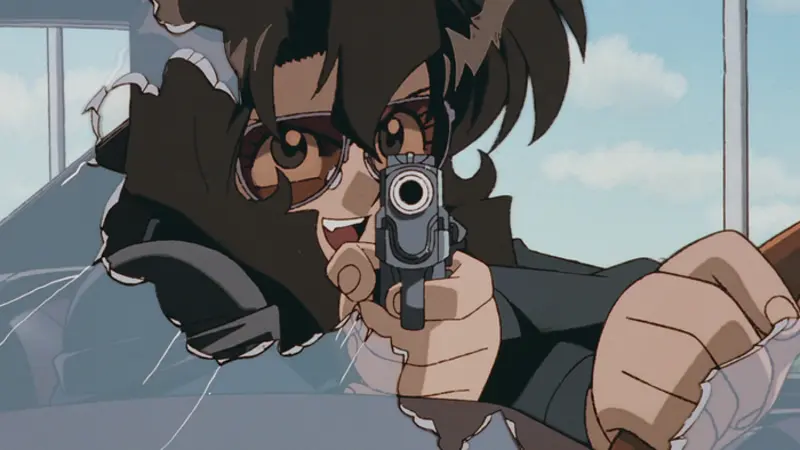
The level of detail poured into the firearms in this short series is genuinely staggering. Rally’s weapon of choice is the CZ-75 1st Variant, and the animators do not just draw a generic pistol—they meticulously animate the specific mechanical recoil, the slide locking back on an empty magazine, and the precise, disciplined trigger pulls. Every single gunshot carries a heavy, deafening audio mix that perfectly captures the concussive force of discharging a weapon in a cramped, enclosed space like a parking garage or a moving Shelby Cobra.
While modern anime might feature flashier choreography, Gunsmith Cats laid the absolute foundational groundwork for treating guns with respect. The series explains the differences in ammunition calibers, the physics of bullet penetration through car doors, and the necessity of tactical reloads under heavy suppressive fire. It is a short, incredibly stylish, jazz-infused masterpiece that remains mandatory viewing for anyone craving authentic, old-school ballistic action.
Gunslinger Girl
If you are looking for high-octane hype, you are in the wrong place. Gunslinger Girl is a bleak, suffocating, and deeply depressing dissection of government-sanctioned violence. The Social Welfare Agency, a highly secretive branch of the Italian government, takes terminally ill or severely traumatized young girls and saves their lives through extreme cybernetic augmentation. In exchange, the girls are heavily brainwashed—a process known as ‘conditioning’—and weaponized as elite, disposable assassins to fight domestic terrorist organizations across Europe.
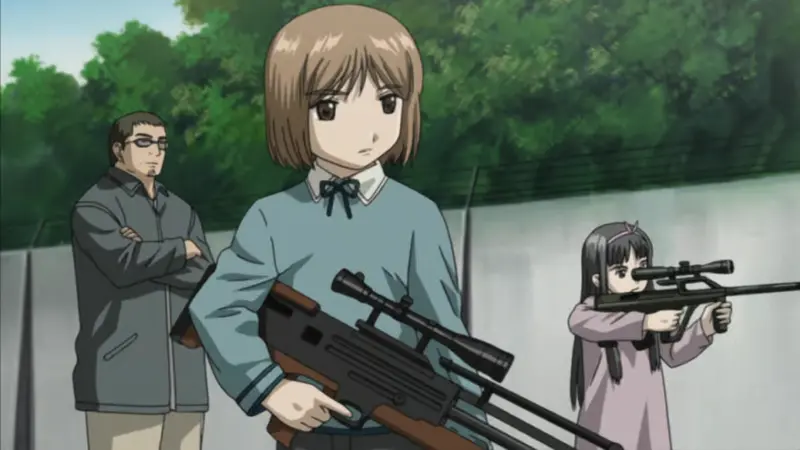
The combat in this series is terrifyingly clinical. There is no flashy dialogue or dramatic posing. When Henrietta or Triela engage a target, they operate with the cold, methodical efficiency of a Tier-1 special forces unit. They utilize authentic, heavily researched weapon loadouts—such as the FN P90, the SIG Sauer P230, and the Franchi SPAS-12. The animators focus heavily on the terrifying contrast between a tiny, innocent-looking child and the brutal, practiced execution of a tactical room breach.
The true tension of Gunslinger Girl comes from the psychological horror of the ‘Fratello’ (Brother) system. Each girl is paired with an adult male handler who dictates their conditioning. The audience is forced to watch as the cybernetic implants and constant brainwashing slowly erode the girls’ memories and emotional capacities, reducing them to mindless biological hardware. It is a masterclass in atmospheric storytelling, proving that the most terrifying gunplay is the kind devoid of any human emotion.
Phantom: Requiem for the Phantom
Phantom: Requiem for the Phantom is a suffocating, hyper-violent dive into the global criminal underworld. The narrative follows a completely ordinary Japanese tourist who accidentally witnesses a mafia assassination in America. Instead of killing him, Inferno—a massive, omnipotent crime syndicate—erases his memories, completely destroys his identity, and renames him “Zwei.” He is handed over to “Ein,” the syndicate’s top, seemingly emotionless assassin, to be trained as the ultimate weapon of the underworld.
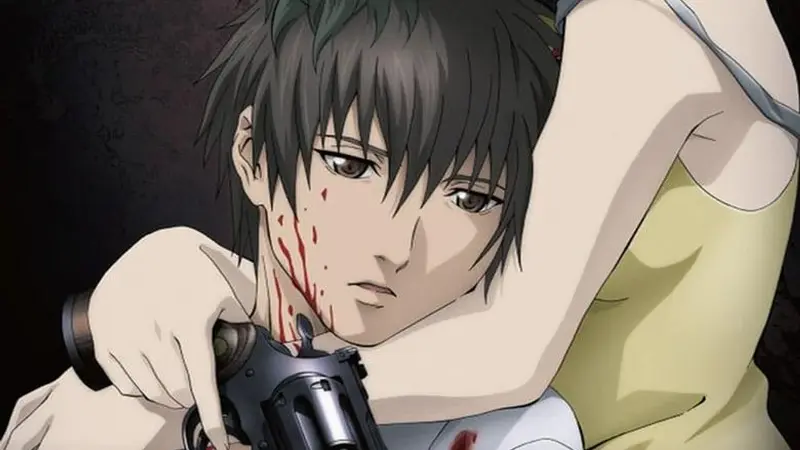
The gunplay in Phantom is heavily grounded in espionage and assassination mechanics. The series does not rely on massive, chaotic shootouts; it focuses on the silent, terrifying precision of a sniper calculating wind resistance, or the brutal efficiency of a suppressed pistol in a crowded nightclub. Zwei’s evolution is agonizing to watch. The audience witnesses his complete psychological breakdown as he transitions from a terrified civilian who vomits after his first kill, into a cold, hyper-lethal ghost who executes targets without a second thought.
The dynamic between Zwei and Ein anchors the entire series. Their partnership is forged entirely in blood and trauma. The show meticulously explores the logistics of the mafia—from the procurement of untraceable firearms to the political fallout of taking out a rival cartel boss. It is a slow-burn, beautifully tragic noir that heavily emphasizes the inescapable, soul-crushing gravity of a life lived entirely through the scope of a rifle.
Trigun / Trigun Stampede
Whether you prefer the cel-shaded 90s grit of the original or the hyper-fluid 3D CGI of Studio Orange’s Stampede, the legend of Vash the Stampede remains one of the greatest ballistic narratives ever told. Trigun is a space-western set on the desolate, sun-scorched planet of No Man’s Land. Vash is the most wanted man on the planet, carrying an astronomical “$60,000,000,000 Double Dollar” bounty on his head. Everywhere he goes, massive, city-leveling destruction follows. Yet, the brilliant paradox of Vash is that he is an absolute, uncompromising pacifist who refuses to take a human life.

The gun-fu in this series is mind-bendingly creative because it operates on a completely defensive axis. Vash wields a massive, custom .45 Long Colt AGL Arms revolver, but he almost never shoots directly at a person. Instead, he utilizes god-tier geometric calculations, shooting the environment to cause rockslides, ricocheting bullets off metal pipes to disarm opponents, or mathematically firing a single round to intercept and shatter an enemy’s bullet mid-air. It is high-speed, mathematical gunplay at its absolute finest.
However, the narrative is not just a comedy about a lucky gunslinger. The series violently challenges Vash’s pacifism at every turn. The antagonists constantly force him into horrific, impossible scenarios where the only logical way to save innocent lives is to pull the trigger and kill the villain. Watching the physical and emotional scars literally accumulate across Vash’s body as he desperately struggles to uphold his unyielding moral code elevates Trigun from a fun action show into a profound psychological masterpiece.
Banana Fish
Banana Fish is an absolute gauntlet of emotional devastation wrapped in a brutally realistic, high-stakes crime thriller. Set in the grimy, unforgiving criminal underworld of New York City, the story follows Ash Lynx, a brilliant, terrifyingly lethal 17-year-old gang leader. Raised from childhood as the personal plaything and elite enforcer for the sadistic mafia boss Dino Golzine, Ash’s life is a constant, suffocating nightmare of abuse and violence. When he uncovers the conspiracy behind a mysterious, mind-destroying drug called “Banana Fish,” he launches a desperate, all-out war against the very syndicate that created him.
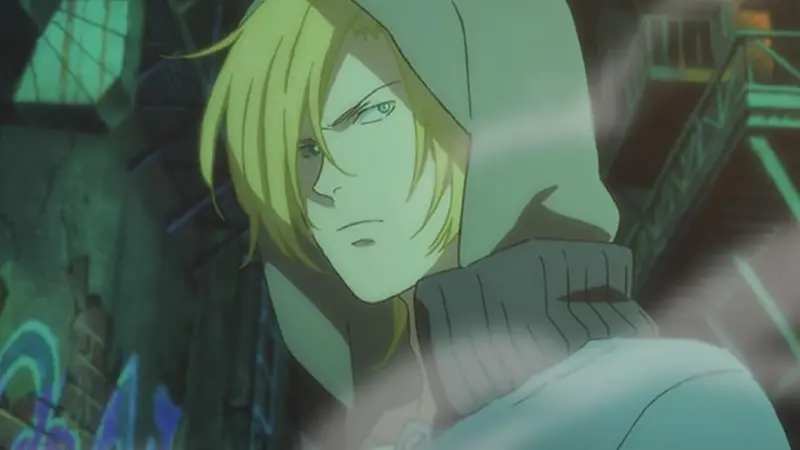
The gunplay in Banana Fish is completely devoid of flashy, anime-style posing. Ash fights with the desperate, ruthless efficiency of a cornered animal. He heavily favors the Smith & Wesson Model 29 (.357 Magnum), utilizing extreme close-quarters combat inside cramped subway cars, abandoned warehouses, and narrow alleyways. The shootouts are incredibly fast and deadly; characters do not survive multiple gunshot wounds, and Ash frequently uses his environment, hostages, and total darkness to gain a brutal tactical advantage.
What elevates this series is the incredibly heavy, authentic psychological weight. The introduction of Eiji Okumura, an innocent Japanese photographer who inadvertently becomes Ash’s only emotional anchor, provides the massive emotional stakes of the series. Every time Ash pulls the trigger, the audience feels the immense tragedy of a boy who was never given the chance to be anything other than a weapon. It is a masterpiece of urban warfare that will leave you absolutely breathless and emotionally shattered.
Jormungand
If you want a series that explores the macro-logistics of warfare rather than just the individual soldier, Jormungand is an unapologetically cynical, high-octane dive into the global arms trade. The narrative follows Koko Hekmatyar, a completely eccentric, terrifyingly intelligent international arms dealer operating under the massive HCLI shipping corporation. Accompanied by her elite squad of heavily armed bodyguards—comprised of ex-military veterans, disgraced snipers, and a child soldier named Jonah—Koko travels the globe selling massive weapon payloads to warlords, militias, and national militaries.
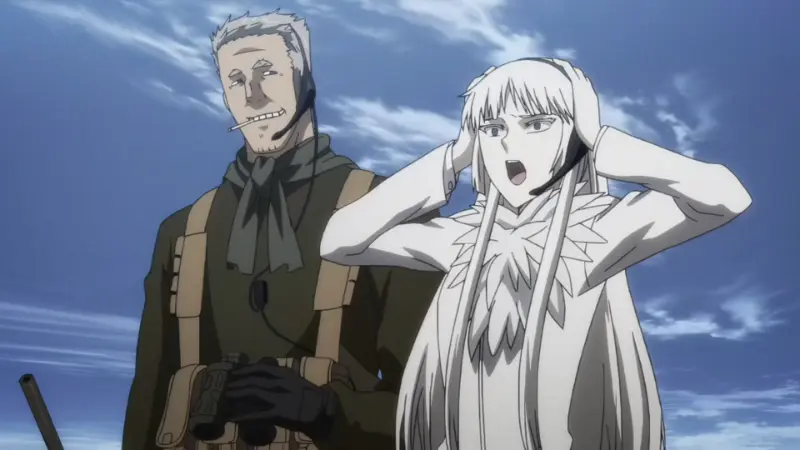
The tactical gunplay in Jormungand is fundamentally different from every other entry on this list because it focuses almost entirely on squad-based synergy. When Koko’s team is ambushed, they do not fight one-on-one duels. They execute flawless, military-grade suppression tactics. The veterans lay down heavy covering fire with FN FNCs and Mk23s, coordinate flanking maneuvers, and manage ammunition across the unit. The animators paid immense attention to modern tactical gear, including plate carriers, communication headsets, and proper vehicle extraction protocols.
The philosophical core of the show is deeply unsettling. Koko is not a hero; she actively profits off the slaughter of millions. However, her ultimate, highly classified plan—which gives the series its namesake—threatens to completely upend the geopolitical structure of the planet. Watching Jonah, a child soldier who absolutely despises weapons, struggle to comprehend Koko’s twisted vision of world peace creates a fascinating moral friction that anchors the relentless, heavy-caliber firefights.
Sakamoto Days
Exploding out of its legendary manga status and violently onto the screen, Sakamoto Days offers some of the most outrageously creative, hyper-kinetic gun-fu ever conceived. Taro Sakamoto was once the absolute greatest, most feared hitman in the global underworld. However, he fell in love, retired, gained a significant amount of weight, and opened a quiet, friendly convenience store. Unfortunately, the criminal underworld refuses to let him rest, constantly sending elite assassins to his store to claim the massive bounty on his head.
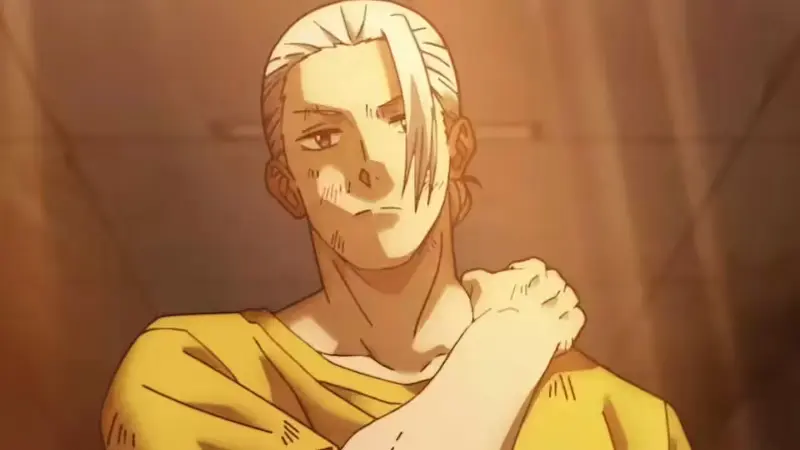
Because Sakamoto has sworn to his wife that he will never kill again, his combat style is a bizarre, breathtaking mix of non-lethal subjugation and impossible environmental physics. The choreography is heavily inspired by Jackie Chan and John Wick. Sakamoto will seamlessly execute a flawless tactical reload while simultaneously using a barcode scanner, a ballpoint pen, or a stale baguette to deflect incoming sniper fire. The fluidity of the animation tracking these high-speed, cramped convenience-store brawls is absolutely staggering.
While the premise sounds like a pure comedy, the sheer technical execution of the gunplay is top-tier. When the supporting cast of active assassins—like the telepathic Shin or the sniper Heisuke—enter the fray, the series unleashes massive, city-destroying shootouts. It perfectly balances hilarious, deadpan slice-of-life humor with incredibly slick, high-velocity ballistics, making it one of the most entertaining, visually creative action shows of the modern era.
Cowboy Bebop
If there is an anime that completely redefined the concept of “cool” on a global scale, it is Shinichiro Watanabe’s untouchable masterpiece, Cowboy Bebop. Set in a beautifully gritty, jazz-infused 2071 where humanity has colonized the solar system, the narrative follows a ragtag crew of bounty hunters scraping by on the spaceship Bebop. The emotional core of the series is anchored by Spike Spiegel, a laid-back, perpetually broke martial artist who is desperately trying to outrun his bloody history as an enforcer for the Red Dragon Crime Syndicate.
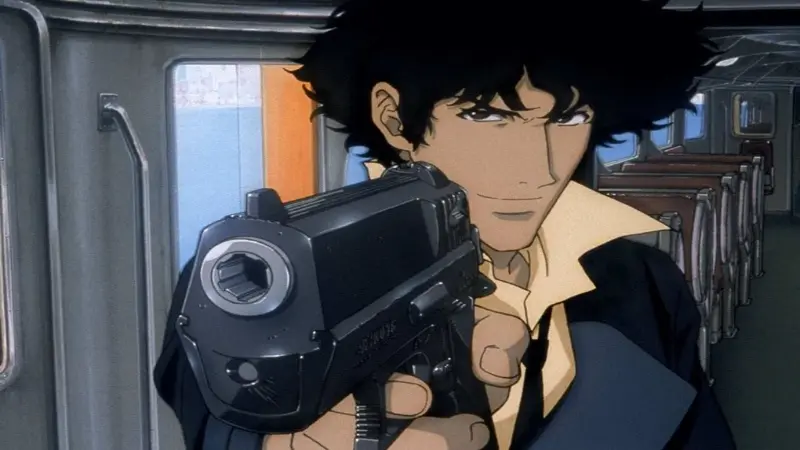
Spike’s combat style is a legendary, fluid amalgamation of Bruce Lee’s Jeet Kune Do and flawless, cinematic marksmanship. Armed with his iconic Jericho 941 R, Spike’s shootouts are heavily inspired by the “heroic bloodshed” genre of 1980s Hong Kong cinema (specifically the works of John Woo). The gunplay is not about hyper-realistic military tactics; it is about rhythm, flow, and the devastating, heavy impact of the shots. The iconic church shootout in the “Ballad of Fallen Angels” episode—featuring shattering stained glass, doves, and a mesmerizing fall set to a haunting choral track—remains one of the greatest sequences ever put to film.
Every single firefight in Bebop feels like a carefully choreographed dance. The camera rarely cuts frantically; it tracks the characters as they slide across marble floors, dive over bar counters, and exchange heavy pistol fire in the rain. The series uses its spectacular, jazzy gunplay to punctuate the deep, suffocating melancholy of characters who are fundamentally trapped by the tragedies of their past. It is an absolute, undeniable classic.
Lycoris Recoil
Do not let the cute cafe uniforms deceive you; Lycoris Recoil completely shattered the anime community by delivering the most technically accurate, high-speed tactical gun-fu seen in decades. The premise involves a highly secretive, government-sanctioned syndicate called Direct Attack (DA), which utilizes orphaned teenage girls, known as “Lycoris,” as elite, invisible assassins to preemptively murder criminals and maintain Japan’s facade of absolute peace. The story follows Takina, a cold, hyper-lethal Lycoris who is demoted and partnered with Chisato, a bizarre, overly cheerful prodigy who completely refuses to kill her targets.

The firearms choreography in this series is an absolute masterclass. Chisato utilizes the Center Axis Relapse (C.A.R.) stance—a real-world, highly compressed shooting system designed for extreme close-quarters combat and weapon retention. The animators mapped out actual line-of-sight tracking, proper tactical reloads, and authentic room-clearing formations. Chisato’s superhuman ability to calculate the trajectory of an enemy’s muzzle flash allows her to literally dodge bullets at point-blank range, turning her non-lethal, rubber-bullet combat into a terrifying display of untouchable dominance.
The friction between Takina’s ruthless, center-mass execution style and Chisato’s hyper-evasive pacifism creates incredible tactical synergy during the massive, multi-level shootouts. The studio, A-1 Pictures, elevated the genre by treating the guns not as props, but as highly detailed, mechanical instruments of death. It perfectly balances lighthearted, slice-of-life character banter with sudden, explosive bursts of elite tactical violence, making it the definitive modern blueprint for animated gun-fu.
Black Lagoon
Sitting completely unchallenged upon the throne of blood and spent brass is the undisputed king of the genre: Black Lagoon. The narrative begins when Rock, an ordinary, beaten-down Japanese salaryman, is kidnapped by the Lagoon Company, a small mercenary pirate crew operating a PT boat in the South China Sea. Abandoned by his corporate superiors and left for dead, Rock suffers a catastrophic existential break. He abandons his former life and joins the crew in Roanapur—a humid, lawless, heavily corrupted Thai city controlled by the Russian mafia, the Triads, and the Colombian cartel.
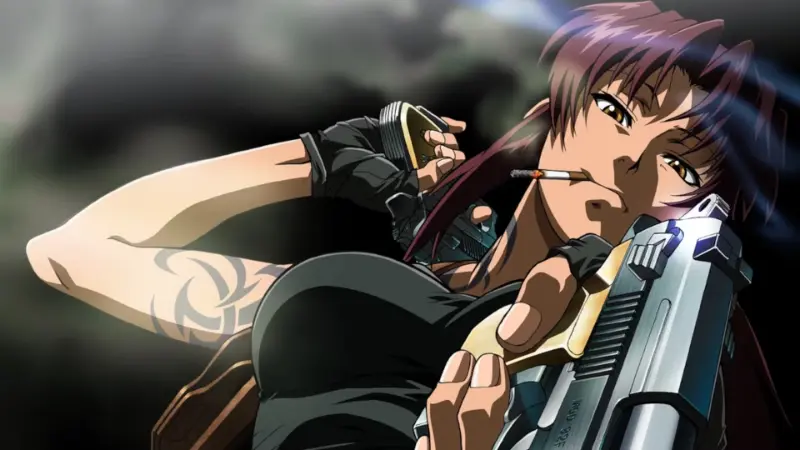
The absolute, terrifying heart of the series is Revy (“Two Hands”), the Lagoon Company’s primary gunfighter. She is an abrasive, deeply traumatized, hyper-violent nihilist who solves absolutely every single problem by pouring ungodly amounts of lead into it. Wielding her signature dual, highly customized Beretta 92FS “Sword Cutlasses,” Revy’s combat style is pure, unadulterated aggression. She does not use cover; she walks directly into the line of fire, utilizing heavy acrobatic flips and suppressing barrages to completely overwhelm heavily armed cartels, neo-Nazis, and rival assassins.
The genius of Black Lagoon is that it never glorifies the violence. It is an unapologetic homage to gritty, 1990s Hollywood action cinema, backed by the suffocating realization that every character in Roanapur is fundamentally broken. Watching Rock’s moral compass slowly shatter as he accepts the horrific, bloody realities of the criminal underworld provides an incredibly heavy psychological anchor to the explosive boat chases and barroom shootouts. It is the rawest, loudest, most perfectly executed ballistic masterpiece in the entire anime medium.
Cease Fire
The gun-fu genre is an incredibly specific, visceral brand of action that requires absolute precision to execute correctly. Whether you are analyzing the microscopic mechanical details of a tactical reload in Lycoris Recoil, or holding your breath as the emotional tragedy of Banana Fish rips your heart out, these series prove that a firearm in anime is far more than just a loud prop. It is a storytelling tool used to explore the deepest, darkest corners of human desperation, survival, and the heavy moral weight of pulling the trigger.
If you have exhausted your ammunition and want to see how this exact same level of tactical tension translates to stories where the weapons are magical or technological rather than purely ballistic, you need to step out of the alleyway and into our Sci-Fi & Fantasy Hub. Or, if the gritty, nihilistic reality of Roanapur has you craving even more psychological warfare, explore the absolute breaking points of the human mind in our Dark Hub.
But before you holster your weapon, we need to know your combat style. Would you rely on the untouchable, hyper-evasive C.A.R. system of Chisato, or the chaotic, dual-wielding aggression of Revy? Head directly over to the Smash or Pass global arcade right now. Drop your votes on your favorite marksmen, rate the most lethal gunfights, and see exactly where your tactical instincts rank against the rest of the community.
Which gun-fu style are you bringing to a shootout?
Frequently Asked Questions
What is the difference between standard action and 'Gun-Fu'?
Why is Lycoris Recoil so highly praised by firearms experts?
Is Sakamoto Days finally an anime?
What makes Black Lagoon the undisputed king of the genre?
Should I watch the original Trigun or Trigun Stampede?
Rank Your Favorites
Take a break and play our interactive Smash or Pass games. Vote on your favorite anime characters, game characters, and idols to shape the global tier lists.


Join the Discussion (0)