Top 10 Comedy Anime That Are Actually Funny (No Cringe)

Comedy is arguably the hardest genre to execute correctly in anime. Too often, studios rely on tired, exhausted tropes that just do not translate well to international audiences. The forced “tsundere” physical abuse, the massive animated sweat drops, and the characters simply screaming at the top of their lungs to signify a joke can quickly become grating. When the punchlines are predictable and the reactions are exaggerated simply for the sake of noise, the comedy turns into pure, unadulterated cringe.
However, when an anime completely nails its comedic timing, it transcends the medium. The shows on this list do not rely on cheap gimmicks; they weaponize deadpan delivery, surreal absurdity, and meta-commentary. They understand that true humor comes from subverting expectations. Whether it is a show spending an astronomical animation budget on a mundane task, or a series completely deconstructing the tropes of its own genre, these are the masterclasses in making an audience genuinely laugh out loud.
If your brain needs a hard reset and you are desperate for narratives that will actually make you laugh rather than roll your eyes, you have found the definitive list. From dysfunctional fantasy parties to deadpan psychics, here are the Top 10 comedy anime that are genuinely, flawlessly funny.
Table of Contents
The Way of the Househusband
Kicking off our list is a masterclass in the “single-joke premise” executed to absolute perfection. The Way of the Househusband follows Tatsu, a legendary and deeply feared former yakuza boss known as the “Immortal Dragon.” However, he has completely retired from the criminal underworld to fully support his career-driven wife. His new battlefield is the grocery store, and his new weapons are coupons, aprons, and perfectly crafted bento boxes.
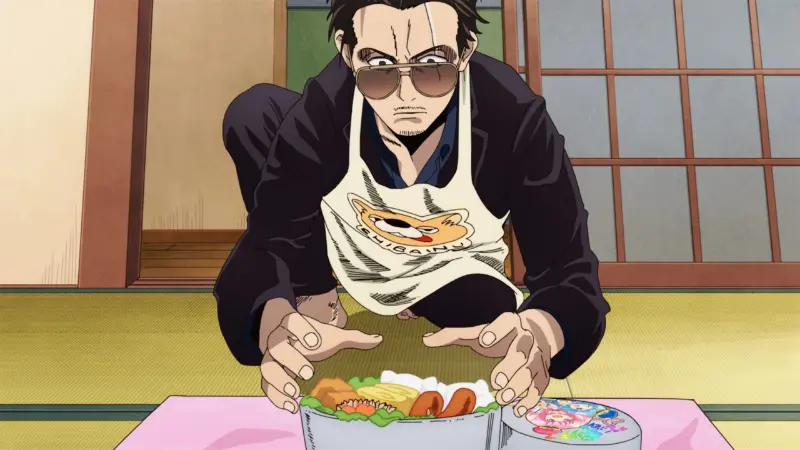
The comedy relies entirely on extreme juxtaposition. Tatsu approaches every mundane domestic task with the terrifying, life-or-death intensity of a gang war. He interrogates a Roomba as if it were a rival informant, and he aggressively presents a cute character-themed lunchbox to his wife like it is a severed head in a briefcase. His terrifying demeanor combined with his genuinely wholesome intentions creates a continuous stream of flawless misunderstandings with police officers and former rivals.
While the anime adaptation utilizes a controversial, “motion-comic” style of limited animation, it actually works in the show’s favor. The stiff, sudden visual cuts highlight the deadpan absurdity of the punchlines. Tatsu’s unwavering commitment to being the ultimate supportive husband, completely oblivious to how terrifying he looks while doing it, makes this a lean, highly bingeable comedy that never overstays its welcome.
Hinamatsuri
Hinamatsuri is a bizarre, brilliant concoction of deadpan sci-fi and heartwarming character growth. The plot kicks off when a mysterious, highly destructive telekinetic girl named Hina materializes in the luxury apartment of Nitta, a successful, materialistic yakuza member. Instead of an epic battle, Nitta is immediately bullied into adopting her, terrified of her psychic tantrums. Thus begins the most dysfunctional, hilarious father-daughter dynamic in modern anime.
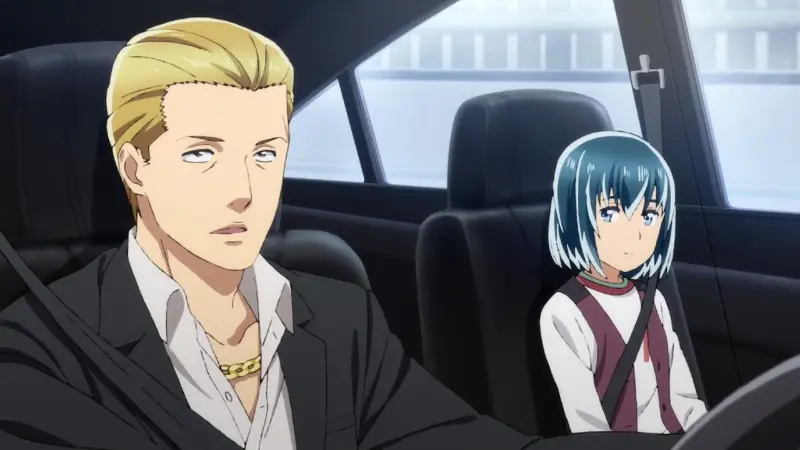
The humor in this series thrives on Hina’s absolute, unapologetic laziness. She possesses world-ending power, but she only uses it to demand expensive salmon roe and play video games. The reactions from Nitta, who constantly tries to maintain his tough-guy yakuza image while secretly stressing over parenting manuals and parent-teacher conferences, are flawlessly animated. The show avoids loud, over-the-top screaming, opting instead for a dry, grounded delivery that makes the chaotic situations exponentially funnier.
What truly elevates Hinamatsuri, however, is its surprising depth. While Hina’s storyline is pure absurdity, the subplot involving another psychic girl, Anzu, who ends up homeless, is handled with incredible care. The show effortlessly weaves between laugh-out-loud yakuza misunderstandings and genuinely touching lessons about poverty, community, and gratitude, creating a remarkably balanced and deeply satisfying comedic experience.
Daily Lives of High School Boys
Most high school anime focus on saving the world, intense sports tournaments, or complex romantic harems. Daily Lives of High School Boys completely shatters these tropes by focusing on the absolute, unadulterated boredom of male adolescence. Tadakuni, Hidenori, and Yoshitake are not special. They are just three painfully ordinary friends who use their hyper-active imaginations to survive the mundane reality of going to an all-boys school.
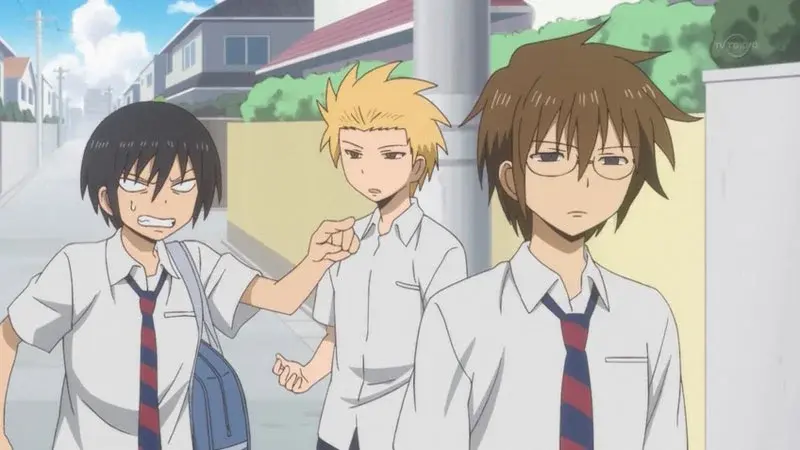
The comedy is agonizingly relatable. The series is essentially a sketch comedy show detailing the stupid, impulsive things teenagers do when no one is watching. From stealing their sister’s underwear just to see what it feels like, to aggressively roleplaying fantasy RPG scenarios on the walk home from school, the show perfectly captures the chaotic, zero-stakes energy of youth. It thrives on the awkward silences and the immediate, crushing regret that follows a failed joke.
The brilliance of the writing lies in its subversion of anime cliches. Whenever the show sets up a standard trope—like a dramatic run-in with a cute girl by the riverbank—it violently swerves into uncomfortable realism. The boys are terrified of girls, terrible at reading social cues, and deeply dramatic about minor inconveniences. It is a nostalgic, hilarious tribute to the universal cringe of being a teenager.
Asobi Asobase
If you judge Asobi Asobase solely by its promotional art and its soft, acoustic opening theme, you will be completely deceived. It presents itself as a gentle, pastel-colored story about three innocent girls forming a “Pastimers Club” to play traditional Japanese games. However, the exact second the opening song ends, the illusion is violently shattered. The show is actually a loud, visceral, and completely unhinged surrealist comedy.
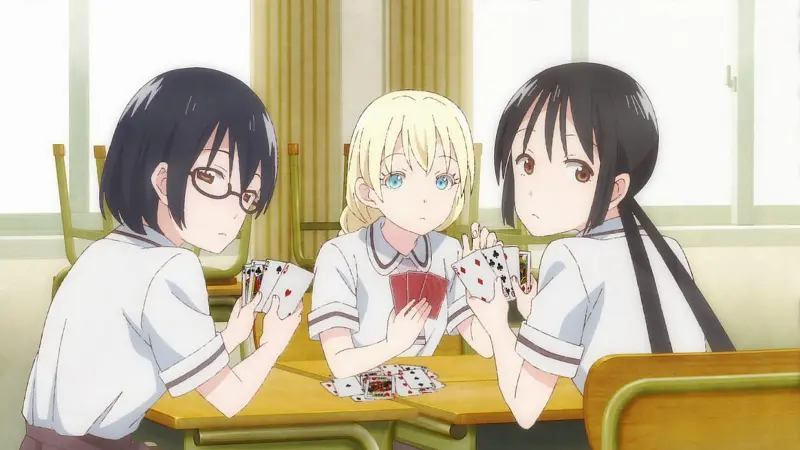
The humor is driven by the fact that all three protagonists—Hanako, Olivia, and Kasumi—are terribly manipulative, chaotic, and aggressively weird. A simple game of rock-paper-scissors instantly escalates into physical violence, psychological warfare, and existential meltdowns. The animation studio uses drastic, horrifying shifts in art style to emphasize the punchlines, morphing the girls’ faces into grotesque, hyper-detailed expressions of rage and despair.
The voice acting in this series is arguably some of the most impressive, throat-shredding work in the industry. The vocal performances carry the sheer absurdity of the script, elevating mundane misunderstandings into screaming matches of epic proportions. Asobi Asobase is a masterclass in subverting the “cute girls doing cute things” genre, replacing the sugar with pure, concentrated chaos.
Prison School
It is very rare for an anime heavily laden with mature themes to be praised for its writing, but Prison School is the massive exception. When five boys enroll in a strict, formerly all-girls academy, they are immediately caught peering into the girls’ bathing area. As punishment, the draconian Underground Student Council locks them inside a literal prison block in the center of the courtyard. What follows is an unbelievable, high-stakes prison break narrative.
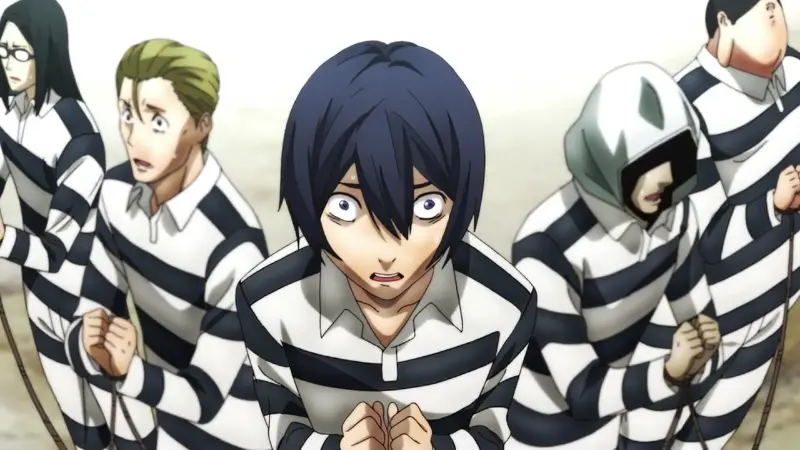
The comedic genius of Prison School lies entirely in its direction. Director Tsutomu Mizushima treats the incredibly stupid, hormonally driven actions of the boys with the exact same cinematic intensity, heavy shadowing, and dramatic musical scores as a serious psychological thriller like Death Note. The characters engage in massive, 300-IQ tactical mind games just to secure a single, mundane item from the outside world.
By treating the absolutely ridiculous premise with dead-serious, life-or-death gravity, the show creates a brilliant comedic dissonance. The sheer loyalty the boys show to one another, sacrificing their dignity in grand, dramatic speeches over the most absurd misunderstandings, makes this series a genuinely gripping, edge-of-your-seat thriller that will simultaneously have you crying with laughter.
Grand Blue Dreaming
Ostensibly, Grand Blue Dreaming is heavily marketed as a beautiful, serene anime about scuba diving. And technically, the ocean is involved. However, the reality of the show is that it is the most accurate, chaotic depiction of college fraternity culture in anime history. When Iori Kitahara moves to a coastal town to attend university, he is immediately kidnapped by the upperclassmen of the local diving club, who spend 95% of their time aggressively drinking and violently partying.
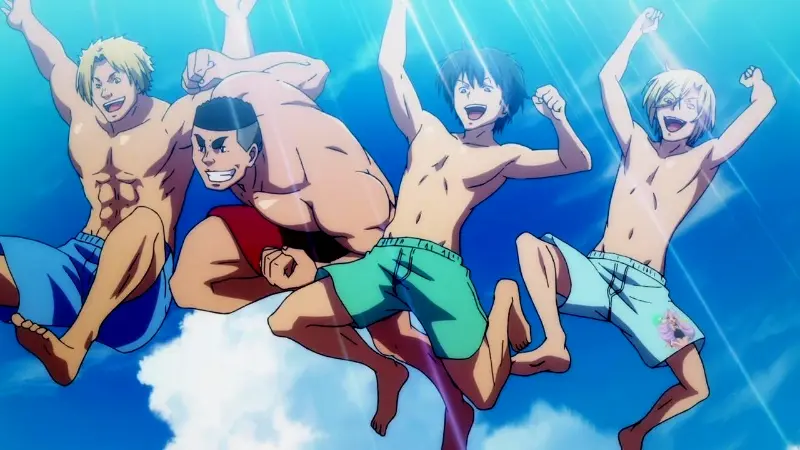
The pacing of the comedy is relentless. Every time Iori tries to establish a normal, respectful university life, he is dragged back into the absolute degeneracy of the “Peek-a-Boo” diving club. The show excels at chain-reaction misunderstandings, where a simple lie to save face snowballs into a catastrophic, public humiliation. The character dynamics are flawless, built entirely on mutual betrayal and dragging each other down to the lowest possible level.
Visually, the show relies heavily on the “Titan Face” trope—morphing the characters’ standard, attractive designs into horrific, hyper-detailed expressions of rage and malice whenever they plot against one another. It captures the unhinged, alcohol-fueled camaraderie of college perfectly. You will learn absolutely nothing about scuba diving, but you will experience one of the funniest, most high-energy comedies ever animated.
Nichijou (My Ordinary Life)
Produced by the legendary Kyoto Animation, Nichijou is a masterclass in visual surrealism. The title translates to “My Ordinary Life,” which is the greatest lie in the series. The show follows the daily lives of a trio of high school girls, as well as a brilliant child scientist, her robot caretaker, and a talking cat. However, the actual plot is entirely secondary to the visual execution of the jokes.
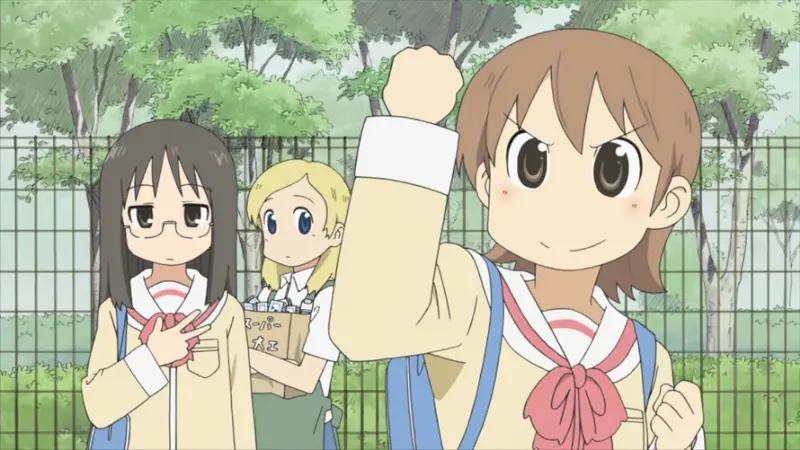
The humor in Nichijou derives from taking a minor, relatable inconvenience and animating it like the climax of a high-octane shonen battle. A student getting bitten by a dog results in a massive, laser-beam explosion that levels the city block. A girl dropping a piece of sausage on the floor triggers a breathless, slow-motion internal monologue worthy of an Oscar. The sheer astronomical animation budget dedicated to absolute nonsense is a punchline in itself.
The pacing is incredibly unique, often utilizing long, uncomfortable silences followed by sudden bursts of kinetic, chaotic energy. It weaves bizarre, disjointed sketches together, rewarding the viewer with running gags that escalate to unfathomable levels of absurdity. It is a show that demands your attention, proving that the most mundane aspects of human existence can be turned into an absolute riot if animated with enough explosive passion.
Konosuba: God's Blessing on This Wonderful World!
The Isekai genre is flooded with identical stories: a kind-hearted, overpowered protagonist is transported to a fantasy world, gathers a harem of competent allies, and saves the day. Konosuba looks at this formula, throws it in the trash, and sets it on fire. Kazuma Satou dies an incredibly embarrassing death and is reincarnated into an RPG world, but instead of a legendary weapon, he spitefully brings along the useless, arrogant goddess Aqua.
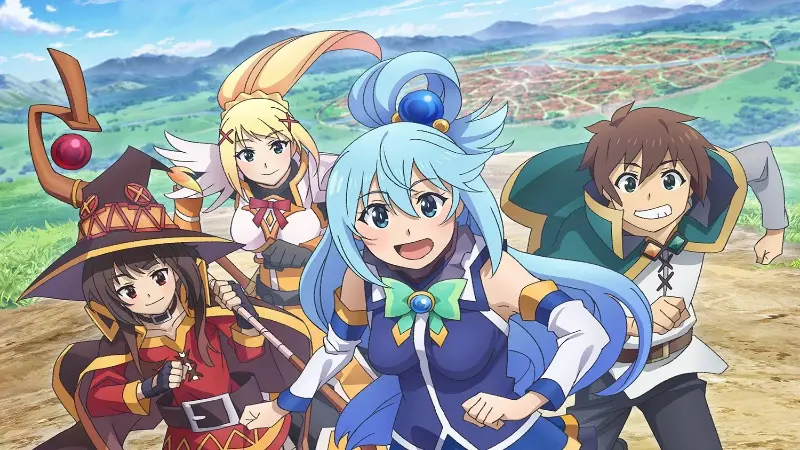
The genius of Konosuba is that every single member of the main party is a fundamentally terrible person. Kazuma is greedy and cynical; Aqua is incredibly arrogant but completely incompetent; Megumin is an explosive-obsessed mage who can only cast one spell a day; and Darkness is a masochistic crusader who cannot hit a target. They are completely dysfunctional, constantly fighting, stealing from each other, and making every situation exponentially worse.
The comedy thrives on their miserable chemistry. Because they are all so selfish and flawed, the audience never feels bad when they suffer horrific, embarrassing defeats. The show actively mocks the tropes of traditional fantasy, turning epic boss fights into chaotic, accidental victories fueled entirely by luck and desperation. It is the gold standard for parody anime, providing a much-needed, hilarious breath of fresh air to a bloated genre.
The Disastrous Life of Saiki K.
If you are looking for pure, unfiltered joke density, The Disastrous Life of Saiki K. is completely unmatched. Kusuo Saiki is born with practically every psychic power imaginable—telepathy, teleportation, pyrokinesis, and time travel. While most protagonists would use this to become a superhero, Saiki finds his powers incredibly annoying. His only goal in life is to remain completely invisible and entirely average, a task that proves entirely impossible.

The comedic structure relies on Saiki acting as the ultimate “straight man.” He is completely silent, communicating with the audience entirely through a rapid-fire, heavily exhausted internal monologue. He is constantly surrounded by a cast of hyper-exaggerated, loud, and deeply eccentric idiots—ranging from a delusional chuunibyou to a terrifyingly dense delinquent. Saiki is forced to secretly use his god-like powers just to fix their mundane mistakes and avoid drawing attention to himself.
The pacing of this anime is legendary. Because it was originally broadcast in five-minute segments, there is absolutely zero fluff. The jokes are fired off at breakneck speed, demanding your full attention to catch the subtle background gags and meta-commentary. Saiki’s dry, cynical reactions to the sheer stupidity of the people around him make this one of the sharpest, most consistently hilarious comedies ever written.
Gintama
Sitting uncontested on the absolute throne of anime comedy is Gintama. Set in an alternate-history Edo period where Japan was conquered by aliens, the show follows Gintoki Sakata, an incredibly lazy, sugar-addicted former samurai who runs an odd-jobs business. Describing the plot of Gintama is virtually impossible, because the show refuses to be confined to a single genre, tone, or even structural reality.
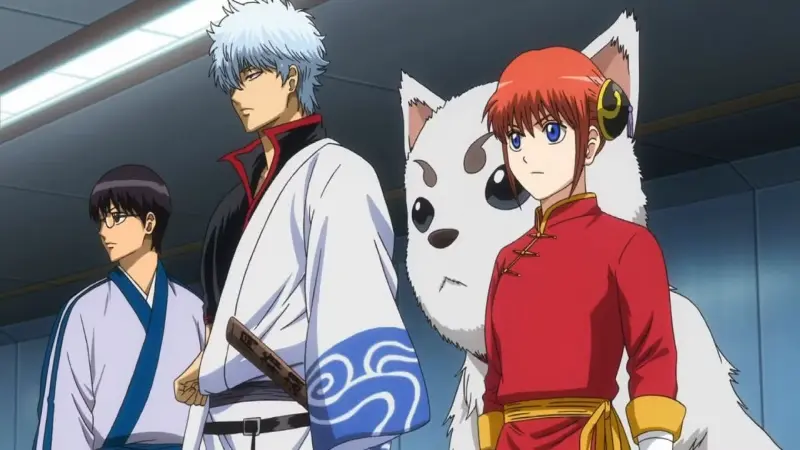
The series is famous for its fearless, aggressive meta-humor. The characters are fully aware they are in an anime. They will literally pause an episode to complain to the audience about their animation budget, aggressively mock the executives at their own production studio, or spend an entire 20 minutes staring at a static background image of their house while arguing over the script. It relentlessly parodies other massive Shonen Jump titles like Dragon Ball, Naruto, and Bleach, completely disregarding copyright safety for the sake of a joke.
However, what cements Gintama as a masterpiece is its unbelievable emotional duality. It can spend three episodes delivering the most absurd, low-brow toilet humor imaginable, and then immediately pivot into an incredibly high-stakes, beautifully animated samurai action arc that will legitimately make you cry. It commands absolute mastery over your emotions, proving that the funniest anime of all time is also one of the greatest stories ever told.
The Punchline
A truly great comedy anime is a rare treasure. When a studio respects its audience enough to avoid cheap, loud gimmicks and instead relies on sharp writing, flawless timing, and brilliant subversion, the result is an experience you can revisit endlessly. Whether you prefer the relentless meta-commentary of Gintama or the rapid-fire deadpan perfection of Saiki K., these shows prove that anime humor can stand toe-to-toe with the best sitcoms in the world.
If you have laughed enough and want to test your judgment, head over to our Smash or Pass hub to cast your votes on your favorite eccentric characters. Want to see the complete opposite of comedy? Check out our harrowing list of the Top 10 Most Suffered & Broken Anime MCs.
Which comedy anime made you laugh the hardest?
Frequently Asked Questions
What makes Saiki K. so highly rated for comedy?
Is Konosuba just another generic Isekai anime?
Why is Gintama considered the king of anime comedy?
Is Prison School safe to watch or just fan service?
What is the bait-and-switch in Asobi Asobase?
Rank Your Favorites
Take a break and play our interactive Smash or Pass games. Vote on your favorite anime characters, game characters, and idols to shape the global tier lists.

Join the Discussion (0)