Top 10 Best Anime Villains Who Were Actually Right
The greatest antagonists in anime are never the ones who simply want to destroy the world for the sake of evil. The most terrifying, compelling villains are the ones who sit across from the protagonist, explain their grand master plan, and force you, the viewer, to quietly admit: “Wait… they actually have a point.” These are the philosophical juggernauts—the characters who look at a fundamentally broken society and decide to fix it, regardless of the blood it costs.
When a villain’s motivation is rooted in cold, calculated utilitarianism or a deep desire to save humanity from itself, the traditional lines between good and evil completely dissolve. The protagonists in these stories are often left fighting to preserve a flawed, painful status quo, while the antagonist is offering a radical, functional utopia. It creates a brilliant psychological dissonance where the audience is forced to question whether the “hero” is actually standing on the wrong side of history.
If you are tired of one-dimensional bad guys and crave narratives that challenge your real-world morality, you are in the right place. From cosmic preservers to anti-capitalist survivalists, here are the Top 10 best anime villains whose philosophies were undeniably, uncomfortably right.
Table of Contents
Tsukasa Shishio (Dr. Stone)
When the entire human race is petrified in stone and the world resets to the Stone Age, Senku Ishigami wants to use science to revive everyone and restore modern civilization. However, his physical rival, Tsukasa Shishio, looks at the reset as a profound blessing. Tsukasa argues that the old world was completely irredeemable—a hyper-capitalist dystopia where the wealthy elite exploited the poor, and innocent people suffered under corrupt landlords and politicians.
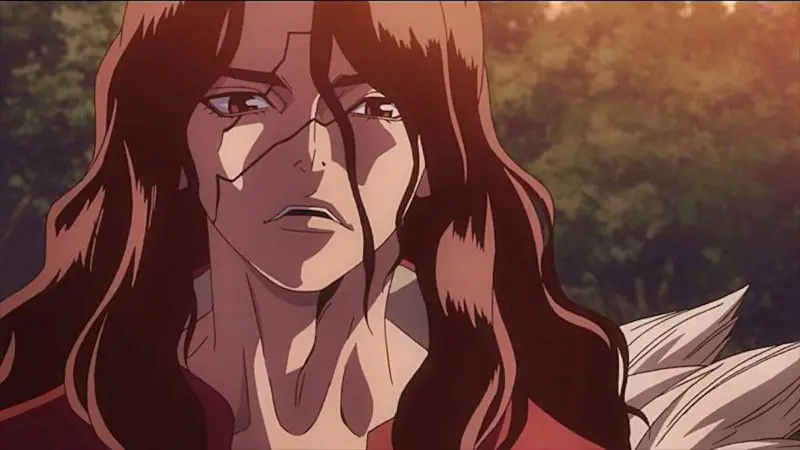
Tsukasa’s philosophy is rooted in a highly protective, albeit extreme, sociology. He proposes reviving only the youth, leaving the corrupt, older generations in their stone forms permanently. His goal is to build an Eden—a society intrinsically tied to nature, free from taxes, borders, and the systemic oppression that defined the 21st century. While his method of smashing adult statues is objectively murder, his underlying critique of modern societal inequality is devastatingly accurate.
The brilliance of the “Stone Wars” arc is that the narrative constantly acknowledges Tsukasa’s point. Senku’s science eventually leads to the recreation of weapons, warfare, and currency—the exact societal poisons Tsukasa was trying to prevent. Tsukasa is the ultimate anti-capitalist antagonist; a young man who was abused by the system and decided that the only way to protect the future was to ensure the past stayed permanently buried in stone.
Askeladd (Vinland Saga)
In the brutal, blood-soaked world of 11th-century Vikings, Vinland Saga introduces Askeladd not as a grand philosopher, but as a pragmatic, cynical mercenary leader. To the protagonist, Thorfinn, Askeladd is the ultimate evil—the man who dishonorably murdered his father. For most of the first season, Askeladd plays the role of the ruthless pillager perfectly, raiding villages and manipulating his own men. Yet, beneath his charismatic exterior lies a profound, burning hatred for the very culture he profits from.
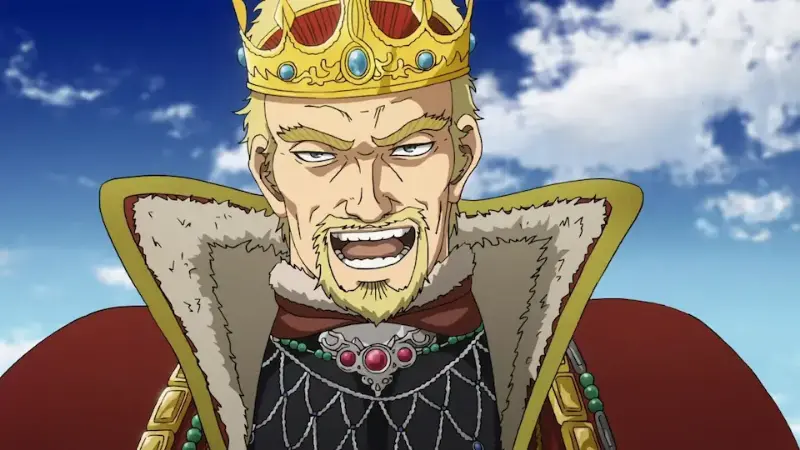
Askeladd’s true genius is his complete detachment from the toxic ideology of Valhalla. While the Vikings around him slaughter each other for hollow glory and a fictional afterlife, Askeladd recognizes the sheer absurdity of their existence. His entire life is a complex, deeply calculated performance designed for a single purpose: to protect the peaceful, Welsh homeland of his enslaved mother from the encroaching Danish empire. He is willing to damn his own soul to hell if it means keeping Wales safe.
His philosophy solidifies in his ultimate sacrifice. By assassinating the Danish King, Askeladd secures the throne for the pacifist Prince Canute and ensures the safety of Wales, playing the villain to the very end. He is one of anime’s greatest anti-villains—a man who willingly bathed in the blood of a savage era specifically to pave the way for a more peaceful, civilized generation.
Garou (One Punch Man)
In a world saturated with professional superheroes, One Punch Man introduces Garou, the “Hero Hunter.” As a child watching superhero shows, Garou always sympathized with the monsters. He noticed a toxic societal bias: the monsters always tried their hardest, yet they were brutally beaten by the heroes simply because the heroes were popular and the crowd demanded it. He saw the concept of “Justice” not as a moral absolute, but as a tyrannical tool used by the majority to oppress the minority.
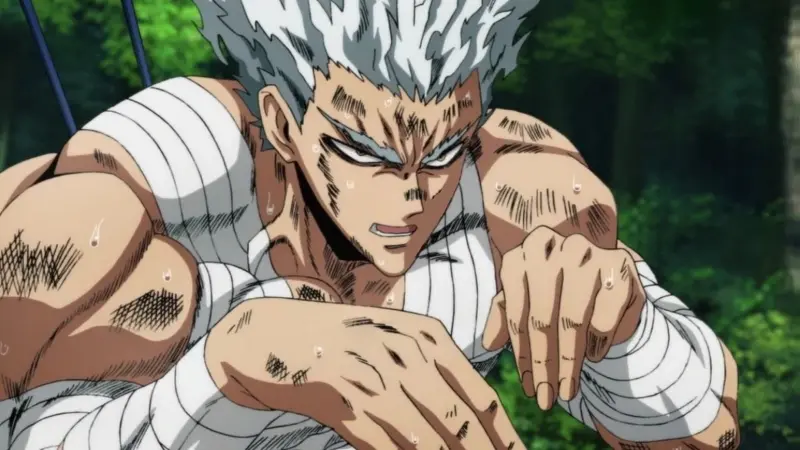
Garou’s philosophy is built on the idea that humanity’s infighting, corruption, and bullying stem from a fractured sense of morality. His solution is radically dark: he seeks to become the “Absolute Evil.” By transforming himself into an unstoppable, terrifying monster that poses a threat to the entire globe, he believes humanity will be forced to stop fighting each other and unite in their shared terror. He wants to save the world by becoming its ultimate nightmare.
The tragedy of Garou is that his logic exposes the deep flaws within the Hero Association. Many top-ranked heroes are shown to be arrogant, corrupt, and concerned only with their media rankings. Garou, despite fighting for “evil,” repeatedly displays more honor and compassion—specifically toward vulnerable children—than the heroes he hunts. He is a deeply philosophical martial artist who realized that sometimes, true peace requires a universal villain.
Sosuke Aizen (Bleach)
For hundreds of episodes, Sosuke Aizen is presented as the ultimate mastermind of Bleach—a cold, calculating traitor who manipulated the entire Soul Society just to achieve godhood. He is arrogant, ruthless, and seems to view everyone around him as expendable pawns. However, the true depth of Aizen’s philosophy is not revealed until the very end of his arc, fundamentally recontextualizing his entire rebellion against the heavens.

Aizen’s treason was born from an existential disgust. He discovered the closely guarded secret of the Soul King—the supposed god of their universe. The Soul King was not a benevolent ruler, but a mutilated, limbless corpse trapped in crystal, used as a linchpin by the corrupt noble families to maintain a stagnant, artificial balance of souls. Aizen, possessing the intellect and power of an Übermensch, found it abhorrent to be ruled by a silent, dead thing.
His motivation was deeply rooted in the philosophical rejection of a broken system. He did not want to destroy the world; he wanted to overthrow a stagnant hierarchy and actively govern a universe that actually made sense. While his methods of brutal experimentation and psychological torture were undeniably villainous, his core assertion—that sentient beings should not blindly bow to a fabricated, hollow authority—made him the most enlightened character in the series.
Shinobu Sensui (Yu Yu Hakusho)
Long before Yusuke Urameshi took the job, Shinobu Sensui was the ultimate Spirit Detective in Yu Yu Hakusho. Sensui was defined by his pure, black-and-white morality; he believed humans were inherently good and demons were inherently evil, and he killed demons without a single ounce of hesitation or guilt. His entire worldview was a rigid, flawless structure of absolute justice. That is, until he stumbled upon the “Feast of Human Vices.”
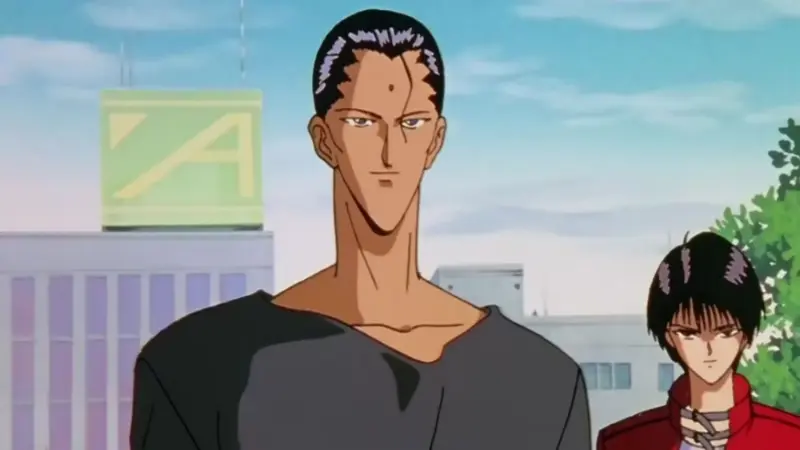
During a routine mission, Sensui discovered an elite human cult bathing in the blood of demons, torturing them for sheer, sadistic entertainment. His absolute morality instantly violently shattered. The horrifying realization that the humans he was sworn to protect were vastly more cruel than the demons he had been slaughtering caused his mind to splinter into seven distinct personalities just to cope with the trauma. He immediately switched sides.
Sensui’s theft of the “Chapter Black” tape—a VHS containing a compilation of humanity’s most horrific atrocities—solidified his philosophy. He sought to open a portal to the demon world not out of malice, but out of a profound sense of penance. He believed that humanity had forfeited its right to exist and needed to be wiped out to protect the rest of the universe from its cruelty. Sensui is a terrifying villain because his hatred for humanity is entirely, irrefutably justified.
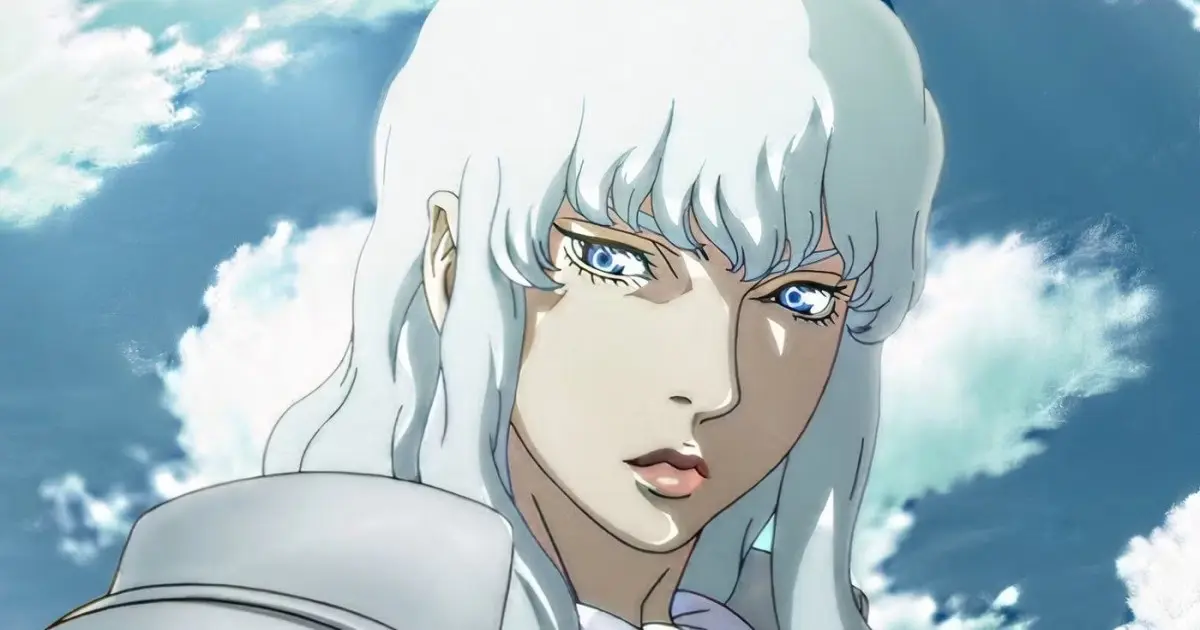
Griffith (Berserk)
Including Griffith on this list is guaranteed to spark intense debate, because his actions during the Eclipse in Berserk are arguably the most vile, irredeemable atrocities ever committed in fiction. Sacrificing his most loyal comrades to demons to ascend to godhood as Femto firmly cements him as an absolute monster. However, if we pull back and look exclusively at the macroeconomic result of his ascension, the uncomfortable truth emerges: Griffith actually saved the world.
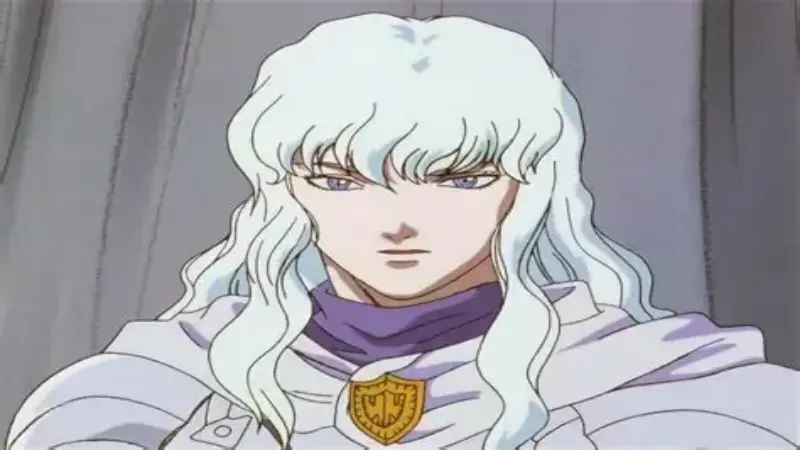
Following the merging of the astral and physical planes, the world of Berserk becomes a living hell overrun by trolls, ogres, and mythical horrors. Humanity is pushed to the absolute brink of extinction. In response, Griffith establishes Falconia—a literal, gleaming utopia. Within its walls, disease is cured, hunger is eliminated, and humans live in perfect harmony alongside apostles. It is the only safe haven on the entire planet, and Griffith rules it as a benevolent, beloved savior.
This creates one of the greatest philosophical paradoxes in anime. The protagonist, Guts, is fighting a desperate war of personal vengeance, while the antagonist, Griffith, has successfully orchestrated global peace and salvation for the remnants of humanity. Griffith’s existence forces the audience to confront a deeply uncomfortable utilitarian question: is a flawless, golden utopia worth the horrific mountain of innocent blood required to lay its foundation?
Shogo Makishima (Psycho-Pass)
In the dystopian, cyberpunk society of Psycho-Pass, Japan is entirely governed by the Sibyl System. This omnipotent AI continuously scans the mental state of every citizen. If a person’s stress levels or criminal intent (their Psycho-Pass) rise too high, they are forcibly arrested, isolated, or executed before they ever actually commit a crime. It is a sterile, perfect panopticon where violent crime has been eradicated, but at the total cost of human autonomy.
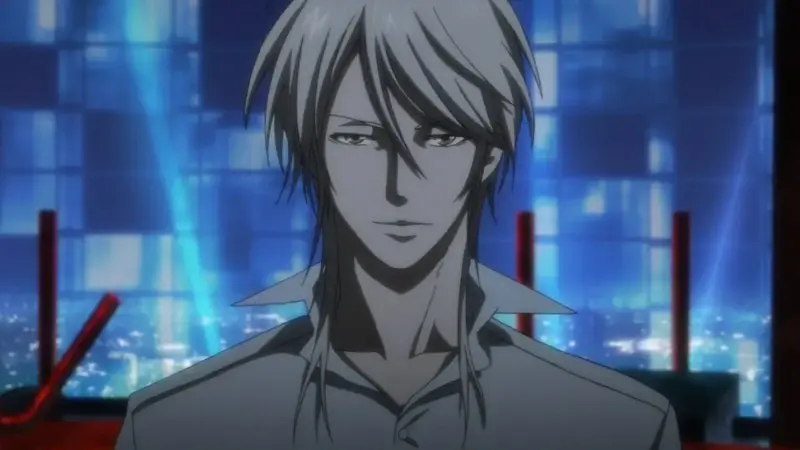
Enter Shogo Makishima, a brilliantly educated antagonist who is fundamentally immune to the system’s scans. Makishima views the citizens of this society not as humans, but as mindless livestock grazing in a gilded cage. He argues that a human being only possesses value when they act according to their own free will. Without the choice to do evil, there is no virtue in doing good. He orchestrates horrific, violent crimes specifically to force citizens to wake up and make a choice.
Makishima is a philosophical terrorist quoting Orwell, Foucault, and Shakespeare while tearing down the foundations of society. His methods are undeniably cruel, but his underlying motivation—to free humanity from the sterile, algorithmic dictatorship of the Sibyl System—is heroic. He is a dark reflection of the human spirit, violently proving that the chaotic freedom of the soul is infinitely more valuable than the synthetic peace of a machine.
Meruem (Hunter x Hunter)
Meruem’s character arc in Hunter x Hunter is widely considered one of the greatest pieces of writing in anime history. He is born as the Chimera Ant King, the absolute apex predator of the food chain, genetically programmed to conquer the world and consume humanity. Initially, he treats humans as nothing more than livestock. However, everything changes when he meets Komugi, a blind, fragile human girl who continuously defeats him in the board game Gungi.
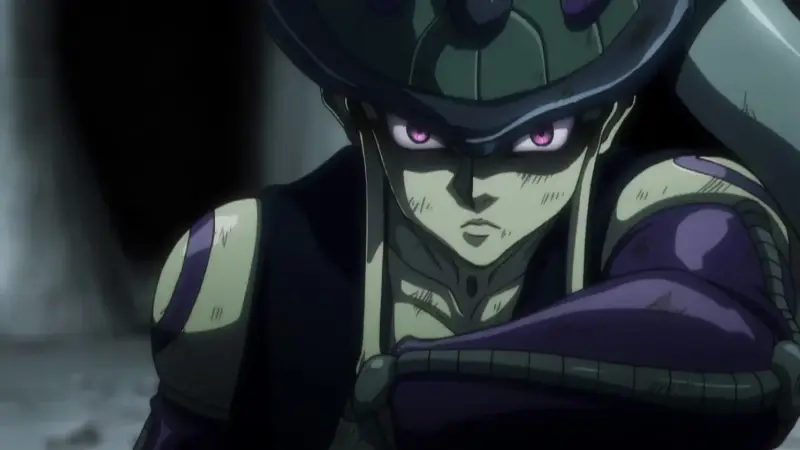
Through Komugi, Meruem’s vast intellect begins to process the reality of human civilization, and he is disgusted by what he finds. He observes a world where artificial borders dictate survival—where children starve on one side of a line while weak, corrupt politicians gorge themselves on the other. He realizes that human society is entirely dictated by inherited wealth and geographical luck, rather than actual capability or intellect.
Meruem decides to change his goal. Instead of eradicating humanity, he seeks to establish a global meritocracy—a perfectly logical society where individuals are valued and protected based on their actual worth, completely eradicating inequality. The tragic irony of the arc is that humanity does not defeat Meruem with a superior moral argument or martial arts; they defeat him with the “Miniature Rose,” a dirty, radioactive bomb representing the sheer, bottomless malice of human evolution. Meruem died a philosopher; humanity survived as the true monsters.
The Anti-Spiral (Gurren Lagann)
Gurren Lagann is an anime entirely fueled by the concept of “Spiral Power”—the infinite, escalating energy of evolution and willpower. The protagonists use this energy to drill through the heavens, overcome impossible odds, and fight for freedom. Standing in their way is the Anti-Spiral, a terrifying, omnipotent cosmic entity that systematically hunts down and oppresses any race that utilizes this power, forcing them underground to live in fear and stagnation.
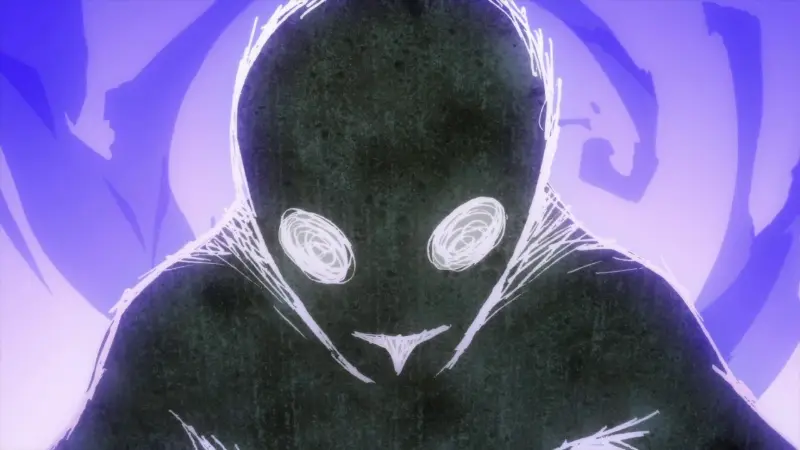
On a surface level, the Anti-Spiral appears to be a classic, tyrannical overlord. However, their motivation is grounded in cold, irrefutable astrophysics. They discovered the “Spiral Nemesis”: a mathematical certainty that the unchecked, exponential growth of spiral energy would eventually create a supermassive black hole, instantaneously consuming the entire universe. To prevent literal, cosmic annihilation, the Anti-Spiral halted their own evolution, locked themselves in a state of suspended animation, and took on the agonizing burden of policing the universe.
They are not evil; they are the ultimate cosmic utilitarians. They willingly became the hated villains of the cosmos to ensure that the cosmos continued to exist. When the protagonist finally defeats the Anti-Spiral, the entity doesn’t curse him—it simply asks him to protect the universe in their stead. It is a stunning revelation that the “big bad” was actually the only thing keeping the universe from tearing itself apart.
Madara Uchiha (Naruto)
Sitting at the absolute pinnacle of philosophical antagonists is Madara Uchiha from Naruto. Born into the brutal Warring States period, Madara spent his youth burying his brothers, fighting a bloody, endless war against rival clans. Despite his efforts to build a peaceful village, he realized a fundamental, terrifying truth about human nature: as long as there is love, there will be hate, and as long as there are victors, there will be war. The cycle of violence was entirely inescapable.
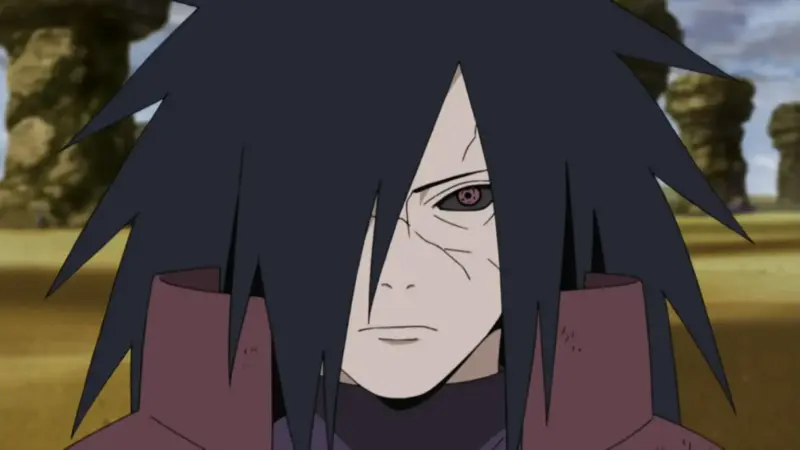
Madara’s solution was the Infinite Tsukuyomi—a massive, global genjutsu that would trap every living human in their own individual, perfectly tailored dream world. In this dream, the dead would live again, there would be no war, no starvation, and no pain. Everyone would get exactly what they wanted, forever, while their physical bodies were sustained by the Divine Tree. It was the ultimate, bloodless pacifism.
The protagonists fight against Madara in the name of “freedom” and “facing reality.” But Madara’s logic forces a deeply uncomfortable question: why is a painful, bloody, and tragic reality inherently better than a perfect, happy fiction? If you can eliminate all suffering in the world with a single illusion, isn’t it morally wrong to stop it? Madara was not a madman; he was a broken savior who decided that the only way to win the game of life was to stop playing it altogether.
The Final Verdict
The beauty of these philosophical antagonists is that they never truly lose the debate. Even when they are physically defeated by the protagonist, their ideologies linger, forcing the surviving characters—and the audience—to build a better world that addresses their critiques. Whether it is Makishima exposing the fragility of a dystopian AI or Madara offering the ultimate escape from reality, these villains prove that true storytelling is never just black and white.
If you are reeling from the heavy philosophical debates and need to cleanse your palate, head over to our Smash or Pass hub to cast your votes on your favorite morally ambiguous characters. Still hungry for complex narratives? Check out our breakdown of the Top 10 Anime With Insane Plot Twists You Won’t See Coming.
Which anime villain had the most bulletproof philosophy?
Frequently Asked Questions
Why was Madara Uchiha actually right in Naruto?
What was the Anti-Spiral's true goal in Gurren Lagann?
Why is Shogo Makishima considered a philosophical antagonist?
How was Meruem right about human society in Hunter x Hunter?
Did Griffith do anything right in Berserk?
Rank Your Favorites
Take a break and play our interactive Smash or Pass games. Vote on your favorite anime characters, game characters, and idols to shape the global tier lists.


Join the Discussion (0)