Top 10 Anime With Insane Plot Twists You Won’t See Coming
There is a specific, intoxicating thrill that comes from having the rug completely pulled out from under you. A truly great plot twist doesn’t just shock you for a few seconds; it fundamentally shatters your entire understanding of the narrative, forcing you to mentally rewind the entire show to see all the subtle, brilliant breadcrumbs the creator left behind. It takes a good anime and transforms it into an unforgettable masterpiece.
The anime industry excels at the art of deception. Some studios use deceptive marketing to hide psychological horrors behind bright, pastel-colored posters. Others spend dozens of episodes meticulously building a massive, sprawling fantasy world, only to drop a single piece of dialogue that completely recontextualizes the entire universe. These are the shows that weaponize your own expectations against you, playing on established tropes just to break them.
If you are looking for narratives that will leave you staring blankly at your screen in absolute disbelief, you have arrived at the perfect list. From brilliant Episode 1 deceptions to devastating mid-story betrayals, here are the Top 10 anime with insane plot twists you will absolutely never see coming.
Table of Contents
Rokka: Braves of the Six Flowers
Rokka: Braves of the Six Flowers pulls off one of the smartest, most seamless genre shifts in modern anime. The premise is classic, high-fantasy boilerplate: the ancient Demon God has awakened, and the Goddess of Fate chooses six elite champions, marking them with a crest, to journey into the demon territory and save the world. It sets itself up to be a sprawling, epic journey across a magical continent.
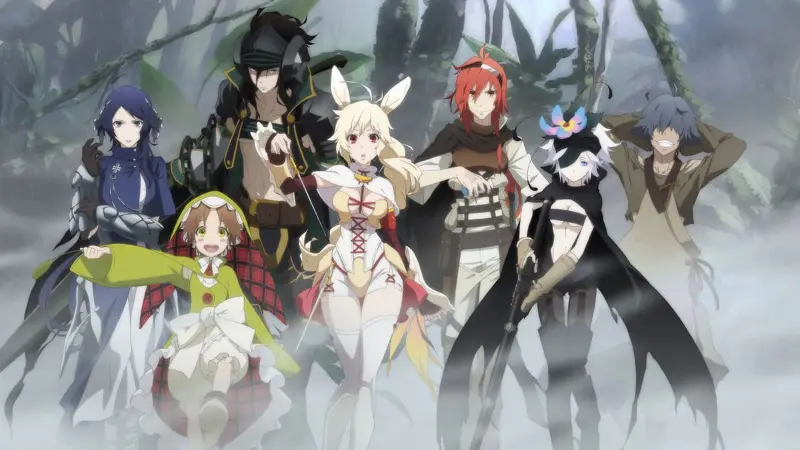
The twist hits like a freight train the moment the heroes finally assemble at the rendezvous point. Instead of six chosen champions, seven people show up. They all possess the crest, they all possess valid backstories, and they are immediately trapped inside a magical, inescapable barrier surrounding a dense, foggy forest. The epic fantasy adventure instantly dies, and the anime transforms into an intensely claustrophobic, high-stakes “locked-room” murder mystery.
What makes this plot twist so phenomenal is the pacing. The protagonist, Adlet Mayer, is immediately framed as the imposter. The entire season is dedicated to a desperate, breathless game of cat-and-mouse as Adlet tries to physically survive the attacks of the other overpowered heroes while using pure logic to deduce the true traitor. The reveal at the very end is meticulously foreshadowed, rewarding attentive viewers with a perfectly executed, “how did I not see that?” conclusion.
Talentless Nana
If you watch the first 20 minutes of Talentless Nana without knowing anything about it, you will likely roll your eyes at how painfully generic it feels. It presents itself as a blatant My Hero Academia clone: a group of super-powered teenagers are sent to a remote island academy to train their quirks to fight against “The Enemies of Humanity.” Enter Nana Hiiragi, the bubbly, pink-haired, seemingly quirkless transfer student who just wants to make friends.
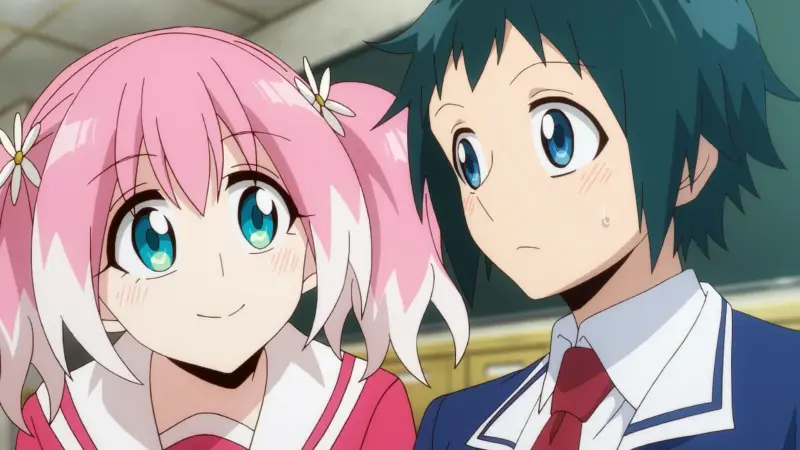
The twist detonates in the final 60 seconds of Episode 1. The anime completely drops its cheerful facade, revealing that there are no outside monsters. The super-powered teenagers are the “Enemies of Humanity,” and the government has exiled them to this island to die. Nana is not a friendly, quirkless underdog; she is a cold, highly trained sociopath dispatched by the military to systematically assassinate the entire class using nothing but deception and psychological warfare.
From that moment on, the anime becomes a brilliant, high-tension game of Among Us. Nana must use incredible psychological gymnastics to murder students who can literally freeze time, manipulate fire, or predict the future, all while pretending to be the innocent class president. The constant twists and near-misses as the students slowly realize there is a killer among them make this one of the most wildly entertaining thrillers of the decade.
School-Live!
No list about plot twists is complete without bowing to the absolute deception that is School-Live! (Gakkougurashi!). The marketing materials, the opening theme song, and the entire first episode are meticulously designed to convince you that you are watching a sugary-sweet “Cute Girls Doing Cute Things” comedy. The plot seems to follow Yuki Takeya, a hyperactive girl who loves her school so much that she and her friends formed the “School Living Club” so they never have to leave.

The illusion holds perfectly until the final moments of the premiere. As Yuki cheerfully talks to her classmates, the camera slowly pans across the room, shifting perspective. The pristine school vanishes, replaced by shattered glass, barricaded doors, blood-stained walls, and a horde of rotting zombies groaning outside the windows. The cheerful tone was not reality—it was Yuki’s severe, trauma-induced psychotic break. Her friends are merely playing along with her delusion to keep her from completely losing her mind.
This twist completely rewires how you watch the rest of the series. Every time the anime shifts back to Yuki’s bright, pastel-colored perspective, you feel an intense, suffocating sense of dread, knowing the horrific reality lurking just outside the frame. It brilliantly balances heartwarming slice-of-life moments with bleak survival horror, creating a deeply uncomfortable and emotionally devastating narrative.
Deca-Dence
Deca-Dence took one of the biggest creative gambles in recent anime history. Episode 1 sets up a gritty, high-octane post-apocalyptic narrative highly reminiscent of Attack on Titan or Mortal Engines. Humanity is pushed to the brink of extinction by giant, grotesque monsters called Gadoll, and the last survivors live inside a massive, mobile fortress. It is a fantastic, visually stunning premiere that promises a serious, straightforward sci-fi war story.
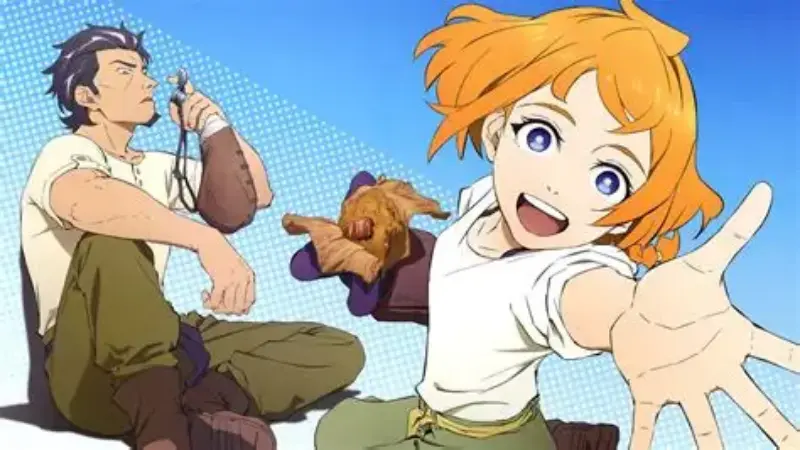
Then, Episode 2 happens, and the anime completely shatters its own reality. The gritty human struggle is entirely fake. The world is actually a massive, corporate-owned entertainment simulation running on a dystopian Earth. The elite warriors fighting the monsters are just colorful, cartoonish cyborg avatars controlled by a society of highly advanced robots seeking entertainment. The “human survivors” are basically just NPC livestock completely unaware that their tragic reality is a video game.
This twist was so sudden and visually jarring that it heavily polarized audiences upon release. However, once you accept the completely insane premise, the anime reveals itself to be a brilliant critique of late-stage capitalism, systemic oppression, and breaking free from predetermined programming. The way the grim human perspective interacts with the surreal, brightly colored cyborg reality makes Deca-Dence one of the most uniquely ambitious sci-fi anime ever produced.
Future Diary (Mirai Nikki)
Future Diary is pure, chaotic entertainment. It thrives on a frantic survival game premise where 12 individuals are granted cell phones that can predict the future. The last person standing becomes the new God of Space and Time. While the anime is packed with betrayals and crazy character deaths, the entire narrative hinges on the terrifyingly devoted, pink-haired yandere icon, Yuno Gasai, and her obsessive protection of the cowardly protagonist, Yukiteru.
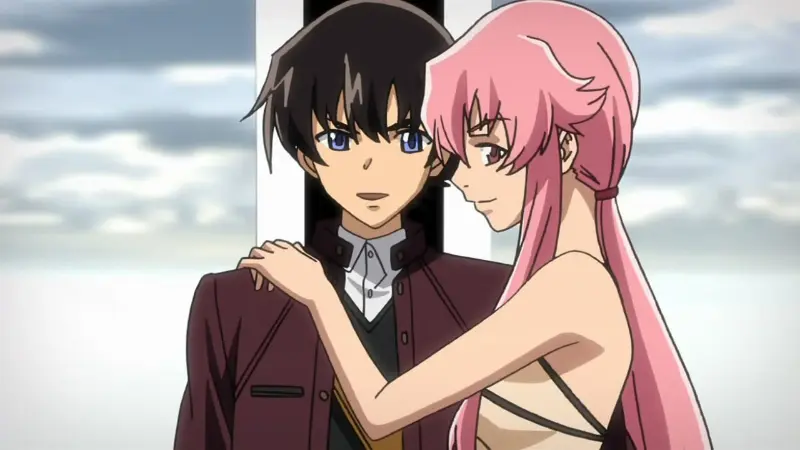
For most of the series, Yuno is presented as a deeply traumatized but highly efficient killer. However, the late-game plot twist completely recontextualizes her entire existence. When Yukiteru discovers a massive, rotting third corpse hidden in Yuno’s home, the truth detonates: the Yuno standing next to him is not the Yuno from his timeline. She is a God from a previously completed survival game who successfully won, realized she could not resurrect Yukiteru, and traveled back in time to murder her alternate self just so she could play the game with him again.
This timeline-shattering revelation takes Yuno from a generic “crazy girlfriend” trope to a figure of profound, god-like obsession and tragedy. The sheer scale of her delusion, and the horrifying realization that she has been manipulating the entire survival game from the very beginning, elevates the final arc of the anime into a truly mind-bending psychological thriller.
The Promised Neverland (Season 1)
There is a reason The Promised Neverland (specifically Season 1) is hailed as a modern masterpiece of suspense. The opening scenes paint Grace Field House as an absolute utopia. It is an idyllic, sun-drenched orphanage where brilliant children live under the loving care of their caretaker, “Mom.” The only rule is that they must never approach the massive, walled-off gate at the edge of the forest. The atmosphere is warm, safe, and deeply comforting.
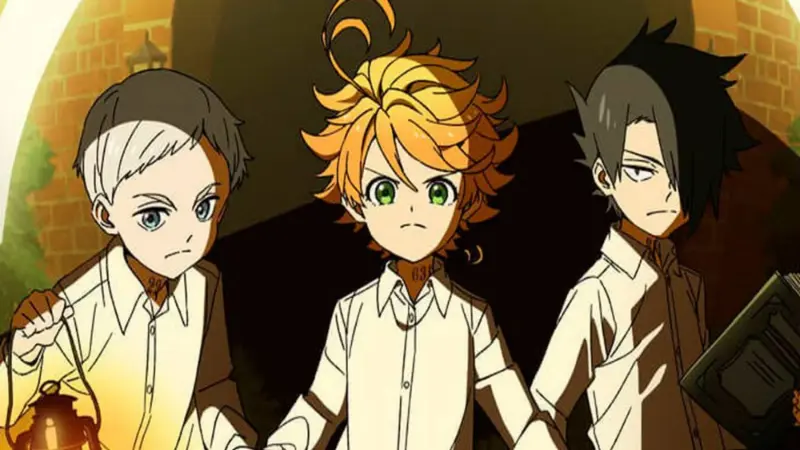
The illusion is violently shattered at the end of Episode 1. When two of the smartest children, Emma and Norman, break the rule to return a forgotten toy to a newly adopted girl, Conny, they discover her lifeless body tossed in the back of a truck. The anime instantly pivots into dark fantasy horror, revealing that Grace Field is not an orphanage—it is a premium, free-range farm. The children are highly prized livestock being raised specifically to be fed to grotesque, towering demons.
This initial twist sets off an incredibly tense, 12-episode psychological chess match. The children cannot simply run; they have to secretly outsmart “Mom,” bypass tracking devices, and plan a mass escape without alerting the demons, all while pretending they know nothing. The constant mind games, hidden betrayals, and shocking revelations about the outside world make the entire first season a breathless, mind-blowing experience.
Puella Magi Madoka Magica
Puella Magi Madoka Magica is the undisputed king of anime deconstruction. Written by the legendary Gen Urobuchi, the series intentionally utilizes soft, moe character designs and standard magical girl tropes to lower the audience’s guard. The first major twist occurs in Episode 3, where the sudden, incredibly brutal death of a main character violently shifts the tone from a lighthearted magical adventure to a grim survival story. But that is merely the appetizer.
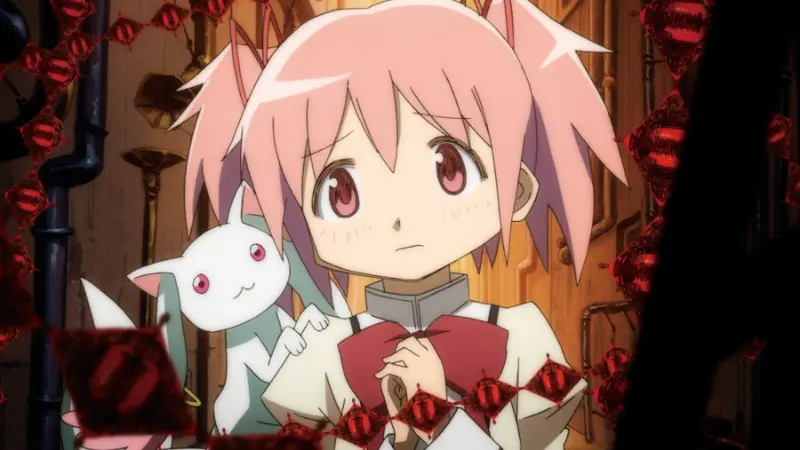
The true, mind-blowing brilliance of the series unravels in the final act, specifically regarding the true nature of Witches and the mysterious, cold transfer student, Homura Akemi. The anime reveals a horrifying, inescapable entropic cycle: Magical Girls are not fighting external monsters; Witches are simply Magical Girls whose souls have become corrupted by despair. The cute mascot character, Kyubey, is actually an emotionless alien using the emotional suffering of teenage girls to harvest energy for the universe.
Furthermore, Episode 10 completely shatters the narrative timeline, revealing that Homura is trapped in a devastating, self-inflicted time loop. She has watched her best friend, Madoka, die countless times, hardening her into the emotionless veteran seen in the beginning. These layered twists fundamentally rewrite the entire magical girl genre, turning a story about hope and friendship into a bleak, philosophical tragedy.
Shinsekai Yori (From the New World)
Shinsekai Yori is a slow-burn masterpiece that builds an incredibly dense, unsettling dystopian future. A millennium after modern society collapsed, humanity survives in isolated, agrarian communities where every citizen possesses god-like psychic abilities (Cantus). To maintain order, the society ruthlessly conditions its children, quietly eliminating anyone who shows signs of psychological instability. They also command a race of ugly, highly intelligent, mole-like creatures known as “Queerats” to perform their menial labor.
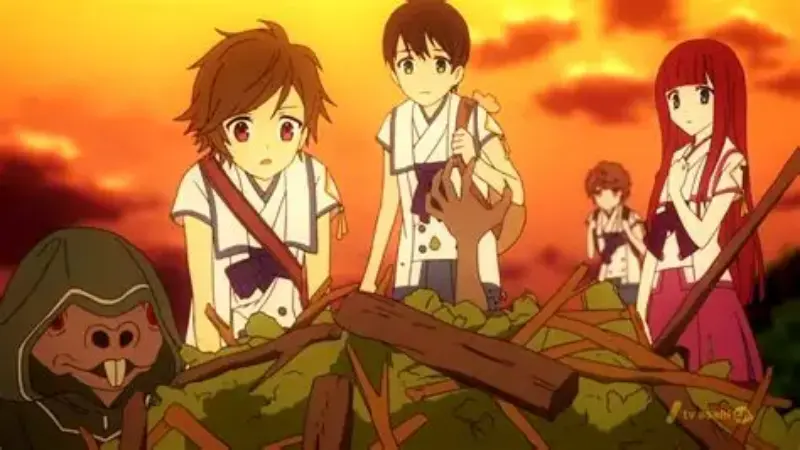
The anime is filled with quiet, unnerving revelations, but the ultimate plot twist in the final episodes is a genuinely sickening gut-punch that changes the moral landscape of the entire show. After a massive, bloody rebellion led by the Queerats is finally quelled, the protagonist uncovers the dark, heavily guarded secret of their origin. The Queerats are not mutated animals. They are the heavily genetically modified descendants of normal, non-psychic humans.
Centuries ago, the ruling psychic class altered the DNA of the non-psychics to make them appear monstrous, bypassing the psychological conditioning that prevented psychics from killing other humans. The horrific realization that the “monsters” they have been enslaving, hunting, and slaughtering are actually just the oppressed working class of humanity turns the protagonists into the true villains of the story. It is a profound, unforgettable twist on eugenics and human cruelty.
Code Geass: Lelouch of the Rebellion
When discussing Code Geass, it is tempting to focus entirely on its legendary finale. However, to truly appreciate why this anime is hailed as a masterpiece of suspense, you have to look at the mid-series structural twists that completely derail the protagonist’s carefully laid plans. The story follows Lelouch vi Britannia, a brilliant, exiled prince who acquires a power that forces anyone to obey his absolute commands, leading a rebellion against the Holy Britannian Empire.
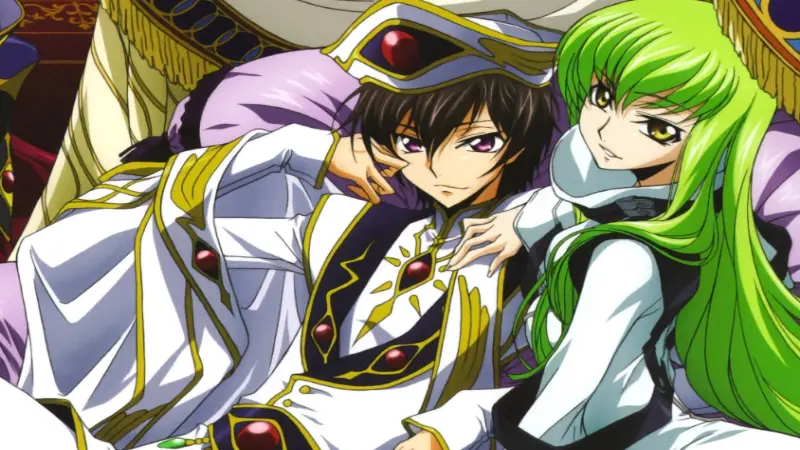
Lelouch operates with surgical precision, treating every battle like a game of chess. But in Episode 22, the anime executes a plot twist so sudden, cruel, and genuinely horrific that it permanently scars the viewer. During a peaceful negotiation with his beloved half-sister, Princess Euphemia, Lelouch jokingly mentions that his power is so absolute he could order her to “kill all the Japanese.” At that exact microsecond, his Geass violently malfunctions, permanently locking into the “on” position.
Because he accidentally gave the command while maintaining eye contact, the gentle princess is instantly brainwashed into a genocidal state. The resulting massacre forces Lelouch to gun down the sister he swore to protect, turning a peaceful resolution into an irreversible bloodbath. It is a terrifying, brilliant twist demonstrating that absolute power cannot be controlled, instantly shifting the narrative from a calculated rebellion to an unstoppable tragedy.
Attack on Titan
Sitting uncontested at the number one spot is Attack on Titan, a series that wrote the modern playbook on narrative deception. While the final seasons are packed with mind-bending time manipulation and lore dumps, the mid-story twists are what cemented the show as an all-time great. The absolute genius of Hajime Isayama’s writing is how he hides world-shattering reveals in plain sight, utilizing the viewer’s own assumptions against them.
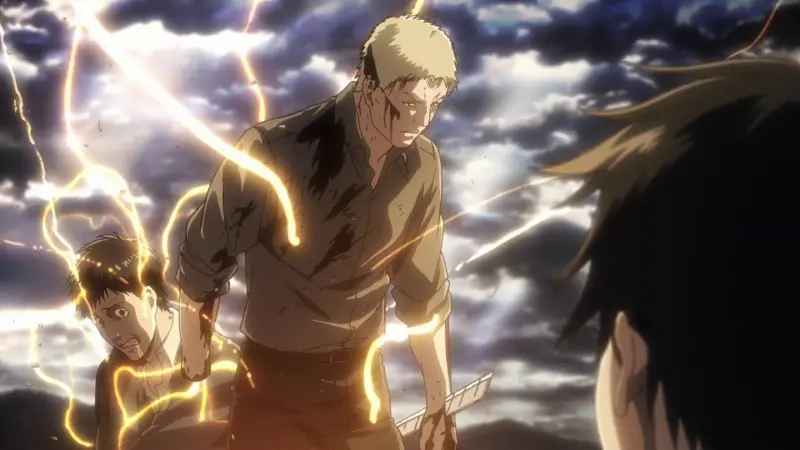
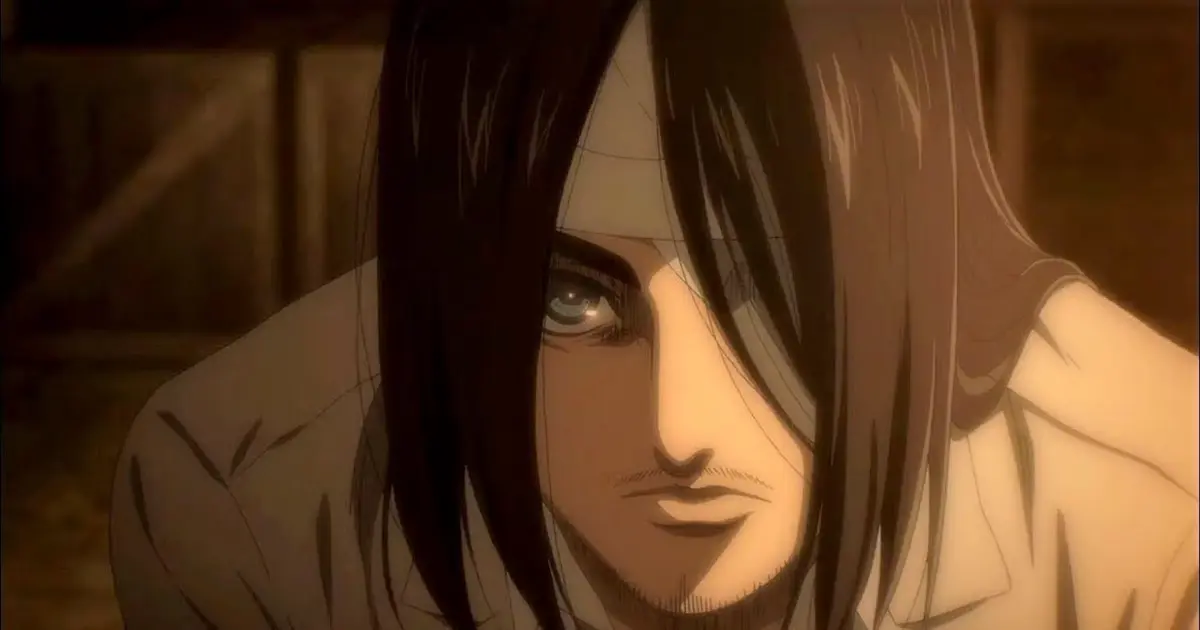
The reveal of the Armored and Colossal Titans in Season 2 is arguably the most perfectly executed twist in television history. There is no swelling orchestral music. There is no dramatic cinematic standoff. The camera pans away to focus on the background while Reiner casually mentions to Eren, in an exhausted, off-hand manner, that he and Bertholdt are the mass-murdering monsters responsible for the fall of humanity. The sheer nonchalance of the dialogue completely breaks your brain, forcing you to rewind the episode just to make sure you heard it correctly.
If that was not enough, the subsequent “Basement Reveal” in Season 3 completely changes the genre of the entire show. Discovering that humanity is not actually extinct, and that the protagonists are living on an isolated island penalized by a massive, technologically advanced, racist global empire, instantly transforms the show from a simple “humans vs. monsters” survival story into a deeply complex geopolitical war thriller. The twists are flawless, inevitable, and completely unmatched.
Pick Up the Pieces
The hallmark of an insane plot twist is its permanence; once you see it, the story is forever changed. You can never go back to viewing School-Live! as a cute comedy, nor can you watch the early episodes of Attack on Titan without spotting the traitors hiding in plain sight. These anime demand multiple rewatches just to appreciate the masterful, invisible web of foreshadowing woven into the background.
If your mind needs a break from the heavy theorizing, dive into our Smash or Pass global arcade and let your instincts take over. Still hungry for dark, psychological narratives? Check out our list of the Top 10 Most Disturbing Anime You Should Never Watch.
Which plot twist completely broke your brain?
Frequently Asked Questions
Why is Episode 1 of School-Live! so famous in the anime community?
Why did Deca-Dence lose viewers after Episode 2?
Is Talentless Nana just a My Hero Academia clone?
What is the true nature of the Queerats in Shinsekai Yori?
What makes the Reiner and Bertholdt twist in Attack on Titan so unique?
Rank Your Favorites
Take a break and play our interactive Smash or Pass games. Vote on your favorite anime characters, game characters, and idols to shape the global tier lists.



Join the Discussion (0)