Top 10 Best Music Anime (Ranked)
Animation is inherently a visual medium, but the absolute masterpieces of the industry understand that the auditory landscape is equally, if not more, devastating. When you strip away the massive magical explosions, the geopolitical mecha wars, and the hyper-kinetic martial arts choreography, you are left with something profoundly grounded. The music anime. In these specific narratives, a Fender Stratocaster or a grand piano carries the exact same lethal, narrative weight as a broadsword. The cutting edge of a scene is not determined by a physical battle, but by the sheer, unadulterated tension of a metronome, the agonizing snap of a broken guitar string, and the psychological warfare that takes place inside a cramped, sweaty recording studio.
But to truly appreciate the absolute peak of the genre, we have to draw a massive, uncompromising line in the sand between commercial idol fluff and actual, heavily grounded music anime. We are not looking at brightly colored stage outfits and perfectly synchronized pop routines. As we have documented in our breakdowns of the best sad romance tearjerkers, music is frequently weaponized as a vehicle for profound trauma and grief. The series on this list understand that music is rarely created in a vacuum of happiness. It is forged in the fires of severe social anxiety, heavy high school concert band politics, the gritty reality of the underground indie punk scene, and the terrifying, suffocating expectations of classical prodigies.
We are analyzing the exact intersection of sound direction and psychological depth. From Kyoto Animation’s god-tier brass instrumentation rendering to Madhouse’s incredibly dark, cigarette-stained depiction of the Tokyo punk rock scene, we are dissecting the absolute greatest auditory experiences the medium has to offer. These are the Top 10 best music anime in history, ranked by their studio execution, their raw thematic weight, and the unforgettable resonance of their live performances.
Table of Contents
BanG Dream! It's MyGO!!!!!
Kicking off the list is an anime that completely blindsided the entire community by taking a historically fluffy, mobile-game-driven multimedia franchise and injecting it with raw, uncomfortable psychological realism. BanG Dream! It’s MyGO!!!!! operates as a complete, unapologetic deconstruction of the “all-girl high school band” trope. The narrative begins not with the joyous formation of a band, but with the brutal, messy dissolution of one. The characters are left fractured, harboring intense resentment, severe communication issues, and a desperate, toxic co-dependency that heavily drives the plot forward.
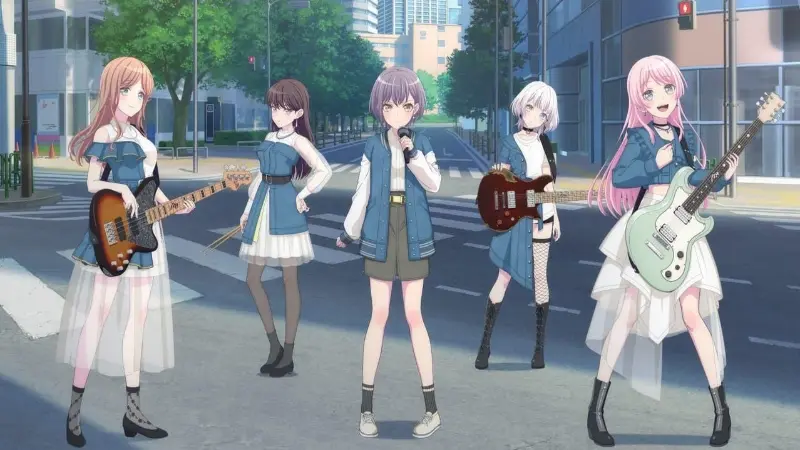
Studio Sanzigen’s application of full 3D CGI animation is a massive technical talking point. While 3D anime has historically struggled to capture the nuance of traditional 2D expressions, Sanzigen utilizes the engine flawlessly to map out the heavy, complex body language of the girls. The 3D models allow for incredibly dynamic, sweeping camera movements during the live performances, capturing the frantic strumming, the off-tempo drum beats, and the physically exhausting reality of playing a live set when the band members actively despise each other’s current mental states.
The thematic brilliance of It’s MyGO!!!!! lies in its sheer refusal to sanitize the creative process. These girls are not making music because they want to smile and be idols; they are making music because they are fundamentally broken teenagers who literally do not know how else to communicate their pain. When the band finally steps onto the stage, the performance is raw, emotionally unstable, and incredibly desperate. It completely elevates the series from a standard promotional vehicle into a heavy, compelling exploration of high school emotional volatility.
Kono Oto Tomare! (Sounds of Life)
Stepping entirely away from electric guitars and modern drum kits, Kono Oto Tomare! provides a masterclass in animating traditional acoustic resonance. The series focuses on the Koto Club—a group dedicated to playing the massive, 13-stringed traditional Japanese instrument. The club is teetering on the absolute brink of closure, populated by a deeply cynical club president and a group of violently misunderstood, marginalized delinquents. The narrative frames the koto not just as an instrument, but as a physical, demanding tool required to bridge the gap between societal outcasts and the traditional world that rejected them.
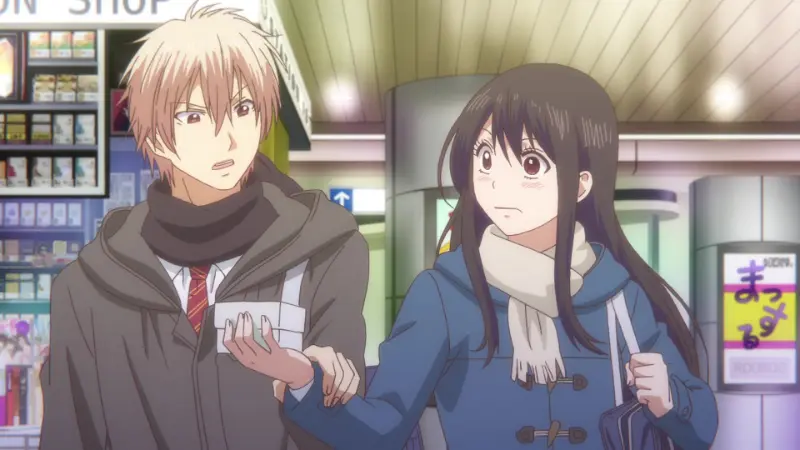
Platinum Vision’s sound direction in this series is nothing short of phenomenal. The koto is a notoriously difficult instrument to animate due to the sheer size of the soundboard and the complex, highly specific finger picks used to pluck the strings. The studio heavily utilizes dynamic visual metaphors to represent the auditory experience—animating the sound as crashing waves, blooming flowers, or shattering glass depending on the player’s emotional state. When the strings are plucked, the audience feels the massive, reverberating acoustic depth of the wooden instrument echoing through the concert hall.
The overarching thematic weight of the show relies on the sheer impossibility of the instrument itself. The koto demands absolute unity; if a single player is slightly off-tempo or harboring emotional resentment, the entire harmony of the 13 strings completely collapses. Watching a group of traumatized, highly defensive delinquents slowly systematically tear down their psychological walls to literally synchronize their breathing and their finger movements creates an intensely rewarding, tear-jerking narrative of hard-fought redemption through traditional art.
Kids on the Slope (Sakamichi no Apollon)
When you combine Shinichiro Watanabe (the legendary director behind Cowboy Bebop) with Yoko Kanno (arguably the greatest composer in anime history), you are guaranteed an absolute auditory masterpiece. Kids on the Slope is a deeply nostalgic, impeccably directed period piece set in 1966 Japan. The story follows Kaoru Nishimi, an introverted, highly regimented classical pianist, who is violently dragged out of his comfort zone by Sentaro Kawabuchi, a massive, brawling delinquent with an absolute, unyielding passion for jazz drumming.
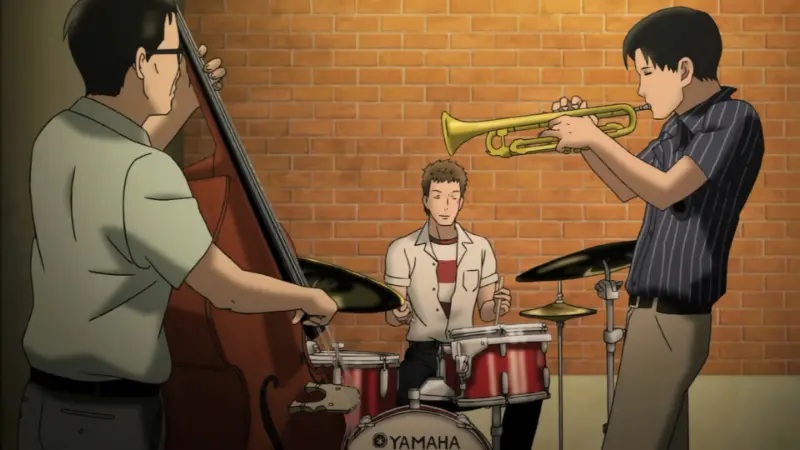
The studio, MAPPA, completely revolutionized the animation of musical performances during this series. To capture the frantic, unpredictable energy of a jazz jam session, they extensively rotoscoped real jazz musicians. The result is a staggering level of visual accuracy. You can see the exact, minute shifts of Kaoru’s fingers dancing across the piano keys, perfectly synced to the heavy, sweat-inducing, polyrhythmic crash of Sentaro’s cymbals. The famous Medley scene in the school auditorium remains one of the most fluid, technically flawless musical sequences ever committed to standard 2D animation.
Thematic depth in Kids on the Slope is entirely tied to the philosophy of jazz itself. Classical music represents Kaoru’s suffocating, wealthy, expectation-heavy upbringing. Jazz represents total, unadulterated freedom. The genre requires intense listening, eye contact, and the ability to spontaneously adapt to your partner’s mistakes. Watching these two young men navigate the brutal, messy realities of 1960s societal expectations, racism, and heartbreak through the chaotic, improvisational nature of their basement jam sessions elevates this series into an untouchable masterpiece of the medium.
Nodame Cantabile
Before the modern wave of tragic musical romances dominated the landscape, Nodame Cantabile established the absolute gold standard for portraying the high-stakes, deeply elitist world of classical music. The narrative is a masterclass in contrasting ideologies: Chiaki Shinichi is a flawless, highly arrogant perfectionist who desperately wants to be a conductor but is trapped in Japan due to a severe phobia of flying. Megumi “Nodame” Noda is a completely unhinged, eccentric piano prodigy who refuses to read sheet music, preferring to play incredibly complex sonatas purely by ear in a chaotic, “cantabile” style.
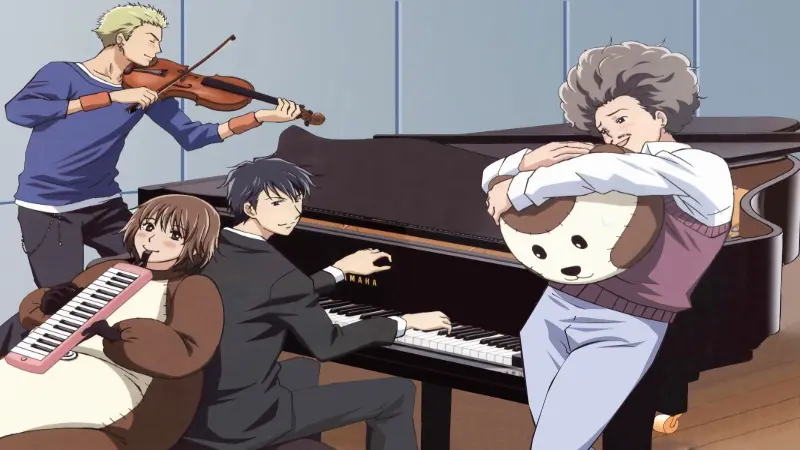
J.C.Staff’s execution of the orchestral performances is incredibly meticulous. Unlike anime that use generic background tracks, Nodame Cantabile specifically hired world-class orchestras (like the Nodame Orchestra) to record bespoke, authentic variations of Beethoven, Mozart, and Chopin. The sound direction is so hyper-specific that the audience can literally hear the difference between a technically flawless, soulless performance by Chiaki and a wildly inaccurate, deeply emotional performance by Nodame. The anime demands that the viewer actively listens to the nuances of the concert hall.
The genius of the series is that it refuses to compromise on the grueling reality of becoming a professional musician. It does not romanticize the grind. The series spans multiple seasons, meticulously detailing the terrifying auditions, the cutthroat European conservatory system, and the sheer, physical exhaustion required to master a symphony. It perfectly balances hilarious, gag-heavy comedy with a profoundly mature exploration of what happens when a rigidly structured perfectionist falls in love with an entirely unpredictable, chaotic genius.
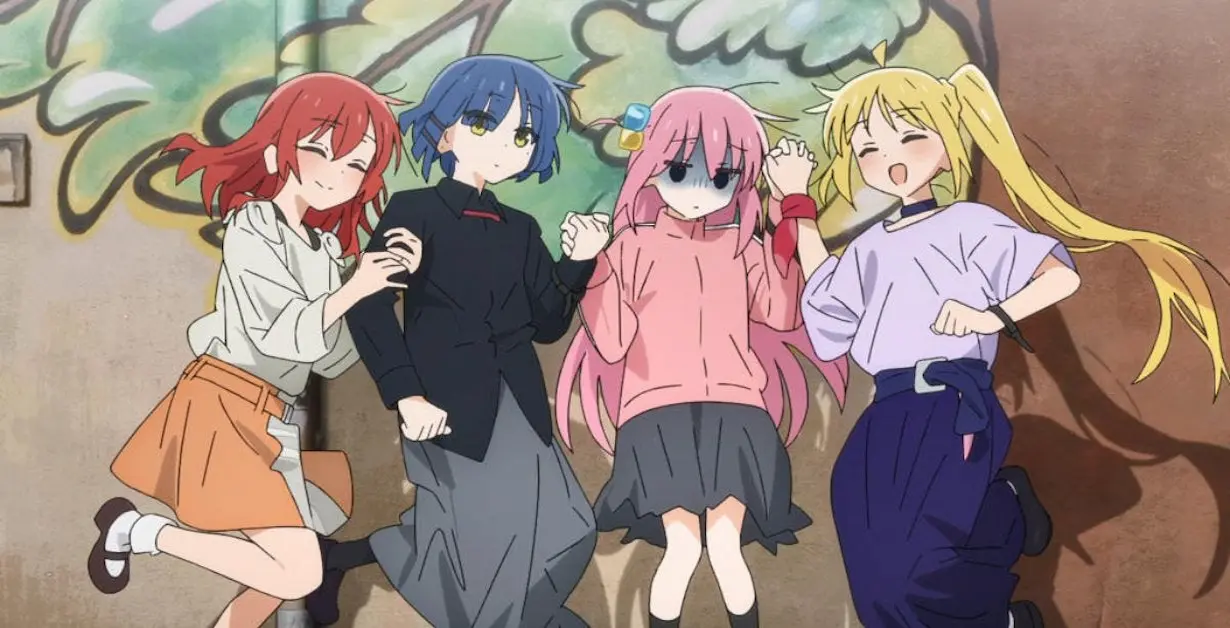
Bocchi the Rock!
When CloverWorks released Bocchi the Rock!, they completely redefined how modern anime handles the intersection of social anxiety and indie music. Hitori “Bocchi” Gotoh is a phenomenally talented guitarist who spent her entire middle school life practicing in a dark closet for six hours a day, building a massive online following as “Guitarhero.” However, in the real world, she is clinically, terrifyingly shy. When she is dragged into the “Kessoku Band,” her god-tier technical skills completely short-circuit the moment she is forced to interact with another human being.
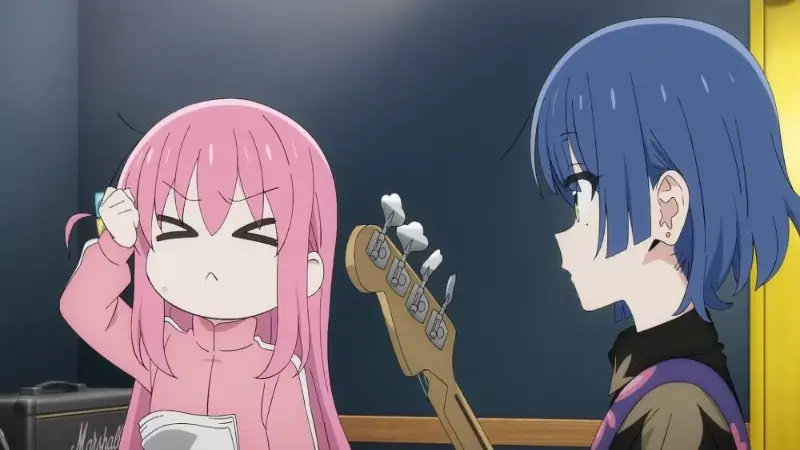
The visual direction of this anime is absolute, glorious anarchy. Instead of simply making Bocchi blush when she is nervous, the studio utilizes a chaotic blend of live-action footage, claymation, glitching low-polygon 3D models, and surrealist horror to physically manifest her panic attacks. The depiction of the Shimokitazawa indie rock scene is incredibly grounded, focusing on the smell of stale beer, the terrifying necessity of selling ticket quotas to empty venues, and the exact, hyper-detailed rendering of Yamaha mixers and Gibson Les Paul Customs.
What elevates the series into a modern masterpiece is that Bocchi’s anxiety is never fully cured. She does not magically become a charismatic rockstar. During their critical live performance, when her equipment literally breaks on stage, she does not deliver a speech—她 panics, drops to her knees, grabs a glass bottle, and completely obliterates the audience with an improvised, heavily distorted slide-guitar solo. She proves that true rock and roll is not about being cool; it is about channeling your absolute, paralyzing terror directly through a heavy distortion pedal.
K-On!
It is impossible to overstate the seismic, industry-shattering impact of K-On!. Directed by the legendary Naoko Yamada at Kyoto Animation, this series took a simple 4-koma manga about girls drinking tea in a light music club and turned it into a massive, cultural phenomenon. On the surface, the anime focuses on Yui Hirasawa, an absolute airhead who buys a Gibson Les Paul (which she names “Gīta”) because she thinks it looks cute, completely unaware of how to play a single chord.
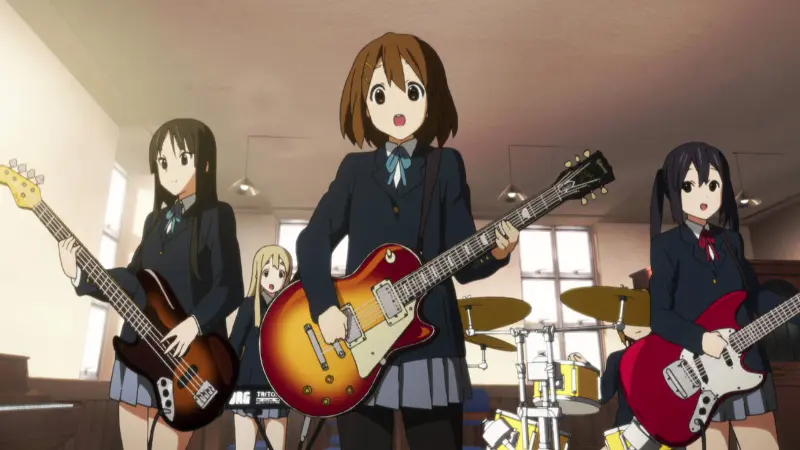
Kyoto Animation’s approach to the musical aspect of the show is fiercely protective of reality. They spent thousands of hours meticulously animating the exact hand positioning, the subtle weight-shifting of the bass player, and the heavy, physical kick of the drum pedal. The sound direction deliberately ensures that the girls sound like an actual high school band. They are not flawless prodigies; their timing fluctuates, the vocals occasionally waver, and the guitar tone is genuinely authentic to the specific Fender and Gibson models they are holding.
However, the true masterpiece of K-On! is its brilliant, subtle execution of existential dread. Yamada uses the music club not just to play pop-rock songs, but to beautifully trap the ephemeral, painfully fleeting nature of high school. As the second season progresses, the endless tea parties and lazy rehearsals take on a heavy, melancholic weight. The girls realize that graduation is approaching and this perfect, safe bubble they have constructed is going to pop. The final, desperate song they play for their underclassman remains one of the most subtly devastating, tear-jerking moments in slice-of-life history.
Beck: Mongolian Chop Squad
If you want to completely bypass the polished, sanitized aesthetic of modern idol shows and look at the absolute, grimy reality of underground rock, you must watch Beck: Mongolian Chop Squad. Produced by Madhouse, the anime follows Koyuki, a deeply bored, directionless 14-year-old who is pulled into the sweaty, aggressive world of underground punk and alternative rock after meeting a brilliant, heavily American-influenced guitarist named Ryusuke.
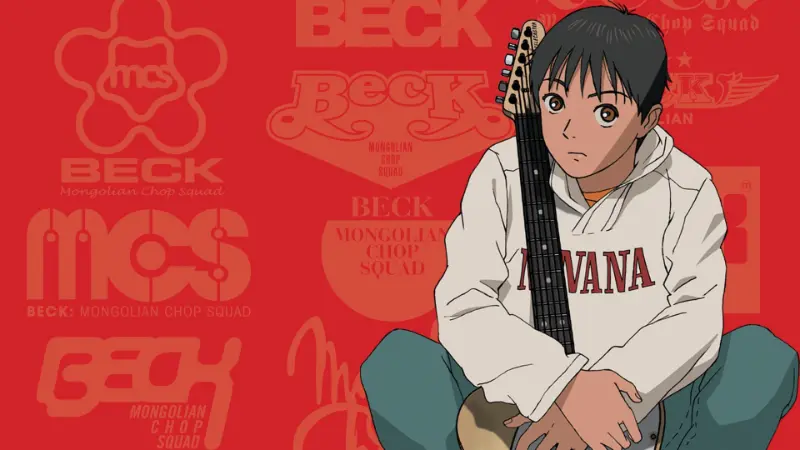
The sound design of Beck is universally praised for its absolute authenticity. The studio did not just write generic pop songs; they recorded heavily distorted, grunge-influenced tracks that perfectly capture the era of 90s alt-rock and Britpop. The anime meticulously details the excruciating, deeply unglamorous aspects of band life: the sheer pain of developing calluses on your fingertips, the terrifying reality of playing to an empty dive bar where the amps are buzzing, and the massive financial strain of booking recording time in a damp basement.
The thematic core of the series is a brutal rebellion against the manufactured, heavily corporate Japanese idol industry. Koyuki’s band, Beck, is raw, unpolished, and intensely passionate. Their journey to the legendary Grateful Sound festival is not paved with viral internet fame; it is built entirely on broken guitar strings, intra-band fistfights, and the undeniable, magnetic gravity of Koyuki’s voice. It remains the undisputed, ultimate love letter to anyone who has ever picked up a cheap Fender Telecaster in their garage and dreamed of changing the world.
Sound! Euphonium (Hibike! Euphonium)
Kyoto Animation completely shattered the “cute girls doing cute things” stereotype with Sound! Euphonium, delivering an incredibly dense, psychologically heavy exploration of a high school concert band. Kumiko Oumae enters the Kitauji High School brass band completely apathetic, heavily traumatized by a middle school failure. When a new, fiercely uncompromising director, Noboru Taki, forces the band to actually choose between playing for fun or brutally aiming for the national championships, the entire social hierarchy of the school violently collapses.
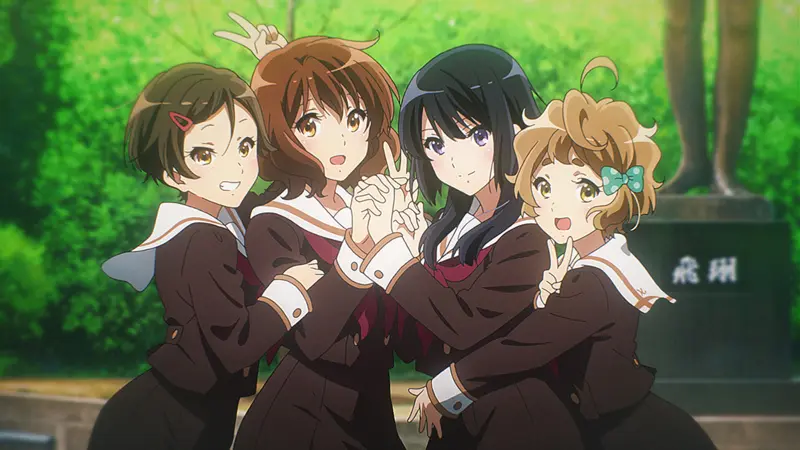
The studio’s attention to auditory and visual detail is borderline obsessive. The animators studied the exact condensation that forms inside a brass instrument, the specific breathing techniques required for a euphonium, and the incredibly minute muscle twitches of an embouchure. The audio engineering is genuinely flawless; KyoAni recorded the exact same orchestral pieces multiple times, intentionally having the musicians play slightly out of tune, missing beats, and squeaking notes to perfectly reflect the band’s progression over the course of the grueling school year.
What elevates Euphonium into the elite tier is its unflinching look at the toxicity of ambition. The series is choked with brutal internal politics, seniors resentful of prodigy freshmen, and the devastating realization that raw talent will always eclipse hard work. Kumiko’s transition from an apathetic observer into a desperately passionate musician—culminating in the legendary scene where she runs down a bridge sobbing, screaming “I want to improve!”—is one of the most powerful, authentic depictions of artistic ambition ever animated.
Your Lie in April (Shigatsu wa Kimi no Uso)
If you are looking for the absolute zenith of emotional devastation in the anime medium, you inevitably arrive at Your Lie in April. Kousei Arima was a legendary piano prodigy, heavily referred to as the “Human Metronome.” However, his flawless playing was the direct result of severe, systemic physical and emotional abuse from his dying mother. When she passes away, the trauma physically manifests: Kousei becomes completely unable to hear the sound of his own piano, describing the sensation as being violently dragged to the bottom of a dark, suffocating ocean.
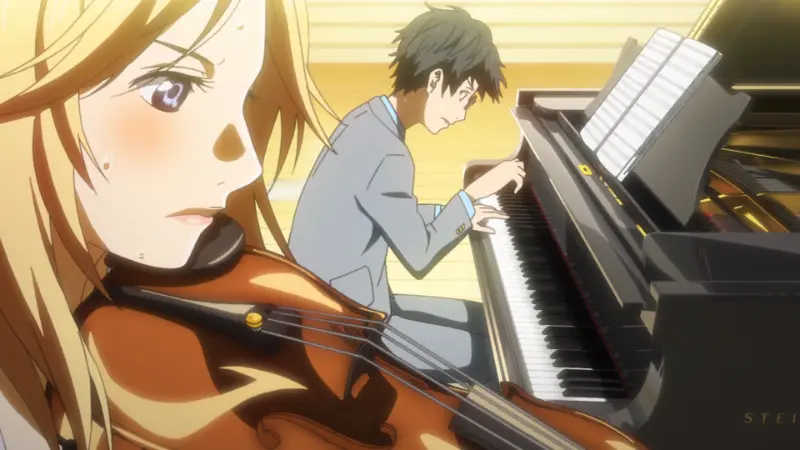
A-1 Pictures utilizes an incredibly vibrant, saturated watercolor palette to completely contrast the heavy psychological darkness of the narrative. When Kaori Miyazono, an eccentric, completely unrestrained violinist, forces Kousei to become her accompanist, the concert hall becomes a literal battlefield. The sound direction is absolutely masterful; the viewer experiences the horrifying, muted distortion of Kousei’s deafness in real-time, only for the audio to violently explode back into clarity when Kaori’s aggressive, score-breaking violin playing literally drags him back to the surface.
The series treats classical music not just as an art form, but as a deeply desperate form of communication. Every single performance is an apology, a confession, or a scream for help. The composers (Chopin, Beethoven, Kreisler) are deliberately chosen to map perfectly onto the characters’ decaying mental and physical states. It is a grueling, incredibly beautiful masterpiece that proves that music is the only language capable of reaching a soul that has been completely shattered by grief.
NANA
There is no other anime that can claim the throne. NANA, produced by the legendary Studio Madhouse, is the undisputed, untouchable god-tier masterpiece of the music genre. The narrative follows two 20-year-old women, both named Nana, who meet on a train to Tokyo. Nana Komatsu is naive, boy-crazy, and desperate for a normal life. Nana Osaki is the fierce, Vivienne Westwood-wearing, heavily tattooed lead singer of the punk band Black Stones (BLAST). They move into apartment 707 together, and their lives become irreparably, toxically intertwined.
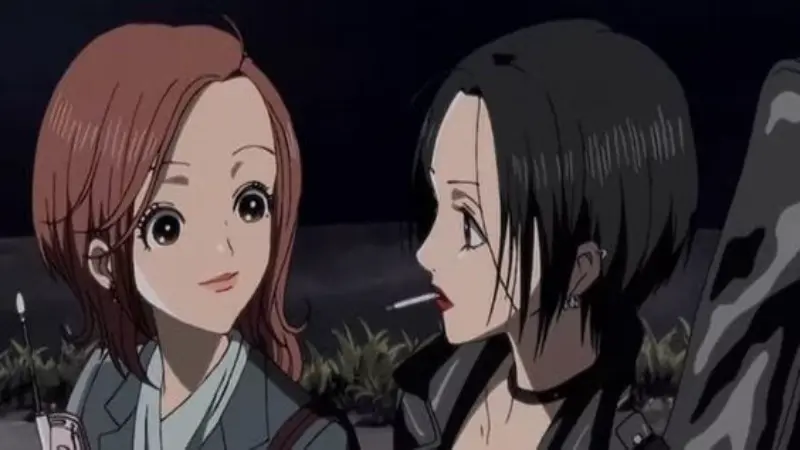
The sound design and musical execution in NANA are absolute industry legends. Madhouse hired real, heavy-hitting Japanese rock vocalists (Anna Tsuchiya for BLAST and Olivia Lufkin for the rival pop-rock band Trapnest) to record the tracks. The music is gritty, heavily distorted, and perfectly captures the suffocating, smoke-filled atmosphere of underground Tokyo live houses. When Nana Osaki steps up to the microphone, the raw, gravelly desperation in her voice carries the immense, agonizing weight of her entire traumatic past.
But what solidifies NANA at the absolute summit is its sheer, devastating emotional maturity. This is not a happy story about the power of friendship overcoming adversity. It is a grueling, realistic dissection of how the music industry, paparazzi, and skyrocketing fame actively destroy human relationships. The anime explores heavy co-dependency, infidelity, and the terrifying realization that achieving your dreams might require completely destroying the people you love. It treats music as an incredibly destructive, intoxicating drug, creating a dark, flawless masterpiece that has never been matched.
The Final Encore
The absolute brilliance of the music genre is its ability to weaponize auditory storytelling to bypass the logical brain and hit the emotional core directly. Whether you are holding your breath while KyoAni animates the exact, microscopic embouchure of a brass instrument, or you are watching the heavily distorted, cigarette-stained punk rock drama of NANA unfold, these anime prove that words are often fundamentally insufficient. When trauma, anxiety, and ambition become too heavy to vocalize, the only option left is to plug into an amplifier and scream it through the fretboard.
If you have had your fill of concert halls and dive bars and want to explore how this exact same level of heavy, suffocating psychological tension translates outside of the recording studio, you need to seamlessly transition over to our breakdown of the best psychological thriller anime. Or, if you want to see what happens when the drama is entirely focused on the chaotic, messy reality of growing up, check out our ranking of the best slice-of-life romance anime.
But before you pack up your gear and log off, we need to know who truly runs the soundboard. Are you submitting to the elite, cutthroat classical world of Totsuki Academy, or are you tuning your guitar in a damp Shimokitazawa basement? Head over to the Smash or Pass global arcade right now. Drop your votes on your favorite fictional bands, rate the most devastating live performances, and see where your top music anime ranks among the rest of the community.
Which music anime had the most devastating emotional impact?
Frequently Asked Questions
What exactly defines a music anime?
Why do studios struggle to animate characters playing instruments?
Is the music in these anime recorded specifically for the show?
Why is classical music so prevalent in dramatic anime?
Did K-On! actually change the music industry in Japan?
Rank Your Favorites
Take a break and play our interactive Smash or Pass games. Vote on your favorite anime characters, game characters, and idols to shape the global tier lists.

Join the Discussion (0)