Top 10 Best Time Travel Anime (Time Loops & Paradoxes)
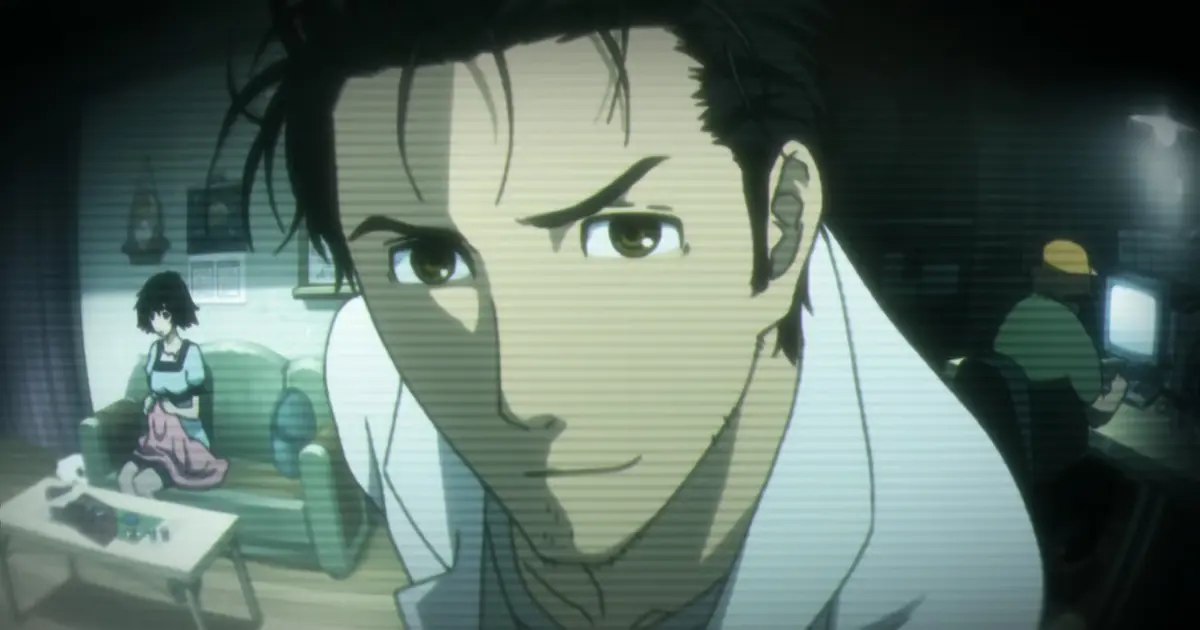
Time travel is perhaps the most dangerous narrative device in the medium of anime. When handled with anything less than surgical precision, it collapses under the weight of plot holes and logical fallacies. However, when a series masters the complex physics of causality, it produces masterpieces that challenge our very understanding of fate, regret, and the linear progression of human existence. These stories aren’t just about moving through years; they are about the crushing weight of memory and the hubris of thinking we can play god with the universe’s script.
The allure of the “what if” is universal—the desperate desire to undo a tragedy, save a loved one, or erase a life-altering mistake. But as the protagonists on this list quickly learn, time has a brutal way of correcting itself. Whether it’s through the claustrophobic dread of an inescapable time loop or the grand-scale complexity of multi-layered paradoxes, these series explore the isolation of the time traveler. While the world resets and moves forward in blissful ignorance, the traveler is left standing still, carrying the trauma of a thousand failed timelines that officially never happened.
If you are looking for mind-bending logic, high-stakes psychological warfare, and the sheer agony of the reset button, you are in the right place. From scientific thrillers to dark magical realism, here are the Top 10 best time travel anime ever made.
Table of Contents
Remake Our Life!
Kicking off our list is a series that trades sci-fi gadgets for the raw, relatable sting of professional regret. Remake Our Life! follows Kyoya Hashiba, a 28-year-old failed game developer who suddenly wakes up ten years in the past. Unlike many temporal thrillers, this isn’t about saving the world from an apocalypse; it’s about saving oneself from a future of mediocrity. By choosing a prestigious arts college he originally turned down, Kyoya sets off a chain reaction that alters the career paths of the legendary “Platinum Generation.”
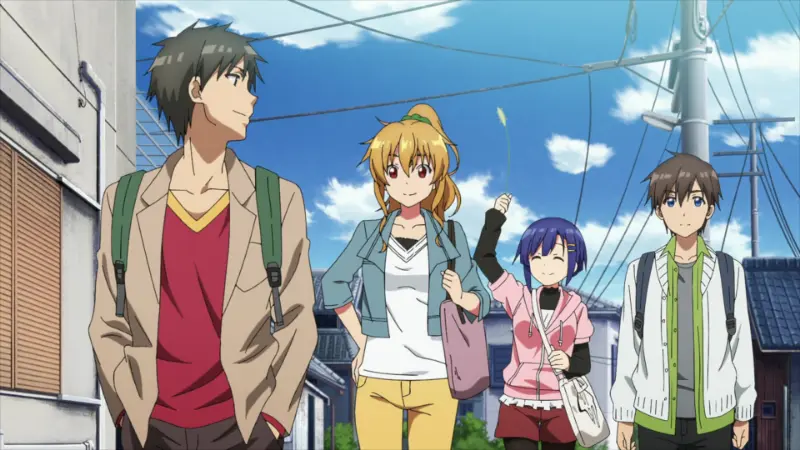
The narrative brilliance of this series lies in its subversion of the “second chance” trope. While Kyoya uses his knowledge of the future to help his talented roommates succeed, he inadvertently stifles their natural growth. The show dives deep into the psychology of creativity, exploring the dangerous arrogance of thinking you can “fix” someone else’s timeline. It poses a difficult question: does using future knowledge to bypass struggle actually create a better artist, or does it just create a hollow version of success?
Watching Kyoya grapple with the ethical implications of his presence in the past is a refreshing take on the genre. The show masterfully handles the tension between his desire for personal fulfillment and the realization that his interventions are robbing his friends of their own transformative struggles. It’s a grounded, emotionally resonant exploration of how the smallest shifts in our creative social circles can lead to entirely different destinies, making it a standout entry for fans of character-driven sci-fi.
The Girl Who Leapt Through Time
A true classic in the realm of temporal cinema, The Girl Who Leapt Through Time captures the reckless, naive spirit of youth through the lens of a sci-fi anomaly. When high schooler Makoto Konno discovers she can literally leap through time, her first instinct isn’t to prevent disasters—it’s to retake exams, avoid awkward social confessions, and repeat her favorite karaoke sessions. This mundane usage of such a powerful ability serves as a poignant metaphor for how young people often perceive time as an infinite resource that can be spent and recovered at will.
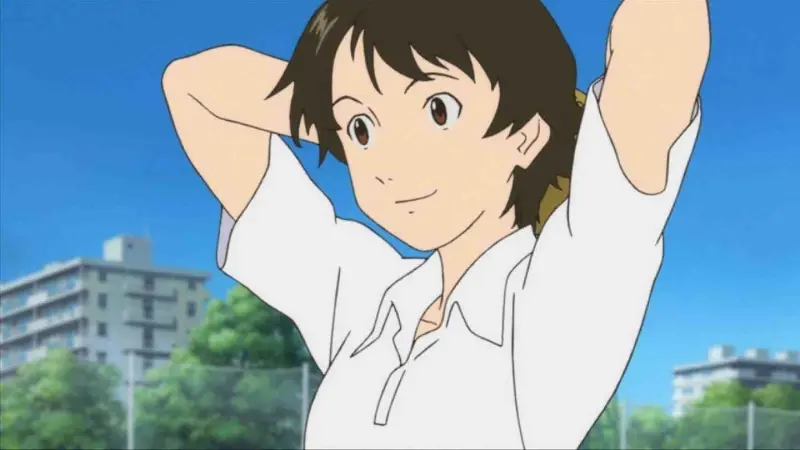
However, the film’s tone shifts dramatically as the number of available “leaps” begins to dwindle. Makoto eventually realizes that every time she “fixes” her own minor inconveniences, someone else pays a price in the background. The narrative structure is a beautiful, tragic lesson in the conservation of causality. Her desperate attempts to micromanage her social circle lead to a series of escalating accidents that she finds herself powerless to stop, forcing her to confront the absolute permanence of choice.
The animation by Madhouse brings a visceral energy to the “leaps” themselves, making each transition feel like a clumsy, physical struggle rather than a magical spell. It’s a coming-of-age story that uses the mechanics of the butterfly effect to teach its protagonist—and the audience—that “time waits for no one.” The final act is a masterclass in emotional payoff, proving that some memories are only precious because they cannot be repeated, cementing its place as a definitive entry in the genre.
Tokyo Revengers
Shifting the focus to high-stakes action, Tokyo Revengers introduces a unique time-leap mechanic that links the past and present through a literal “trigger” (a handshake between specific individuals). Takemichi Hanagaki, a middle-aged loser, is sent back to his middle school days with one mission: prevent the Tokyo Manji Gang from evolving into a murderous criminal syndicate. It’s a gritty, adrenaline-fueled take on the genre that blends 90s delinquent subculture with the anxiety of a ticking clock.

The series excels at showing the futility of trying to change human nature through temporal interference. Even when Takemichi successfully alters a major event in the past, he returns to a present day that is often more horrific than the one he left. The narrative highlights the “Iron Law of Oligarchy” within the gang’s structure—no matter how many individuals Takemichi saves, the systemic corruption of the gang seems destined to repeat itself. It transforms the time travel trope into a grueling war of attrition against destiny.
What makes Tokyo Revengers stand out is the physical and psychological toll it takes on a protagonist who isn’t a genius or a fighter. Takemichi is a “crybaby hero” whose only weapon is the memory of his past failures. His journey is a battle against the trauma of seeing his friends die across multiple timelines, creating a narrative of persistence that resonates deeply. The show’s exploration of fate and the weight of leadership makes it a compelling, albeit brutal, entry in the time-leap subgenre.
Erased
Erased (Boku dake ga Inai Machi) is a haunting, atmospheric masterpiece that uses time travel to explore the trauma of unsolved crimes. Satoru Fujinuma possesses an involuntary ability called “Revival” that sends him back a few minutes to prevent tragedies. However, when his mother is murdered, his ability sends him back eighteen years. He realizes the key to saving his mother lies in preventing the disappearance of his classmate, Kayo Hinazuki, decades prior.
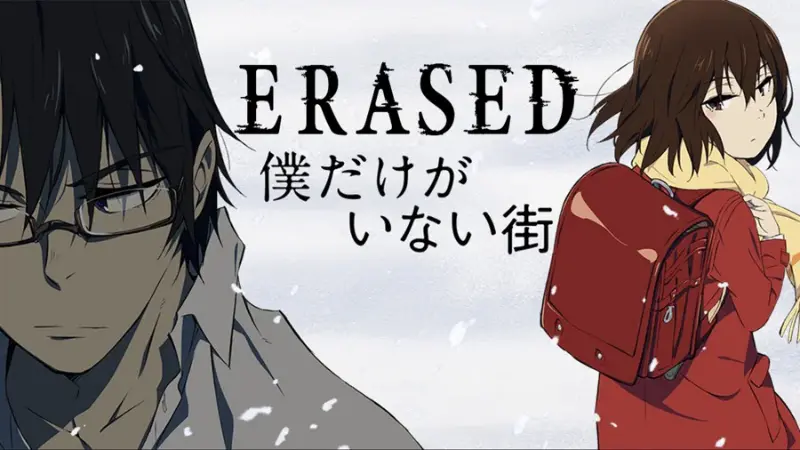
The brilliance of Erased is how it grounds its temporal mechanics in emotional realism. Satoru is a 29-year-old man trapped in an 11-year-old’s body, forcing him to navigate the social politics of elementary school while hunting a serial killer. The tension between his adult knowledge and his physical limitations creates a constant sense of vulnerability. Every interaction with Kayo is a delicate balancing act—he must earn her trust to save her life without raising suspicion from the predator lurking in the shadows.
The cinematography and pacing of the series are designed to evoke a sense of nostalgic dread. The snowy setting of 1988 Hokkaido feels like a beautiful prison, where the protagonist is racing against a timeline he only half-remembers. Erased isn’t just about the mechanics of the leap; it’s a profound commentary on the power of connection and the long-term ripple effects of isolation. It is a tightly scripted thriller that maintains incredible tension until the final world line is established.
Vivy: Fluorite Eye's Song
From the studio that brought you Attack on Titan comes a visually stunning sci-fi epic. Vivy: Fluorite Eye’s Song takes a “Terminator-style” approach to time travel but adds a unique, existential layer. Vivy, the world’s first autonomous AI singer, is visited by a programmed entity from the future named Matsumoto. His mission: work with Vivy over the next 100 years to alter specific historical “Singularity” events and prevent a future war between humans and AI.

The narrative structure of Vivy is fascinating, as it jumps decades at a time. We see the slow-burn evolution of the world through Vivy’s eyes as she lives through the history she is trying to change. The “Singularity Project” is a masterclass in the butterfly effect—every time Vivy prevents one disaster, the future recalculates, often resulting in an AI development that is even more sophisticated and dangerous. It creates a perpetual state of “one step forward, two steps back” for the protagonist.
Beyond the high-octane action, the series explores what it means to have a “mission.” While Matsumoto is a cold, logical AI focused solely on the numbers, Vivy struggles with her original directive: “to make everyone happy through song.” Her struggle to find the “heart” in her music while committing violent acts for the sake of the future provides a deep psychological anchor to the complex temporal mechanics. It is a rare, perfectly self-contained time travel story with a breathtaking conclusion.
Link Click
Proving that some of the best “anime” isn’t always from Japan, the Chinese donghua Link Click has taken the community by storm with its innovative take on time travel. Partners Cheng Xiaoshi and Lu Guang run a shop where they use supernatural abilities to dive into photographs. Cheng “enters” the photo, inhabiting the body and memories of the photographer for twelve hours, while Lu Guang acts as a guide with knowledge of everything that happens in the photo’s future.
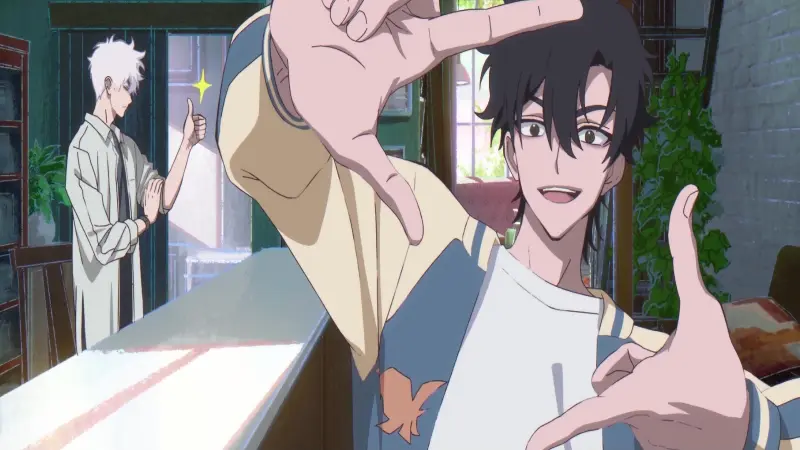
The golden rule of Link Click is simple: “Do not change the past.” However, this proves nearly impossible when Cheng Xiaoshi experiences the raw emotions and tragedies of the people he inhabits. The show masterfully builds tension by focusing on “Nodes”—specific moments that, if changed, ripple outward with devastating consequences. The narrative is a series of emotional gut-punches that eventually coalesce into a dark, overarching conspiracy that threatens the protagonists themselves.
The chemistry between the two leads is the heartbeat of the show. Lu Guang’s cold, calculated adherence to the timeline constantly clashes with Cheng Xiaoshi’s empathy. This conflict drives the core theme: is it better to let a tragedy happen to preserve the timeline, or is the human cost of “correct” history too high? With its sleek art style, incredible cliffhangers, and tight writing, Link Click is a mandatory watch for fans of the genre who want a more intimate look at temporal consequences.
Summertime Rendering
If you like your time travel with a side of supernatural horror and intense tactical strategy, Summertime Rendering is a modern masterpiece. Shinpei Ajiro returns to his secluded island home for a funeral, only to discover a terrifying conspiracy involving “Shadows”—dopplegangers that kill and replace the islanders. When Shinpei is killed, he discovers he can loop back to the moment he arrived on the island. However, there is a catch: his “save point” moves forward with every loop, and the Shadows are starting to remember the previous timelines too.
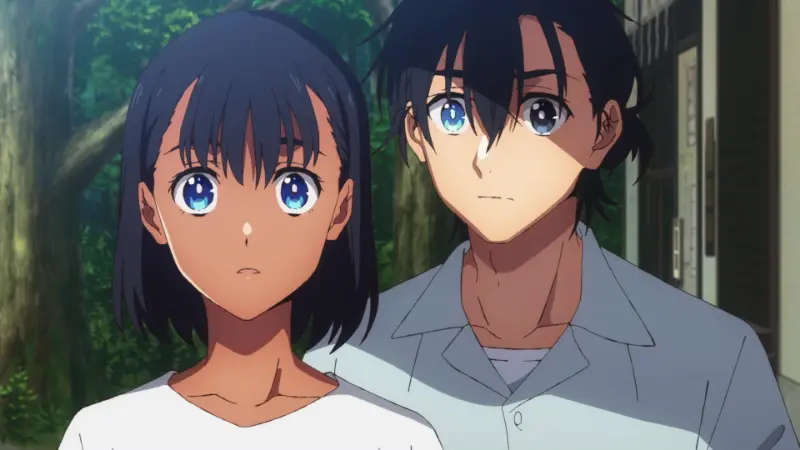
The pacing of this series is relentless. Unlike other loop series where the protagonist spends time wandering, Shinpei treats every loop like a high-stakes tactical simulation. He uses his deductive reasoning to gather information, test the Shadows’ weaknesses, and recruit allies. The narrative is a constant game of “cat and mouse” where both sides are evolving. The fact that the Shadows can also navigate the temporal mechanics makes this one of the most balanced and thrilling conflicts in anime.
The “save point” mechanic is a genius addition that adds a sense of permanent consequence to an otherwise repeatable cycle. Shinpei is slowly losing time; if he dies too many times, he will eventually reach a point where he cannot save his friends. This creates a claustrophobic pressure that permeates every episode. Summertime Rendering perfectly balances its complex mystery with visceral action, leading to one of the most satisfying conclusions in the genre.
Puella Magi Madoka Magica
For the first half of its run, Madoka Magica hides its time travel elements behind a veil of psychological horror and deconstructed magical girl tropes. However, the revelation of Homura Akemi’s true role in the story reframes the entire series into one of the most tragic time travel narratives ever conceived. Homura is trapped in a month-long loop, repeating the same cycle of hope and despair over a hundred times in a desperate attempt to save her friend, Madoka, from a gruesome fate.

The series explores the “Karmic Destiny” of time travel. Every time Homura resets the timeline to save Madoka, she inadvertently makes Madoka the center of a more powerful causal nexus. By trying to protect her, Homura is unknowingly making Madoka’s potential power—and her eventual tragedy—exponentially greater. It is a cruel, mathematical paradox where the act of saving someone is exactly what ensures their destruction. The visual storytelling by Studio SHAFT uses abstract imagery to represent the fracturing of Homura’s mind across these countless cycles.
Homura’s character arc is the ultimate exploration of the “lonely time traveler.” She has watched her friends die in every conceivable way, leading her to become a cold, detached version of herself just to survive the mental toll. The transition from the “moe” aesthetic to the dark, clockwork reality of her struggle is jarring and effective. Madoka Magica isn’t just a magical girl show; it’s a profound study of how infinite second chances can lead to an infinite amount of grief.
Re:Zero − Starting Life in Another World
While many time travel anime focus on the mechanics, Re:Zero focuses entirely on the cost. Subaru Natsuki is transported to a fantasy world with a single, cursed ability: “Return by Death.” Every time he dies, he respawns at a previous “save point.” Subaru must endure the physical pain of death and the mental trauma of seeing everyone he loves slaughtered, over and over, while being unable to tell anyone about his ability. It turns the Isekai genre into a grueling, multi-layered puzzle where the only currency for a solution is Subaru’s sanity.

The series is famous for its “Zero” moments—episodes where the protagonist completely breaks down under the weight of his failures. The time travel mechanic is used to strip away Subaru’s ego, forcing him to confront his own selfishness and incompetence. Unlike a typical hero, he cannot win through power; he wins by dying enough times to map out every variable, every trap, and every conversation. It turns the repetition of time travel into a visceral exploration of PTSD and human resilience.
Season 2 further complicates the mechanics by introducing the “Trials,” where Subaru is forced to confront the “unthinkable presents”—the timelines he left behind where his friends had to deal with his death. This adds a horrific layer of guilt to the time travel trope, suggesting that his loops might not be resets, but the creation of abandoned, tragic world lines. Re:Zero is a visceral, emotional rollercoaster that defines the “time loop” subgenre for the modern era.
Steins;Gate
There is no discussion of time travel anime without the undisputed king: Steins;Gate. What starts as a group of eccentric lab members accidentally discovering they can send text messages to the past (D-Mails) spirals into a global conspiracy involving SERN, time machines, and World War III. Rintaro Okabe, the self-proclaimed “Mad Scientist,” is the only one who possesses “Reading Steiner”—the ability to retain his memories when the world line shifts, while the rest of reality rewrites itself.
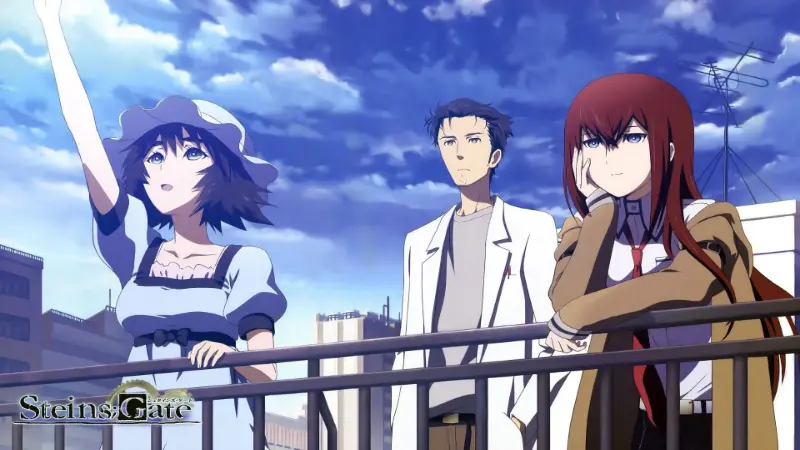
The brilliance of Steins;Gate is its commitment to “Attractor Field Theory.” It introduces the concept of convergence—the idea that certain events are destined to happen within a set of world lines, no matter how much you try to change the past. Watching Okabe desperately try to save his childhood friend Mayuri, only to watch her die in a hundred different ways due to causal convergence, is one of the most heartbreaking sequences in fiction. The show masterfully transitions from a lighthearted slice-of-life to a suffocating, high-stakes thriller.
The narrative is a closed loop of absolute perfection. Every minor detail from the first episode is revealed to be part of a massive, multi-timeline plan. It respects the intelligence of its audience, utilizing real scientific concepts like Kerr black holes and IBM 5100 architecture to ground its fiction. Steins;Gate is the definitive time travel experience, proving that even a brilliant mind is nothing compared to the cold, unrelenting logic of the universe.
The End of the Line
Whether it is the scientific precision of Steins;Gate or the brutal, emotional repetition of Re:Zero, time travel anime continue to fascinate us because they touch on a fundamental human desire: the hope that we can fix what is broken. But as these stories show, the cost of a reset is often higher than we can imagine. These masterpieces remind us that while the past is written in stone, the future is a blank page—and perhaps it is better to move forward than to forever loop back.
Want to see if these temporal masterminds would survive a different kind of trial? Head over to our Smash or Pass hub to vote on your favorite time-traveling heroes. Or, if you prefer your protagonists to use raw brainpower instead of time machines, check out our list of the Top 10 Anime With Genius Main Characters.
Which time travel mechanic is the most terrifying?
Frequently Asked Questions
What is considered the best time travel anime of all time?
Is Re:Zero a time travel anime or just an Isekai?
Which anime has the most realistic time travel mechanics?
What is the Butterfly Effect in anime?
Are there any time travel anime without high-stakes action?
Rank Your Favorites
Take a break and play our interactive Smash or Pass games. Vote on your favorite anime characters, game characters, and idols to shape the global tier lists.


Join the Discussion (0)