Top 10 Best Cooking Anime (Ranked)

There is a universal truth in the animation industry: nobody animates a sizzling cut of meat or a steaming bowl of broth quite like Japanese studios. While the medium is internationally renowned for colossal mecha battles and high-stakes psychological warfare, there is a completely different, highly specialized tier of anime that weaponizes its entire animation budget to trigger a visceral, biological response. The cooking anime. This genre strips away the world-ending stakes and replaces them with something far more relatable, deeply comforting, and undeniably mouth-watering. In these shows, the cutting board is the battlefield, the chef’s knife is the ultimate weapon, and a perfectly executed reduction sauce carries more narrative weight than a magical incantation.
But the true genius of the gourmet genre is its absolute versatility. Food is the ultimate storytelling anchor. As we have seen in our breakdowns of the best pure comedy anime, food can be used as a ridiculous, highly exaggerated punchline where a single bite causes a character’s clothes to explode. Conversely, it can act as the emotional core of a narrative, grounding the most overpowered protagonists by forcing them to sit down, break bread, and connect with their humanity. The best culinary shows understand that eating is never just about caloric intake; it is about nostalgia, survival, diplomacy, and the profound, agonizingly human desire to care for someone else.
We are firing up the stoves and strictly analyzing the mechanics of flavor. From highly tactical, cutthroat culinary academies animated by J.C.Staff to currently releasing fantasy road trips where monster ecology meets Michelin-star prep work, we are looking at the absolute peak of the genre’s production value. These are the Top 10 best cooking anime in history, ranked by their visual execution, their narrative flavor profile, and their unmatched ability to leave you completely starving.
Table of Contents
Koufuku Graffiti (Gourmet Girl Graffiti)
Kicking off our list is a series that treats the physical act of eating with a borderline overwhelming level of sensory detail. Koufuku Graffiti (Gourmet Girl Graffiti) establishes a brilliant, highly relatable premise: the technical mechanics of a meal can be completely flawless, but if the emotional architecture of the meal is missing, the food will taste like ash. The narrative follows a young girl living alone who discovers her elite-tier cooking has become entirely bland, exploring the very real psychological link between isolation and appetite.

The true standout feature of this anime is the legendary visual direction of Studio Shaft. Known for their highly stylized, avant-garde productions, Shaft takes the simple concept of eating a meal and runs it through an intensely glossy, hyper-focused filter. The color palettes are heavily saturated, the lighting on the food is intensely reflective, and the character reactions are drawn with exaggerated, fluid detail that makes every single bite look like a monumental, life-altering experience.
While some viewers might find the hyper-detailed eating sequences slightly jarring compared to standard slice-of-life fare, the underlying message of the series is incredibly profound. Koufuku Graffiti is a meticulous exploration of how companionship fundamentally alters human perception. It proves that eating alone is merely a biological requirement for survival, but cooking for someone you care about, and watching their face light up from the very first bite, elevates the meal into a profound act of emotional healing.
'Tis Time for Torture, Princess
If you want to experience the most brilliant, high-concept comedic subversion of the gourmet genre, you absolutely have to study ‘Tis Time for “Torture,” Princess. The anime sets up a classic grimdark, high-stakes fantasy thriller: the heroic commander of the Imperial Army has been captured by the demon horde and locked in a dark, terrifying dungeon. The Grand Inquisitor enters the cell to begin the “torture” required to extract state secrets. However, the torture is not physical. The torture is a perfectly toasted, buttery slice of thick-cut bread served alongside a steaming bowl of midnight ramen.
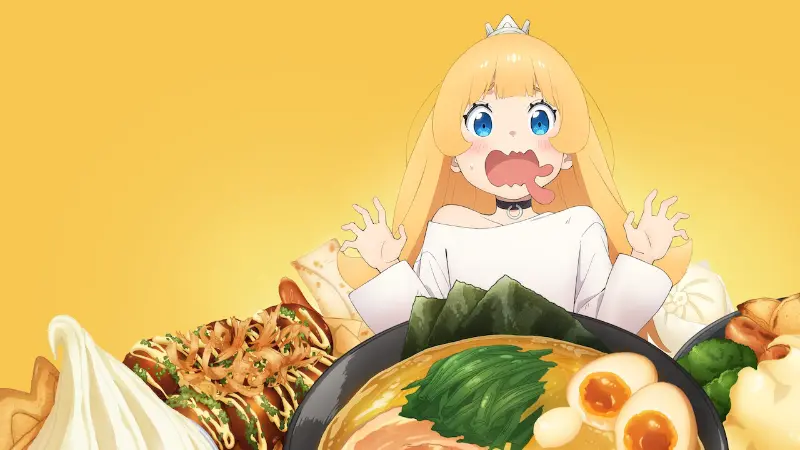
The comedy relies entirely on the immaculate visual presentation of the food juxtaposed against the captive’s crumbling willpower. The demon army uses hyper-modern, deeply comforting junk food and comfort meals—takoyaki, fluffy pancakes, and late-night convenience store snacks—to completely break royal discipline. The animators treat the sizzling sound of a hot dog on a grill with the exact same gravity and auditory weight as a massive magical explosion. The heroic facade shatters immediately, resulting in the gleeful spilling of military secrets just for a single bite.
What elevates this anime from a simple running gag into a top-tier gourmet show is the surprisingly wholesome dynamic between the captive and the captors. The demons are incredibly supportive, ensuring their prisoner gets a balanced diet, proper sleep, and even taking her on field trips to amusement parks. It is a hilarious, highly comforting analysis of how the universal, undeniable appeal of perfectly engineered junk food can effortlessly bridge the gap between two warring factions.
Today's Menu for the Emiya Family
The Fate franchise is globally recognized for its brutally intense, blood-soaked magical battle royales and crushing psychological trauma. That is exactly why Today’s Menu for the Emiya Family is one of the greatest narrative palette cleansers in modern anime history. Set in a peaceful, alternate timeline where the horrific Holy Grail War simply never happens, the anime abandons the supernatural warfare entirely to focus on the meticulous, highly precise act of cooking comforting, traditional Japanese meals for a household of overpowered mages and heroic spirits.
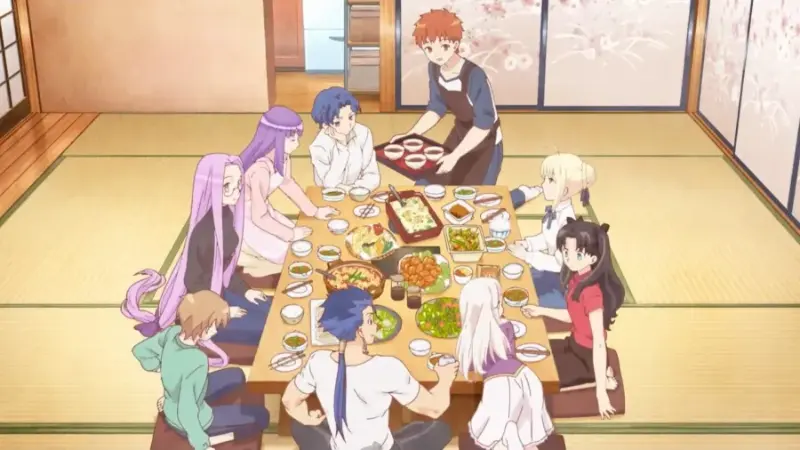
The absolute, undeniable flex of this series is the animation studio. Ufotable—the same studio legendary for animating the god-tier, explosive combat in Demon Slayer and Fate/stay night—redirects their famously unlimited budget and hyper-dynamic camera work entirely toward domestic cooking. Watching Ufotable animate a knife slicing through a fresh salmon, the perfectly rendered steam rising off a hotpot, or the glossy sheen of a soy sauce glaze is an absolute visual masterpiece. The technical culinary steps are so detailed and accurate that you can legitimately use the episodes as a step-by-step cooking tutorial.
Beyond the flawless visuals, the emotional weight of the series is immense for fans of the franchise. Watching characters who usually spend their time suffering, fighting to the death, and dealing with immense PTSD simply sit around a warm kotatsu, laughing and enjoying a perfectly cooked meal, is profoundly healing. It proves that sometimes the ultimate victory is not securing a magical wish-granting grail; it is just securing the exact right ingredients for dinner.
Yakitate!! Japan
If you want to understand the foundational DNA of the modern, over-the-top culinary battle shonen, you have to pay respect to the absolute classic: Yakitate!! Japan. Long before modern chefs were blowing people’s clothes off with umami, this series stepped up to the cutting board with a massive, absurd premise: creating a national bread for Japan that is so undeniably flawless, it rivals the staple breads of France and England. The series weaponizes a genetic anomaly called the “Hands of the Sun”—where a baker’s hands run unusually hot—to ferment bread dough at an accelerated, superhuman rate.
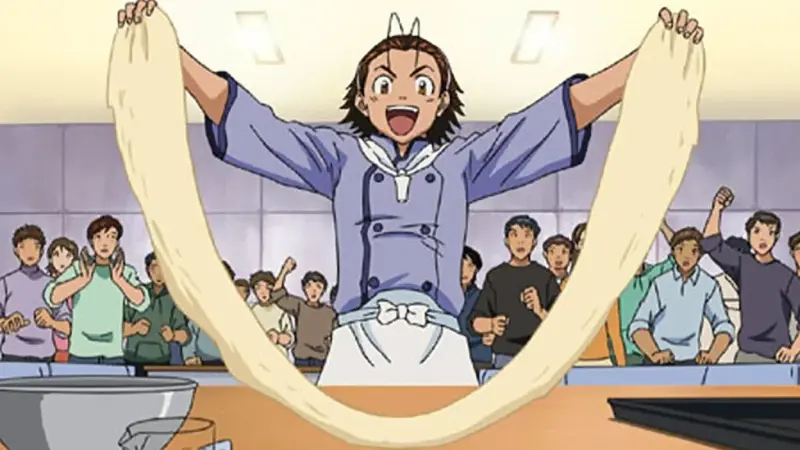
This anime completely abandons reality in favor of pure, unadulterated hype. It treats the act of baking with the exact same gravity and intense training regimens as a martial arts protagonist in Dragon Ball Z. The tournaments are fiercely competitive, complete with corrupt judges, massive corporate espionage, and rival bakers who possess impossible, superhuman techniques. While the scientific explanations behind gluten development and yeast fermentation are actually surprisingly accurate, they are delivered with the hyper-intense shouting of a final boss monologue.
The true legacy of Yakitate!! Japan, however, lies in its reaction faces. When a judge takes a bite of the legendary bread, they do not just say it tastes good. They hallucinate, they travel through time, they physically transform into different animals, and they completely rewrite the fabric of reality due to the sheer dopamine rush of the carbohydrates. It is a completely ridiculous, highly nostalgic, and undeniably brilliant pioneer of the gourmet genre that paved the way for everything that followed.
The Forsaken Saintess and Her Foodie Roadtrip in Another World
Stepping right into the current hype cycle, we have to talk about the highly anticipated, currently releasing breakout hit of the season. The Forsaken Saintess and Her Foodie Roadtrip in Another World takes the deeply saturated “kicked out of the hero’s party” trope and violently pivots it into a cozy, massive, high-fantasy culinary expedition. After the protagonist is falsely accused and exiled from her kingdom, the narrative abandons the stressful, unpaid divine duties entirely, opting instead for a continent-spanning journey alongside a terrifying horned demon to eat absolutely everything in sight.

What makes this new release immediately compelling is its strict focus on the actual logistics of nomadic cooking. The anime does not rely on elite, fully stocked kitchen environments; the meals are prepped over open campfires by massive, crystal-blue lakes. The animation production puts massive visual weight into rendering thick, sizzling meat skewers, wild-foraged fantasy herbs, and bubbling stews. The series creates a brilliant, highly functional magic system where previously unappreciated holy magic is used not to smite enemies, but to perfectly regulate the temperature of a cast-iron frying pan.
The dynamic between the exiled saintess and her demon companion acts as the emotional anchor of the series. Despite being a terrifying entity, the demon acts as the ultimate culinary hype-man, completely validating the cooking and providing the massive appetite required to fuel their journey. If the series maintains this level of visual execution and emotional warmth throughout the rest of its airing schedule, it is absolutely primed to become a modern classic in the cozy gourmet subgenre, proving that the best revenge is simply eating well.
Restaurant to Another World (Isekai Shokudou)
The reverse-isekai genre frequently relies on massive culture shock for cheap comedy, but Restaurant to Another World (Isekai Shokudou) uses it to create an absolute masterpiece of culinary diplomacy. The episodic narrative revolves around a seemingly ordinary “Western Restaurant Nekoya” in Tokyo, whose front door magically connects to various, highly dangerous locations across a high-fantasy world every Saturday. The show focuses on the stoic preparation required to serve heavily armored knights, ancient dragons, and terrified elves who stumble through the portal.
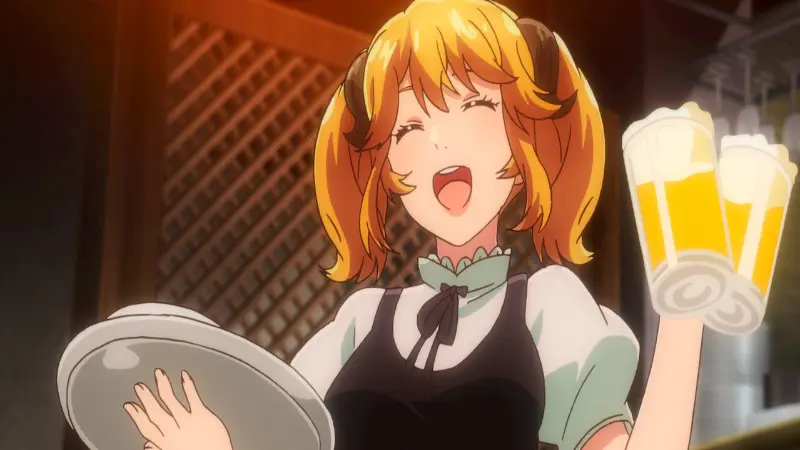
The aesthetic of the food is completely distinct. Instead of elaborate, Michelin-star plating, the restaurant specializes in “Yoshoku”—Western-influenced Japanese comfort food. The animation lovingly details massive, perfectly breaded pork cutlets, bubbling cast-iron plates of hamburger steak, and flawless, glowing mounds of omurice. The fantasy characters have never experienced modern culinary science—the precise balancing of acidity, the perfection of a deep-fry, or the concept of refrigeration. Watching an ancient, terrifying dragon physically melt in pure ecstasy after eating a beef stew is a phenomenally satisfying narrative loop.
However, the true weight of the anime is the establishment of the restaurant as a completely neutral, sacred sanctuary. In the fantasy world, these species are actively at war, separated by deep racial prejudices and territorial disputes. But the moment they step through the magical door and sit at the counter, the politics completely vanish. A highly decorated human knight and an exiled demon will sit side-by-side, entirely united by their mutual respect for the cooking. It is a beautiful, deeply comforting exploration of how a hot meal can completely dismantle prejudice.
Campfire Cooking in Another World with My Absurd Skill
When you hear that MAPPA—the legendary studio behind the hyper-violent, beautifully kinetic animation of Jujutsu Kaisen and Chainsaw Man—is animating a cooking isekai, you expect absolute visual dominance. They deliver flawlessly with Campfire Cooking in Another World with My Absurd Skill. The anime follows a summoned hero whose only magical skill is “Online Grocery,” allowing him to literally access a modern Japanese supermarket interface and buy processed ingredients, which are magically delivered to him in cardboard boxes.
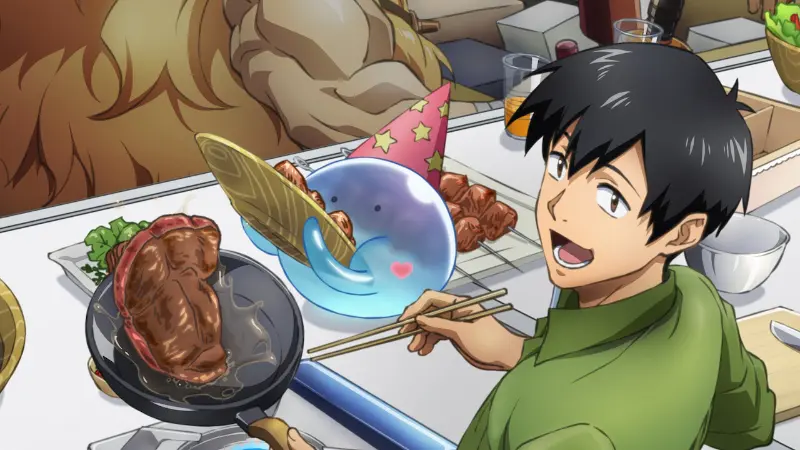
The series completely upends the power-scaling of traditional isekai. The moment the protagonist pan-fries a massive slab of fantasy boar meat using modern ginger pork marinade, the aroma completely breaks the local ecosystem. A god-tier, legendary Fenrir immediately descends upon the camp, absolutely addicted to the flavor of modern soy sauce and commercial seasonings. The anime establishes a hilarious dynamic where absolute physical protection is traded for three massive, perfectly cooked meals a day.
The animation is completely ridiculous in the best way possible. MAPPA animates the tearing open of a plastic seasoning packet, or the sizzling fat of a wagyu steak hitting cast iron, with the exact same visual intensity as a domain expansion. The comedy is brilliant because it highlights the sheer, overwhelming logistical advantage of modern culinary science. The series proves that you do not need legendary sword skills to survive a magical world; the ability to procure instant curry and bottled teriyaki sauce makes you the most influential, well-protected human on the entire continent.
Sweetness & Lightning (Amaama to Inazuma)
Stepping entirely away from the fantasy worlds and the battle academies, we find the absolute emotional pinnacle of the genre. Sweetness & Lightning (Amaama to Inazuma) delivers a profoundly heavy, tear-jerking narrative masked as a cozy cooking show. The story follows a recently widowed high school teacher trying to raise his hyper-energetic, fiercely independent little girl. Completely overwhelmed by grief and his demanding job, he relies entirely on convenience store bento boxes, heavily neglecting the emotional warmth of a home-cooked meal.
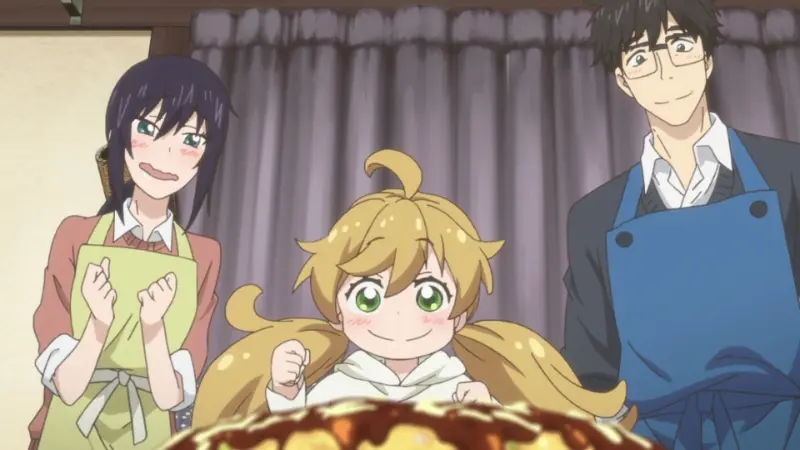
The narrative’s absolute breaking point occurs when the father realizes his daughter is desperately craving the specific, comforting meals her late mother used to make. Driven by a fierce, agonizing desire to properly care for her, he teams up with a student to learn how to cook from absolute scratch. The anime does not feature magical fire or flawless techniques. It features burnt rice, accidentally heavily salted stews, and the intense, highly relatable frustration of a parent trying to follow a complex recipe while a toddler screams in the background.
This anime achieves top-tier status because of its crushing authenticity. The sound design of the knife hitting the cutting board, the messy kitchen counters, and the hyper-realistic recipes ground the show entirely in reality. The payoff is emotionally devastating. When the meal is finally successful and the young girl takes a bite, her massive, tearful smile of absolute joy acts as the ultimate catharsis. It is a masterpiece that proves cooking is one of the most profound, fundamental acts of parental love.
Delicious in Dungeon (Dungeon Meshi)
Studio Trigger completely shattered the established rules of the fantasy genre with their flawless adaptation of Delicious in Dungeon. The plot drops a party of adventurers deep within a massive, lethal dungeon, racing against the clock to save a party member from being digested by a Red Dragon. They have absolutely no money and no rations. To survive the descent, the narrative introduces an insane strategy fueled by a deeply hidden obsession with monster biology: they will simply eat the monsters they kill.
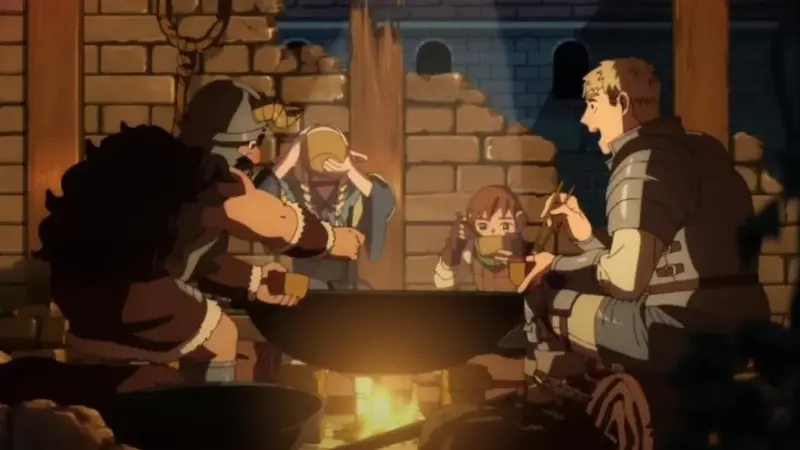
The anime takes a hyper-logical, aggressively detailed approach to fantasy ecology. This is not a gimmick. The world-building is god-tier. The characters do not just magically turn a slime into a potion; they analyze its cellular structure and figure out how to dry it out to use as a substitute for noodles. They harvest walking mushrooms, carefully extract the poisonous barbs from a giant basilisk to roast the thigh meat, and treat living armor as a unique ecosystem for breeding edible mollusks.
What makes Delicious in Dungeon a masterpiece is how it completely deconstructs the standard RPG formula. It argues that a dungeon is not just a place to farm experience points; it is a living, breathing ecosystem where the apex predator is simply the one who understands the food chain best. The brilliant blend of Studio Trigger’s hyper-kinetic animation with meticulous, grounded biological science creates an incredibly smart, visually stunning, and entirely unique approach to the gourmet genre that demands your absolute attention.
Food Wars! (Shokugeki no Soma)
There can be absolutely no debate at the summit. If you are discussing the anime that completely redefined, dominated, and mainstreamed the gourmet genre for an entire generation, you are talking about the undisputed juggernaut: Food Wars! (Shokugeki no Soma). J.C.Staff took the concept of a high school cooking competition and injected it with the high-octane, aggressively intense adrenaline of an elite battle shonen. Totsuki Culinary Academy is established as a brutal, unforgiving warzone where students settle disputes through “Shokugeki”—formal cooking duels where the loser is permanently expelled.
The anime thrives on its intense underdog narrative, pitting humble, blue-collar family diner techniques against an academy filled with massive egos, wealthy heirs, and prodigies trained in the finest Michelin-star restaurants in the world. The series uses relentless, chaotic creativity as its ultimate weapon. Taking standard, cheap ingredients—like transforming a simple egg into a high-end, transforming souffle—and using flawless technique to completely shatter the arrogant egos of the elite forms the incredibly satisfying core loop of the show.
The visual execution of Food Wars! is legendary. The animation of the food prep is meticulously researched (consulted by real-world celebrity chef Yuki Morisaki), breaking down complex molecular gastronomy and classic French techniques with stunning accuracy. And yes, it is globally infamous for its “foodgasms”—where the sheer, overwhelming flavor of a dish causes the judges’ clothes to violently explode in a rush of pure ecstasy. It is highly exaggerated, deeply technical, and undeniably hype-inducing, forever cementing its legacy as the absolute peak of the cooking anime genre.
The Final Course
The undeniable brilliance of the gourmet genre is that it understands a fundamental truth of human psychology: the highest stakes are not always saving the world; sometimes, the highest stakes are perfectly nailing the sear on a steak. Whether you are laughing at MAPPA animating modern grocery shopping in another world, or gripping the edge of your seat as two chefs go head-to-head in a high-stakes duel orchestrated by J.C.Staff, these anime prove that the kitchen is just as intense, and infinitely more delicious, than any battlefield.
If you have had your fill of culinary wars and want to see how this exact same level of hyper-intense, heavily animated competition translates to physical combat, you need to transition over to our breakdown of the best pure martial arts anime. Or, if you want something that requires zero brain power and massive laughs after a heavy meal, check out our ranking of the best absolute comedy anime to properly digest.
But before you log off and inevitably check your fridge for late-night snacks, we need to know your ultimate dining destination. Are you enrolling in the cutthroat kitchens of Totsuki Academy, or are you pulling up a chair at the Western Restaurant Nekoya? Head over to the Smash or Pass global arcade right now. Drop your votes on your favorite fictional chefs, rate their most iconic dishes, and see where your top culinary anime ranks among the rest of the community.
Which anime's food made you the most hungry?
Frequently Asked Questions
What is a gourmet anime?
Why does anime food look so incredibly appetizing?
Did Food Wars! invent the exaggerated reaction face trope?
Why is the isekai genre combining so frequently with cooking anime?
Are the recipes featured in these cooking anime actually realistic?
Rank Your Favorites
Take a break and play our interactive Smash or Pass games. Vote on your favorite anime characters, game characters, and idols to shape the global tier lists.



Join the Discussion (0)