Top 10 Best Dandere Characters in Anime
The anime industry thrives on massive, explosive personalities. We are constantly inundated with hyper-aggressive protagonists who scream their ambitions at the sky, or wildly extroverted heroines who completely dominate every frame of animation they inhabit. But beneath the noise, the screaming, and the sheer chaos of modern seasonal anime, there exists a profoundly different, incredibly delicate character archetype that commands absolute loyalty from the fanbase. The dandere. These are not characters who mask their emotions behind walls of freezing, calculated logic. They are characters who are overflowing with intense, beautiful emotions, but are physically paralyzed by the sheer terror of sharing them with the world.
To truly understand the narrative weight of a dandere, you have to look at how they contrast with other romantic archetypes. If you look at our breakdown of the best tsundere characters, you see fear of intimacy weaponized outward as physical violence and insults. The dandere internalizes that exact same fear. Their battleground is entirely psychological. Every single syllable they manage to speak is a hard-fought victory against their own crippling self-doubt. This is why their arcs often anchor the most poignant storylines in the best childhood friend romance anime, where the agony of an unspoken, decade-long crush creates a suffocating, deeply relatable tension.
We are stripping away the loud confessions and the extroverted confidence. From historically foundational ninja heiresses fighting to prove their worth, to hyper-modern, glitching depictions of clinical social anxiety, we are diving deep into the psychology of the quietest characters in the medium. These are the Top 10 best dandere anime characters, ranked by their psychological depth, their character growth, and the absolute narrative hype of their eventual emotional awakening.
Table of Contents
Chika Komari - Makeine: Too Many Losing Heroines!
Kicking off our list is an incredibly strong modern entry that perfectly encapsulates the chaotic reality of high school social dynamics. Chika Komari from the wildly praised Makeine: Too Many Losing Heroines! is the definitive literature club dandere. Small in stature, heavily guarded, and possessing an absolute terror of being perceived by anyone outside her immediate social circle, Komari uses the dusty, quiet confines of her clubroom as a literal fortress against the overwhelming sensory overload of standard high school life.
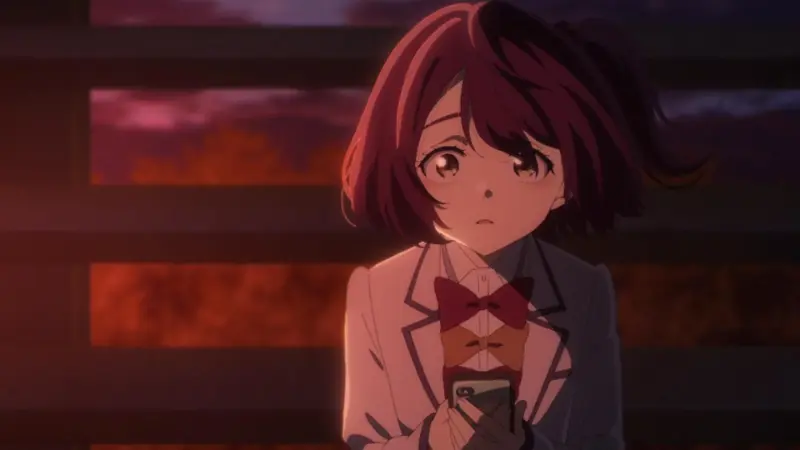
What elevates Komari above standard shy tropes is the meticulous, almost painful realism in how A-1 Pictures animates her anxiety. She does not just blush; her entire body language collapses inward. She hides behind books, physically shrinks away from eye contact, and stumbles over her words in a rapid, panic-stricken stutter when forced into the spotlight. Her dandere nature is deeply tied to her reliance on her upperclassman, establishing a profoundly vulnerable dynamic where she clings to the few people who understand her highly specific, introverted frequency.
The core conflict of Komari’s character arc is the forced destruction of her comfort zone. As her senpai prepares to graduate, the protective walls she has built around her quiet life begin to crack, forcing her to step up and actually lead the club she loves. Watching her painfully navigate the grief of losing her romantic anchor, while simultaneously fighting tooth and nail against her own paralyzing anxiety to keep the club alive, makes her one of the most compelling, authentic danderes in modern anime.
Shiori Shiomiya - The World God Only Knows
In the vast pantheon of harem heroines, Shiori Shiomiya from The World God Only Knows stands out as an absolute masterclass in analyzing the internal mechanics of a dandere. Stationed perpetually in the school library, Shiori appears to be a completely unapproachable ghost who communicates only by pointing at books. She is the ultimate, hyper-exaggerated version of the quiet bookworm, entirely content to live completely submerged in the fictional worlds of literature rather than dealing with the unpredictable messiness of actual human beings.
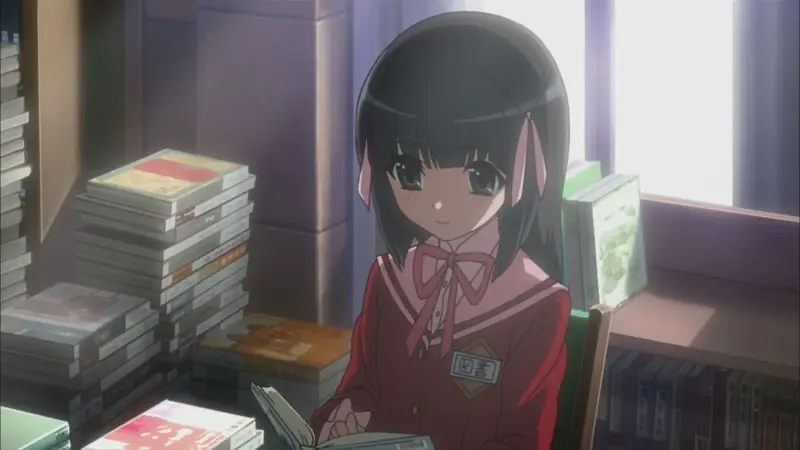
However, the brilliance of Shiori’s character writing lies in her internal monologue. While her exterior is completely silent and frozen, her mind is an incredibly loud, fast-paced, highly articulate hurricane of thoughts. Mangaka Tamiki Wakaki expertly illustrates that Shiori is not slow or empty-headed; she is simply processing far too much information at once. Every time she tries to speak, she over-analyzes every possible outcome, terrifying herself into complete vocal paralysis. Her silence is not a lack of things to say; it is a catastrophic traffic jam at the vocal cords.
When Keima Katsuragi, the God of Conquest, decides to capture her heart, he does not force her to become an extrovert. Instead, he meticulously enters her world, engaging with her through the silent, structured language of the library. Her eventual breakthrough—the agonizing, desperate effort to physically force her voice out to defend the books she loves—is a phenomenal, high-stakes emotional victory. Shiori perfectly represents the immense intellectual depth that is so frequently hidden behind the dandere’s quiet facade.
Megumi Tadokoro - Food Wars!
Taking a character whose entire personality revolves around gentle, small-town hospitality and throwing her into the most ruthless, hyper-competitive culinary academy on the planet is a recipe for absolute psychological terror. Megumi Tadokoro from Food Wars! is the ultimate underdog dandere. When we first meet her at Totsuki Academy, she is a nervous wreck. She constantly fumbles her ingredients, hyperventilates before every exam, and repeatedly draws the kanji for “person” on her hand to swallow it—an ancient, deeply desperate Japanese coping mechanism for severe anxiety.
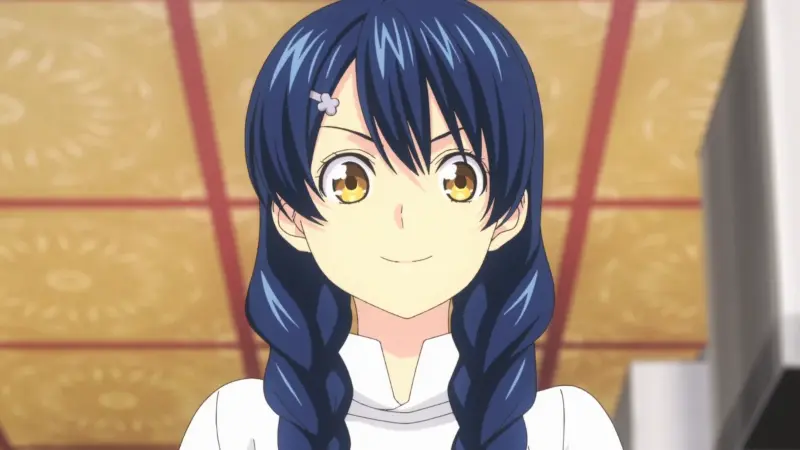
Megumi’s shyness is intrinsically linked to her imposter syndrome. Surrounded by wealthy, arrogant prodigies who weaponize their cooking to destroy their opponents, Megumi simply wants to make food that makes people feel warm and safe. Her anxiety completely paralyzes her technical skills, leading her to the very brink of expulsion. It is only through the chaotic, aggressively confident intervention of Soma Yukihira that Megumi is forced to stand her ground and realize that her gentle approach to culinary arts is not a weakness, but an incredibly rare, highly specialized strength.
Watching Megumi evolve over the course of five seasons is one of the most satisfying character arcs in modern shonen. She does not lose her dandere traits; she still gets flustered, she still panics, and she remains overwhelmingly polite. However, she learns to channel that nervous energy into razor-sharp focus at the cutting board. When a deeply shy girl steps up to a high-stakes tournament stage and completely floors a panel of elite judges using nothing but the nostalgic, comforting power of extreme hospitality, it cements her legacy as an elite-tier character.
Kosaki Onodera - Nisekoi
If you want to experience the absolute peak of romantic frustration, you must analyze Kosaki Onodera from Nisekoi. Animated with flawless, hyper-expressive detail by Studio Shaft, Onodera is the quintessential, universally beloved “nice girl” of the anime community. She is profoundly sweet, deeply caring, and hopelessly, desperately in love with the protagonist, Raku Ichijou. The feeling is entirely mutual. They are completely perfect for each other, but Onodera’s pure, unadulterated dandere nature acts as an unbreakable barrier between them.
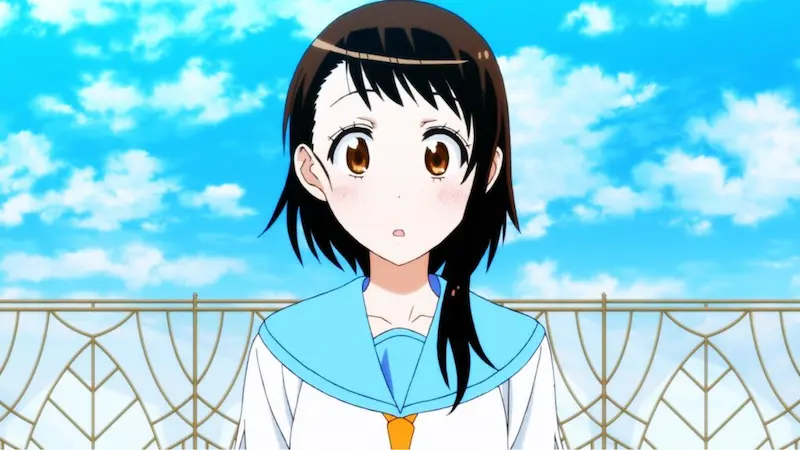
The entire narrative tension of Nisekoi heavily relies on Onodera’s inability to simply confess her feelings. Whenever the perfect romantic atmosphere aligns, and Raku is ready to listen, Onodera’s extreme shyness kicks into overdrive. Her face turns crimson, her brain completely short-circuits, and she violently redirects the conversation to something entirely mundane out of pure panic. It is an agonizing, highly relatable depiction of how paralyzing a high school crush can truly be when the fear of ruining the current friendship drastically outweighs the potential reward of a relationship.
Onodera represents the pure, nostalgic archetype of innocent romance. Unlike the aggressive tsundere energy of Chitoge, Onodera’s battles are fought quietly in the background. Her storyline is a beautiful, melancholic exploration of the “what if.” She is the ultimate proof that in the highly competitive warzone of anime romance, simply being the nicest, most supportive person in the room is not enough; if the dandere cannot find the courage to wield their voice as a weapon, they will inevitably be left behind.
Mio Akiyama - K-On!
Kyoto Animation has an undisputed mastery over subtle character acting, and Mio Akiyama from K-On! remains one of their absolute greatest achievements. On paper, Mio is the coolest girl in school. She is tall, mature, plays a left-handed Fender Jazz Bass, and writes the lyrics for the Light Music Club. However, the moment any form of public attention is directed toward her, she completely shatters into a trembling, hyperventilating, teary-eyed mess. She is the ultimate contradiction: a literal rockstar who is violently allergic to the spotlight.
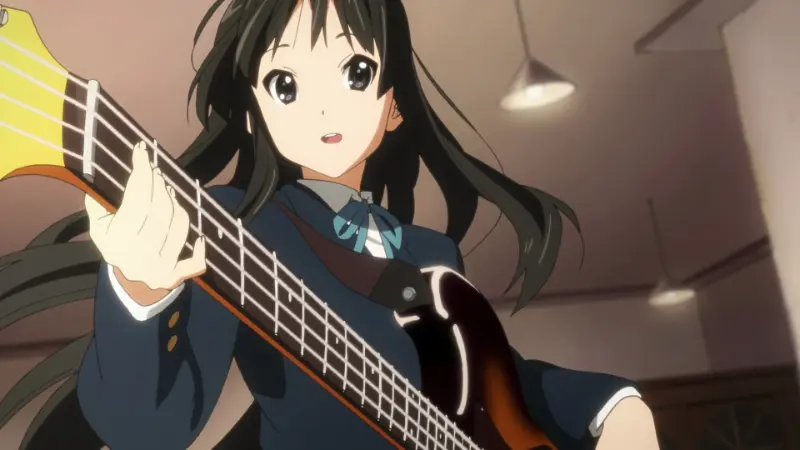
Mio’s dandere mechanics are incredibly physical. When she is embarrassed, KyoAni animates her physically retreating into her own body—pulling her knees to her chest, hiding behind her hair, or desperately seeking cover behind her hyper-extroverted friend, Ritsu. Her anxiety is frequently used for brilliant comedic effect, especially when her terrifyingly dark, macabre lyrics are contrasted with the bubbly, pop-rock sound of the band. But beneath the comedy is a genuinely compelling narrative of a girl trying to overcome her own mental limitations for the sake of her friends.
What makes Mio an elite-tier dandere is her undeniable, sheer competence. Despite her absolute terror of playing in front of an audience, the moment the countdown hits zero, she completely locks in. Her bass lines are the heavy, driving anchor that holds the entire chaotic band together. Watching her force herself onto the microphone to sing lead vocals when the situation demands it is a massive, hype-inducing victory over her own psychology, proving that true bravery is not the absence of fear, but playing the gig anyway while completely terrified.
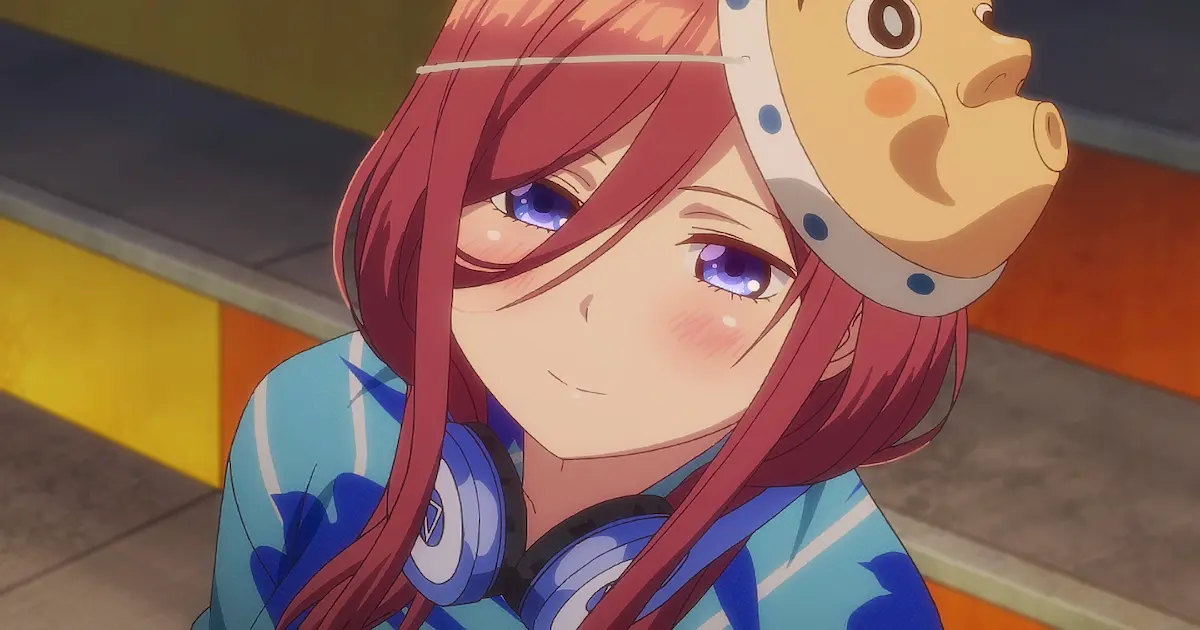
Miku Nakano - The Quintessential Quintuplets
In the fiercely contested, high-stakes battleground of The Quintessential Quintuplets, Miku Nakano immediately established herself as the undisputed fan-favorite by perfectly executing the modern dandere formula. The third sister of the Nakano quintuplets, Miku is introduced as a deeply pessimistic, highly introverted girl who uses a massive pair of Audio-Technica headphones as a literal, physical barrier against the outside world. She has incredibly low self-esteem, constantly comparing herself unfavorably to the brighter, more outgoing personalities of her identical sisters.
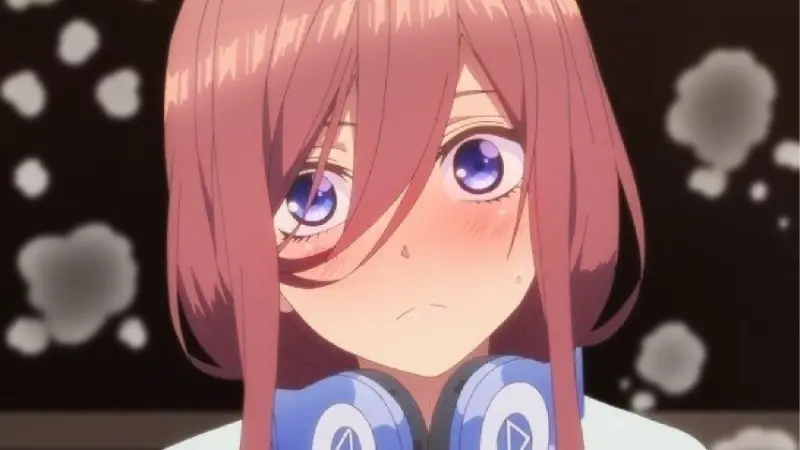
The core of Miku’s initial shyness is deeply rooted in her highly niche, deeply nerdy obsession with Sengoku period Japanese warlords. Believing her hobby is weird and unappealing, she fiercely guards this secret, choosing to remain completely silent rather than risk rejection. When Futaro Uesugi actually takes the time to learn about warlords just to connect with her, it acts as the catalyst for one of the most meticulously paced, rewarding character evolutions in modern harem anime. He validates her weirdness, effectively shattering the ice surrounding her heart.
Miku’s transition from a quiet, background observer to an aggressive, highly competitive romantic contender is absolutely phenomenal. She does not magically become an extrovert; every time she flirts or makes a move, you can see the immense, taxing psychological effort it takes for her to push past her boundaries. Whether it is learning how to cook from scratch or boldly declaring her intentions to her sisters, Miku demonstrates that a dandere armed with absolute, unwavering determination is the most dangerous force on any romantic battlefield.
Sawako Kuronuma - Kimi ni Todoke
Diving into the absolute royalty of the shoujo demographic, Sawako Kuronuma from Production I.G’s masterpiece Kimi ni Todoke provides a completely unique, highly comedic twist on the dandere archetype. Sawako is a fundamentally sweet, deeply empathetic, and incredibly positive girl. However, she is cursed with long, jet-black hair, pale skin, and an extremely awkward, forced smile that makes her look exactly like the terrifying ghost from The Ring. Due to her crippling social anxiety, she is completely unable to clear up this massive misunderstanding.
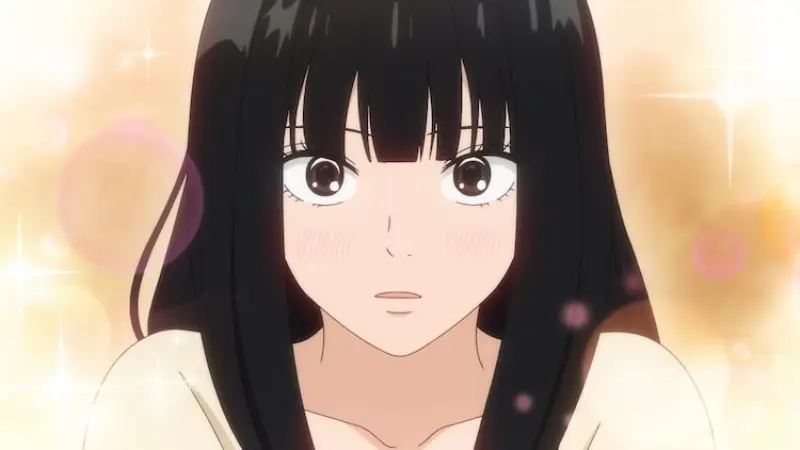
For years, her classmates have treated her like a literal curse, fleeing in terror whenever she tries to politely say good morning. This extreme isolation forces Sawako to internalize her profound loneliness, convincing herself that she is simply meant to be a background character. The psychological weight of her situation is devastating; she wants so desperately to make friends, but every single attempt is perceived as a horrific, supernatural threat. Her dandere silence is born from a desire to protect others from her “cursed” presence.
The narrative explodes with warmth when the ultra-popular, refreshingly straightforward Shota Kazehaya simply treats her like a normal human being. Watching Sawako systematically deconstruct her own cursed reputation, slowly learning how to vocalize her genuine thoughts and clear up malicious rumors, is the ultimate healing narrative. Her emotional awakening is an absolute tearjerker, proving that behind the most terrifying, misunderstood exteriors often lies the most fragile, overwhelmingly gentle heart in the entire school.
Hitori Gotoh - Bocchi the Rock!
If previous entries on this list are the classic, romanticized versions of the trope, Hitori “Bocchi” Gotoh from the explosively popular Bocchi the Rock! is the hyper-modern, completely unhinged, clinical deconstruction of the dandere. CloverWorks did not just animate a shy girl; they unleashed absolute visual anarchy to depict the literal, terrifying sensation of a panic attack. When Bocchi is forced to interact with a stranger, she does not just blush—she physically dissolves into ash, transforms into a low-polygon 3D model, or glitches out like corrupted software.
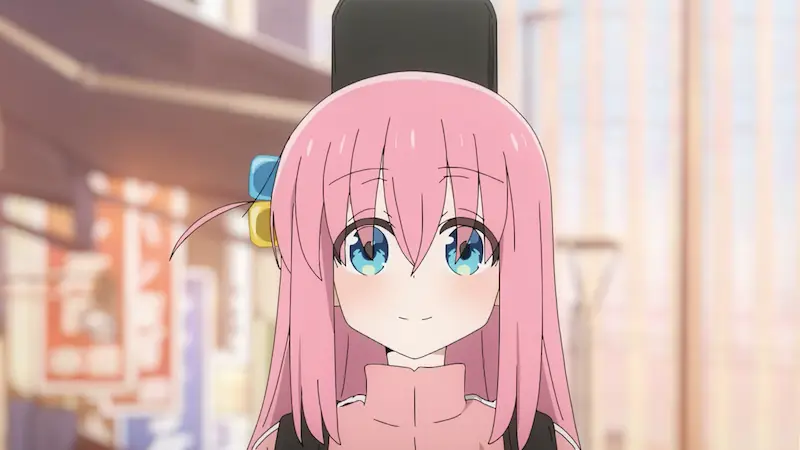
Bocchi’s backstory is a brutally relatable commentary on modern internet culture. Desperate for attention but absolutely terrified of real human interaction, she spent her entire middle school life practicing the guitar in a dark closet for six hours a day. She is a genuine, god-tier guitar prodigy online under the alias “Guitarhero,” but in real life, she cannot even muster the courage to order a drink at a cafe without undergoing a complete mental breakdown. Her guitar is not just an instrument; it is a desperate, highly technical coping mechanism.
The absolute genius of Bocchi the Rock! is that it never cures her. She does not magically become a charismatic rockstar. She remains a hunched-over, tracksuit-wearing mess who hides inside a mango box during her first live performance. But when the band’s equipment fails during a critical gig, Bocchi taps into her closet-practiced, hyper-technical shredding skills to save the day, completely melting the faces of the audience. She is the ultimate champion for the chronically online introverts, proving that you can be absolutely terrified of the world and still deliver an earth-shattering performance.
Shouko Komi - Komi Can't Communicate
Sitting at the absolute pinnacle of modern dandere writing is Shouko Komi from the critically acclaimed Komi Can’t Communicate. The premise relies on a massive, highly comedic misunderstanding: Komi is stunningly beautiful, tall, and possesses an intense, piercing stare. The entire student body genuinely believes she is a flawless, untouchable goddess who is simply too cool to speak to mere mortals. The devastating reality, however, is that Komi suffers from a severe, clinical communication disorder. She is absolutely terrified of people, and her “intense stare” is actually a look of pure, unadulterated panic.
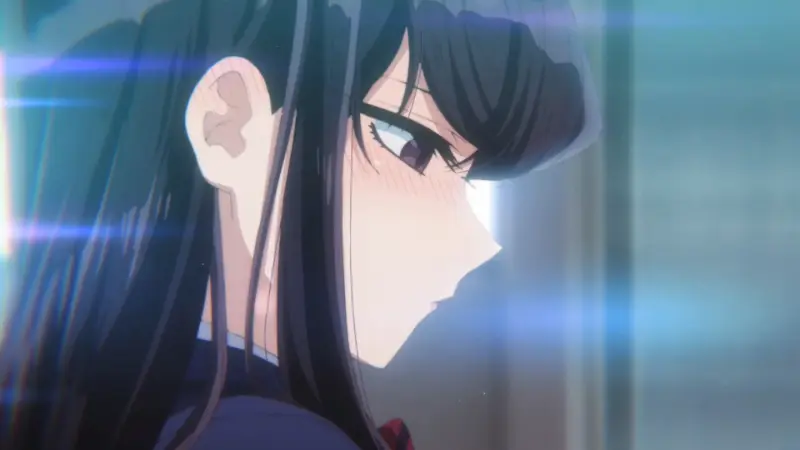
The turning point of the series, and one of the most beautifully animated sequences in recent history, happens in the very first episode. When Hitohito Tadano realizes she is not arrogant, but simply trapped in her own mind, he initiates a conversation with her using a chalkboard. What follows is a silent, incredibly emotional outpouring of years of isolation, completely written in chalk. It is a profound acknowledgment that verbal speech is not the only valid form of human connection, completely redefining how the anime industry handles the mechanics of extreme shyness.
Komi’s overarching goal—to make 100 friends—is a monumental, almost impossible task for someone with her psychological barriers. Every single step she takes, whether it is calling a friend on the phone, ordering a coffee, or offering a trembling, microscopic smile, is treated with the narrative weight of a massive shonen battle victory. She perfectly bridges the gap between absurd, gag-manga comedy and deeply touching emotional resonance, securing her spot as the undeniable modern queen of the dandere archetype.
Hinata Hyuga - Naruto
There is absolutely no debate to be had. When you trace the DNA of every single blushing, finger-twiddling, hyper-shy anime girl back to its absolute origin point, you arrive at the undisputed godmother of the archetype: Hinata Hyuga from the massive, industry-defining juggernaut, Naruto. From the very beginning of the series, Hinata defined the visual language of the dandere. Fainting at the sight of her crush, hiding behind trees to observe from afar, and tapping her index fingers together in a state of terminal nervousness—she wrote the literal textbook on anime shyness.
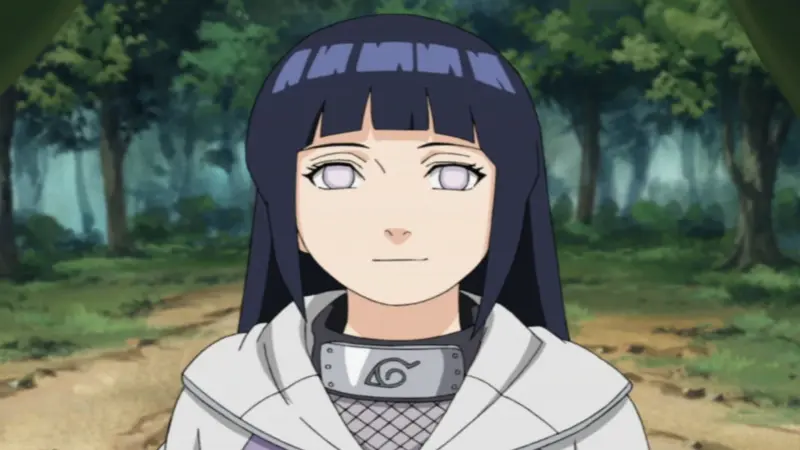
But reducing Hinata to her crush on Naruto does a massive disservice to the heavy psychological architecture of her character. Her extreme lack of confidence is the direct result of brutal, systemic familial abuse. Born as the heiress to the elite, aristocratic Hyuga clan, Hinata was deemed a complete failure by her own father because she possessed a gentle, empathetic heart in a militaristic society that only valued lethal efficiency. Her shyness is deeply rooted in the crushing, internalized belief that her sheer existence is a disappointment to her bloodline.
This is exactly why Hinata claims the number one spot. Her arc is not just about overcoming a crush; it is about weaponizing her gentleness to forge an unbreakable, god-tier level of courage. The legendary moment during the Pain arc—where the entire village is destroyed, the most powerful ninjas are dead, and a deeply terrified, physically outmatched Hinata steps onto the battlefield knowing she will likely die, solely to protect Naruto—is the absolute peak of the dandere archetype. She proves that the quietest characters, when pushed to the absolute edge, possess a terrifying, unyielding strength that loud characters can only dream of.
Finding Their Voice
The true brilliance of the dandere archetype lies in the sheer, unadulterated psychological effort required to break the silence. Whether you are laughing at the surreal, glitching panic attacks of Bocchi trying to order a coffee, or holding your breath as Hinata steps onto a completely ruined battlefield to face a god, these characters prove that bravery is not the absence of fear. True courage is feeling the absolute, paralyzing terror of social rejection, and deciding to push the words past your lips anyway. They turn the mundane act of communication into a massive, high-stakes battleground.
If you are craving more emotional narratives that prioritize heavy character growth and tear-jerking resolutions over explosive action, you need to seamlessly transition over to our breakdown of the most devastating sad romance anime. Or, if you want a complete, jarring psychological contrast, check out what happens when the protagonist possesses absolutely zero fear or hesitation in our deep dive into the best overpowered main characters. The dynamic shift is massive.
But before you log off and retreat into your own clubroom, we need to know who truly runs the hierarchy. Are you submitting to the modern, chalk-written dominance of Shouko Komi, or are you staying fiercely loyal to the legendary, Byakugan-wielding blueprint? Head over to the Smash or Pass global arcade right now. Drop your votes on your favorite shy prodigies, rate their emotional awakenings, and see where your top dandere ranks among the rest of the community.
Which dandere's emotional awakening hit you the hardest?
Frequently Asked Questions
What does the term dandere actually mean?
What is the exact difference between a dandere and a kuudere?
Why is the dandere archetype so enduringly popular in anime culture?
How has the portrayal of the dandere evolved in modern anime?
Are all dandere characters defined by their romantic interests?
Rank Your Favorites
Take a break and play our interactive Smash or Pass games. Vote on your favorite anime characters, game characters, and idols to shape the global tier lists.
Join the Discussion (0)