Top 10 Best Kuudere Characters in Anime
The anime landscape is absolutely saturated with loud, hyper-aggressive personalities. From screaming shonen protagonists to intensely fiery romantic leads, the industry often relies on explosive emotional outbursts to drive a narrative forward. However, there is a distinctly different, deeply fascinating breed of character that dominates the medium through sheer, unbreakable silence. The kuudere. These are the characters who stand in the middle of a burning battlefield, or the center of a chaotic high school classroom, with an expression of absolute, unbothered apathy. They do not yell, they do not panic, and they certainly do not wear their hearts on their sleeves. Instead, they operate on a frequency of pure, freezing logic, locking their true emotions behind impenetrable walls of stoicism.
But the true genius of the kuudere archetype is not the ice; it is the inevitable, painstaking thaw. If you look at our breakdowns of the best tsundere characters, you see emotion weaponized as physical aggression. The kuudere is entirely different. Because they give you absolutely nothing up front, the emotional economy of their character arc is incredibly dense. When a character who has maintained a deadpan stare for twenty episodes finally offers a microscopic smile, or reaches out a trembling hand, the narrative impact is absolutely devastating. It is a slow-burn emotional investment that frequently features in the best psychological anime, where emotional suppression is not just a quirky character trait—it is a mandatory survival mechanism against a cruel world.
We are stripping away the loud, the chaotic, and the obnoxious. From traumatized child soldiers learning what it means to feel, to immortal elves wrestling with the unbearable weight of human lifespans, we are diving deep into the absolute peak of emotional suppression. These are the Top 10 best kuudere characters in anime history, ranked by their thematic depth, their psychological architecture, and the sheer narrative weight of their emotional awakening.
Table of Contents
Eucliwood Hellscythe - Is This a Zombie?
Kicking off our list is a character who takes the concept of the “silent, stoic girl” to its absolute, literal extreme. Eucliwood Hellscythe, affectionately known as Eu, from the bizarrely brilliant Is This a Zombie?, is a necromancer from the Underworld. When she revives the protagonist, Ayumu, as a zombie after a fatal encounter with a serial killer, she moves into his house. From episode one, Eu presents an utterly impenetrable wall of ice. She wears heavy silver armor and communicates exclusively by scribbling short, incredibly blunt sentences onto a small notepad.
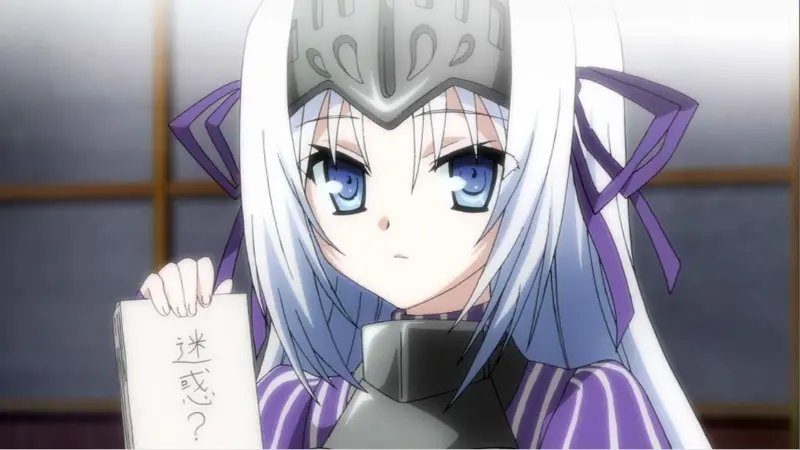
However, the genius of Eucliwood’s character is that her kuudere nature is not born of arrogance, shyness, or standard social anxiety—it is a terrifyingly necessary biological restraint. Eu possesses reality-altering magic tied directly to her words and emotions. If she speaks the word “die,” the target will instantly perish. If she experiences a strong emotional outburst, the surrounding reality will distort and shatter. Her stoicism is a heavy, self-imposed prison. She forces herself to remain emotionally numb and completely silent because the sheer weight of her existence is a lethal hazard to everyone around her.
The emotional payoff with Eucliwood is subtle but incredibly potent. Beneath the deadpan stares and the blunt notepad commands, she is deeply burdened by the pain she absorbs from her magic and the crushing isolation of her abilities. Watching her slowly learn to trust Ayumu, who accepts her immense, dangerous baggage without hesitation, is beautifully handled. When the ice finally cracks and you realize that every single silent moment was a deliberate act of profound mercy toward humanity, it recontextualizes her entire character as one of the most tragic kuuderes in the medium.
Shoto Todoroki - My Hero Academia
While the kuudere archetype is overwhelmingly dominated by female characters, Shoto Todoroki proves that the formula works flawlessly when applied to the heavy, high-stakes environment of a modern battle shonen. Introduced early in My Hero Academia, Shoto is the undisputed prodigy of U.A. High’s Class 1-A. He is completely unapproachable, highly analytical, and approaches every single combat situation with a chilling, detached efficiency. He rarely speaks unless spoken to, and he views his classmates not as friends, but as irrelevant obstacles on his path to the top.

But Shoto’s icy exterior is not a personality quirk; it is a direct, psychological manifestation of horrific generational trauma. Raised as a eugenics experiment by his abusive father, Endeavor, Shoto was designed purely to surpass All Might. The literal duality of his quirk—ice on the right, fire on the left—serves as a brilliant narrative device for his internal state. For years, he aggressively suppresses his fire, completely rejecting the left side of his body as a massive middle finger to his father. His kuudere personality is a thick layer of frost built to protect a deeply bruised, incredibly angry inner child.
The “dere” awakening for Todoroki is legendary. During the U.A. Sports Festival, Izuku Midoriya completely shatters Todoroki’s emotional suppression, screaming at him that his power is his own, not his father’s. The moment Shoto finally ignites his left side, crying as the metaphorical and literal ice melts away, is one of the highest peaks in the genre. From that point on, Shoto slowly transitions from an isolated weapon to a genuinely caring, albeit somewhat socially awkward, hero who actively fights to protect his friends. It is a masterful, action-oriented execution of the kuudere timeline.
Kanade Tachibana - Angel Beats!
Key Visual Arts are the absolute masters of the emotional gut-punch, and Kanade Tachibana from Angel Beats! is one of their crowning achievements. The series takes place in an afterlife high school functioning as a purgatory for teenagers who experienced unfair, tragic lives. The protagonist group, the SSS, perceives Kanade as “Tenshi” (Angel)—a seemingly emotionless, robotic enforcer of the school’s rules. With her striking yellow eyes and soft, monotone voice, she brutally dismantles the rebels’ operations using heavily modified, software-like defensive abilities.

For the first half of the series, Kanade perfectly plays the role of the unfeeling antagonist. She takes bullets, explosions, and insults without flinching, continuing her duties with mechanical precision. However, the crushing reality of her character is entirely built on tragic miscommunication. Kanade is not an angel, nor is she a robotic program designed by God. She is just a regular, incredibly lonely human girl who is desperately trying to help these traumatized teenagers achieve peace and move on from purgatory. Her kuudere demeanor is simply the result of extreme social isolation; no one bothered to talk to her because they were too busy shooting at her.
The emotional revelation surrounding Kanade’s past is utterly devastating. When Otonashi finally breaks through her defenses and treats her like a normal human being, the ice immediately shatters, revealing a sweet, surprisingly clumsy girl who just wanted a friend. The final plot twist—revealing the physical and spiritual connection between Kanade and Otonashi’s past life—elevates her from a standard stoic archetype to a profoundly tragic figure. She remains one of the most memorable examples of how silence can mask an ocean of gratitude.
Yukino Yukinoshita - Oregairu
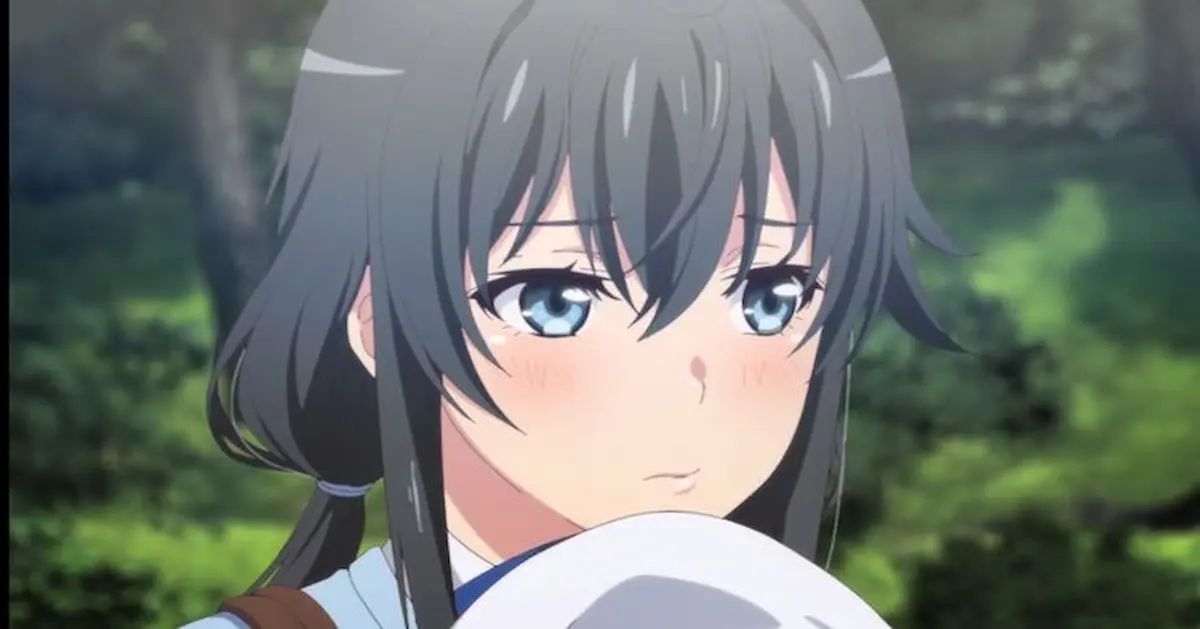
Moving away from battlefields and purgatories, we find Yukino Yukinoshita—the absolute pinnacle of the modern, realistic high school kuudere. As the president of the Service Club in My Teen Romantic Comedy SNAFU, Yukino, often called the “Ice-Cold Beauty,” is flawless. She is wealthy, stunningly beautiful, academically brilliant, and completely unapproachable. She wields her intelligence like a scalpel, perfectly willing to dissect and destroy anyone’s ego with brutal, hyper-logical honesty, delivering scathing insults with a completely straight face.

But Oregairu is a masterclass in psychological deconstruction. Yukino’s icy exterior is not a gimmick; it is an incredibly dense, heavily reinforced defense mechanism. Because she has spent her entire life overshadowed by a hyper-successful older sister and suffocated by a controlling mother, Yukino is terrified of vulnerability. She was bullied by her peers for her perfection, leading her to believe that forming emotional attachments is a useless liability. Her logic is an armor she wears to protect a severely fragile, deeply insecure ego that does not know who she actually is beneath the expectations of her family.
Watching Yukino’s facade slowly crumble over the course of three seasons is an incredibly rewarding experience. Her dynamic with Hachiman—another deeply cynical outcast—forces her to confront the reality that logic cannot solve human emotions. The “dere” moments here are not explosive confessions; they are subtle, agonizingly human shifts. A sudden reliance on Hachiman’s presence, the trembling realization of her own hypocrisy, and finally, the quiet, desperate request to be “saved.” Yukino perfectly captures the painful, messy reality of learning how to rely on someone else.
Frieren - Frieren: Beyond Journey's End
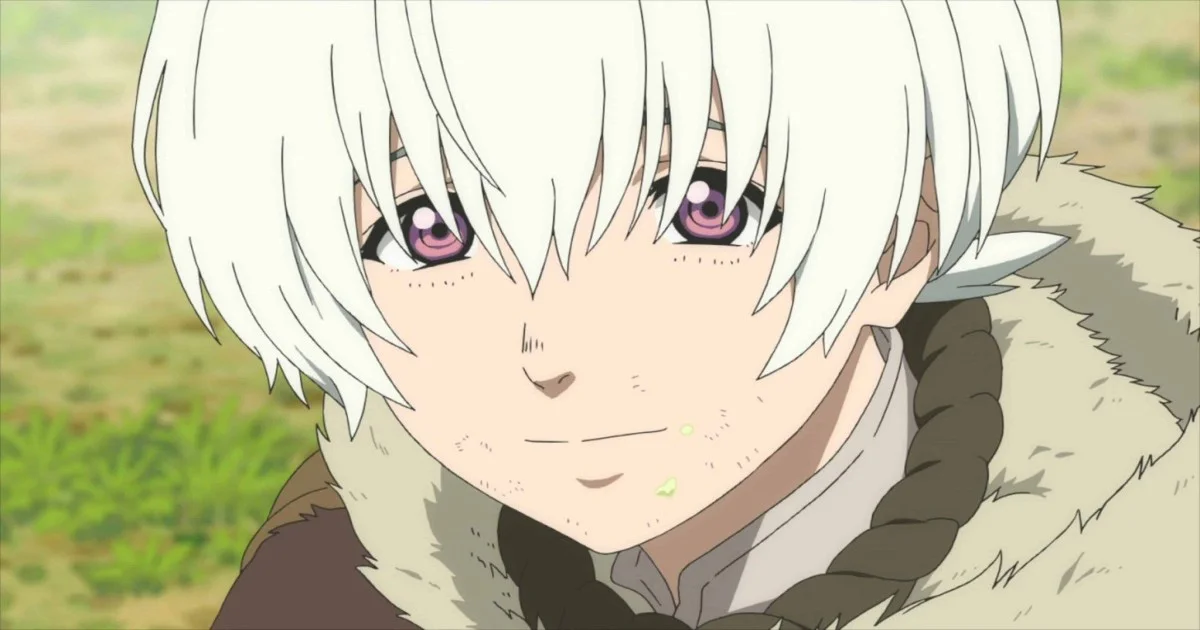
Frieren represents a massive, critically acclaimed evolution of the kuudere archetype. The protagonist of Frieren: Beyond Journey’s End, she is an ancient elven mage who helped defeat the Demon King. To a viewer, Frieren appears to be the textbook definition of the trope: she is lethargic, emotionally flat, rarely smiles, and treats massive, world-altering magical combat with the bored indifference of someone doing their laundry. But the narrative completely flips the script on why she acts this way.
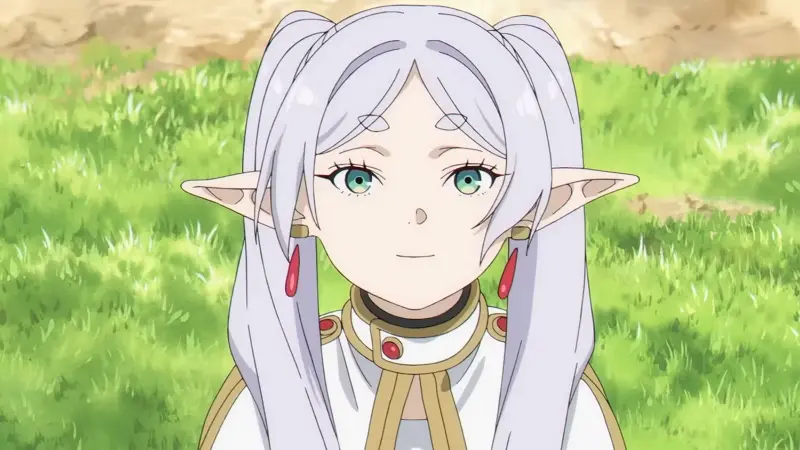
Frieren’s stoicism is not the result of psychological trauma or an artificial upbringing; it is a direct consequence of her biology. For an elf who lives for thousands of years, a ten-year adventure with a human party is the equivalent of a brief weekend trip. Her emotional detachment stems from a fundamental inability to perceive time and urgency the way humans do. She does not form deep emotional bonds simply because, from her perspective, humans flicker in and out of existence too quickly to warrant a massive emotional investment.
However, the entire premise of the show is Frieren’s retrospective emotional awakening. After the hero Himmel dies of old age, Frieren experiences a shattering, delayed wave of grief, realizing she completely wasted the opportunity to understand him while he was alive. Her “dere” development is a quiet, deeply melancholic journey of retracing her steps, learning to cherish fleeting human connections, and finally understanding the profound love Himmel held for her. It is an incredibly mature, philosophical approach to the kuudere formula that completely avoids standard high school tropes.
Homura Akemi - Puella Magi Madoka Magica
If you want to look at the darkest, most psychologically devastating origin story for a kuudere, you have to look at Homura Akemi from Puella Magi Madoka Magica. When Homura transfers into Madoka’s class, she is flawless, cold, physically gifted, and intensely hostile. She actively attacks the cutesy mascot, Kyubey, and delivers cryptic, borderline cruel warnings to Madoka about the harsh realities of becoming a magical girl. She is the ultimate, unfeeling veteran of a magical war that no one else seems to understand.

But the brilliance of Homura’s character is that she was not always this way. Episode 10 delivers one of the greatest reveals in anime history: Homura actually started out as a heavily glasses-wearing, incredibly shy, and deeply insecure ‘dandere’. Her icy, kuudere persona is the direct, horrifying result of severe PTSD. Homura possesses time-manipulation magic, and she has spent nearly a hundred timelines watching her only friend, Madoka, die in horrific, agonizing ways. The ice is not a personality trait; it is scar tissue.
Homura forced herself to kill her own emotions because mourning Madoka hundreds of times would have driven her completely insane. She adopted the cold, highly tactical mindset of a soldier solely to maximize her efficiency in saving the one person she loves. Her “dere” side never truly disappeared; it was just buried under mountains of trauma and temporal despair. When the facade finally breaks and Homura allows herself to openly weep in Madoka’s arms, you realize the sheer, horrifying cost of her stoicism. It is a flawless execution of the trope weaponized as psychological horror.
C.C. - Code Geass
Entering the absolute elite tier of the archetype is the immortal witch herself, C.C. from Code Geass. As the mysterious benefactor who grants Lelouch his reality-bending power of absolute obedience, C.C. immediately establishes herself as a completely unreadable, cynical force of nature. She lounges around Lelouch’s room eating pizza, delivering cryptic, philosophical monologues, and watching massive geopolitical revolutions unfold with the bored expression of someone watching reruns on television.
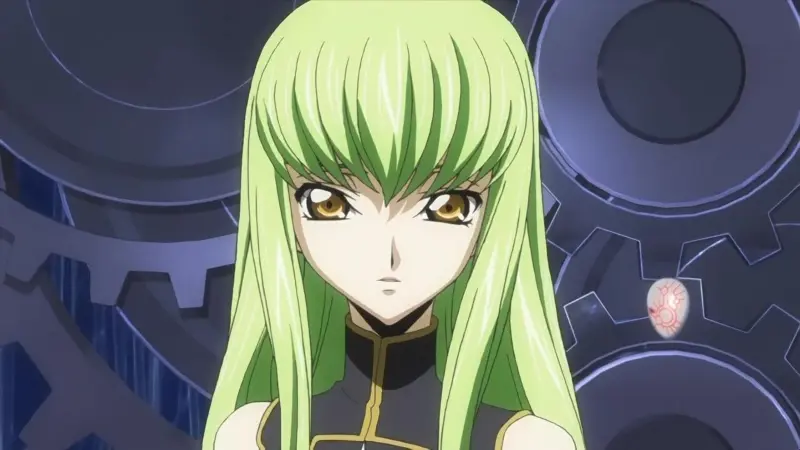
C.C.’s kuudere nature is born from absolute emotional exhaustion. Having lived for centuries and endured endless cycles of torture, betrayal, and heartbreak, she has concluded that human connection is fundamentally pointless. Every single person she has ever cared about has either betrayed her or died, leaving her with a profound, terrifying apathy toward life itself. Her snarky, detached attitude is a heavily reinforced armor designed to keep Lelouch at arm’s length. She wants to die, and forming an attachment to the boy who is supposed to kill her is a massive conflict of interest.
What makes C.C. so iconic is her unique dynamic with Lelouch. They do not have a standard, blushing high school romance. They are partners in crime, bound by a literal and metaphorical contract. The slow thawing of her icy exterior is brilliantly subtle; it is found in the moments where she actively chooses to shield Lelouch, abandoning her purely transactional mindset to ensure his survival. When an immortal being who wishes for death finally finds a reason to keep living by your side, it creates a deeply compelling, highly mature emotional narrative that standard tropes simply cannot match.
Yuki Nagato - The Melancholy of Haruhi Suzumiya
You cannot discuss the kuudere archetype without acknowledging the monumental impact of Yuki Nagato from The Melancholy of Haruhi Suzumiya. For the entire first season, Yuki sits quietly in the corner of the SOS Brigade clubroom, silently reading thick sci-fi novels while chaos erupts around her. She rarely speaks, and when she does, it is in an incredibly flat, rapid-fire monotone devoid of any human inflection. She is the literal definition of the “quiet library girl” trope, executed flawlessly.
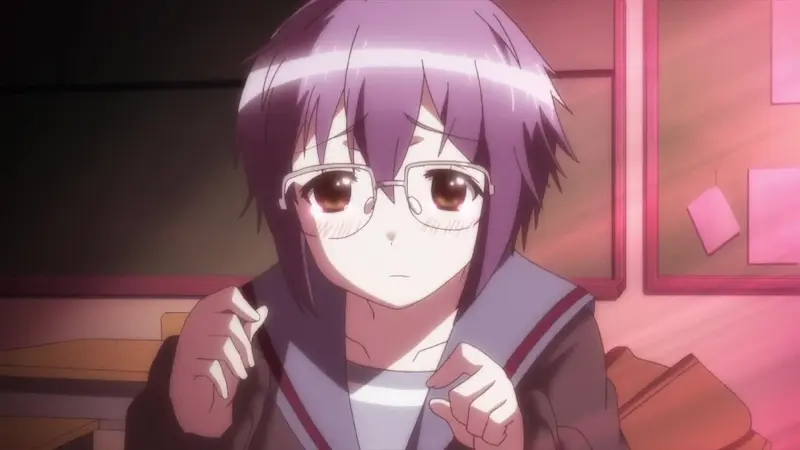
However, Yuki is not just socially awkward; she is a “Humanoid Interface” created by an omnipresent alien data integration entity. Her lack of emotion is not a psychological barrier; she was literally programmed without the capacity to feel. Her sole directive is to observe the reality-warping god, Haruhi Suzumiya, and prevent the destruction of the universe. For dozens of episodes, Yuki operates as an absolute machine, taking immense physical damage and casting massive data-spells without ever blinking or showing fear.
The masterpiece of Yuki’s character arc happens in the legendary film, The Disappearance of Haruhi Suzumiya. After spending hundreds of hours with the club, and looping through the exact same summer vacation over 15,000 times, Yuki’s code begins to break. She experiences an accumulation of data “errors”—which is a highly technical way of saying she developed human emotions. The crushing loneliness and the desire for a normal life push her to completely rewrite the universe. It is a stunning, heavily sci-fi exploration of what happens when a machine finally learns how to feel, cementing her as an absolute god-tier kuudere.
Violet Evergarden - Violet Evergarden
If you want to understand the absolute peak of emotional vulnerability hidden beneath a robotic exterior, Violet Evergarden is the gold standard. Violet was raised as a weapon. Stripped of her humanity and utilized as a ruthless child soldier in a devastating global war, she was never taught how to read, write, or feel. When the war ends, she is left with mechanical prosthetic arms and a completely hollowed-out soul. She operates entirely on military protocol, demanding orders and approaching civilian life with a chilling, deeply unsettling lack of emotion.
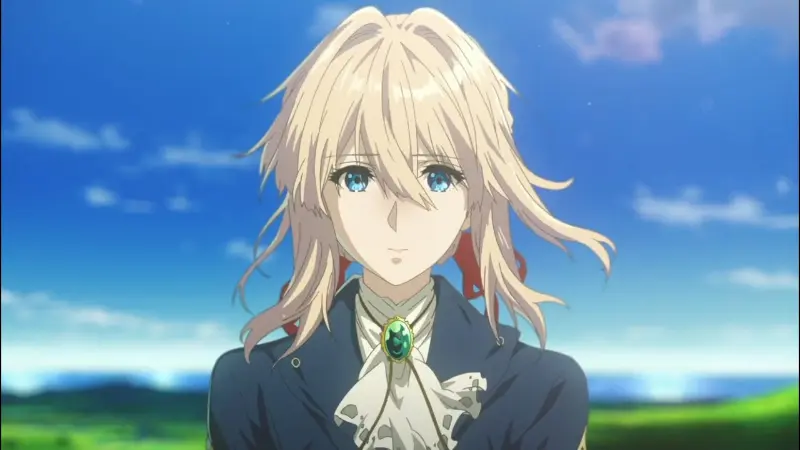
Violet takes a job as an “Auto Memory Doll”—a ghostwriter who pens letters for people unable to write their own. The tragic irony is profound: a girl who fundamentally cannot comprehend human emotion is tasked with translating the deepest, most complex feelings of grief, love, and regret into words for strangers. Violet’s kuudere nature is not an edgy aesthetic choice; it is the tragic result of severe, systemic child abuse. She literally does not have the vocabulary to express her own profound PTSD.
The entire anime is dedicated to the slow, agonizing, and incredibly beautiful thawing of her emotional state. Every letter she writes for a client slowly teaches her a new facet of empathy. The turning point—where Violet finally realizes that she is carrying the massive, burning guilt of the lives she took during the war—is one of the most visually and emotionally devastating scenes in anime history. Watching this broken, emotionless weapon slowly evolve into a deeply compassionate, weeping human being is the absolute zenith of the “dere” awakening.
Rei Ayanami - Neon Genesis Evangelion
There can be no debate. Every single silent, blue-haired, emotionally detached anime girl that has existed in the last thirty years owes her existence entirely to the undisputed godmother of the archetype: Rei Ayanami from Neon Genesis Evangelion. As the pilot of Evangelion Unit-00, Rei is a haunting presence. She lives in a desolate, decaying apartment, possesses a chilling, thousand-yard stare, and responds to standard human interaction with complete, unblinking apathy. She shows absolutely no regard for her own life, willingly throwing herself into lethal situations without a second thought.
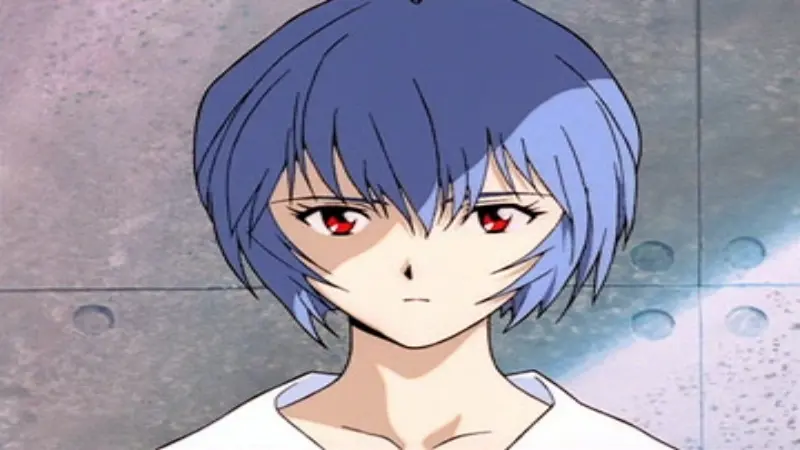
Rei’s stoicism is not just an attitude; it is a dense, philosophical exploration of existentialism. Hideaki Anno designed Rei to reflect the deepest depths of depression and dissociation. As the series progresses, the horrifying truth is revealed: Rei is a disposable clone, manufactured from the DNA of Shinji’s mother and the soul of a god. Her lack of emotion is rooted in the terrifying realization that she is completely replaceable. If she dies, another Rei will simply be activated. Why bother forming an identity, or expressing joy, when you are nothing but biological hardware designed to be destroyed?
Despite being a vessel for existential horror, Rei’s subtle emotional shifts define the core of the kuudere formula. The legendary scene where Shinji forcibly opens her melted entry plug, crying out of fear for her life, shatters her programmed reality. When she admits she “doesn’t know what face to make,” and Shinji suggests she smile, the resulting, fragile expression is one of the most iconic frames in animation history. Rei Ayanami is not just a character; she is an industry-defining blueprint. She proved that absolute silence could be infinitely more compelling than dialogue, forever cementing her as the number one kuudere in anime history.
The Ice Finally Breaks
The absolute brilliance of the kuudere archetype is that it forces the audience to earn the emotional payoff. We are not handed tragic backstories or tearful confessions in episode one. Instead, we are given a wall of ice, heavily reinforced by trauma, alien biology, or deep-seated insecurity. Whether it is the terrifying reality manipulation of Eucliwood, the heavy time-loop PTSD of Homura, or the pure existential dread of Rei Ayanami, these characters prove that the loudest emotional resonance often comes from the characters who speak the least.
If you are craving more series that prioritize heavy psychological architecture over explosive battles, you need to transition over to our breakdown of the best sad romance tearjerkers. Or, if you want to see how this exact same level of emotional suppression translates to massive, geopolitical warfare, check out our deep dive into the best standalone mecha anime. The emotional stakes only get higher from here.
But before you log off, we need to know who truly runs the hierarchy. Are you submitting to the absolute logic of Yukino Yukinoshita, or are you handing over your loyalty to the immortal apathy of C.C.? Head over to the Smash or Pass global arcade right now. Drop your votes on your favorite stoic prodigies, rate the heaviest emotional awakenings, and see where your top kuudere ranks among the rest of the community.
Which kuudere's emotional awakening hit you the hardest?
Frequently Asked Questions
What exactly defines a kuudere character in anime?
Why do fans prefer kuuderes over tsunderes?
Are all kuudere characters emotionless robots or aliens?
Why is Rei Ayanami considered the blueprint for the kuudere archetype?
How does Frieren represent the modern evolution of the kuudere?
Rank Your Favorites
Take a break and play our interactive Smash or Pass games. Vote on your favorite anime characters, game characters, and idols to shape the global tier lists.

Join the Discussion (0)