Top 10 Best Historical Samurai Anime
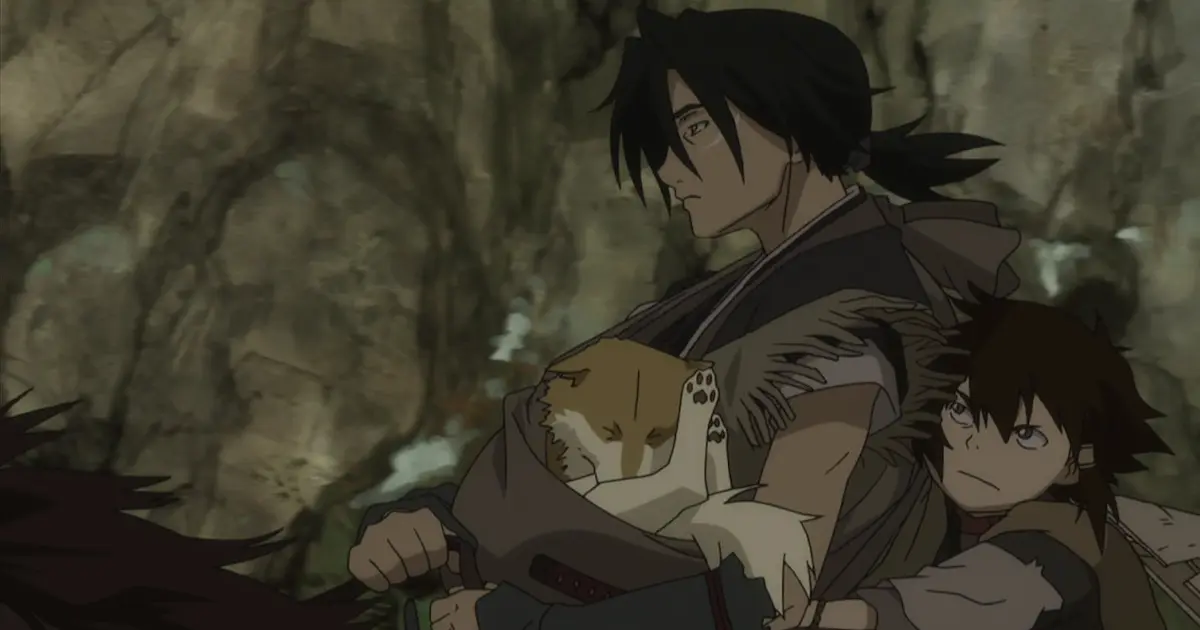
There is a terrifying purity to the clash of two katana blades. In the realm of historical samurai narratives, there are no magical healing spells, no overwhelming energy blasts to fall back on, and absolutely no margin for error. A duel between two master swordsmen is a high-speed game of psychological chess that is usually decided in a fraction of a second. It is a genre defined by the suffocating tension of the draw (iaijutsu), the reading of an opponent’s footwork, and the heavy, agonizing burden of taking a human life at extremely close range. When a studio accurately captures the weight of folded steel cutting through bone, it creates an unparalleled cinematic experience.
Unlike standard shonen series that rely on escalating power levels, the best samurai anime are intimately tied to the sociopolitical turbulence of actual Japanese history. As we frequently explore over in our Action Hub, grounding a fight in reality makes every single strike feel infinitely more lethal. These narratives drag us through the blood-soaked mud of the Sengoku Jidai (Warring States period), the rigid, suffocating class structures of the Pax Tokugawa (Edo period), and the violent, culture-shocking transition of the Meiji Restoration. They explore the tragic paradox of the warrior class: men forged for absolute violence struggling to find a purpose in an era of mandated peace.
From the desperate survival tactics of the Kamakura period to the hyper-stylish, hip-hop-infused journeys of masterless ronin, these series represent the absolute pinnacle of animated swordsmanship. Draw your blade and steady your breathing—here are the Top 10 best historical samurai anime completely grounded in the brutal reality of feudal Japan.
Table of Contents
Peacemaker Kurogane
Peacemaker Kurogane provides a remarkably raw and intimate look into one of the most romanticized factions in Japanese history: the Shinsengumi. Set during the chaotic, violent twilight of the Tokugawa shogunate (the Bakumatsu era), the streets of Kyoto are running red with the blood of political assassinations. The story follows Tetsunosuke Ichimura, an energetic 15-year-old boy who desperately begs to join the Shinsengumi to avenge the murder of his parents, only to realize he is entirely unprepared for the horrific reality of organized slaughter.
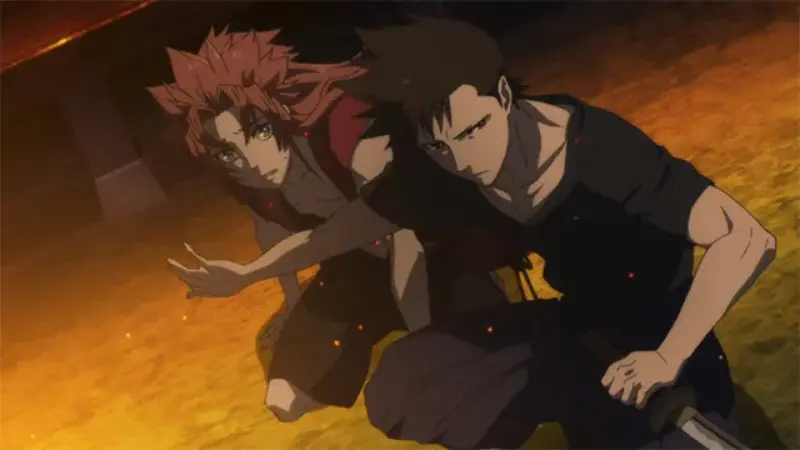
The series excels at stripping away the mythological aura surrounding legendary historical figures like Hijikata Toshizo and Okita Soji. Instead of portraying them as invincible, flawless heroes, the anime grounds them as exhausted, heavily burdened soldiers enforcing martial law in a rapidly modernizing country. Tetsunosuke’s journey is deeply traumatic. The narrative forces a child to confront the fact that joining a militia does not make you a hero; it makes you a political executioner tasked with slaughtering other human beings who simply hold different ideologies.
The swordplay in Peacemaker Kurogane is deliberately heavy and unglamorous. The combat sequences emphasize the claustrophobia of indoor assassinations, the desperate scrambling on blood-slicked wooden floors, and the terrifying weight of drawing a blade with intent to kill. It perfectly balances moments of lighthearted camaraderie within the Shinsengumi barracks with the suffocating, oppressive reality that these young men are fighting a losing war against the inevitable flow of modern history.
Onihei
If you are exhausted by standard shonen tropes and want a deeply mature, atmospheric dive into the criminal underworld of feudal Japan, Onihei is an absolute hidden gem. Based on a classic series of historical novels, the anime follows Heizo Hasegawa, the chief of the Arson and Theft Control division in Edo (modern-day Tokyo). Known by the criminal underworld as “Onihei” (Heizo the Demon), he is a ruthlessly effective, highly skilled samurai tasked with dismantling the city’s most dangerous thief guilds and assassin rings.
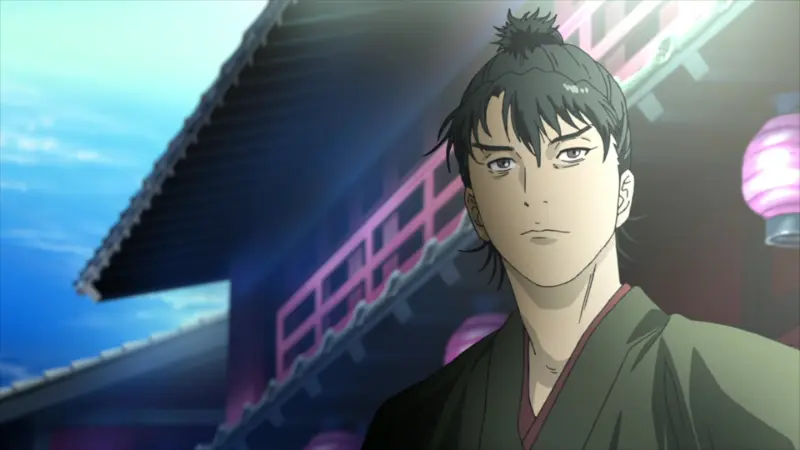
Unlike typical action-heavy samurai narratives, Onihei functions as an episodic, historical police procedural. It meticulously details the daily mechanics of Edo period law enforcement, from utilizing the jitte (an iron truncheon used to disarm swordsmen) to managing networks of informants consisting of reformed criminals. Heizo is a phenomenal protagonist because he is not a rigid, blind enforcer of the law. He understands that systemic poverty drives good men to commit terrible crimes, and he constantly operates in a massive moral gray area, dispensing mercy just as often as he dispenses lethal justice.
The animation style is elegant and grounded, matching the serious, contemplative tone of the writing. The violence is never glorified; when Heizo draws his katana, the resulting action is swift, clinical, and completely devastating. It is a beautifully crafted series that explores the harsh social disparities of the Tokugawa era, proving that the heaviest burdens a samurai carries are not the battles they fight, but the moral judgments they are forced to make.
Revenger
Set in the bustling, culturally diverse port city of Nagasaki, Revenger offers a distinctly unique visual and historical flavor. The story begins when Raizo Kurima, an incredibly loyal, naive samurai, is manipulated into murdering his own father-in-law on the orders of his corrupt lord. Stripped of his honor, his family, and his reason to live, Raizo is taken in by the “Revengers”—a secret organization of highly skilled assassins operating out of a local convenience store who execute targets on behalf of the helpless for a single gold coin.
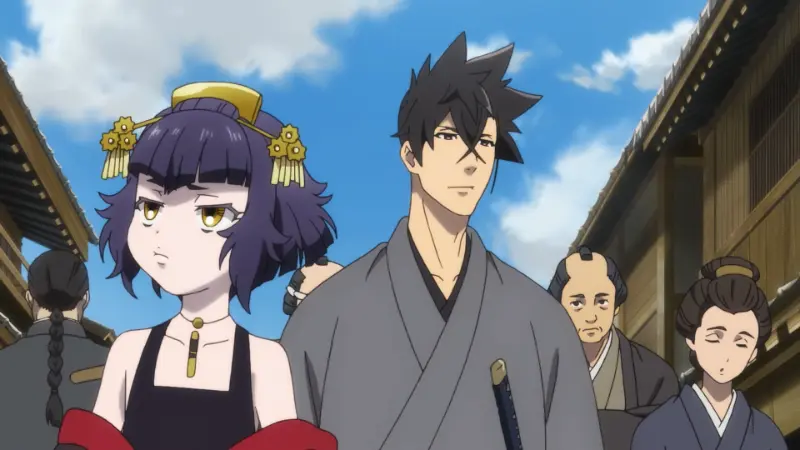
What sets this anime apart is its focus on specialized, highly unorthodox assassination methods. While Raizo relies on flawless, traditional Battojutsu (the art of drawing the sword), the rest of his crew utilizes bizarre, beautifully animated tools of death. You have an assassin who strangles targets using gold leaf kite strings, and a doctor who weaponizes pressure points with glass shards. The juxtaposition of these chaotic killing styles against Raizo’s silent, stoic traditional swordsmanship creates a phenomenal on-screen dynamic.
The historical backdrop of Nagasaki is utilized brilliantly. As the only port open to foreign trade during Japan’s isolationist period, the city is a melting pot of European architecture, imported goods, and rampant political corruption. The series heavily explores the dark underbelly of the opium trade and political smuggling, forcing Raizo to realize that the ‘honor’ he was raised to protect is nothing more than a convenient lie used by the wealthy elite to control the warrior class.
The Elusive Samurai
Hitting the scene with incredibly fluid animation and a completely fresh take on samurai combat, The Elusive Samurai flips the genre on its head. Set in 1333, during the violent collapse of the Kamakura shogunate, the story follows Tokiyuki Hojo, the young heir to the ruling clan. When his family is completely betrayed and slaughtered by the legendary samurai Ashikaga Takauji, Tokiyuki is forced to flee. However, unlike traditional protagonists who seek frontal, honorable revenge, Tokiyuki’s only skill is an almost supernatural ability to run away and hide.
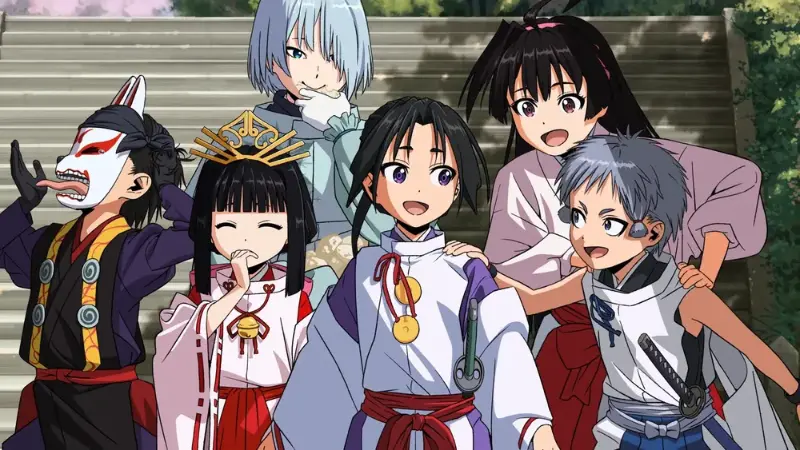
The series brilliantly weaponizes the concept of evasion. In a culture obsessed with honorable suicide (seppuku) and dying a glorious death on the battlefield, Tokiyuki’s absolute refusal to die infuriates his enemies. Guided by a bizarre, prophetic priest, the young heir must build a covert guerrilla army from the shadows. The combat sequences are a visual treat, focusing entirely on momentum, dodging, and striking only when the enemy has completely overextended themselves out of frustration.
Despite its bright, almost whimsical art direction provided by Studio CloverWorks, the historical stakes are incredibly grim. The anime does not shy away from the horrific realities of the era, showcasing mass executions, severed heads on display, and the terrifying political prowess of Ashikaga Takauji. It is a phenomenal, highly unique historical epic that proves survival and tactical evasion require just as much immense courage as drawing a sword.
Angolmois: Record of Mongol Invasion
For fans craving pure, unfiltered military history and desperate survival tactics, Angolmois: Record of Mongol Invasion is a gritty, blood-soaked masterpiece. The anime chronicles the real-world events of 1274, when the massive, seemingly invincible Mongol Empire launched its first devastating invasion of Japan. The narrative zeros in on the island of Tsushima, the very first line of defense. The protagonist, Jinzaburo Kuchii, is a disgraced former Kamakura samurai who has been exiled to the island, only to immediately be drafted into a completely suicidal defense force.
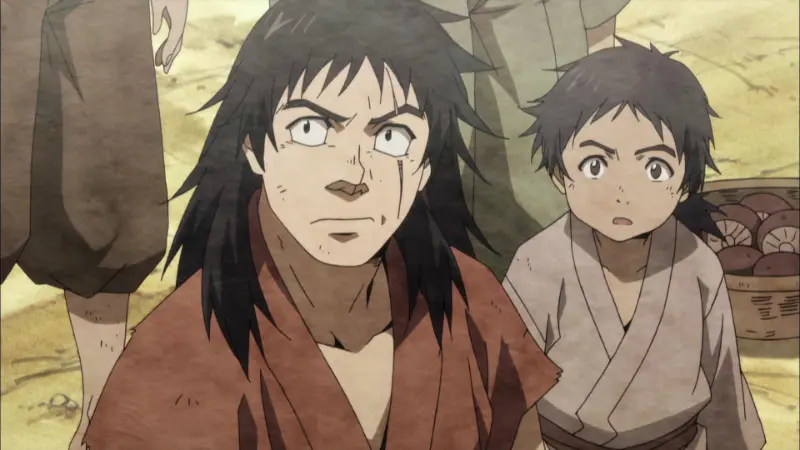
The combat in Angolmois is incredibly grounded and heavily reliant on historical military doctrine. The Japanese samurai, who were historically accustomed to highly ritualized, one-on-one honorable duels, are completely butchered by the Mongols’ advanced group tactics, poison arrows, and early explosive weapons (tetsuhau). Jinzaburo realizes that honorable combat means instant death, forcing the ragtag defense force of exiles, criminals, and local militia to resort to brutal, muddy guerrilla warfare in the island’s dense forests.
The visual direction perfectly captures the grime, exhaustion, and absolute terror of facing a massive imperial armada. The filter over the animation mimics the texture of old parchment, giving the entire series the feel of a forgotten historical document coming to life. It is an intense, suffocating 12-episode war story that highlights the sheer resilience of a few dozen men holding the line against a tidal wave of death.
Blade of the Immortal
Blurring the line between historical fiction and brutal dark fantasy, Blade of the Immortal is a relentless, visceral exploration of revenge and penance. Manji is a legendary, highly skilled swordsman in the Edo period who has been cursed with sacred bloodworms that make him completely immortal. To break the curse and finally find peace in death, he vows to kill 1,000 evil men to atone for the innocent lives he took in his past. His journey begins when he is hired as a bodyguard by Rin, a young girl seeking revenge against the Itto-ryu, a ruthless dojo that slaughtered her parents.
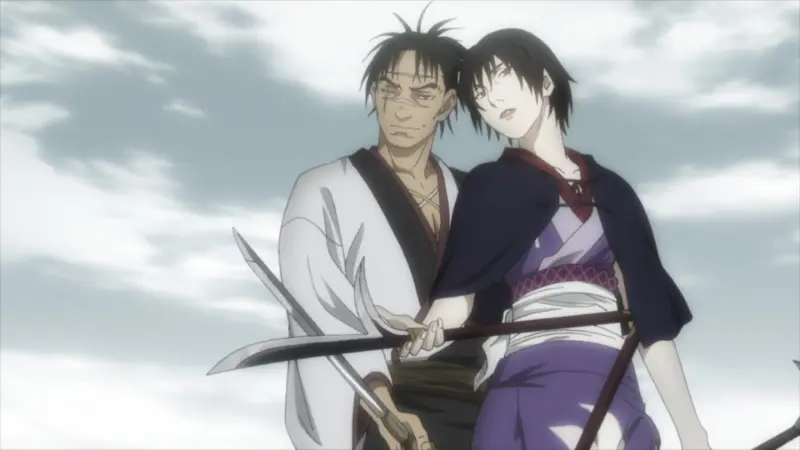
The action in this series is wildly inventive and incredibly gory. Because Manji cannot die, his fighting style is completely reckless. He routinely allows himself to be impaled, dismembered, and hacked to pieces just to get close enough to deliver a fatal counter-strike. However, he still feels every agonizing ounce of pain, making his immortality feel like a horrific torture rather than a superpower. The enemies he faces wield an absurd, highly creative arsenal of weapons, ranging from massive dual-bladed battle axes to hidden chain-scythes, ensuring that no two fights are ever the same.
Beneath the fountains of blood and severed limbs, the anime asks profound philosophical questions about the nature of the samurai code. The villainous Itto-ryu dojo argues that the traditional, highly formalized sword schools of the Edo period have made samurai weak and complacent, believing that true strength only comes from surviving unregulated, lawless slaughter. It is a grim, hyper-violent odyssey that brilliantly deconstructs the rigid martial arts traditions of feudal Japan.
Shigurui: Death Frenzy
There is absolutely nothing romantic about the samurai in Shigurui: Death Frenzy. Directed by Hiroshi Hamasaki (the visionary behind Steins;Gate), this anime is a deeply unsettling, hyper-realistic psychological horror masquerading as a historical drama. Set in 1629 during the early Edo period, a sadistic feudal lord orders a martial arts tournament to be fought with real steel blades instead of wooden training swords. The opening scene pits a one-armed swordsman against a blind, crippled master, and the anime spends 12 episodes diving into the grotesque, tragic history that brought them to this fatal moment.
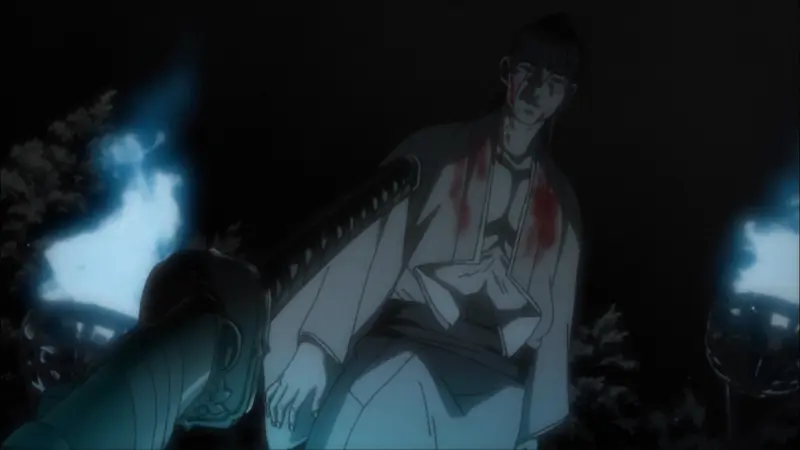
The pacing of Shigurui is suffocatingly slow and deliberate. The fights do not feature high-speed clashes or shouting; they are fought in absolute, dead silence, accompanied only by the sound of heavy breathing and the buzzing of summer cicadas. The studio heavily researched human anatomy, rendering every muscle twitch, bulging vein, and internal organ with terrifying precision. When a blade connects, it does not just leave a clean line—it shatters collarbones, spills intestines, and permanently mutilates the combatants.
This anime serves as the ultimate critique of ‘Bushido’. It showcases how absolute, unquestioning loyalty to a master strips a human being of all free will, reducing them to mindless, violent tools. The characters endure horrific physical and psychological torture simply because their lord demands it, leading to a profound descent into madness. It is a masterful, deeply disturbing work of art that completely shatters the myth of the honorable samurai.
Samurai Champloo
Directed by the legendary Shinichiro Watanabe (Cowboy Bebop), Samurai Champloo is a brilliant, highly stylized anachronism. While the setting is firmly rooted in the Edo period—featuring historically accurate events like the persecution of underground Christians and Dutch border control—the cultural execution is heavily fused with modern hip-hop, graffiti, and breakdancing. The story follows a chaotic trio: Mugen, a wild, breakdancing vagabond; Jin, a highly disciplined, traditional ronin; and Fuu, a brave young girl who forces them to help her find “the samurai who smells of sunflowers.”
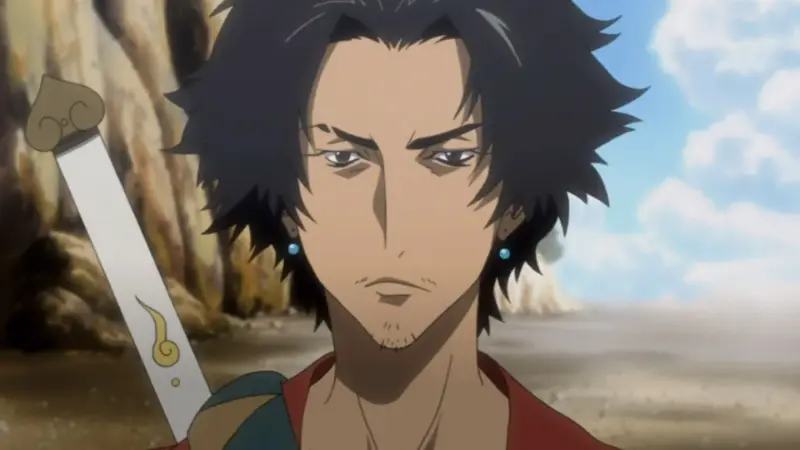
The contrast between the two leads provides the foundation for the show’s incredible combat choreography. Jin utilizes pristine, highly formal Kenjutsu, dispatching enemies with minimal, mathematically perfect movements. Mugen, on the other hand, fights with a completely unpredictable, erratic style heavily inspired by Capoeira and breakdancing, utilizing environmental geometry to launch bizarre, lethal strikes. Backed by the iconic, melancholic beats of the late Nujabes, every single fight sequence feels like a perfectly choreographed music video.
Despite its comedic, anachronistic flair, the historical core of Samurai Champloo is deeply poignant. The anime acts as a massive road trip through the marginalized communities of feudal Japan. It explores the lives of outcasts, foreign immigrants, prostitutes, and disgraced soldiers who have fallen through the cracks of the Tokugawa Shogunate’s rigid class system. It is a masterpiece of style, music, and kinetic action that redefines how historical fiction can be presented.
Rurouni Kenshin
Arguably the most famous samurai narrative ever animated, Rurouni Kenshin perfectly captures the violent, culture-shocking transition of the Meiji Restoration. Himura Kenshin was once known as the Hitokiri Battousai—a legendary, terrifying political assassin whose blade carved the path for the new era. However, ten years after the revolution, Kenshin has become a gentle, wandering vagabond who has sworn a strict oath never to kill again, wielding a sakabato (a reverse-blade sword that cannot cut on the primary edge).
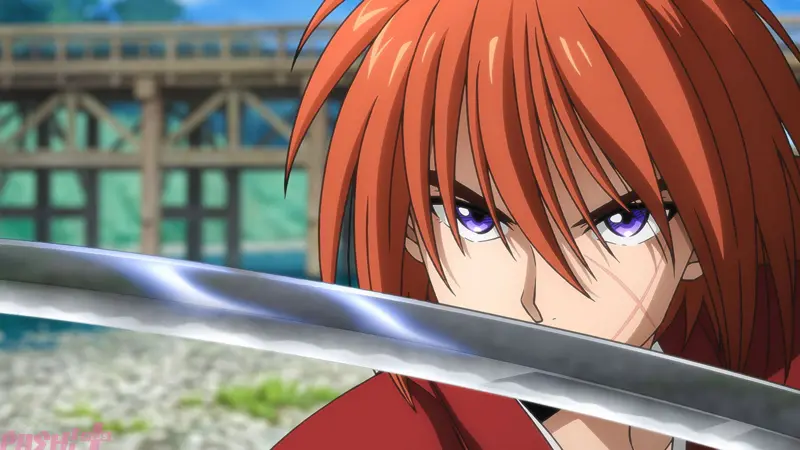
The tension of the series revolves around the political vacuum left in the wake of the Boshin War. The country is attempting to modernize, banning the carrying of swords and abolishing the samurai class, but the ghosts of the past refuse to die peacefully. Kenshin is constantly hunted by former government assassins, radical militias, and vengeance-seeking survivors (most notably the iconic Makoto Shishio). Watching Kenshin desperately try to neutralize extremely lethal threats without breaking his vow to never kill is a masterclass in narrative tension.
Mechanically, the Hiten Mitsurugi-ryu (Kenshin’s ancient sword style) is animated with blinding speed, focusing on Battojutsu (drawing the sword from the scabbard). While the modern remake offers incredibly slick, updated choreography, the heart of the show remains the same: the deep psychological trauma of a former child soldier trying to find peace in a world he built over a mountain of corpses. It is the definitive historical epic of redemption.
Sword of the Stranger
Standing completely untouched at the very peak of the samurai genre is Studio Bones’ cinematic masterpiece, Sword of the Stranger. Set during the chaotic, war-torn Sengoku period, the film follows Nanashi (‘No Name’), a deeply traumatized, nameless ronin who has physically tied his katana shut to prevent himself from ever drawing it again. He crosses paths with Kotaro, a young orphan boy being relentlessly hunted by elite assassins from the Ming Dynasty of China, who require his blood for an occult immortality ritual.
There are no supernatural energy blasts or magical powers in this film. The combat is 100% grounded, reliant entirely on physics, momentum, and flawless tactical execution. The animators at Studio Bones poured an ungodly amount of detail into the footwork, the shifting of weight, and the precise angle of parries. The Ming assassins utilize a terrifying arsenal of weapons, including poison darts, dual-wielded daggers, and heavy whips, forcing Nanashi to constantly adapt his defensive spacing while fighting with a sealed scabbard.
The final ten minutes of this movie feature the single greatest sword fight in anime history. The climactic duel between Nanashi and Luo-Lang—a terrifyingly fast, blue-eyed Ming assassin who fights purely for the thrill of facing a worthy opponent—takes place atop a snowy fortress. The choreography is blindingly fast, tracking the absolute destruction of their environment as they trade heavy, lethal blows. The raw emotional payoff of Nanashi finally cutting the knot on his blade to protect the child, combined with an incredibly sweeping orchestral score, secures Sword of the Stranger as the undisputed king of historical samurai anime.
The Final Cut
The samurai genre is a testament to the raw, uncompromising reality of human conflict. These narratives strip away the safety net of magical plot armor, forcing characters to rely entirely on decades of brutal discipline, tactical spacing, and an ironclad psychological resolve. Whether you are bearing witness to the grotesque, suffocating tragedy of Shigurui or having your mind blown by the flawless, kinetic choreography of the final duel in Sword of the Stranger, these historical epics demand your absolute respect and attention.
If you have had your fill of folded steel and want to see how these exact same principles of spacing, tension, and biomechanics translate to bare-knuckle violence, you must absolutely check out our breakdown of the best martial arts anime for hand-to-hand combat. It trades the katana for raw bone, but the psychological warfare remains exactly the same.
Before you sheathe your blade, we need to know who the community considers the ultimate swordsman. Would Kenshin’s blinding speed overcome Nanashi’s flawless tactical execution? Head over to the Smash or Pass global arcade right now. Cast your votes on your favorite wandering ronin, rate their signature techniques, and see who truly reigns supreme in feudal Japan.
Who is the absolute deadliest swordsman in anime history?
Frequently Asked Questions
Are samurai anime historically accurate?
What is the difference between a samurai and a ronin?
Why is Shigurui considered the darkest samurai anime?
Do you need to watch the old Rurouni Kenshin anime or the remake?
Is Samurai Champloo historically accurate?
Rank Your Favorites
Take a break and play our interactive Smash or Pass games. Vote on your favorite anime characters, game characters, and idols to shape the global tier lists.

Join the Discussion (0)